
Master Limits and Derivatives for Exams | PlanetSpark

Table of Contents
- Introduction to Limits and Derivatives
- Common Function Derivatives
- Why Limits and Derivatives Dominate Your Exam Paper?
- Key Steps to Master Limits and Derivatives
- 7-Day Rapid Revision Plan for Limits and Derivatives
- Practice Questions on Limits and Derivatives
- How PlanetSpark Makes Learning Unit Conversions Fun and Easy
- Conclusion
Calculus begins here! Limits and derivatives form the backbone of higher mathematics and calculus. Moreover, they help students understand change, continuity, and motion in real life. From solving algebraic limits to applying differentiation rules, this topic frequently appears in board and competitive exams. Therefore, mastering concepts with clarity and practice becomes essential for scoring high marks and building strong conceptual foundations in calculus.
At PlanetSpark, students receive structured guidance to simplify complex math topics. Furthermore, expert mentors break down difficult concepts into engaging sessions, helping learners build confidence. Through interactive practice and step-by-step explanations, students not only understand formulas but also apply them effectively in exams. Thus, learning becomes smarter and result-oriented.
Introduction to Limits and Derivatives
Limits and derivatives form the foundation of calculus and help us understand how quantities change. These concepts were developed to study motion, growth, and variation, and today they are widely used in physics, engineering, and advanced mathematics. In mathematics limits and derivatives, a limit explains how a function behaves near a point, while a derivative measures the rate of change.
For students who want to learn limits and derivatives, it is important to first understand the meaning of limits and how they connect to differentiation.
Limits of a Function
In mathematics, a limit is the value that a function approaches as the input gets closer to a specific number.
We represent it as:
lim(x→a) f(x) = L
This means that as x approaches a, the function f(x) gets closer to the value L.
Limits are important because they help define continuity, derivatives, and integrals. Many limits and derivatives formulas are based on these fundamental limit concepts.
Important Limits Formulas
Before solving questions confidently, it is essential to know the key formulas that form the base of calculus. These standard results save time, reduce calculation effort, and make problem-solving faster in exams. Below are some commonly used formula of limits and derivatives that students should remember:
Trigonometric Limits
lim(x→0) (sin x) / x = 1
lim(x→0) (tan x) / x = 1
lim(x→0) (1 − cos x) / x = 0
These are widely used while solving problems in calculus and appear frequently in limits and derivatives ncert solution exercises.
Exponential and Logarithmic Limits
lim(x→0) (e^x − 1) / x = 1
lim(x→∞) (1 + 1/x)^x = e
lim(x→0) (log(1 + x)) / x = 1
These expressions are important parts of standard limits and derivatives formulas used in differentiation problems.
L’Hospital’s Rule
When a limit gives an indeterminate form like 0/0, we use L’Hospital’s Rule:
If
lim(x→a) f(x)/g(x) = 0/0
Then,
lim(x→a) f(x)/g(x) = lim(x→a) f′(x)/g′(x)
This method is commonly applied while solving advanced limits and derivatives solution problems.
Struggle with limits and derivatives no more! Master these concepts now and excel in your exams with confidence. Join us today and boost your exam scores with daily practice!
Derivative from First Principle
A derivative shows how a function changes with respect to a variable. One of the key formulas is:
lim(h→0) [f(x + h) − f(x)] / h = f′(x)
For a power function:
lim(x→a) (x^n − a^n) / (x − a) = n·a^(n−1)
This formula plays a major role in many limits and derivatives ncert solution examples and helps in understanding differentiation step by step.
Properties of Limits
If limits of two functions exist, then:
lim(x→a) [f(x) + g(x)] = lim(x→a) f(x) + lim(x→a) g(x)
lim(x→a) [f(x) − g(x)] = lim(x→a) f(x) − lim(x→a) g(x)
lim(x→a) [f(x) · g(x)] = lim(x→a) f(x) × lim(x→a) g(x)
lim(x→a) [f(x) / g(x)] = (lim(x→a) f(x)) / (lim(x→a) g(x))
These properties simplify calculations and are widely used in limits and derivatives solution steps.
Derivatives of a Function
In calculus, a derivative represents the rate at which a function changes with respect to a variable. It helps describe motion, growth, and variation in real-life situations. In limits and derivatives, the derivative is defined using limits, making it one of the most important ideas in calculus.
In mathematics limits and derivatives, the derivative of a function is written as:
f′(x) = lim(h→0) [f(x + h) − f(x)] / h
This is called the first principle or the basic formula of limits and derivatives. It shows how the value of a function changes as the input changes slightly.
Understanding the Derivative Formula
If a function f(x) is continuous and the limit exists, then its derivative at any point x can be found using:
f′(x) = lim(h→0) [f(x + h) − f(x)] / h
For example, if:
f(x) = sin x
Then,
f′(0) = lim(h→0) [sin(0 + h) − sin(0)] / h
= lim(h→0) (sin h / h)
= 1
This method is commonly used in limits and derivatives ncert solution exercises to understand how derivatives are formed step by step.
Properties of Derivatives
Some important rules used in solving limits and derivatives solution problems are:
- d/dx [f(x) + g(x)] = f′(x) + g′(x)
- d/dx [f(x) − g(x)] = f′(x) − g′(x)
- d/dx [f(x) · g(x)] = f(x)·g′(x) + g(x)·f′(x)
- d/dx [f(x) / g(x)] = [g(x)f′(x) − f(x)g′(x)] / [g(x)]²
These rules simplify complex calculations and are a key part of standard limits and derivatives formulas used in problem solving.
Solved Examples
Example 1: Finding a Limit
Find:
lim(x→3) (x + 3)
Solution:
lim(x→3) (x + 3) = 3 + 3 = 6
This is a simple example to help students learn limits and derivatives concepts clearly.
Example 2: Derivative at a Point
Find the derivative of sin x at x = 0 using first principle.
Let:
f(x) = sin x
Then,
f′(0) = lim(h→0) [sin(0 + h) − sin(0)] / h
= lim(h→0) (sin h / h)
= 1
Such examples frequently appear in limits and derivatives ncert solution questions and help build a strong foundation.
Example 3: Trigonometric Limit
Find:
lim(x→0) [sin(2 + x) − sin(2 − x)] / x
Using trigonometric identity:
sin A − sin B = 2 cos[(A + B)/2] sin[(A − B)/2]
So,
sin(2 + x) − sin(2 − x)
= 2 cos(2) sin(x)
Now,
lim(x→0) [2 cos(2) sin(x)] / x
= 2 cos(2) · lim(x→0) (sin x / x)
= 2 cos(2) · 1
= 2 cos(2)
This is a classic example used in limits and derivatives solution practice.
Learn limits and derivatives step by step with PlanetSpark’s expert guidance and boost your exam scores. Build strong concepts and solve problems with confidence and accuracy.
Common Function Derivatives
Function | Derivative |
|---|---|
|
|
|
|
|
|
|
|
|
|
|
|
|
|
|
|
|
|
|
|


Higher-Order Derivatives:
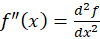
 = n-th derivative
- Example:
 , if
, if 
Quick Exam Tricks
- Use
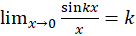 instead of deriving each time.
 - Recognise derivative patterns like:
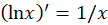 , so
, so 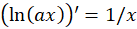

- Combine L’Hôpital + chain rule for tricky 0/0 forms.
- For polynomials and rational functions → check degree rules for limits at infinity.
Regular practice of these limits and derivatives formulas and shortcuts ensures faster problem-solving and mastery for exams. With this strategy clear, let’s examine common mistakes to avoid for top scores.

Why Limits and Derivatives Dominate Your Exam Paper?
Limits introduce the concept of approaching values, while derivatives explain rates of change. Consequently, examiners include multiple conceptual and application-based questions from this unit. Because it connects algebra and calculus, it carries significant weightage in most mathematics limits and derivatives papers.
Additionally, this topic builds the base for advanced calculus chapters. Therefore, scoring well here ensures overall academic improvement. With consistent preparation, students can confidently solve even tricky problems. Before diving into preparation strategies, it is important to understand the structured steps that simplify this seemingly complex topic. These clear and organised methods will help you build confidence and prepare more effectively for your exams.
Key Steps to Master Limits and Derivatives
Scoring well in limits and derivatives requires clear concepts, regular practice, and proper revision. First, understand definitions and theorems thoroughly. Then apply formulas step by step instead of skipping steps. Regular revision and solving question papers help improve speed and accuracy in limits and derivatives ncert solution practice.
PlanetSpark supports students through structured lessons, guided worksheets, and expert feedback that make preparation organised and stress-free.
Important Steps to Follow
Visualise Limits: Understand how a function behaves as it approaches a value from both sides. For example, as x → 0, sin x/x = 1. This improves clarity in mathematics limits and derivatives.
Use Proper Techniques: Simplify expressions using factorisation, rationalisation, and L’Hôpital’s Rule when needed. Applying the right method improves accuracy in limits and derivatives solution problems.
Understand Derivatives as Change: Think of derivatives as rates of change, like velocity being the derivative of displacement. This makes the formula of limits and derivatives easier to understand in real-life context.
Practice Mixed Questions: Solve problems that combine limits and derivatives, including graphs and application-based questions. Regular practice strengthens understanding of limits and derivatives formulas.
Manage Time Smartly: Start with easy questions to gain quick marks. Avoid lengthy steps in the beginning and keep time for revision at the end.
Write Step-by-Step Answers: Always write the formula first, then solve step by step clearly. A structured approach helps while you learn limits and derivatives and improves exam scores.
Study Previous Year Patterns: Practice repeated and important questions from past papers. This helps in recognising patterns and preparing better for exams.
By following these steps, students can improve accuracy and confidence in limits and derivatives.
Master limits and derivatives solution through PlanetSpark’s personalised worksheets and focused practice sessions. Improve speed, clarity, and overall performance in mathematics.
7-Day Rapid Revision Plan for Limits and Derivatives
A short and focused plan helps students revise concepts quickly and effectively. Consistent practice and structured revision improve speed and strengthen understanding of limits and derivatives formulas.
Day 1–2: Standard Limits & Simplification
Revise key limit values and practice factorisation and rationalisation. Solve daily questions to improve clarity using limits and derivatives ncert solution examples.
Day 3: Basics of Derivatives
Focus on first principle and basic differentiation rules. Practice simple functions to build a strong base and learn limits and derivatives step by step.
Day 4–5: Advanced Rules & Mixed Questions
Revise chain rule and mixed problems to improve adaptability. Regular practice strengthens confidence in solving complex limits and derivatives questions.
Day 6: Applications Practice
Solve rate of change and motion-based problems. Practice application-based questions from mathematics limits and derivatives topics.
Day 7: Full-Length Test + Analysis
Attempt one timed mock test and analyse mistakes carefully. Revising weak areas using key limits and derivatives formulas ensures better final preparation.
Following this simple plan improves accuracy, boosts speed, and helps students approach exams with confidence.
Practice Questions on Limits and Derivatives
Understanding limits and derivatives is essential for solving calculus problems efficiently. Practicing varied problems not only strengthens conceptual clarity but also improves speed and accuracy for exams. Below are two example questions with step-by-step solutions to illustrate common techniques in limits and differentiation.
Question 1: Limit Problem
Evaluate:
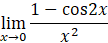
Solution:
Step 1: Use the identity  .
.

Step 2: Substitute into the limit:
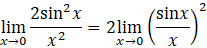
Step 3: Apply the standard limit 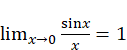 :
:

Answer: 2
Question 2: Derivative Problem
Find the derivative:

Solution:
Step 1: Identify that this requires the product rule:
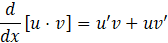
Step 2: Set  and
and 
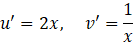
Step 3: Apply the product rule:

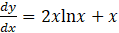
Answer: (2xlnx+x)
Regularly solving such practice questions reinforces concepts, improves problem-solving speed, and builds confidence for exams. After mastering revision techniques, choosing the right learning platform helps you understand calculus effectively.
How PlanetSpark Makes Learning Unit Conversions Fun and Easy?
Mathematics can feel challenging, but interactive teaching makes it easier to understand. At PlanetSpark, lessons focus on clarity, logic, and step-by-step learning so students can truly learn limits and derivatives without relying on memorisation.

Sessions are personalised to match each student’s pace, with regular feedback, worksheets, and practice support. This structured approach helps students build confidence, improve accuracy, and perform better in exams.
Interactive Live Classes
Students attend highly engaging and interactive live sessions regularly. Teachers explain concepts step-by-step using clear examples and logical breakdowns. Moreover, real-time doubt solving ensures that confusion is addressed immediately. As a result, students develop stronger clarity and deeper conceptual understanding.
Confidence-Building Activities
Students are encouraged to present solutions confidently during sessions on limits and derivatives solution. Furthermore, mentors promote analytical and independent thinking skills. Interactive discussions improve clarity and reasoning abilities significantly. Therefore, communication skills grow alongside academic excellence and subject confidence.
Personalised Practice Plans
Customised worksheets are designed to target each student’s weak areas effectively. Additionally, regular assessments help track measurable improvement over time. Structured and progressive practice strengthens conceptual foundations gradually. Consequently, consistent effort ensures long-term mastery and better academic performance.
Conclusion
Mastering limits and derivatives requires consistent practice, formula clarity, and structured revision. Therefore, focus on understanding concepts deeply instead of memorising steps mechanically. When you apply rules logically and practice regularly, even complex problems become manageable and less intimidating in exams.
Strengthen your understanding of limits and derivatives formulas with PlanetSpark’s structured learning approach. Book a free demo today and start solving problems faster and smarter.
PlanetSpark empowers students through expert guidance and interactive learning methods. Moreover, personalised mentorship, structured practice, and regular feedback build stronger conceptual foundations and significantly improve overall exam performance.
Frequently Asked Questions
Limits form the foundation of continuity and differentiation in calculus. Therefore, mastering limits and derivatives helps students understand advanced concepts like applications of derivatives and real-world rate problems clearly.
Practice step-wise solutions consistently and avoid skipping intermediate steps. Additionally, revise limits and derivatives formulas regularly to reduce calculation errors and improve overall accuracy in examinations.
You can refer to the structured limits and derivatives NCERT solution guides for clear explanations. These resources provide step-by-step methods, solved examples, and practice questions aligned with exam patterns.
Follow a focused revision schedule covering key concepts and standard results. Practice regularly using limits and derivatives solution sets to strengthen clarity, speed, and confidence before exams.
PlanetSpark offers interactive live classes with expert mentors and personalised worksheets. These structured sessions help students learn complex mathematical concepts more effectively and confidently.
Yes, PlanetSpark builds confidence through structured practice and regular mock assessments. Guided feedback and doubt-solving sessions ensure students feel well-prepared and perform better academically.