
Math Project Ideas for Kids: Creative and Easy Concepts to Try
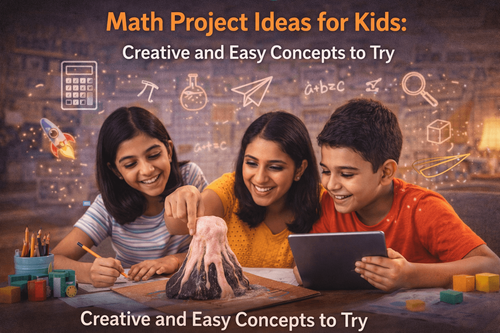

Table of Contents
- Why Math Projects Are Important for Kids
- Key Skills Kids Develop Through Math Projects
- Easy Math Project Ideas for Younger Kids (Grades 1–5)
- Creative Math Project Ideas for Middle School Kids (Grades 6
- Advanced Math Project Ideas for Older Kids (Grades 9–12)
- Tips to Make Math Projects More Engaging
- Common Mistakes to Avoid in Math Projects
- How Parents and Teachers Can Support Kids
- Conclusion
Mathematics is an important subject that helps children develop logical thinking and problem-solving skills. However, many kids find math difficult or boring when it is taught only through textbooks and formulas. This is where math project ideas for kids can make a big difference.
Math projects turn learning into a fun and interactive experience. Instead of just solving problems on paper, children get to explore concepts through real-life activities. This hands-on approach makes it easier to understand topics like numbers, shapes, measurements, and data.
In this article, you will find a variety of easy and creative math project ideas suitable for different age groups. These projects are simple to try at home or school and help children understand math concepts in a practical and enjoyable way.
Why Math Projects Are Important for Kids
Math projects play a crucial role in making learning effective and enjoyable for children. Unlike traditional methods, project-based learning allows kids to explore concepts in a practical way.
- One of the biggest benefits of math projects is that they improve conceptual understanding. When children see how math works in real life, they can understand topics more clearly instead of just memorizing formulas.
- Math projects also help in developing problem-solving and analytical thinking skills. While working on a project, kids learn how to think step by step, analyze situations, and find solutions.
- Another important advantage is that math projects encourage creativity. Children get the freedom to experiment, design, and present their ideas in unique ways. This makes learning more interesting and engaging.
- These projects also build confidence. When kids successfully complete a project, they feel a sense of achievement, which motivates them to learn more.
- Additionally, math projects help children understand how math is used in real-life situations, such as budgeting, measuring, and data analysis.
Key Skills Kids Develop Through Math Projects
Math projects are not just about numbers—they help children develop a wide range of important skills that are useful in both academics and daily life.
- One of the key skills is logical reasoning. When kids work on math projects, they learn how to think logically and connect different ideas. This improves their ability to solve problems effectively.
- Another important skill is critical thinking. Projects encourage children to analyze situations, make decisions, and evaluate results. This helps them understand concepts more deeply.
- Math projects also enhance creativity and innovation. Children get the opportunity to design models, create charts, and explore new ideas. This makes learning more exciting and meaningful.
- In group projects, kids develop teamwork and collaboration skills. They learn how to share ideas, listen to others, and work together to achieve a common goal.
- Communication is another important skill. While presenting their projects, children learn how to explain their ideas clearly and confidently.
- Lastly, math projects teach time management and planning. Kids learn how to organize their work, set goals, and complete tasks within a given time.
- These skills not only improve academic performance but also prepare children for real-life challenges.
Book a Free PlanetSpark Demo Class and Make Learning Math Fun for Your Child!
Easy Math Project Ideas for Younger Kids (Grades 1–5)
Young children learn best through fun and interactive activities. Simple math projects can help them understand basic concepts while keeping them engaged and excited.
Counting and Number Games
Counting and number games are a great way to introduce math to younger kids. You can use everyday objects like toys, fruits, or blocks to teach counting and basic operations.
For example, children can count the number of apples in a basket or group toys into sets. This helps them understand numbers, addition, and subtraction in a practical way.
These activities make learning fun and improve number recognition and basic calculation skills.
Shape Hunt Activity
A shape hunt is an exciting project that helps kids learn about basic geometry. In this activity, children identify shapes like circles, squares, and triangles in their surroundings.
For instance, a clock can represent a circle, a book can represent a rectangle, and a slice of pizza can represent a triangle.
This activity helps children connect math with real life and improves their observation skills.
Measurement Projects
Measurement projects help kids understand concepts like length, height, and weight. Children can measure objects at home using simple tools like a ruler or measuring tape.
For example, they can measure their height, the length of a table, or compare the weight of different objects.
This activity introduces units of measurement and helps kids understand comparisons in a practical way.
Simple Graph Projects
Creating graphs is a fun way to introduce kids to data representation. Children can collect simple data, such as their favorite fruits or colors, and create bar graphs.
For example, they can count how many people like apples, bananas, or oranges and represent the data visually.
This helps in developing basic data interpretation skills and makes math more engaging.
Creative Math Project Ideas for Middle School Kids (Grades 6–8)
As children grow, they can handle more complex math concepts. At this stage, math projects should focus on applying knowledge to real-life situations while encouraging creativity and logical thinking.
Budget Planning Project
A budget planning project is a practical way to teach kids about money management and basic arithmetic. Students can create a simple budget for a trip, birthday party, or monthly expenses.
They can list estimated costs for travel, food, and other needs, then calculate the total and adjust the budget if needed. This project helps students understand addition, subtraction, and financial planning.
It also teaches responsibility and real-life decision-making skills.
Math in Daily Life
This project helps students see how math is used in everyday activities. Kids can track daily expenses, time spent on activities, or even steps walked in a day.
For example, they can calculate weekly spending or analyze how they spend their time during the day. This encourages students to apply math concepts outside the classroom.
It makes math more relatable and useful in real life.
Geometry Art Project
A geometry art project combines creativity with mathematical concepts. Students can create patterns using shapes, symmetry, and designs.
For example, they can design rangoli patterns, tessellations, or geometric drawings using triangles, squares, and circles.
This project helps students understand geometry while also encouraging artistic expression.
Probability Games
Probability projects make learning math fun and interactive. Students can use dice, coins, or cards to explore chance and outcomes.
For example, they can record how many times a coin lands on heads or tails and analyze the results. This helps them understand probability in a simple and engaging way.
It also improves logical thinking and data interpretation skills.
Turn Math into an Exciting Adventure – Reserve a Demo Class Today!
Advanced Math Project Ideas for Older Kids (Grades 9–12)
Older students can work on more advanced math projects that involve deeper analysis, critical thinking, and real-world applications.
Statistics and Data Analysis
This project involves collecting data and analyzing it using charts and graphs. Students can conduct surveys on topics like study habits, favorite subjects, or daily screen time.
They can then represent the data using bar graphs, pie charts, or tables and draw conclusions.
This helps students understand statistics and improves analytical thinking.
Math-Based Science Projects
Math plays an important role in science. Students can create projects that involve calculations in physics or experiments.
For example, they can calculate speed, distance, or time in a simple experiment. This helps them understand how math is used in scientific concepts.
It also strengthens their problem-solving skills.
Coding and Math Integration
Combining coding with math is a great way to develop logical thinking. Students can use basic programming to solve math problems or create simple applications.
For example, they can write a program to perform calculations or generate patterns.
This project builds both technical and analytical skills, which are useful for future careers.
Real-Life Problem Solving
Students can work on projects that solve real-life problems using math. For example, they can plan the layout of a room, calculate construction costs, or design a small business plan.
This helps them apply math concepts in practical situations and understand their real-world importance.
Tips to Make Math Projects More Engaging
Making math projects engaging is important to keep kids interested and motivated. Simple strategies can make a big difference in how children experience learning.
- Using real-life examples helps children understand the practical use of math. When kids see how math applies to their daily lives, they become more interested in learning.
- Encouraging creativity is also important. Allow kids to design, experiment, and present their projects in their own way. This makes the activity more enjoyable and meaningful.
- Keeping projects simple and age-appropriate ensures that children do not feel overwhelmed. Starting with easy concepts builds confidence and encourages participation.
- Using visuals like charts, models, and drawings makes learning more interactive and easier to understand.
- Involving parents or teachers provides guidance and support, helping children complete their projects effectively.
Common Mistakes to Avoid in Math Projects
While working on math projects, certain mistakes can reduce their effectiveness. Avoiding these errors helps children learn better and achieve better results.
- One common mistake is overcomplicating the project. Choosing a topic that is too difficult can lead to confusion and frustration.
- Another mistake is focusing only on theory without practical application. Math projects should involve real-life examples to make learning meaningful.
- Lack of planning can also affect the outcome. Without a clear structure, projects may feel incomplete or disorganized.
- Ignoring presentation is another issue. A well-presented project helps in better understanding and communication of ideas.
- Finally, not understanding the concept behind the project defeats its purpose. Students should focus on learning rather than just completing the task.
Help Your Child Learn Faster with Creative Projects – Join a PlanetSpark Demo Class Now!
How Parents and Teachers Can Support Kids
Parents and teachers play an important role in helping children succeed in math projects. Their support can make learning more enjoyable and effective.
- Encouraging curiosity is the first step. Children should feel free to ask questions and explore ideas without fear.
- Providing guidance without giving direct answers helps children think independently. This improves problem-solving skills.
- Creating a positive learning environment is also important. A supportive atmosphere motivates children to participate actively.
- Appreciating effort and creativity builds confidence. Even small achievements should be recognized to encourage further learning.
- Parents and teachers can also help by providing resources like books, tools, or online materials.
- With the right support, children can enjoy math projects and develop a strong interest in learning.
Conclusion
Math does not have to be boring or difficult. With the help of creative and easy math project ideas for kids, learning can become fun, interactive, and meaningful.
Math projects help children understand concepts clearly, develop important skills, and build confidence. From simple counting games to advanced data analysis, these projects provide valuable learning experiences for every age group.
By encouraging creativity, practical learning, and consistent practice, kids can develop a strong foundation in mathematics. These skills are not only useful in academics but also in everyday life.
Parents and teachers play a key role in guiding and supporting children throughout this process. With the right approach, math can become an enjoyable subject rather than a challenging one.
Frequently Asked Questions
Counting games, shape hunts, measurement activities, and simple graph projects are easy and effective math project ideas.
Math projects make learning practical and interactive, helping children understand concepts more clearly and improve problem-solving skills.
Basic materials like paper, pencils, rulers, charts, and everyday objects are usually enough for most math projects.
Yes, math projects improve understanding and analytical skills, which help in performing better in exams.
Parents can guide, encourage, and provide resources while allowing children to think and solve problems independently.