
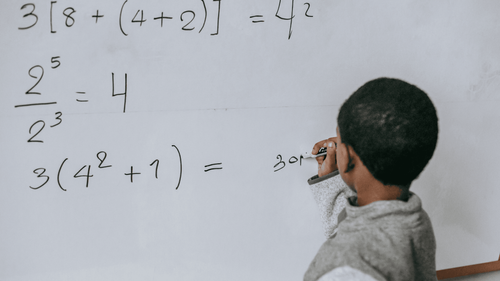

Ever watched a child freeze mid-sum, counting on fingers while the clock ticks away? It’s a familiar scene for many parents. Building calculation speed isn’t just about getting the right answers it’s about nurturing confidence, focus, and a love for numbers.
In this blog, we will uncover smart maths calculation practice tips, fun tricks, and engaging activities that help kids calculate faster and think sharper. From simple mental maths hacks to exciting games and daily habits, everything here is designed to make learning effortless. And for expert-guided learning, PlanetSpark’s online maths programme makes mastering numbers fun and effective.
Common Challenges Kids Face in Maths Calculations
Many children struggle with calculation speed and accuracy, and recognising these hurdles is the first step in overcoming them.
Slow addition and subtraction: When facing multi-digit sums, children may rely on counting fingers or writing every step. This can slow them down considerably. They might pause between each operation instead of moving seamlessly.
Confusion with multiplication tables: Memorising times-tables is often the bottleneck. If the table for say 8 or 12 isn’t automatic, the child stops to think, losing momentum and increasing chance of error.
Mental maths anxiety: A child who expects mistakes may slow right down, double-check every answer, or choose paper when mental work would suffice. That anxiety eats into speed and pleasure.
Lack of structured practise: Sometimes the child jumps from topic to topic without systematically practising calculation drills. Without repetition, fluency won’t build and fast calculation practice remains elusive.
Poor estimation skills: When children can’t approximate or sense whether a result is reasonable, they spend extra time verifying each answer instead of trusting their instinct.
By recognising these common challenges, the way is cleared for targeted action. The next section explores exactly how to build smart, speed-oriented calculation habits.
Maths Calculation Practice Tips to Boost Speed Instantly
Turning calculation into a fast, fluent skill involves smart strategies, consistent practice, and clever shortcuts. Here’s how children can sharpen their maths skills with focused, fun, and structured methods:
1. Daily Mini-Speed Slots
Dedicate 5–10 minutes daily for quick, timed drills such as “30 questions in 5 minutes.” These mini-sessions build focus and strengthen mental agility under mild time pressure. Over time, children start solving sums instinctively rather than hesitating.
2. Focused Table-Mastery Bursts
Spend a few minutes each day mastering one specific multiplication table say the 7s or 12s. Repetition ensures instant recall, transforming tables from memorisation to reflex. Once retrieval becomes automatic, problem-solving time drops significantly.
3. Use Number Bonds and Complements
Help children see relationships between numbers, such as 8 + 7 = (10 + 5). Understanding number bonds trains the brain to spot quicker routes to answers. This approach also strengthens mental addition and subtraction skills.
4. Chunking Large Numbers
Teach them to break bigger sums into smaller, manageable partslike (300 + 200) + (60 + 40) + (8 + 7). Chunking reduces the steps needed and keeps the mind organised during calculation. It’s one of the easiest ways to simplify complex problems.
5. Practise ‘Reverse’ Calculations
Encourage solving in reverse e.g., “what two numbers multiply to make 56?” instead of “what is 8 × 7?”. This strengthens conceptual clarity and helps children identify number relationships quickly. Reverse thinking boosts both speed and logic.
Give your child the power to calculate faster and smarter!
Turn maths anxiety into maths mastery with PlanetSpark’s expert tutors.
6. Variety of Formats
Alternate between mental, written, and timed challenges to keep practice engaging. Changing formats prevents monotony and builds flexible problem-solving ability. It also helps children perform confidently in different test environments.
7. Review Errors Immediately
After each session, go through mistakes to spot where speed dropped or errors crept in. Quick correction helps the brain avoid repeating the same pattern. Reviewing immediately also boosts retention and builds confidence.
8. Gradually Increase Complexity
Start with simple addition and move toward multi-digit or mixed operations as fluency grows. Gradual complexity strengthens endurance and keeps the challenge exciting. This steady progression ensures lasting mastery.
9. Track Progress Visibly
Create a progress chart showing “questions per minute” or “time taken per round.” Tracking visible growth keeps motivation high and adds a sense of achievement. Visual proof of progress inspires consistency.
10. Celebrate Fluency, Not Just Correctness
Appreciate both accuracy and speed not just getting answers right. Celebrating small wins, like a new personal best, reinforces a growth mindset. It helps children associate maths practice with positivity and progress.
By consistently applying these smart maths calculation practice strategies, children develop sharper thinking, faster recall, and greater confidence essential for excelling in both academics and everyday life.
Fun Games & Activities for Smart Maths Calculation Practice
Turning maths calculation practice into a game or challenge boosts motivation and retention.
Maths flash-cards speed rounds
Create flash-cards for sums or tables. Set a timer (e.g., 60 seconds) and see how many correct answers the child can give. Record each day and watch the count grow.
Online apps & timed challenges
There are many maths apps that focus on calculation speed, timed rounds, star ratings for speed. Introduce one of these for five minutes each day to build enjoyment.
Friendly “calculation race” competitions
Invite siblings or friends to a quick contest: who can finish 20 mental additions first with no mistakes? A bit of friendly competition adds drive.
Puzzle-booklets with mental maths
Use puzzle sheets where each answer leads to the next question (a chain). For example: start with 15 + 7, then multiply result by 4, then subtract 10. The chaining keeps attention high and reinforces fast thinking.
Real-life speed-tasks
At home or on a walk, pose quick sums: “If I pick 3 packets of crisps at ₹ 24 each, how much?” or “I buy 7 notebooks at ₹ 56; what’s the total?” These real-life scenarios make maths feel relevant and accelerate retrieval.
Times-table maze game
Draw a grid of numbers (e.g., products of 3–12) and the child must hop through the maze of correct answers in a set time. This blends movement, visual pattern-recognition and fast calculation.
“Mystery number” card game
Place cards showing sums face down. Child flips card, calls the answer as fast as possible, then flips next. Track streaks of correct responses and reward longer streaks: fast calculation practice becomes game-based.
Leaderboard and rewards board
Create a Board on the wall: “This week’s fastest time” or “Most correct in 3 minutes”. At week’s end celebrate improvement, not perfection. This stimulates consistent engagement.
Math relay at home
If multiple children, form teams. Team A solves a sum on the board and tags Team B who solves next. The relay continues until time runs out. Fast turns mean fast calculation practice.
Use countdown clocks
Set a countdown of 2 minutes and challenge how many correctly solved sums can happen before the timer hits zero. The sense of urgency trains speed and focus.
By weaving these activities into routine, calculation practice becomes less a chore and more a challenge, which significantly enhances fluency and enthusiasm.
Watch your child solve sums confidently without counting on fingers!
Join thousands of parents choosing PlanetSpark for speed and skill.
Daily Maths Calculation Practice Habits for Faster Thinking
Developing calculation speed isn’t about long study hours it’s about building small, consistent habits that train the brain to think quickly and accurately. Here’s how simple daily routines can make a big difference in your child’s maths calculation practice journey:
1. Set a Fixed Practice Routine
Consistency beats intensity. A 10-minute calculation drill every day helps build focus and rhythm. When practice becomes a part of the daily schedule just like brushing teeth it strengthens memory recall and mental agility effortlessly.
2. Use Real-Life Maths Moments
Everyday situations are great for fast calculation practice. Let children estimate grocery totals, calculate change, or split a pizza equally. Real-life maths keeps their mind active and improves mental computation without making it feel like “homework.”
3. Set Small, Achievable Goals
Replace vague goals like “get faster” with specific ones for instance, “complete 20 sums in 3 minutes” or “improve score by 5 points this week.” Small targets give children measurable progress and a sense of achievement, motivating them to keep practising.
4. Review Mistakes Together
Keep a simple “error tracker” notebook to jot down recurring mistakes. Reviewing errors immediately after practice helps children understand where they slow down or slip up. Reflection turns mistakes into learning tools and prevents repetition
5. Celebrate Progress-Big or Small
Acknowledging improvement, no matter how minor, boosts motivation. A sticker, kind word, or short break after a successful practice session reinforces positive behaviour. Celebrations link success with effort, not luck, building confidence naturally.
6. Rotate Practice Styles Regularly
Avoid monotony by changing how practice happens flashcards one day, mental maths games the next. Rotating between formats keeps sessions exciting and trains the mind to adapt quickly across different problem types.
7. Encourage Thinking Aloud
As children solve sums, ask them to explain their thought process aloud. Speaking while calculating improves focus, strengthens understanding, and reveals where they hesitate. This active engagement turns silent solving into mindful learning.
8. Maintain a Clean, Distraction-Free Study Zone
A tidy, well-lit environment helps children focus purely on numbers. Removing unnecessary gadgets or background noise improves concentration, which directly impacts calculation speed and accuracy.
9. Track Progress Visually
A progress chart showing “time taken” or “accuracy percentage” can work wonders. Children feel encouraged when they see tangible improvement week after week. It’s a powerful motivator to keep practising.
10. Include Short Brain-Boosting Breaks
After every intense 10-minute drill, add a quick relaxation break stretching, walking, or a snack. These mini-breaks recharge the brain and prevent fatigue, helping children return to practice with renewed focus.
By incorporating these simple yet powerful habits, children build strong foundations for smart maths calculation practice. The goal isn’t just to solve faster, but to think smarter, stay consistent, and enjoy every step of their learning journey.
Stronger basics. Faster brains. Smarter kids.
That’s what PlanetSpark’s maths course delivers every single day.
Claim a free trial class and see the results yourself!
Fun Mental Maths Tricks for Fast Calculation Practice
Smart mental maths isn’t just about speed it’s about clever shortcuts, intuitive number sense and turning calculation into play.
Instead of 16 × 5 directly, think: 10 × 5 = 50, 6 × 5 = 30, so total 80. Breaking numbers into friendly chunks reduces mental load.
When adding 9 + 8, turn one into 10 by giving 1 to the other: 9 + 8 = (10 + 7) = 17. Similarly 19 + 6 = (20 + 5) = 25. This trick helps produce answers faster.
If the child knows 8 + 8 = 16, then 8 + 9 is just one more, i.e. 17. Recognising near-doubles speeds addition and subtraction.
Suppose 1000 – 378: Recognise 378 is 22 less than 400, so result is 622. Using complements avoids counting down step by step.
If asked 47 × 19, first estimate 50 × 20 = 1000, then compute exactly. Estimation builds number sense and gives confidence before exact calculation.
For two-digit number ab: ab×11=a(a+b)b. Example: 34 × 11 = 3 (3+4) 4 = 374 (carry-over if a+b > 9). Having these shortcuts in the mental toolkit boosts speed.
Teach the child to quickly sum digits of result and compare with original sum of digits mod 9 (also known as casting out nines). This doesn’t give full correctness but flags some errors fast.
Instead of viewing “36 ÷ 4”, consider “4 × ? = 36”. Reframing improves calculation agility.
These playful mental maths tricks turn routine sums into fun challenges and help build fast calculation practice without formulaic drudgery.
Why Choose PlanetSpark for Your Child’s Maths Calculation Journey
When it comes to building speed, accuracy, and confidence in maths, PlanetSpark goes beyond traditional learning. Its Maths Course is designed to make every number count.
Key USPs that make PlanetSpark stand out:
Smart, Structured Learning: Each lesson is designed using interactive methods that blend conceptual understanding with fast calculation practice.
Personalised Guidance: One-on-one mentorship ensures that every child learns at their own pace, with tailored feedback to strengthen weak areas.
Gamified Learning Experience: Fun quizzes, puzzles, and digital challenges make maths practice engaging instead of repetitive.
Real-Life Application: Lessons connect classroom maths to everyday situations like shopping, time, and distance helping kids apply what they learn instantly.
Progress Tracking & Reports: Parents receive regular updates on accuracy, speed improvement, and learning milestones.
Confidence-Driven Teaching: With a focus on positivity and encouragement, children overcome fear of numbers and begin to enjoy solving problems quickly.
PlanetSpark’s expert educators, tech-powered classrooms, and proven teaching approach transform how children learn maths making them faster, sharper, and more confident with every session.
Building Fast Maths Skills for Life!
Mastering swift, accurate number work is more than a test requirement it’s a lifelong skill. By recognising typical calculation hurdles, employing smart strategies for fast calculation practice, sprinkling in fun mental tricks and games, and building daily habits anchored in real-life contexts, children transform from cautious counters to confident calculators.
For those seeking guided, structured support in building these skills, the online maths course from PlanetSpark offers tailored learning pathways, expert mentors and engaging practice. With the right practice, speedy calculation becomes the new normal.