
NCERT Class 12 Matrices: Types, Formulas, and Examples


Table of Contents
- What is a Matrix?
- Order of a Matrix
- Types of Matrices
- Equality of Matrices
- Addition of Matrices
- Scalar Multiplication of a Matrix
- Negative of a Matrix
- Properties of Matrix Multiplication
- Transpose of a Matrix
- Symmetric Matrix
- Skew-Symmetric Matrix
- Invertible Matrix
- Inverse of a Matrix Using Elementary Operations
- Solved Examples from NCERT
- Practice Questions
- Common Mistakes Students Make in Matrices
- How PlanetSpark Helps Students Master Maths
- Understanding the Importance of Matrices
Numbers are everywhere, from social media algorithms to computer graphics and even artificial intelligence. Behind many of these systems lies a powerful mathematical tool called matrices. In Class 12 Mathematics, matrices help students organize data, perform calculations efficiently, and understand advanced mathematical concepts.
This chapter introduces different types of matrices, operations, and formulas used in problem-solving. In this guide, we will break down the NCERT Matrices chapter in a simple way with clear explanations, solved examples, formulas, and practice questions to help students master the topic confidently.
What is a Matrix?
A matrix is a rectangular arrangement of numbers, symbols, or functions placed in rows and columns. Matrices help organize large amounts of data in a structured form, making mathematical calculations easier and more systematic. They are widely used in fields such as computer graphics, economics, statistics, and engineering.
Representation of a Matrix
A matrix is usually represented by capital letters such as A, B, or C.
Mathematically, a matrix is written as:

Here:
- A represents the name of the matrix.
- aᵢⱼ represents the element of the matrix.
- i represents the row number.
- j represents the column number.
This notation means that each element in the matrix can be identified by its position (row, column).
Example of a Matrix
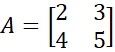
For example, consider the following matrix:
Understanding the Parts of a Matrix
Let us break down the matrix to understand its components.
1. Elements
The numbers inside the matrix are called elements or entries.
In the above matrix, the elements are 2, 3, 4, and 5.
2. Rows
Rows are the horizontal arrangements of elements.
In the example matrix:
- Row 1 → 2, 3
- Row 2 → 4, 5
So, the matrix has 2 rows.
3. Columns
Columns are the vertical arrangements of elements.
- Column 1 → 2, 4
- Column 2 → 3, 5
So, the matrix has 2 columns.
Order of a Matrix
The order of a matrix is written as:

For the above example:
- Rows = 2
- Columns = 2
So, the order of the matrix is 2 × 2.
Understanding matrices and their structure is the first step toward learning matrix operations and advanced applications in mathematics.

Order of a Matrix
The order of a matrix tells us the size or dimension of the matrix. It shows how many rows and columns are present in the matrix.
Definition
If a matrix has m rows and n columns, then the order of the matrix is written as:

Here:
- m represents the number of rows
- n represents the number of columns
So, a matrix with 2 rows and 3 columns will have the order 2 × 3.
Example
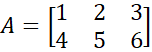
Consider the matrix:
Let us identify the rows and columns:
- Rows = 2
- Columns = 3
Therefore, the order of matrix A = 2 × 3.
Important Points to Remember
Total number of elements
The total number of elements in a matrix is:

For example, in a 2 × 3 matrix, the total number of elements is 2 × 3 = 6.
Position of an element
Each element in a matrix is represented as aᵢⱼ, where:
- i represents the row number
- j represents the column number
For example:
- a₁₂ means the element in row 1 and column 2.
Example Problem
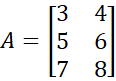
Find the order of the matrix:
Solution
Step 1: Count the number of rows
Rows = 3
Step 2: Count the number of columns
Columns = 2
Step 3: Write the order
Order of matrix A = 3 × 2
So, this matrix has 3 rows and 2 columns, which means it is a 3 × 2 matrix.
Types of Matrices
Matrices can be classified into different types based on their structure and elements. Understanding these types helps students identify matrices easily and apply the correct formulas while solving problems.
Row Matrix
A row matrix is a matrix that has only one row but can have multiple columns.
This means the order of a row matrix is always 1 × n.
Example

Order: 1 × 3
Here, there is one row and three columns, so it is a row matrix.
Column Matrix
A column matrix is a matrix that has only one column but can have multiple rows.
The order of a column matrix is always m × 1.
Example

Order: 3 × 1
This matrix has three rows and one column, so it is called a column matrix.
Book Your Free Math Class Today!
Square Matrix
A square matrix is a matrix in which the number of rows is equal to the number of columns.
If a matrix has n rows and n columns, its order is n × n.
Example

Order: 2 × 2
Since the number of rows and columns are equal, it is a square matrix.
Zero Matrix
A zero matrix (or null matrix) is a matrix in which all the elements are equal to zero.
Example

No matter what the order is, if every element is 0, the matrix is called a zero matrix.
Diagonal Matrix
A diagonal matrix is a square matrix in which all the elements except the main diagonal are zero.
The main diagonal runs from the top-left corner to the bottom-right corner.
Example
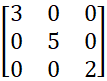
Here, only the diagonal elements (3, 5, 2) are non-zero, and all other elements are 0.
Scalar Matrix
A scalar matrix is a special type of diagonal matrix in which all the diagonal elements are equal.
Example

Here, the diagonal elements are 4 and 4, which are equal. Therefore, it is called a scalar matrix.
Identity Matrix
An identity matrix (also called a unit matrix) is a special type of scalar matrix in which all diagonal elements are 1 and all other elements are 0.
Example
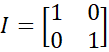
This matrix is called the identity matrix because when it is multiplied with another matrix, the result remains the same matrix.
Understanding these different types of matrices helps students quickly recognize matrix structures and apply the correct operations while solving mathematical problems.
Equality of Matrices
Two matrices are said to be equal when they satisfy certain conditions. Matrix equality is important because it helps us find unknown values in matrices and compare two matrices.
Conditions for Equality of Matrices
Two matrices A and B are equal if:
- They have the same order (same number of rows and columns).
- All corresponding elements are equal.
This means that the element in the same position in both matrices must be equal.
Mathematically, if

then the matrices are equal only when

for every value of i and j.
Example Problem
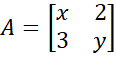
If
and
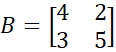
Find the values of x and y.
Solution
Step 1: Compare the elements in the same positions.
First row, first column:

First row, second column:

Second row, first column:

Second row, second column:

Final Answer
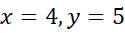
So, when x = 4 and y = 5, the matrices A and B become equal.
Addition of Matrices
Matrix addition is one of the most basic operations in matrix algebra. It involves adding the corresponding elements of two matrices.
Rule for Matrix Addition
Two matrices can be added only when they have the same order.
This means both matrices must have the same number of rows and the same number of columns.
If the orders are different, matrix addition is not possible.
Formula for Addition of Matrices
If two matrices A = [aᵢⱼ] and B = [bᵢⱼ] have the same order, then their sum is obtained by adding the corresponding elements.

This means each element in the resulting matrix is the sum of the corresponding elements of matrices A and B.
Example
Let
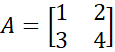
and
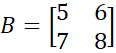
Both matrices have the same order (2 × 2), so they can be added.
Solution
Add the corresponding elements:
First row:
1 + 5 = 6
2 + 6 = 8
Second row:
3 + 7 = 10
4 + 8 = 12
Result:
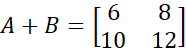
So, the sum of matrices A and B is:

Matrix addition helps simplify calculations and is widely used in data processing, engineering, and computer science.
Scalar Multiplication of a Matrix
Scalar multiplication means multiplying every element of a matrix by a single number. The number used to multiply the matrix is called a scalar.
Definition
If k is a number (scalar) and A is a matrix, then multiplying the matrix by k means multiplying each element of the matrix by k.
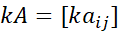
Here:
- k represents the scalar number.
- aᵢⱼ represents the elements of the matrix.
- Each element in matrix A is multiplied by k.
Example
Multiply the matrix by 2.

Solution
Multiply 2 with every element of the matrix.
First row:
2 × 1 = 2
2 × 3 = 6
Second row:
2 × 4 = 8
2 × 2 = 4
So the resulting matrix becomes:

Therefore,
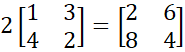
Scalar multiplication is useful when scaling values in data tables, physics calculations, and mathematical modeling.
Start Your Free Math Learning Class Now
Negative of a Matrix
The negative of a matrix is obtained by multiplying every element of the matrix by −1. This operation changes the sign of each element in the matrix.
Definition
If A is a matrix, then its negative is written as:

This means that every element in matrix A is multiplied by −1.
Example
Let the matrix be:
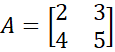
To find −A, multiply each element by −1.
Solution
Multiply −1 with each element:
First row:
−1 × 2 = −2
−1 × 3 = −3
Second row:
−1 × 4 = −4
−1 × 5 = −5
So the negative matrix becomes:
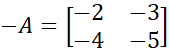
Therefore, the negative of matrix A is:
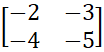
The concept of the negative of a matrix is useful in matrix operations like matrix subtraction and solving algebraic equations involving matrices.
Multiplication of Matrices
Matrix multiplication is another important operation in matrix algebra. Unlike addition and subtraction, matrix multiplication follows a specific condition. It is widely used in computer graphics, data analysis, and engineering calculations.
Condition for Matrix Multiplication
Two matrices A and B can be multiplied only when:
Number of columns of A = Number of rows of B
If this condition is satisfied, the product AB exists.
For example:
- If A is of order m × n
- And B is of order n × p
Then the product AB will be of order m × p.
Formula for Matrix Multiplication
If A and B are two matrices, their product is written as:

Each element of matrix C is obtained by multiplying the elements of the corresponding row of A with the column of B and then adding them.

This formula shows how each element of the resulting matrix is calculated.
Example (Step-by-Step)
Multiply the matrices:
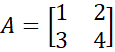
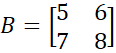
Both matrices are 2 × 2, so multiplication is possible.
Step 1: Find the first element
First row of A × First column of B

Step 2: Find the second element
First row of A × Second column of B

Step 3: Find the third element
Second row of A × First column of B

Step 4: Find the fourth element
Second row of A × Second column of B

Final Answer
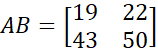
So, the product of matrices A and B is:

Matrix multiplication is an essential concept that forms the foundation for advanced topics like determinants, inverse matrices, and linear algebra applications.
Try a Free Math Class with Expert Teachers
Properties of Matrix Multiplication
Matrix multiplication follows certain mathematical properties. Understanding these properties helps students solve problems faster and recognize how matrices behave during operations.
Non-Commutative Property
In matrix multiplication, the order of multiplication matters.
This means:

So, multiplying matrix A × B does not always give the same result as B × A. In some cases, BA may not even be possible if the order condition is not satisfied.
Example
Let
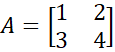
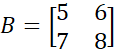
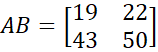
First find AB:
Now find BA:
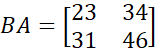
Since

matrix multiplication is non-commutative.
Associative Property
Matrix multiplication follows the associative property, which means the grouping of matrices does not affect the result.

This means if three matrices A, B, and C are multiplied, we can first multiply A and B or B and C — the final result will remain the same.
Example
Let

First compute:

Now compute:

Since both results are equal, the associative property holds true.
Distributive Property
Matrix multiplication also follows the distributive property over addition.
This means multiplication distributes over matrix addition.

and

Example
Let

First calculate B + C:
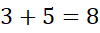
Now multiply:

Now calculate the right side:

Since both sides give the same result, the distributive property is verified.
Key Takeaway
The three important properties of matrix multiplication are:
- Non-commutative:

- Associative:

- Distributive:

Understanding these properties helps students simplify complex matrix calculations and solve exam problems more efficiently.
Experience Fun Math Learning. Book a Free Trial Now
Transpose of a Matrix
The transpose of a matrix is obtained by interchanging its rows and columns. In simple terms, the rows of the original matrix become columns, and the columns become rows in the new matrix.
The transpose of a matrix A is written as Aᵀ.
Definition
If a matrix A = [aᵢⱼ], then its transpose is obtained by switching the position of the indices.
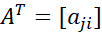
This means the element in the i-th row and j-th column of matrix A becomes the element in the j-th row and i-th column in the transpose.
Example
Let the matrix be:
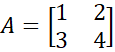
To find the transpose, we interchange rows and columns.
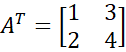
- First row (1, 2) becomes the first column.
- Second row (3, 4) becomes the second column.
So, the transpose of matrix A is:
Properties of Transpose
Transpose follows several important mathematical properties.
1. Transpose of Transpose
If we take the transpose of a matrix and then transpose it again, we get the original matrix.
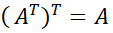
This means applying transpose twice returns the same matrix.
2. Transpose of a Sum
The transpose of the sum of two matrices is equal to the sum of their transposes.

This property works only when the matrices have the same order.
3. Transpose of a Product
The transpose of the product of two matrices is equal to the product of their transposes in reverse order.

Notice that the order of multiplication is reversed.
Key Takeaway
The transpose operation helps simplify matrix expressions and is widely used in linear algebra, matrix equations, and advanced mathematical computations. Understanding these properties makes it easier for students to solve matrix-related problems in Class 12 mathematics.
Symmetric Matrix
A symmetric matrix is a special type of square matrix in which the matrix is equal to its transpose. This means that when the rows and columns are interchanged, the matrix remains the same.
Condition for a Symmetric Matrix
A matrix A is symmetric if:

This means the element in the i-th row and j-th column is equal to the element in the j-th row and i-th column.
In simple words, the matrix is mirror-like along its main diagonal.
Example
Consider the matrix:
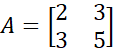
Now find its transpose.
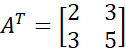
Since

the matrix A is a symmetric matrix.
Key Point
In a symmetric matrix:
- The matrix must always be a square matrix.
- Elements on opposite sides of the main diagonal are equal.
For example:


Symmetric matrices are important in advanced mathematics, physics, statistics, and computer science because they simplify many calculations.
Help Your Child Excel in Math. Try a Free Class Today.
Skew-Symmetric Matrix
A skew-symmetric matrix is a special type of square matrix in which the transpose of the matrix is equal to the negative of the matrix.
In simple terms, when we take the transpose of the matrix, the elements become the negative values of the corresponding elements in the original matrix.
Condition for a Skew-Symmetric Matrix
A matrix A is skew-symmetric if:

This means that the element in the i-th row and j-th column is the negative of the element in the j-th row and i-th column.
For example:
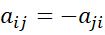
Example
Consider the matrix:
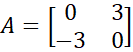
Now find its transpose.
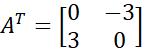
If we take the negative of matrix A:
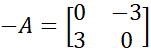
Since

the matrix A is a skew-symmetric matrix.
Important Rule
In a skew-symmetric matrix:
All diagonal elements are always equal to 0.
This happens because:
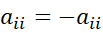
which is possible only when

Key Takeaway
- A skew-symmetric matrix must be a square matrix.
- Opposite elements have opposite signs.
- Diagonal elements are always zero.
Skew-symmetric matrices are useful in advanced algebra, physics, and linear transformations.
Invertible Matrix
An invertible matrix is a special type of square matrix that has another matrix called its inverse. When a matrix is multiplied by its inverse, the result is the identity matrix.
Definition
A square matrix A is said to be invertible if there exists a matrix A⁻¹ such that:

Here:
- A = Original matrix
- A⁻¹ = Inverse of matrix A
- I = Identity matrix
This means multiplying a matrix by its inverse always gives the identity matrix.
Book Your Free Math Class Today!
What is an Inverse Matrix?
The inverse of a matrix is another matrix that reverses the effect of the original matrix when multiplied.
If a matrix A has an inverse A⁻¹, then:

However, not every matrix has an inverse. A matrix must satisfy certain conditions:
- It must be a square matrix.
- Its determinant must not be zero.
If the determinant is zero, the matrix is called a singular matrix and it does not have an inverse.
Identity Matrix Relation
The identity matrix plays an important role in matrix algebra.
An identity matrix is a square matrix in which:
- All diagonal elements are 1
- All other elements are 0
Example of a 2 × 2 identity matrix:
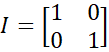
The identity matrix works like the number 1 in multiplication.
For any matrix A:
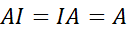
This means multiplying any matrix by the identity matrix does not change the matrix.
Key Idea
If a matrix A has an inverse A⁻¹, then:


This concept is important for solving systems of linear equations, matrix algebra, and advanced topics in linear algebra.
Inverse of a Matrix Using Elementary Operations
The inverse of a matrix can be found using elementary row operations. This method is commonly used in Class 12 mathematics because it provides a systematic way to convert a matrix into its inverse.
The basic idea is to transform the given matrix into the identity matrix. During this process, the identity matrix on the right side transforms into the inverse of the matrix.
Steps to Find the Inverse Using Elementary Operations
Step 1: Write the matrix in the form

Practically, we write the matrix along with the identity matrix as an augmented matrix:

Step 2: Apply elementary row operations
Use operations such as:
- Interchanging two rows
- Multiplying a row by a non-zero number
- Adding or subtracting rows
These operations help simplify the matrix.
Step 3: Convert the matrix  into the identity matrix
Apply row operations until the left side becomes the identity matrix.

Step 4: The right-hand side becomes the inverse
Once the left side becomes I, the right side automatically becomes  .
.
Also Read
Example
Find the inverse of the matrix
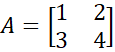
Step 1: Write the augmented matrix

Step 2: Make the first column below the pivot zero
Perform:
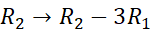
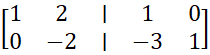
Step 3: Make the pivot element equal to 1
Divide the second row by −2

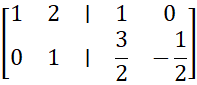
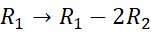
Step 4: Make the element above the pivot zero
Perform:
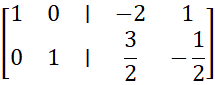
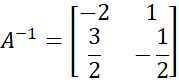
Final Result
Now the left side has become the identity matrix, so the right side is the inverse of A.
Key Idea
Using elementary row operations, we transform:

This method is very useful for finding the inverse of matrices in exams and solving systems of equations.
Schedule Your Free Math Demo Class Now
Solved Examples from NCERT
To understand matrices better, it is important to practice NCERT-style problems. Below are some commonly asked types of questions from the Matrices chapter along with clear step-by-step solutions.
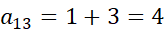
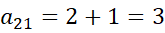
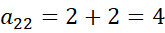
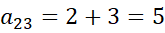
Example 1: Construct a Matrix Using 
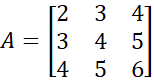
Construct a 3 × 3 matrix whose elements are given by:
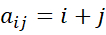
Step 1: Identify the order
The matrix is 3 × 3, so:


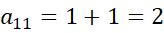
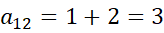
Step 2: Find each element
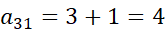
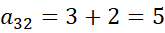
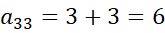
Final Matrix
Example 2: Check Which Matrices Can Be Added
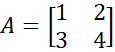
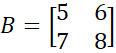
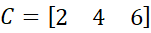
Let
Step 1: Identify the order
- Matrix A = 2 × 2
- Matrix B = 2 × 2
- Matrix C = 1 × 3
Step 2: Apply matrix addition rule
Matrices can be added only if their orders are the same.
Step 3: Check combinations
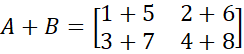
- A + B → Possible (same order)
- A + C → Not possible
- B + C → Not possible
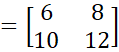
Step 4: Perform addition
Example 3: Prove Symmetric + Skew-Symmetric Matrix = Zero Matrix
Let A be a symmetric matrix and B be a skew-symmetric matrix.
For symmetric matrix:

For skew-symmetric matrix:

Suppose:
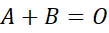
where O is the zero matrix.
Step 1: Take transpose

Using transpose property:

Step 2: Substitute properties
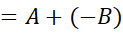

Since 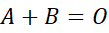 ,
,

Therefore,
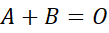
Hence, the sum of a symmetric and skew-symmetric matrix under this condition becomes a zero matrix.
Example 4: Find the Value of 
Given:
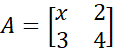
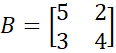
If A = B, find x.
Step 1: Apply equality rule
For two matrices to be equal:
- Their orders must be the same
- Their corresponding elements must be equal
Step 2: Compare elements
First element:

Other elements are already equal.
Final Answer

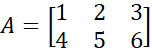
Example 5: Find the Transpose of a Matrix
Given:
Step 1: Identify order
Matrix A is 2 × 3.
Step 2: Interchange rows and columns
First row → First column
Second row → Second column
Final Transpose
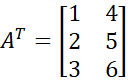
Order becomes 3 × 2.
Example 6: Matrix Multiplication
Multiply:
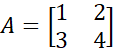
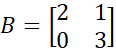
Step 1: Multiply rows and columns
First row × first column:

First row × second column:

Second row × first column:

Second row × second column:

Final Answer
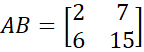
These NCERT-style solved examples help students understand how to apply matrix formulas and concepts step by step. Regular practice of such problems makes the Matrices chapter much easier and more scoring in Class 12 exams.
Try a Free Math Class with Expert Teachers
Practice Questions
1. Basic Practice Questions
- Find the order of the matrix
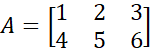
- Write the order of a matrix having 5 rows and 2 columns.
- Identify the type of matrix:

- Identify whether the matrix is row matrix or column matrix:
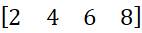
- Find the transpose of the matrix
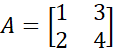
- Find the transpose of
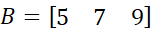
- Identify whether the matrix is square matrix or rectangular matrix:

- Write the zero matrix of order
 .
. - Determine whether the matrix is diagonal matrix:
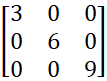
- Find the transpose of
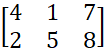
2. Intermediate Practice Questions
- Add the matrices
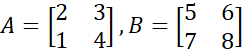
- Subtract the matrices
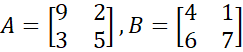
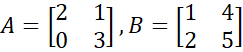
- Multiply the matrices
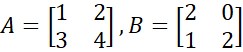
- Find
 if
if
- If
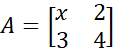
and
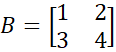
find  such that
  .
.
- Find
 if
if
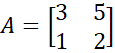
- Solve the matrix equation
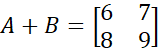
where
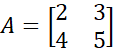
- If
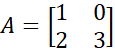
find  .
.
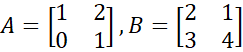
- Verify whether
 for the matrices
- Multiply
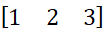
with

Start Learning Math the Smart Way. Join a Free Demo Class Now.
3. NCERT Level Questions
- Verify that

for suitable matrices.
- Show that

is symmetric matrix.
- Prove that

is skew symmetric matrix.
- Verify the associative property of matrix multiplication.
- Verify the distributive property

- Show that the transpose of a symmetric matrix is itself.
- If
 is symmetric and
  is skew symmetric, prove that

is neither symmetric nor skew symmetric in general.
- If
 , prove that all diagonal elements are zero.
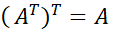
 - Prove that
- Verify the property

4. Challenge Questions
- Express the matrix
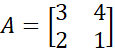
as the sum of symmetric and skew symmetric matrices.
- Find the inverse of the matrix

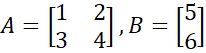
- Solve the matrix equation

where
- Show that if
 is symmetric and
  is skew symmetric then

is skew symmetric.
- Find the inverse using elementary row operations.
- If
 , show that
  .
. - Prove that the inverse of a symmetric matrix is also symmetric.
- If
 , prove that
  .
. - If
 is invertible, show that
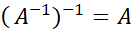
- Solve the matrix equation
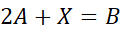
for  .
.
Book Your Free Math Demo Class Today!
Common Mistakes Students Make in Matrices
Students often make small mistakes while solving matrix problems. Being aware of them can help avoid errors.
Ignoring matrix order in multiplication – Matrix multiplication is only possible when the number of columns of the first matrix equals the number of rows of the second matrix.
Confusing transpose with inverse – Transpose only swaps rows and columns, while the inverse is a completely different concept.
Forgetting that  – Matrix multiplication is not commutative, so changing the order changes the result.
Errors in element positions – Students sometimes place elements in the wrong position while forming matrices or calculating results.
How PlanetSpark Helps Students Master Maths
PlanetSpark supports students in building strong mathematical skills through structured and engaging learning methods.
Concept-based learning – Students focus on understanding the logic behind mathematical concepts instead of memorizing formulas.
Interactive problem solving – Live sessions and guided practice help students apply concepts while solving different types of problems.
Personalized attention – Small class sizes ensure teachers can focus on each student’s learning needs and pace.
Confidence building – Regular practice and feedback help students overcome math anxiety and improve accuracy.
Communication + logical thinking – Students learn how to explain solutions clearly, improving both reasoning and communication skills.

Understanding the Importance of Matrices
Matrices are an important topic in Class 12 mathematics that introduces students to structured numerical systems used in many real-world applications. Through matrices, students learn concepts like matrix types, operations, transpose, and inverse. Understanding these ideas requires strong conceptual clarity and regular practice.
Matrices are widely used in technology, science, engineering, and data analysis. With consistent practice and the right guidance, students can solve matrix problems efficiently. Structured learning platforms like PlanetSpark can make mastering matrices easier and more engaging for students.
You May Also Read
Frequently Asked Questions
PlanetSpark helps students understand matrices in Class 12 through concept-based learning, interactive explanations, and guided problem-solving sessions.
Yes, PlanetSpark provides structured practice and step-by-step solutions that help students solve matrix problems confidently for school exams and competitive tests.
PlanetSpark teachers break down matrix concepts like types, operations, transpose, and inverse into simple explanations with relatable examples.
Yes, PlanetSpark offers personalized learning where teachers focus on each student’s pace and help them master matrices with individual guidance.
PlanetSpark builds confidence through regular practice, interactive sessions, and detailed feedback that helps students avoid common mistakes in matrices.
Yes, PlanetSpark explains how matrices are used in technology, data analysis, and engineering to help students connect math concepts with real-world uses.
Students can learn matrices with PlanetSpark because it combines concept clarity, interactive learning, and expert guidance to make mathematics easier and more engaging.