
NCERT Class 10 Quadratic Equations


Table of Contents
- What is a Quadratic Equation?
- Roots of a Quadratic Equation
- Methods to Solve Quadratic Equations
- Solving Quadratic Equations by Factorisation
- Solving by Completing the Square Method
- Quadratic Formula Method
- Discriminant of a Quadratic Equation
- Nature of Roots Explained with Examples
- Important Relationships of Roots
- Word Problems Based on Quadratic Equations
- NCERT-Based Solved Examples
- Discriminant of a Quadratic Equation
- Nature of Roots Explained with Examples
- Important Relationships of Roots
- Word Problems Based on Quadratic Equations
- NCERT-Based Solved Examples
- Practice Set for Students
- Common Mistakes Students Make
- Tips to Solve Quadratic Equations Faster
- How PlanetSpark Helps Students Master Maths
- Key Takeaways from Quadratic Equations
Have you ever wondered how maths helps calculate speed, area, or even marks in exams? Many real-life problems in mathematics can be solved using quadratic equations. In Class 10 NCERT Maths, quadratic equations are an important algebraic concept that helps students understand how to form and solve equations with a squared variable. This chapter explains different methods to solve quadratic equations and how to determine the nature of their roots. In this blog, we will explore the concepts, formulas, solved examples, and practice questions to help students master quadratic equations easily.
What is a Quadratic Equation?
Definition
A quadratic equation is an algebraic equation in which the highest power of the variable is 2. In most cases, the variable used is x.
A quadratic equation in the variable x is written in the standard form:
ax² + bx + c = 0
Where:
- a, b, and c are real numbers
- a ≠ 0
- x is the variable
This form is called the standard form of a quadratic equation.
Why a ≠ 0
In a quadratic equation, the coefficient a must not be equal to zero.
If a = 0, the term ax² disappears and the equation becomes:
bx + c = 0
This is no longer a quadratic equation because the highest power of the variable becomes 1, which makes it a linear equation. Therefore, for an equation to remain quadratic, a must not be zero.
Examples of Quadratic Equations
Let us look at a few examples to understand this concept better.
Example 1
x² + 5x + 6 = 0
Here:
- a = 1
- b = 5
- c = 6
Since the highest power of x is 2, it is a quadratic equation.
Example 2
2x² – 3x – 5 = 0
Here:
- a = 2
- b = –3
- c = –5
Again, the highest power of x is 2, so this is also a quadratic equation.
Example 3
3x² + 7 = 0
Here:
- a = 3
- b = 0
- c = 7
Even though the x term is missing, the highest power of x is still 2, so it is still a quadratic equation.
Non-Examples of Quadratic Equations
Not every algebraic equation is quadratic. If the highest power of the variable is greater than 2, the equation is not quadratic.
Example
x³ + 2x + 1 = 0
In this equation, the highest power of x is 3, so it is called a cubic equation, not a quadratic equation.
Understanding how to identify a quadratic equation is the first step before learning how to solve it.

Roots of a Quadratic Equation
Definition of Roots
The roots of a quadratic equation are the values of the variable x that satisfy the equation.
In simple words, roots are the values that make the equation true when substituted into it.
If α (alpha) is a root of the quadratic equation
ax² + bx + c = 0
then it must satisfy the equation:
aα² + bα + c = 0
This means that when we replace x with α, the equation becomes equal to zero.
Relation Between Roots and Zeroes
The roots of a quadratic equation are the same as the zeroes of the quadratic polynomial.
For example, the polynomial:
x² – 5x + 6
becomes a quadratic equation when we write:
x² – 5x + 6 = 0
The values of x that make this polynomial equal to zero are called its zeroes or roots.
Example
Consider the equation:
x² – 5x + 6 = 0
We solve it using factorisation.
First, we factorise the expression:
x² – 5x + 6
This can be written as:
(x – 2)(x – 3) = 0
Now apply the zero product rule, which states that if the product of two factors is zero, then at least one factor must be zero.
So we get:
x – 2 = 0
x – 3 = 0
Solving these gives:
x = 2
x = 3
Therefore, 2 and 3 are the roots of the quadratic equation.
Methods to Solve Quadratic Equations
There are three main methods used in Class 10 mathematics to solve quadratic equations. Each method works in different situations, depending on the type of equation.
1. Factorisation Method
In this method, the quadratic expression is factorised into two linear factors.
After factorisation, we equate each factor to zero to find the values of x.
This method works best when the equation can be easily factorised.
2. Completing the Square Method
In this method, the quadratic equation is rewritten so that one side becomes a perfect square.
After forming the perfect square, we take the square root of both sides to solve for x.
This method is useful when the equation cannot be easily factorised.
3. Quadratic Formula Method
This is a universal method that works for all quadratic equations, whether they can be factorised or not.
The quadratic formula is:
x = (−b ± √(b² − 4ac)) / 2a
By substituting the values of a, b, and c, we can find the roots of any quadratic equation.
In the next sections, we will learn each of these methods step by step with detailed examples.
Book Your Free Math Class Today!
Solving Quadratic Equations by Factorisation
Concept Explanation
The factorisation method is one of the simplest ways to solve quadratic equations when the expression can be easily broken into factors. The idea is to split the middle term so that the quadratic expression can be written as a product of two linear factors.
Once the expression is factorised, we use the zero product property, which states that if the product of two factors is zero, then at least one of the factors must be zero.
Steps to Solve by Factorisation
Follow these steps to solve a quadratic equation using the factorisation method:
- Multiply the coefficients a and c.
- Find two numbers whose sum equals b and whose product equals ac.
- Split the middle term using these two numbers.
- Factorise the expression and equate each factor to zero to find the roots.
Example 1
Solve the equation:
x² – 5x + 6 = 0
Step 1: Split the middle term.
x² – 5x + 6
= x² – 2x – 3x + 6
Step 2: Factorise by grouping.
x(x – 2) – 3(x – 2) = 0
Step 3: Take the common factor.
(x – 2)(x – 3) = 0
Step 4: Equate each factor to zero.
x – 2 = 0
x – 3 = 0
Roots:
x = 2
x = 3
So, 2 and 3 are the roots of the equation.
Example 2
Solve:
2x² – 7x + 3 = 0
Step 1: Split the middle term.
2x² – 7x + 3
= 2x² – 6x – x + 3
Step 2: Factorise by grouping.
2x(x – 3) – 1(x – 3) = 0
Step 3: Take the common factor.
(2x – 1)(x – 3) = 0
Step 4: Equate each factor to zero.
2x – 1 = 0
x – 3 = 0
Roots:
x = 1/2
x = 3
Therefore, the roots of the equation are 1/2 and 3.
Also Read:
Solving by Completing the Square Method
Concept
The completing the square method is another technique used to solve quadratic equations. In this method, the quadratic expression is rewritten so that it becomes a perfect square.
Once the expression is converted into a perfect square, we can easily solve the equation by taking the square root of both sides.
Steps to Solve by Completing the Square
- Move the constant term to the right-hand side (RHS).
- Divide the equation by the coefficient of x² if it is not 1.
- Add and subtract the square of half the coefficient of x.
- Rewrite the expression as a perfect square and take the square root of both sides.
Example
Solve the equation:
x² + 6x + 5 = 0
Step 1: Move the constant to the RHS.
x² + 6x = –5
Step 2: Take half of the coefficient of x and square it.
Half of 6 = 3
Square of 3 = 9
Step 3: Add 9 to both sides.
x² + 6x + 9 = –5 + 9
x² + 6x + 9 = 4
Step 4: Write the left side as a perfect square.
(x + 3)² = 4
Step 5: Take square roots on both sides.
x + 3 = ±2
Step 6: Solve for x.
x = –1
x = –5
Therefore, the roots of the equation are –1 and –5.

Quadratic Formula Method
Formula
The quadratic formula is a general formula used to solve any quadratic equation of the form:
ax² + bx + c = 0
The formula is:
x = (-b ± √(b² – 4ac)) / 2a
This method works even when the equation cannot be easily factorised.
Explanation of Terms
In the formula:
- a = coefficient of x²
- b = coefficient of x
- c = constant term
The expression b² – 4ac inside the square root is called the discriminant. It helps determine the nature of the roots.
Example
Solve the equation:
2x² – 5x – 2 = 0
Step 1: Identify the values.
a = 2
b = –5
c = –2
Step 2: Find the discriminant.
b² – 4ac
= (–5)² – 4 × 2 × (–2)
= 25 + 16
= 41
Step 3: Substitute the values into the formula.
x = (-b ± √(b² – 4ac)) / 2a
x = (5 ± √41) / 4
Therefore, the roots of the equation are:
x = (5 + √41) / 4
x = (5 – √41) / 4
The quadratic formula method is especially useful when the equation cannot be solved easily using factorisation.
You May Also Find Useful
Linear Equations for Class 10-Formula, Graph & Practice Questions
Discriminant of a Quadratic Equation
A very important concept in quadratic equations is the discriminant. It helps us understand what type of solutions an equation will have before solving it.
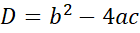
Here:
- a, b, and c are the coefficients of the quadratic equation
- D is called the discriminant
Why is the Discriminant Important?
The discriminant tells us the nature of the roots of a quadratic equation.
Cases Based on the Value of D
1. If D > 0
The equation has two distinct real roots.
2. If D = 0
The equation has two equal real roots.
3. If D < 0
The equation has no real roots (imaginary roots).
Example
Solve the equation:
x² – 4x + 4 = 0
Here,
a = 1
b = –4
c = 4
D = (–4)² – 4(1)(4)
D = 16 – 16
D = 0
Since D = 0, the equation has equal roots.
Start Your Free Math Learning Session Now
Nature of Roots Explained with Examples
The value of the discriminant determines the type of roots a quadratic equation has. Let’s understand each case with examples.
Case 1: Two Distinct Real Roots
When the discriminant is greater than zero (D > 0), the quadratic equation has two different real solutions.
Example
x² – 5x + 6 = 0
Factorizing the equation:
(x – 2)(x – 3) = 0
Roots:
x = 2
x = 3
These are two distinct real roots.
Case 2: Equal Roots
When the discriminant is equal to zero (D = 0), both roots are the same.
Example
x² – 4x + 4 = 0
Factorizing:
(x – 2)² = 0
Root:
x = 2
Since both roots are the same, they are called equal or repeated roots.
Case 3: No Real Roots
When the discriminant is less than zero (D < 0), the quadratic equation has no real solution.
Example
x² + 4x + 5 = 0
D = 4² – 4(1)(5)
D = 16 – 20
D = –4
Since D < 0, the equation has no real roots.
Important Relationships of Roots
Quadratic equations also have some useful relationships between their roots. These formulas help solve many problems quickly.
For a quadratic equation:
ax² + bx + c = 0
The relationships are:
Sum of roots
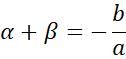
Product of roots

Where:
- α and β are the roots of the equation.
Example
Consider the equation:
2x² – 7x + 3 = 0
Here,
a = 2
b = –7
c = 3
Sum of roots
= –(–7)/2
= 7/2
Product of roots
= 3/2
These formulas are very useful in solving higher-level problems and checking answers quickly.
Try a Free Math Class with Expert Teachers
Word Problems Based on Quadratic Equations
Quadratic equations are not just theoretical concepts. They are widely used to solve real-life mathematical problems related to speed, numbers, marks, and geometry.
Let’s look at some simple examples.
Example 1: Marks Problem
Suppose a student’s marks are represented by x.
According to the problem:
9(x + 10) = x²
Expanding:
9x + 90 = x²
Rearranging:
x² – 9x – 90 = 0
Factorizing:
(x – 15)(x + 6) = 0
Possible values:
x = 15
x = –6
Since marks cannot be negative,
Marks = 15
Example 2: Train Speed Problem
Let the speed of a train be x km/h.
Using the distance = speed × time relationship, a quadratic equation is formed based on the conditions given in the problem.
After solving the equation, we get:
Speed = 42 km/h
Word problems help students connect mathematics with real-life situations, which is very important for board exams.
NCERT-Based Solved Examples
To master quadratic equations, students should practice NCERT textbook questions from all exercises in the chapter.
Here are some examples based on different exercises.
Example 1 (Exercise 4.1)
Solve:
x² – 7x + 10 = 0
Factorizing:
(x – 5)(x – 2) = 0
Roots:
x = 5
x = 2
Example 2 (Exercise 4.2)
Solve using the quadratic formula:
x² + 5x + 6 = 0
Using the formula:
x = [-b ± √(b² – 4ac)] / 2a
Substitute values:
a = 1
b = 5
c = 6
x = [-5 ± √(25 – 24)] / 2
x = [-5 ± 1] / 2
Roots:
x = –2
x = –3
Example 3 (Exercise 4.3)
Find the nature of roots of:
x² – 6x + 9 = 0
D = 36 – 36 = 0
So the equation has equal roots.
Root:
x = 3
Example 4 (Exercise 4.4)
Find the roots of:
3x² – 5x – 2 = 0
Using factorization:
(3x + 1)(x – 2) = 0
Roots:
x = 2
x = –1/3
Students should practice MCQs, short-answer questions, and long-answer problems from Exercises 4.1, 4.2, 4.3, and 4.4 to fully understand the concept.
Regular practice will help students score better in board exams and build a strong foundation in algebra.
Book Your Free Math Class Today!
Discriminant of a Quadratic Equation
The discriminant is an important part of solving quadratic equations. It helps us determine the nature of the roots (solutions) of the equation without actually solving it.
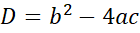
Here, a, b, and c are the coefficients of the quadratic equation:

Importance of the Discriminant
The value of D tells us what type of roots the equation has.
Cases:
- If D > 0 → The equation has two distinct real roots
- If D = 0 → The equation has two equal real roots
- If D < 0 → The equation has no real roots
Example
Equation:

Here,
a = 1, b = –4, c = 4

Since D = 0, the equation has equal roots.
Nature of Roots Explained with Examples
The discriminant helps identify the type of solutions a quadratic equation has.
Case 1: Two Distinct Real Roots
Example:

Factorising:

Roots: 2 and 3
Since the roots are different, the equation has two distinct real roots.
Case 2: Equal Roots
Example:

Factorising:
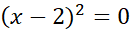
Root: 2
Both solutions are the same, so the equation has equal roots.
Case 3: No Real Roots
Example:



Since D < 0, the equation has no real roots.
Important Relationships of Roots
In quadratic equations, there are useful formulas that relate the roots of the equation to its coefficients.
For the equation:

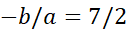
- Sum of roots = –b/a
- Product of roots = c/a
These formulas help verify answers quickly without solving the full equation.
Example
Equation:

Here,
a = 2
b = –7
c = 3
Sum of roots:
Product of roots:
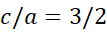
So the sum of the roots is 7/2 and the product is 3/2.
Start Your Free Math Learning Session Now
Word Problems Based on Quadratic Equations
Quadratic equations are widely used in real-life situations such as calculating speed, area, marks, or distances.
Example 1: Marks Problem
Let the marks obtained by a student be x.
The condition given:
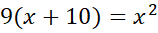
Solving the equation gives:

So the marks obtained by the student are 15.
Example 2: Train Speed Problem
Let the speed of the train = x km/h
Using the relationship:
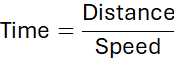
A quadratic equation is formed based on the given condition.
After solving the equation:
Speed of the train = 42 km/h
NCERT-Based Solved Examples
Below are sample problems similar to those found in NCERT exercises.
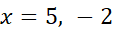
Example 1 (Exercise 4.1)
Solve:

Factorisation:

Roots:
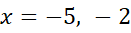
Example 2 (Exercise 4.1)
Solve:


Roots:
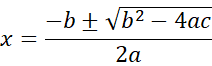
Example 3 (Exercise 4.2)
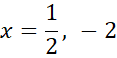
Solve using quadratic formula:

Using formula:
Roots:
Example 4 (Exercise 4.2)

Factorising:

Roots:
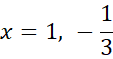
Example 5 (Exercise 4.3)
Find nature of roots:

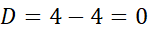
Roots are equal.
Example 6 (Exercise 4.3)


Since D > 0, roots are real and distinct.
Try a Free Math Class with Expert Teachers
Example 7 (Exercise 4.4)
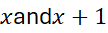
Product of two consecutive numbers is 132.
Let the numbers be:
Equation:
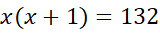

Roots:

Numbers are 11 and 12.
Example 8
Solve:


Roots:

Example 9
Solve:


Roots:

Example 10
Find roots:
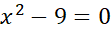

Roots:

Practice Set for Students
A. Basic Concept Questions
- Identify whether the following equation is quadratic:

- Identify whether the following equation is quadratic:

- Identify whether the following equation is quadratic:

- Identify whether the following equation is quadratic:

- Write the coefficients
 of the equation:
- Write the coefficients
 of the equation:
- Write the coefficients
 of the equation:
- Check whether the equation
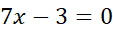 is quadratic.
 - Check whether the equation
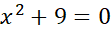 is quadratic.
 - Write the coefficients of the equation
 .
.
B. Solve by Factorisation


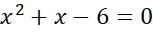







Book Your Free Math Class Today!
C. Solve Using Quadratic Formula










D. Find the Nature of Roots










E. Word Problems
- Find a number whose square is 84 more than the number.
- Find two consecutive numbers whose product is 132.
- A train travels 360 km at a uniform speed. If the speed increases by 5 km/h, the travel time reduces by 1 hour. Find the original speed.
- The sum of two numbers is 15, and their product is 56. Find the numbers.
- The area of a rectangular field is 96 m². If the length is 4 m more than the width, find the dimensions.
- The product of two consecutive positive integers is 210. Find the integers.
- The sum of squares of two consecutive numbers is 85. Find the numbers.
- A number and its reciprocal add up to
 . Find the number.
 - The difference of two numbers is 3 and their product is 70. Find the numbers.
- The area of a square is 196 cm². Form and solve a quadratic equation to find the side of the square.
Common Mistakes Students Make
Students often make small mistakes while solving quadratic equations. Avoiding these errors can improve accuracy.
Common mistakes include:
- Forgetting that a ≠ 0 in a quadratic equation
- Incorrect factorisation of expressions
- Making sign errors while using formulas
- Calculating the discriminant incorrectly
- Ignoring negative solutions in word problems when they may be valid
Regular practice helps reduce these mistakes.
Tips to Solve Quadratic Equations Faster
Students can solve quadratic equations more efficiently by following a few smart strategies:
- First check if the equation can be factorised easily
- Use the quadratic formula when factorisation is difficult
- Calculate the discriminant first to understand the type of roots
- Double-check signs and coefficients before solving
- Practice word problems regularly to strengthen problem-solving skills
How PlanetSpark Helps Students Master Maths
Learning mathematics becomes easier when students receive the right guidance and support. PlanetSpark helps students build strong maths skills through:
- Interactive learning sessions that make concepts engaging
- Expert teachers who explain topics clearly
- Step-by-step concept clarity for difficult problems
- Personalized doubt solving to address individual challenges
- Regular practice worksheets to improve problem-solving ability
- Confidence-building for board exams through structured learning
With the right practice and support, students can master quadratic equations effectively.

Key Takeaways from Quadratic Equations
Quadratic equations are an essential part of algebra and play an important role in many areas of mathematics. In this chapter, students learn how to form quadratic equations and solve them using methods like factorisation and the quadratic formula. Understanding the discriminant also helps identify the nature of roots. With regular practice and clear concepts, students can solve quadratic problems confidently and perform well in exams. Mastering this topic builds a strong foundation for higher-level mathematics.
Also Read
Frequently Asked Questions
PlanetSpark helps students understand quadratic equations through interactive learning, expert guidance, and step-by-step explanations that make maths concepts simple and engaging.
Students learning quadratic equations with PlanetSpark benefit from personalized sessions, concept clarity, and practice exercises that strengthen their mathematical skills.
Yes, PlanetSpark focuses on improving students' problem-solving skills in quadratic equations through guided practice, real examples, and structured learning methods.
PlanetSpark simplifies difficult maths topics like quadratic equations using interactive lessons, practical examples, and one-on-one guidance from experienced educators.
Yes, PlanetSpark helps Class 10 students prepare for board exams by strengthening their understanding of quadratic equations through practice problems and concept-based learning.
Parents can enroll their children in PlanetSpark programs where expert mentors guide students step-by-step to master quadratic equations and other important maths concepts.