
Learn Real-Life Maths Using Everyday Examples | PlanetSpark
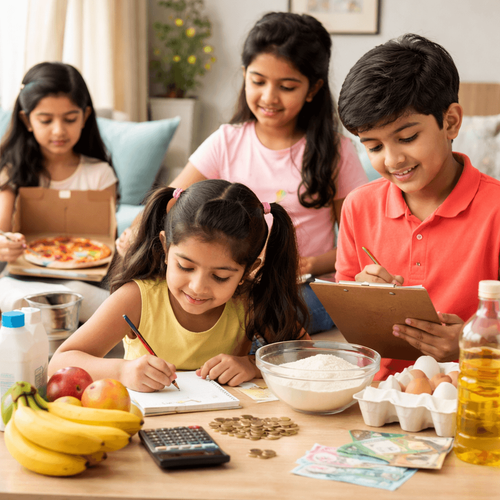

Maths is not just something children learn at school, it is a skill they use every day without even realizing it. From counting toys and telling time to sharing snacks equally or saving pocket money, math plays a role in many small moments of daily life. When children understand maths real life examples and how numbers work around them, learning feels less confusing and much more enjoyable.
Seeing some real-life maths applicable in different situations helps children understand why they are learning it. Instead of memorizing formulas, they begin to notice patterns, make decisions, and solve problems confidently. For parents, this makes maths easier to explain at home through simple activities like shopping, cooking, or planning a day out.
At PlanetSpark, math is taught in a way that feels natural, fun, and relatable. By connecting lessons to everyday experiences, children learn to think clearly, ask questions, and build confidence. This practical approach helps young learners enjoy math while developing skills they will use for life.
Real-Life Maths With Everyday Examples | PlanetSpark
Maths is not just about numbers in textbooks or equations on a board; it’s a skill that plays a crucial role in our daily lives. Here are some real-life maths examples that help children connect their learning to the world around them:
- Measuring ingredients: When children help in the kitchen, they use fractions and proportions to measure ingredients, which shows them real life applications of maths.
- Counting steps while walking: This simple activity helps children understand the concept of measurement and distance, making them see math in real life in action.
- Managing pocket money: Children learn addition, subtraction, and budgeting by keeping track of their pocket money, which is an example of maths real life examples.
- Shopping for toys: Predicting the cost of their favorite toy teaches children basic multiplication and estimation, giving them another example of functions in math in real life.
- Adjusting recipe measurements: When children double or halve ingredients for a recipe, they are learning about ratios and proportions, an essential part of real life mathematics.
- Estimating time: Children calculate how much time it will take to get somewhere, applying math in real life to real-world situations like travel.
These real-life maths experiences make learning more meaningful and enjoyable. Children begin to appreciate how maths is not just a subject in school but a valuable tool they use in everyday life.
How Children Experience Maths in Their Daily World?
Children use real-life maths naturally every day, often without realising it. From counting steps while walking to sharing snacks with friends, numbers help children understand their surroundings.
When everyday activities connect with maths, learning feels easier and less stressful. Seeing maths beyond textbooks builds confidence, improves understanding, and helps young learners enjoy solving real-life problems through simple experiences.
Counting, Comparing, and Sharing
Children practise real life mathematics when they count toys, compare heights, or divide chocolates among friends. These everyday actions gently introduce addition, subtraction, and comparison without formal lessons.
Sharing snacks equally also helps children understand fairness and division. Such hands-on experiences make maths feel familiar, friendly, and useful, reducing fear and building early confidence in using numbers.
Understanding More and Less
Real life applications of maths teach children ideas like “more,” “less,” and “equal” naturally. Comparing who has more pencils or fewer candies strengthens number sense and observation skills.
These comparisons help children understand quantities clearly and make decisions. Learning these concepts early supports future skills in addition, subtraction, and logical problem-solving.
Telling Time Through Daily Routines
Understanding time is an important maths children learn through daily routines. Reading clocks, knowing school timings, or setting bedtime schedules involve numbers and sequencing.
When children learn how long tasks take through real life mathematics, they develop planning skills and responsibility. This practical use of time helps children feel organized and understand how maths helps manage everyday life.
Learning Patterns in Nature and Surroundings
Children often notice patterns in tiles, clothes, flowers, or even day-and-night cycles. These observations introduce ideas of repetition and sequencing naturally.
Recognising patterns builds logical thinking and helps children predict what comes next. Pattern awareness strengthens memory and prepares children for advanced maths concepts like sequences and problem-solving.
Shapes and Spaces Around Us
Children learn geometry by observing shapes in everyday objects like doors, windows, books, and playground equipment. When real-life maths help them recognize circles, squares, or triangles, it improves their visual thinking and spatial awareness.
Understanding how objects fit together helps children connect maths to real life. These observations build a strong foundation for geometry, often without the need for formal classroom instruction.
Turn everyday tasks into learning opportunities. Join your child in discovering real-life maths through cooking, shopping, and travel, building confidence and problem-solving skills along the way.
Maths in Play, Games, and Outdoor Activities
Playtime is one of the most effective ways for children to learn maths naturally. Many games show real life applications of maths where numbers, rules, pattern, and strategies are included. When children play, they practise thinking, planning, and problem-solving without feeling pressure. Learning maths through play keeps children engaged, improves understanding, and helps them remember concepts more easily while having fun.
Board Games and Number Games
Board games help children practise counting, number recognition, and rule-following in an enjoyable way. Dice games is also an excellent example of real life mathematics. It improves addition skills as children count total moves, while card games strengthen memory and sequencing.
These games teach patience, turn-taking, and concentration. By playing regularly, children develop logical thinking and confidence while learning maths naturally.
Strategy and Decision-Making in Games
Many games related to math in real life require children to plan ahead and choose the best move. Deciding when to move forward or wait helps children predict outcomes and analyse options.
This builds reasoning and critical-thinking skills. Children learn that maths is not only about numbers but also about smart decision-making and problem-solving in real situations.
Sports and Physical Activities
Sports introduce real life applications of maths through scoring, timing, and measuring distance. Counting goals, tracking points, or timing races helps children understand numbers in action.
These activities also improve coordination and teamwork. Children learn that maths supports fair play, planning, and performance, making physical activities both active and educational at the same time.
Outdoor Exploration and Travel
Outdoor activities help children understand distance, direction, and time. Counting steps during a walk or estimating how long it takes to reach a park builds spatial awareness.
Noticing landmarks and routes helps children plan and navigate. These real-life experiences and examples of functions in math in real life show children how maths helps them understand and explore their surroundings.
Puzzle Play and Brain Games
Puzzles are a vital part of real life mathematics. It encourages children to think logically and identify patterns. Solving puzzles improves focus, patience, and problem-solving skills.
Whether it is jigsaw puzzles or number challenges, children learn to try different approaches. These activities show that maths can be challenging yet enjoyable, boosting confidence and curiosity.
Building Confidence and Thinking Skills with Real-Life Maths
Real-life maths helps children become confident learners. When maths is tied to daily activities like counting money, measuring ingredients, or dividing snacks, children feel less anxious about making mistakes. These practical experiences encourage curiosity and independence, helping children understand concepts clearly and perform better in school.
Improving Problem-Solving Abilities: Solving everyday problems, like dividing snacks or planning playtime, boosts logical thinking and resilience, helping children make better decisions.
Strengthening School Learning: Connecting classroom lessons to real-life maths (e.g., time, money, measurement) makes concepts easier to grasp and increases interest and confidence.
Encouraging Curiosity and Confidence: Small successes, like calculating change or measuring ingredients, encourage children to explore new challenges and enjoy learning.
Developing Independence: Tasks like managing time or making decisions build independence, helping children rely on their thinking and strengthen confidence.
Building a Positive Relationship with Maths: Early real-life maths experiences, like budgeting or measuring, create a positive attitude towards maths, making it enjoyable and practical.
Help your child learn concepts practically while having fun and building confidence. Join PlanetSpark today and explore interactive lessons that teach real-life maths!
Turning Maths into an Enjoyable Experience at PlanetSpark
At PlanetSpark, learning maths real life examples goes beyond textbooks and worksheets. Children explore concepts through activities that connect directly to their daily lives. This approach makes lessons more engaging and relatable. Fun games, interactive exercises, and real-world problems keep students interested. Teachers guide learners to see the relevance of what they study.

By linking theory with practice, children understand why real-life maths matters. They gain confidence while solving problems independently. PlanetSpark also encourages collaboration and discussion among students. Ultimately, this method turns maths into an enjoyable experience, inspiring curiosity and a love for learning. Through these innovative methods, children master maths and develop skills they can apply throughout life.
Interactive Learning Activities
PlanetSpark uses hands-on activities to teach children important maths concepts. Games, quizzes, and puzzles allow students to explore ideas in practical ways.
These exercises make learning enjoyable while reinforcing understanding. For instance, children might measure ingredients, calculate distances, or track quantities in experiments. Such activities demonstrate math in real life, making lessons exciting and meaningful.
Gamified Learning and Challenges
Gamification motivates students by encouraging active participation through points, levels, and friendly competitions. Children are challenged to think critically and solve problems creatively.
This approach also fosters teamwork and perseverance. By making learning interactive and enjoyable, PlanetSpark ensures that children not only grasp concepts effectively but also find mastering maths a fun and rewarding experience.
Real-Life Scenarios and Examples
Lessons often incorporate maths real life examples like shopping, budgeting, and planning trips. Children practice addition, subtraction, fractions, and percentages in real contexts.
Applying concepts this way strengthens problem-solving skills. Abstract ideas become tangible and easier to grasp. Students also enjoy seeing how maths connects directly to everyday situations and decisions.
Encouraging Critical Thinking
PlanetSpark develops children’s analytical and logical reasoning skills by encouraging independent and systematic problem-solving through real life applications of maths. Group discussions and explanations further deepen understanding and reinforce concepts.
This approach strengthens both comprehension and practical application. As a result, students gain confidence, improve academic performance, and acquire essential skills that help them navigate real-world challenges effectively and successfully.
Discover how real-life maths examples bring learning to life every day. Enroll your child in PlanetSpark’s programs to make maths engaging and relevant.
Conclusion
Maths is everywhere, from home to school, and noticing it in daily life helps children develop essential skills. Parents can encourage this awareness by involving kids in practical activities like shopping, cooking, or planning trips. Learning through real-life maths examples makes the subject engaging, meaningful, and fun. To help your child build confidence, problem-solving abilities, and a lasting love for learning maths, explore interactive lessons at PlanetSpark.
Frequently Asked Questions
Children encounter maths in shopping, cooking, time management, and travel. Observing and applying these situations helps them understand concepts practically and build essential problem-solving skills.
It connects classroom learning to daily activities, making concepts easier to grasp. Real-life maths strengthens analytical thinking, confidence, and decision-making abilities in children.
Examples include calculating bills, tracking time, planning trips, managing allowance, or measuring ingredients. These activities help children understand and apply maths concepts effectively.
PlanetSpark uses interactive activities, games, and real-life scenarios to teach maths. This approach helps children engage actively while connecting concepts to practical situations.
Parents can involve children in measuring ingredients, budgeting, or calculating discounts. These real-life maths activities turn learning into a fun and meaningful experience.
Yes, PlanetSpark incorporates real-life maths examples like budgeting, cooking, and travel planning. Students learn to solve problems confidently and see the relevance of maths.