Reasoning skills play a crucial role
in how children and adults understand the world, make decisions, and solve everyday problems. From choosing the correct answer in a math question to deciding the best solution in real life, reasoning skills help the brain think logically and clearly. These skills are not only important for academic success but also for personal and professional growth.
For kids, strong reasoning skills build
confidence, improve learning speed, and encourage independent thinking. For working professionals, reasoning and analytical skills help in decision making, planning, and problem solving at work. This is why developing reasoning skills early creates a strong foundation that benefits people throughout life.
In this blog, we will clearly
explain the reasoning skills meaning, why they are important, and how they support confident problem solving. The focus is on simple explanations, practical understanding, and real life relevance for both kids and adults.
What Are Reasoning Skills?
Reasoning skills are the mental abilities that help a person think logically, understand relationships, and draw correct conclusions. These skills allow kids and adults to connect information, analyze situations, and decide what makes sense.
Reasoning Skills Meaning Explained Simply
Reasoning skills meaning can be understood as the brain’s ability to think, question, and solve problems step by step. When a child looks at a pattern and figures out what comes next, they are using reasoning skills. When a professional compares two options before making a decision, they are also using reasoning skills.
These skills involve:
Understanding facts and information
Identifying patterns and connections
Thinking logically instead of guessing
Making decisions based on evidence
Types of Reasoning Skills
Reasoning skills are often divided into different types. Each type helps in a unique way.
Type
What It Helps With
Example
Logical reasoning
Thinking step by step
Solving math puzzles
Analytical reasoning
Breaking problems into parts
Comparing solutions
Critical reasoning
Evaluating information
Choosing the best answer
Visual reasoning
Understanding images and patterns
Spotting shapes and sequences
These reasoning and analytical skills work together to improve thinking ability and problem solving confidence.
How Reasoning Skills Develop
Reasoning skills develop gradually through learning, observation, and practice. Kids strengthen them by asking questions, solving puzzles, and exploring new ideas. Adults sharpen them through experience, decision making, and continuous learning.
Strong reasoning skills help learners move from memorizing information to truly understanding it.
Why Reasoning Skills Are Important for Kids
Reasoning skills are especially important for kids because they shape how children learn, think, and respond to challenges. A child with strong reasoning skills is more confident, curious, and independent.
Building Confidence Through Thinking
When kids understand how to reason, they feel confident solving problems on their own. Instead of feeling stuck, they learn to try different approaches and find answers logically.
Benefits include:
Better problem solving ability
Reduced fear of mistakes
Improved classroom participation
Supporting Academic Learning
Reasoning skills help kids perform better in subjects like math, science, and language. Understanding concepts becomes easier when children can think logically and analyze information.
Examples:
In math, reasoning helps understand why an answer is correct
In reading, it helps analyze stories and meanings
In science, it helps form conclusions from observations
Life Skills Beyond School
Reasoning skills are not limited to academics. Kids use them in daily life when they:
Decide how to manage time
Solve small conflicts with friends
Choose between right and wrong
This early development of reasoning and analytical skills prepares children for real world challenges.
Long Term Benefits for Professionals
Strong reasoning skills developed in childhood continue to help working professionals later in life. They support better communication, planning, and decision making at work. This shows why learning how to develop reasoning skills early is so valuable.
Reasoning skills are used far more often than we realize. From simple daily choices to complex decisions, reasoning skills guide both kids and working professionals in thinking clearly and acting confidently. These skills are not limited to classrooms or offices. They are part of everyday life.
Reasoning Skills in Daily Life
Kids use reasoning skills when they try to understand situations, predict outcomes, and choose the best option. For example, when a child decides which homework to complete first, they are using reasoning skills to manage time and effort.
Common daily situations where reasoning skills are used:
Choosing the right answer in a question
Understanding cause and effect
Solving small conflicts logically
Planning tasks step by step
This shows the true reasoning skills meaning in real life. It is about thinking before acting.
Use of Reasoning Skills in Learning
In academics, reasoning skills help kids move beyond memorization. They begin to understand concepts deeply and apply knowledge correctly.
Reasoning skills are used when:
Solving word problems in math
Understanding patterns and sequences
Analyzing stories and situations
Drawing conclusions from facts
Strong reasoning and analytical skills help learners ask better questions and find logical answers instead of guessing.
Reasoning Skills at Work for Professionals
Working professionals use reasoning skills daily to solve problems, make decisions, and plan strategies. Whether it is analyzing data or choosing the best solution, reasoning skills support smarter thinking.
Examples include:
Comparing multiple options before deciding
Understanding risks and benefits
Solving unexpected challenges
Communicating ideas clearly
This highlights why learning how to improve reasoning skills is valuable at every age.
Emotional and Social Reasoning
Reasoning skills are also used in emotional and social situations. Kids use them to understand feelings, respond calmly, and resolve disagreements.
They help in:
Understanding others’ perspectives
Making fair decisions
Controlling impulsive reactions
When kids apply reasoning skills in social situations, they become more confident and emotionally balanced.
Why Frequent Use Matters
The more often reasoning skills are used, the stronger they become. Regular use improves clarity, speed of thinking, and confidence. This is why both kids and professionals benefit from environments that encourage questioning, thinking, and logical problem solving.
Learning reasoning skills becomes easier and more effective when it feels fun and engaging. Real life examples help kids understand how reasoning skills work in simple and interesting ways.
Everyday Reasoning Skills Examples
Kids use reasoning skills naturally in playful situations. These moments show how thinking logically helps solve problems.
Examples include:
Figuring out which toy fits in a box
Choosing the fastest route while playing a game
Predicting what will happen next in a story
Solving puzzles and riddles
Each example reflects the practical reasoning skills meaning in action.
Games That Build Reasoning Skills
Many games strengthen reasoning and analytical skills without feeling like learning.
Popular examples:
Board games that require planning
Pattern matching games
Logic puzzles and brain teasers
Strategy based video games
These activities encourage kids to think ahead, analyze outcomes, and adjust decisions.
Reasoning Skills in Simple Questions
Even basic questions help develop reasoning skills when kids explain their answers.
Examples:
Why do you think this answer is correct
What will happen if we change this step
Which option works better and why
Such questions promote logical thinking and support how to develop reasoning skills naturally.
Visual and Analytical Reasoning Examples
Visual reasoning skills are used when kids understand shapes, diagrams, and images.
Activity
Reasoning Skill Used
Spot the difference
Analytical reasoning
Complete the pattern
Logical reasoning
Arrange steps in order
Sequential reasoning
Identify odd one out
Critical reasoning
These examples improve reasoning and analytical skills while keeping learning enjoyable.
Why Fun Examples Work
Fun examples reduce fear of mistakes and encourage experimentation. Kids feel safe trying different approaches, which improves confidence. Over time, these playful experiences support how to improve reasoning skills in a natural and effective way.
When learning is engaging, reasoning skills grow stronger and more reliable.
Developing reasoning skills is a gradual process that improves with the right methods, environment, and consistent practice. Both kids and working professionals can strengthen their thinking abilities by following a structured approach that focuses on understanding, logic, and application.
Step 1: Encourage Curiosity and Questions
Curiosity is the foundation of reasoning skills. When kids are encouraged to ask questions, they begin to think beyond surface level information.
Ways to support this step:
Ask open ended questions during learning
Encourage children to explain their answers
Allow multiple solutions to one problem
This approach helps clarify the reasoning skills meaning and builds confidence in thinking independently.
Step 2: Focus on Understanding, Not Memorization
Reasoning skills develop when learners understand the “why” behind concepts. Memorizing answers limits thinking, while understanding builds logic.
Examples include:
Explaining how an answer was reached
Breaking complex problems into smaller steps
Using real life examples to explain concepts
This method strengthens reasoning and analytical skills and improves long term learning.
Step 3: Practice Logical Thinking Regularly
Consistent practice plays a major role in how to develop reasoning skills. Small daily activities can make a big difference.
Effective practices:
Solving logic based questions
Working on patterns and sequences
Playing strategy based games
These activities help learners think step by step and improve decision making skills.
Step 4: Teach Comparison and Analysis
Comparing options helps kids and professionals analyze situations logically.
This can be done by:
Comparing two answers and choosing the better one
Discussing advantages and disadvantages
Evaluating outcomes before deciding
This step builds strong reasoning and analytical skills used in academics and real life.
Step 5: Apply Reasoning to Real Situations
Applying reasoning skills to daily life helps learners understand their practical value.
Examples:
Planning daily tasks
Solving small challenges independently
Making thoughtful choices
Step by step development creates a solid thinking foundation that supports confident problem solving.
Improving reasoning skills requires consistent and focused practice. When practice is structured and engaging, reasoning skills become sharper, faster, and more reliable over time.
Why Practice Matters
Practice strengthens the brain’s ability to think logically. Just like physical exercise improves strength, mental practice improves reasoning skills.
Benefits of regular practice:
Faster thinking ability
Improved accuracy in problem solving
Increased confidence in decision making
This explains how to improve reasoning skills effectively.
Practice Techniques That Work
Different techniques help develop reasoning skills in unique ways.
Effective methods include:
Solving puzzles and brain teasers
Answering “why” and “how” questions
Analyzing mistakes and correcting them
Practicing problem solving without time pressure
These techniques strengthen reasoning and analytical skills for both kids and professionals.
Daily Practice Ideas
Simple daily activities can be turned into reasoning exercises.
Examples:
Discussing daily decisions and outcomes
Predicting results before an activity
Explaining thought processes out loud
These habits naturally improve reasoning skills and thinking clarity.
Tracking progress shows how consistent effort leads to stronger reasoning skills.
Creating a Supportive Environment
A positive environment encourages learners to practice without fear of mistakes. When errors are treated as learning opportunities, reasoning skills improve faster.
Regular practice combined with encouragement helps learners understand how to improve reasoning skills confidently and effectively.
Activities that involve thinking, analyzing, and problem solving play a powerful role in strengthening reasoning skills. When kids and working professionals engage in the right activities, reasoning becomes faster, clearer, and more confident.
Hands On Learning Activities
Hands on activities help learners understand concepts by doing rather than memorizing. These activities naturally develop reasoning skills by encouraging exploration and logic.
Examples include:
Building models using blocks or materials
Sorting objects based on size, shape, or pattern
Solving real life problems through role play
These activities clearly reflect the reasoning skills meaning in action.
Problem Solving Activities
Problem solving tasks challenge the brain to think logically and creatively.
Effective activities:
Logic puzzles and riddles
Math based word problems
Scenario based questions that require decisions
Such tasks strengthen reasoning and analytical skills and improve confidence.
Group Activities for Reasoning Development
Group activities allow learners to explain their thinking and understand different viewpoints.
Benefits include:
Improved communication skills
Better understanding through discussion
Exposure to multiple problem solving approaches
Group based reasoning activities support how to develop reasoning skills naturally.
Analytical Thinking Activities
Analytical activities help learners break down problems into smaller parts.
Examples:
Comparing two solutions and choosing the best one
Identifying patterns in data or sequences
Evaluating outcomes based on evidence
Activity Type
Reasoning Skill Developed
Sorting tasks
Logical reasoning
Puzzle solving
Critical reasoning
Comparison tasks
Analytical reasoning
Strategy games
Decision making
These activities help learners understand how to improve reasoning skills with consistency.
Why Activity Based Learning Works
Activities make learning engaging and meaningful. They reduce fear of mistakes and encourage experimentation. Over time, activity based learning builds strong reasoning skills that support confident problem solving in academics and daily life.
How Reasoning Skills Help Kids Solve Problems Confidently
Reasoning skills empower kids to face challenges with clarity and confidence. When children understand how to think logically, they feel more in control of problem solving situations.
Building Confidence Through Logical Thinking
Kids with strong reasoning skills trust their thinking ability. They are more willing to attempt difficult tasks because they know how to approach problems step by step.
Confidence improves when kids:
Understand how to start solving a problem
Know how to evaluate options
Learn from mistakes without fear
This shows the true value of reasoning and analytical skills.
Improved Decision Making
Reasoning skills help kids make better decisions by considering facts and outcomes.
Examples include:
Choosing the right solution in a question
Deciding how to manage time
Selecting the best approach to a challenge
This logical thinking strengthens independence and responsibility.
Handling Challenges Calmly
When kids use reasoning skills, they respond calmly instead of reacting impulsively.
Benefits include:
Reduced frustration
Better emotional control
Clearer thinking under pressure
This emotional balance supports confident problem solving.
Applying Reasoning Skills in Real Life
Kids apply reasoning skills beyond academics in daily situations.
Examples:
Solving conflicts with friends
Understanding rules and consequences
Planning tasks effectively
These real life applications reinforce the reasoning skills meaning and build long term confidence.
Preparing for Future Success
Strong reasoning skills developed early continue to support kids as they grow. These skills help them adapt to new challenges, learn faster, and perform better in both personal and professional environments.
Why Choose PlanetSpark Math Course
The PlanetSpark Math Course is designed to strengthen reasoning skills by focusing on logical thinking and clarity rather than memorization. It helps both kids and working professionals build confidence in problem solving through structured learning.
Concept Focused Learning
The course emphasizes understanding concepts step by step. This helps learners clearly grasp the reasoning skills meaning and apply logic across different types of problems.
Key benefits:
Clear explanation of problem solving steps
Logical thinking over rote learning
Strong foundation in reasoning and analytical skills
Practice Driven Improvement
Regular and guided practice helps learners understand how to develop reasoning skills effectively. Consistent exposure to logical questions improves accuracy and thinking speed.
Practice includes:
Reasoning based math problems
Analytical thinking exercises
Progressive difficulty levels
Real Life Application
The course connects math concepts with real situations, helping learners understand how to improve reasoning skills beyond academics. This practical approach builds confidence and independent thinking.
PlanetSpark Math Course supports long term growth by strengthening reasoning skills in a simple, structured, and effective way.
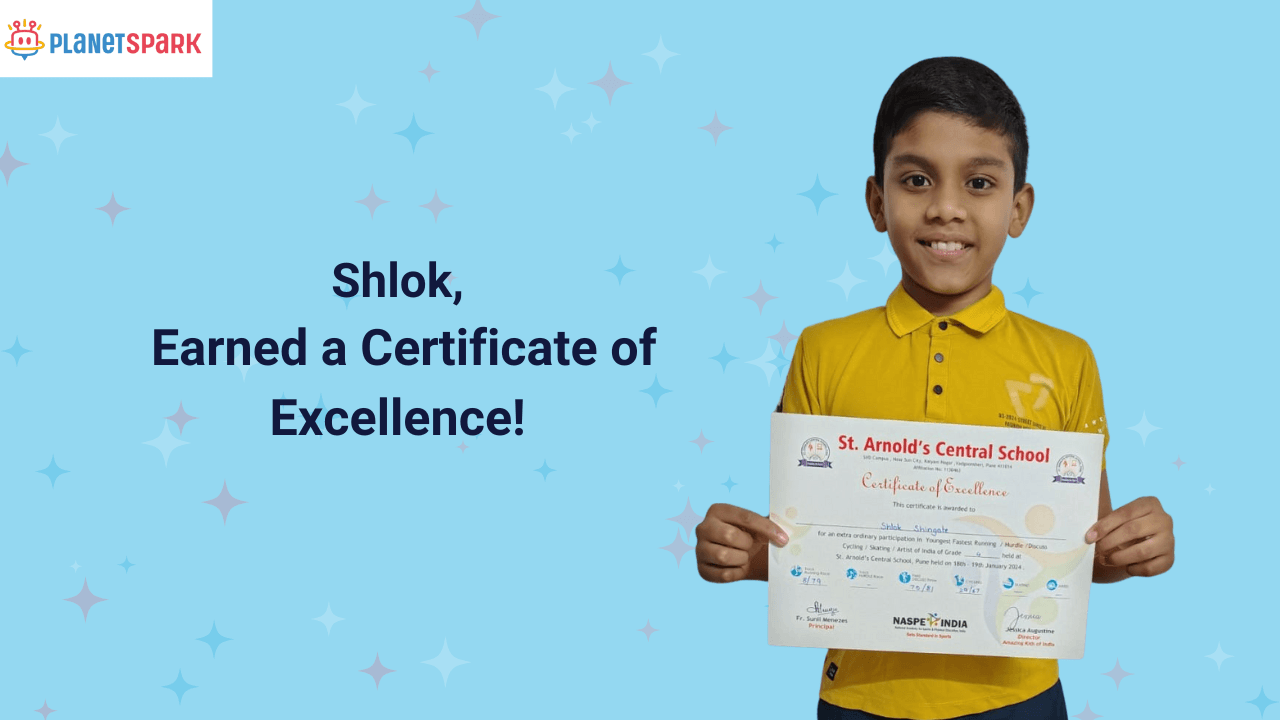
Shlok’s Math Success Story: Growing Confidence Through Reasoning Skills
Shlok’s journey highlights the power of strong reasoning skills in math learning. By focusing on understanding concepts and solving problems step by step, he improved his logical thinking and confidence.
His progress was recognized when he earned a Certificate of Excellence, reflecting the growth of his reasoning and analytical skills. Shlok’s success shows how developing reasoning skills helps kids approach math with clarity and confidence.
Conclusion: Growing Smarter with Reasoning Skills
Reasoning skills are essential for confident problem solving, clear thinking, and smart decision making. Whether it is a child learning new concepts or a working professional handling daily challenges, reasoning skills support success at every stage of life.
Understanding the reasoning skills meaning helps learners see the value of logical thinking. Through consistent practice, engaging activities, and structured learning, anyone can learn how to develop reasoning skills effectively. Over time, this also explains how to improve reasoning skills naturally and confidently.
Strong reasoning and analytical skills help kids grow into confident thinkers and professionals become better decision makers. By nurturing these skills early and strengthening them regularly, learners build a foundation for lifelong success, smarter thinking, and confident problem solving.