
What Are Supplementary Angles? Learn Geometry Clearly with PlanetSpark
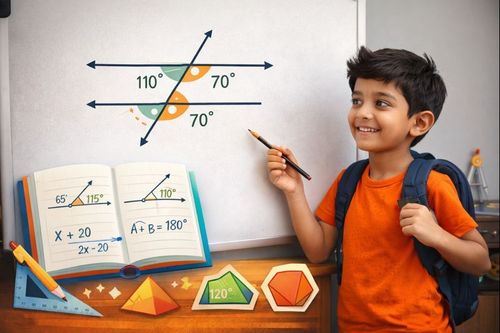

Supplementary angles create one of the first big ideas students meet in geometry. Learners see this topic in middle school, yet many carry confusion for years. The confusion grows when students memorize rules instead of understanding ideas. This blog explains the concept step by step using clear words and short sentences. You will learn how these angles work, how to solve problems, and where you see them in real life. This guide also shows how structured learning helps students master geometry with confidence.
Understanding Supplementary Angles Clearly
What Is a Supplementary Angle?
The definition of supplementary angles stays simple. Two angles become supplementary when their total equals 180 degrees. That rule never changes.
The angles may touch each other. They may also stay apart. Their position does not matter. Only the sum matters.
For example, one angle measures 50 degrees. Another angle measures 130 degrees. Their total equals 180 degrees. These two angles form a supplementary pair.
This rule helps students solve many geometry problems with ease.
Students often ask, what is a supplementary angle in easy language? One angle becomes supplementary when it joins with another angle to make 180 degrees.
Think about a straight road. The road creates a straight angle. That angle measures 180 degrees. If you divide that straight angle into two parts, each part becomes supplementary to the other.
This idea helps students visualize the concept without stress.
Supplementary Angles on a Straight Line
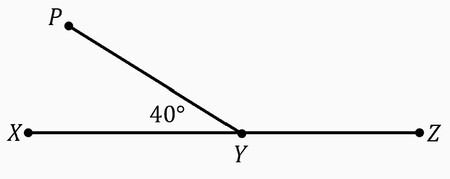
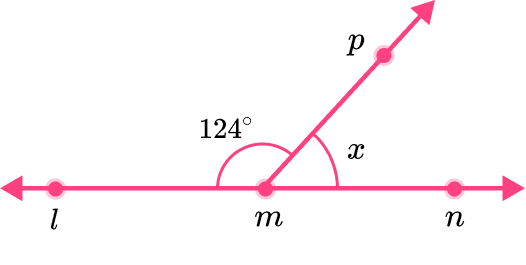
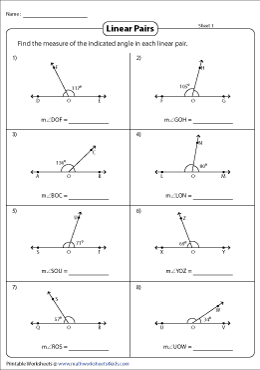
A straight line always measures 180 degrees. When two angles lie next to each other on a straight line, they form a linear pair.
Linear pairs always create supplementary angles. The angles share one common side. Their other sides form a straight line.
For example:
- Angle A = 65 degrees
- Angle B = 115 degrees
The total equals 180 degrees. The relationship stays clear.
This rule helps students identify angle pairs quickly during exams.

Solving Problems Using Supplementary Angles
Solving geometry problems becomes easier when students follow a clear method. Many students fear angle questions because they try to solve them mentally or skip steps. This habit causes errors. A step-by-step approach helps students stay calm and accurate. Supplementary angles problems follow a fixed logic. When students learn this logic, they solve questions with confidence.
Step-by-Step Method to Find Supplementary Angles
Problem-solving works best when students follow a structure. Each step builds clarity and avoids confusion.
Step 1: Identify the relationship
The first step involves observation. Students must look at the diagram or read the question carefully. They should ask simple questions:
- Do the angles lie on a straight line?
- Does the question mention a straight angle?
- Does the question say the sum equals 180 degrees?
If the answer to any of these questions is yes, the angles form supplementary angles. This step matters because not all angle pairs are supplementary. Correct identification prevents wrong calculations.
Students should also draw a diagram if one is missing. A simple sketch helps them see the straight line clearly.
Step 2: Form an equation
After identifying the relationship, students move to the equation stage. This step requires discipline and clarity.
Students should:
- Write the expressions of both angles
- Add them together
- Set the total equal to 180 degrees
This step works for both numeric and algebraic problems. Writing equations reduces mental load. It also prevents careless mistakes.
For example:
- Angle A = (x + 15)
- Angle B = (2x − 15)
Equation:
(x + 15) + (2x − 15) = 180
The plus and minus signs cancel neatly. This process keeps the math simple.
Step 3: Solve carefully
This step requires patience. Students should solve the equation step by step.
Helpful habits include:
- Simplifying one side at a time
- Avoiding shortcuts
- Checking calculations
Once students find the value of the variable, they must substitute it back. This final check confirms accuracy.
This method reduces mistakes and saves time during exams.
Sample Questions and Solutions
Practice strengthens understanding. Examples help students see how the steps work in real problems.
Example 1
Angle A measures 72 degrees. The angle forms a straight line with another angle.
Find the other angle.
Solution:
- A straight line measures 180 degrees
- Subtract the given angle from 180
Calculation:
180 − 72 = 108
The other angle measures 108 degrees.
This problem shows how simple subtraction works when one angle is known.
Example 2
Angle A = (x + 20)
Angle B = (2x − 20)
The angles form a straight line.
Solution:
Step 1: Add the expressions
(x + 20) + (2x − 20)
Step 2: Simplify
3x = 180
Step 3: Solve
x = 60
Step 4: Substitute the value
Angle A = 60 + 20 = 80 degrees
Angle B = 120 − 20 = 100 degrees
The angles add up to 180 degrees, so the answer is correct.
PlanetSpark Maths Classes that make geometry easy and fun. Book Your Free Trial Call Now.
Why This Method Works Well for Students
This structured approach helps students in many ways:
- It builds confidence
- It improves accuracy
- It reduces exam stress
- It works for all difficulty levels
Students stop guessing answers. They rely on logic instead. Over time, they solve problems faster.
Common Errors to Avoid While Solving
Students often make small mistakes that change the final answer. Awareness helps prevent them.
Common errors include:
- Forgetting to set the sum equal to 180
- Mixing supplementary and complementary angles
- Solving the equation but not substituting back
- Rushing through subtraction
Teachers encourage students to slow down and check each step.
Practice Builds Speed and Confidence
Students improve through regular practice. Solving different question types builds flexibility. Diagram-based questions sharpen observation skills. Algebra-based questions improve equation handling.
When students follow the same steps every time, geometry feels predictable. Supplementary angle problems stop feeling difficult. With practice, students begin to enjoy solving them.
This step-by-step method turns confusion into clarity and builds strong problem-solving skills in geometry.
Why Students Need Clear Angle Concepts
Geometry looks simple at first. Lines and shapes appear easy to draw. Many students feel confident during early lessons. Problems begin when angle rules appear without explanation. Teachers often move fast. Students start memorizing instead of thinking.
Angles form the base of geometry. When students misunderstand angles, they struggle with bigger topics later. Exams test understanding, not memory. Clear concepts help students solve questions with speed and accuracy.
This topic matters because angle relationships appear in almost every geometry chapter. A strong base helps students avoid fear and build interest in maths.
Where Supplementary Angles Are Used
Students use this angle relationship in school exams. Teachers test it in worksheets and assessments. Competitive exams also include such questions.
Students also see this idea in daily life. Roads, doors, books, and straight surfaces show angle relationships. When learning connects with real objects, students remember better.
Supplementary Angles in Advanced Geometry
As students move to higher classes, geometry becomes more logical and layered. Simple angle rules connect with complex figures and diagrams. Supplementary angles help students understand these connections clearly. In advanced geometry, this concept appears again and again in different forms. Using visuals and structured thinking makes learning easier.
Supplementary Angles in Parallel Lines and Transversals
Parallel lines and transversals form one of the most important chapters in geometry. This chapter relies heavily on supplementary angles.
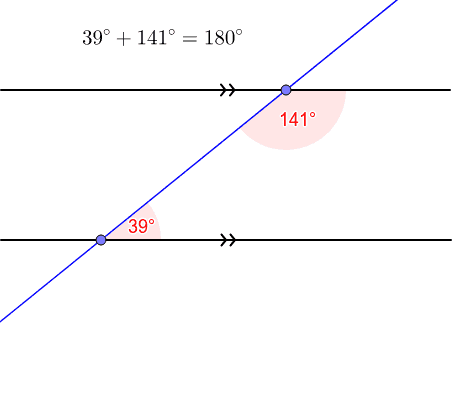
Students learn the types of angles in parallel lines, which include:
- Corresponding angles
- Alternate interior angles
- Co-interior angles
Key points students must remember:
- Co-interior angles lie on the same side of the transversal
- These angles always lie between the two parallel lines
- Co-interior angles always add up to 180 degrees
- This makes them supplementary angles
Example for clarity:
- One co-interior angle = 125°
- Other co-interior angle = 55°
- Total = 180°
Students who remember this rule solve diagram-based questions faster. They do not guess answers. They apply logic directly.
Role of Supplementary Angles in Polygons and Triangles
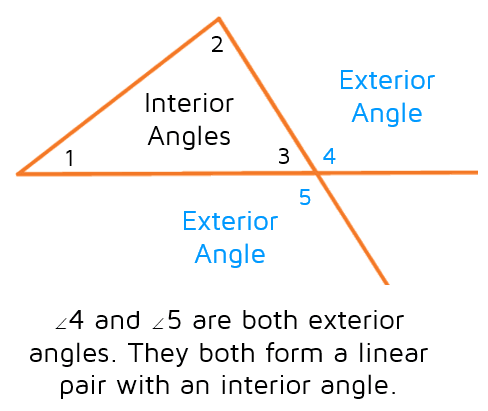
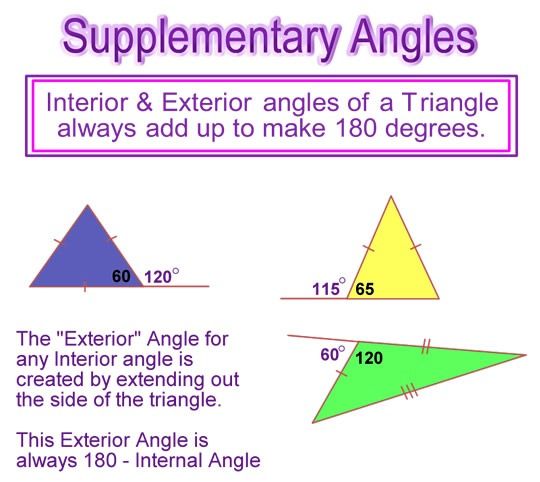
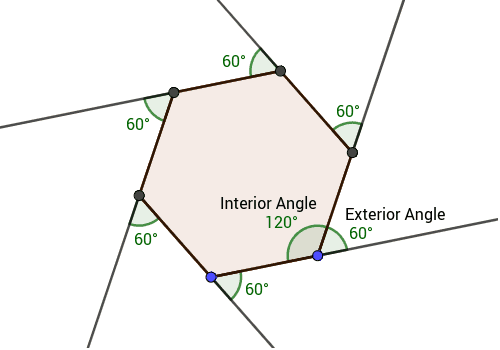
Supplementary angles also play a strong role in polygons and triangles. Students use this idea when they study interior and exterior angles.
Important uses in polygons:
- At every vertex, an interior angle and exterior angle form a straight line
- These two angles always form supplementary angles
- Their sum always equals 180 degrees
In triangles, students apply this rule often:
- An exterior angle and its adjacent interior angle form a linear pair
- These angles always add up to 180 degrees
- Students subtract the given angle from 180 to find the missing one
This concept prepares students for higher triangle properties. It also builds strong problem-solving habits.
Using Supplementary Angles in Complex Geometry Problems
Advanced geometry questions often look long and confusing. Supplementary angles help simplify these problems.
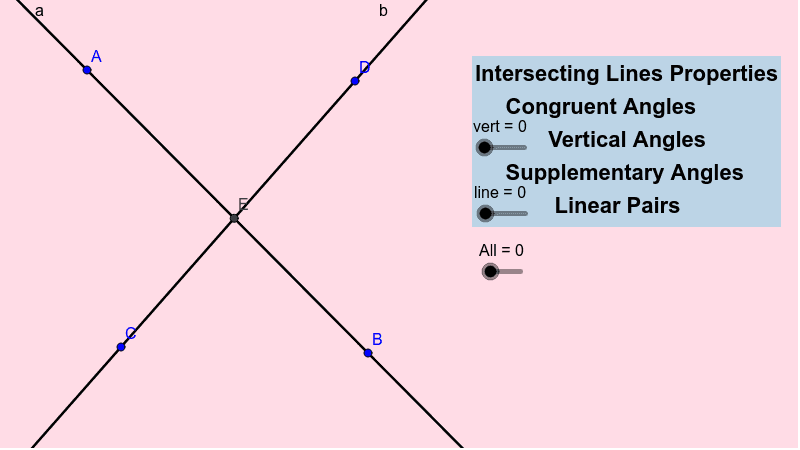
Students use a clear approach:
- Identify straight lines in the diagram
- Look for linear pairs
- Apply the 180-degree rule
- Form equations step by step
Benefits of this method:
- Reduces careless mistakes
- Saves exam time
- Improves accuracy
- Builds logical thinking
When students practice with diagrams and labels, they gain confidence. They stop fearing complex figures. Supplementary angles act as a reliable tool that connects basic and advanced geometry concepts smoothly.
From Numbers to Glory: A Young Mind That Stunned the World

Aurosree Siddhisha delivered a remarkable victory at the International Maths Olympiad, proving that brilliance knows no age. With PlanetSpark shaping the journey, passion met precision and the world took notice.
Why PlanetSpark Is the Best Place to Learn Maths Concepts
PlanetSpark focuses on concept clarity. Teachers explain ideas step by step. They ask questions and encourage thinking.
Students learn through discussion, not memorization. Teachers use examples that match the child’s level. This method builds confidence from the start.
Live one-on-one sessions allow students to ask doubts freely. Teachers correct mistakes immediately.
Unique Maths Learning Features at PlanetSpark
PlanetSpark designs lessons to suit each learner.
- One-on-one live classes
- Personalized learning plans
- Trained maths educators
- Regular assessments
- Detailed feedback
Teachers focus on understanding, not speed. Students gain clarity in topics like geometry and algebra.
Key Takeaways on Supplementary Angles
Supplementary angles form a core idea in geometry. Students use this concept across many chapters. Clear understanding reduces errors and boosts confidence.
Practice, visualization, and guidance help students succeed. Structured learning builds strong foundations. With the right support, every student can enjoy learning maths and solve problems with ease.
Frequently Asked Questions
Supplementary angles are two angles whose measures add up to 180 degrees. The angles may sit next to each other or appear separately. Their position does not matter, but their total always equals 180 degrees. Students use this rule to solve many geometry questions easily.
Students first check if the angles lie on a straight line. A straight line always forms 180 degrees. If the question mentions a total of 180 degrees, the angles are supplementary. Drawing a diagram and forming an equation helps confirm the answer quickly.
Yes, supplementary angles do not need to touch each other. They can appear in different places in a diagram. As long as the sum of their measures equals 180 degrees, they form a supplementary pair. This rule helps students solve advanced geometry problems.
PlanetSpark conducts live one-on-one classes with trained teachers. Teachers explain geometry concepts step by step using clear examples. They encourage students to ask questions and think logically. This approach helps students understand concepts instead of memorizing rules.
PlanetSpark offers personalized maths learning based on each child’s level. Teachers focus on building strong basics and clearing doubts early. Regular feedback helps students track progress. Parents see steady improvement in confidence and exam performance.
PlanetSpark builds strong foundations through structured and guided lessons. Students practice regularly with teacher support. This method improves problem-solving skills and logical thinking. Over time, students lose fear and gain confidence in maths.