
What Are Variables? Learn the Core Concept Easily | PlanetSpark
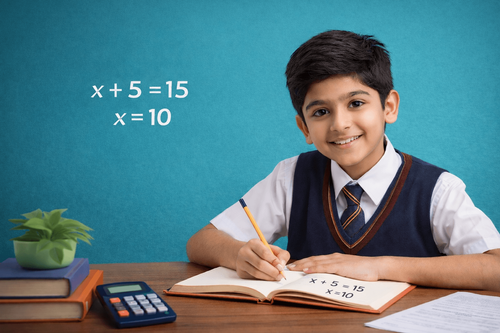

Table of Contents
Variables are everywhere in math, in science experiments, and even in video games. But what are variables? In simple words, variables are things that can change. They help us describe situations where values are not fixed but can vary. This concept may sound a little big, but it’s very easy once you break it down with simple examples and fun ideas.
In this blog, we will explain what variables are, why they are important, how they are used in different subjects (like math, science, and coding), and how kids can spot variables in real life. Along the way, we’ll also answer common questions and give plenty of examples.
What Are Variables? Start with the Basic Meaning
Variables are values that can change
or take different numbers or items, depending on the situation.
When something can vary, it’s a variable.
For example:
- The number of candies you have today might be 10.
- Tomorrow, it might be 15.
- The number changes - so it is a variable!
In math and science, variables let us write formulas and rules that work for different situations.
Think of a variable as a “placeholder” or a box that can hold different values.
Variables in Math: Simple and Fun
In math, variables are often used as symbols (like x, y, a, or n) that stand in for numbers we don’t know yet or that can change.
For example:
x + 5 = 10
Here:
- x is a variable
- That means it can be a number that makes the equation true
- In this case, x = 5
Variables help us write math rules that work in many cases - not just one.
Why Do We Use Variables in Math?
Variables are useful because they:
- Let us write reusable rules
- Help us solve problems where numbers change
- Make patterns easier to notice
For example, the rule for adding 2 to any number:
x + 2
Here, x can be 1, 5, 100 - the rule still works!
Help your child master maths concepts with confidence, start learning with PlanetSpark today.
Variables in Science: Measuring What Changes
In science, variables help us keep track of things that change during experiments.
There are two big types of variables in science:
Independent Variable
This is the part that you change on purpose in an experiment.
Example:
If you test how plants grow with different amounts of water, the amount of water is the independent variable.
Dependent Variable
This is what you measure or watch carefully.
Example:
In the plant experiment, the height of the plant depends on the water.
Scientists often write it like:
- Independent Variable → water amount
- Dependent Variable → plant height
There can also be controlled variables, things you keep the same so the test is fair, like the type of plant or amount of sunlight.
Variables in Programming: Telling Computers What Can Change
If you’re curious about coding, you’ll meet variables there, too!
In programming, a variable is a name that stores a value, and that value can change as the program runs.
For example:
score = 0
score = score + 10
Here:
- score is a variable
- It starts at 0
- Later, it becomes 10
Variables in programming work like boxes in a computer’s memory that can store numbers, words, or other information.
Make maths simple and fun for your child. Join PlanetSpark’s expert-led classes now.
Everyday Examples of Variables
Let’s see how variables show up in your everyday life:
Example 1: Temperature
- Temperature = 30°C today
- Temperature = 25°C tomorrow
The temperature is a variable because it changes.
Example 2: Game Score
- Your Score = 150
- Your Score = 200
Your game score changes, so it’s a variable!
Example 3: Number of Items in a Cart
- Items in cart = 3
- Items in cart = 5
This changes whenever you add or remove items, another variable!
Variables in Algebra: How They Help Us Solve Problems
Algebra is all about working with variables. You’ll often see expressions like:
y = 2x + 3
In this rule:
- x and y are variables
- If x = 1, then *y = 2(1) + 3 = 5
This tells us how y changes when x changes.
Graphing such equations shows patterns and relationships between variables. This is a powerful tool that helps in science, economics, engineering, and everyday problem-solving.
Build strong math foundations early. Sign up for PlanetSpark’s guided learning program.
How Variables Make Learning Easier
Variables help simplify complex patterns. Instead of writing many specific numbers, we use variables to make general rules.
For example:
Instead of saying “10 + 5 = 15”, “20 + 5 = 25”, and “30 + 5 = 35”,
We write:
x + 5
This covers every case!
It helps your brain focus on patterns and logic, not just memorizing numbers.
Variables in Graphs: Seeing Change Visually
Once you understand variables, you can show them on graphs.
Example:
- Independent variable (x-axis): time spent studying
- Dependent variable (y-axis): test score
You will see that as one changes, the other may change too. Graphs help you see relationships between variables — a big step from just writing formulas.
Turn confusing math problems into clear solutions. Enroll your child with PlanetSpark.
Why Students Need to Learn About Variables
Variables are a foundation for many school subjects:
- Math: algebra, geometry, functions
- Science: experiments, data tracking
- Coding: storing and changing values
- Economics: predicting change
- Statistics: analyzing data
Learning variables builds problem-solving skills, something you’ll use throughout life!
How Variables Help Us Think Smarter
Variables do more than just store numbers. They help us think logically and understand how one thing affects another. When kids learn variables, they start asking better questions like “What happens if this changes?” or “Why did the result become different?”
For example, if you change how long you study every day, your test score might change too. Here, the study time is a variable, and the test score is another variable. Thinking this way helps students understand cause and effect, which is an important life skill.
Variables teach kids that answers don’t always stay the same, they depend on conditions.
Variables and Patterns: Seeing Repetition Clearly
Patterns become much easier to understand with variables. Instead of listing numbers again and again, variables help represent the pattern in one simple rule.
Example pattern:
2, 4, 6, 8, 10
Instead of writing all numbers, we can say:
2 × n
Here:
- n is a variable
- It can be 1, 2, 3, 4, or any number
- This helps kids recognize patterns faster and prepares them for advanced math topics like sequences and functions.
Solving Simple Word Problems Using Variables
Variables help solve word problems easily.
Example:
A pencil costs ₹5. How much do x pencils cost?
Instead of guessing:
5 × x
If:
x = 3 → cost = 15
x = 10 → cost = 50
The variable helps answer any version of the problem.
This builds confidence in problem-solving.
Give your child the confidence to solve equations and variables. Join PlanetSpark today.
Variables and Change Over Time
Variables are especially useful when tracking changes over time.
Examples:
- Age
- Height
- Savings
- Speed
Your age increases every year. Your savings change when you add or spend money. These changes are tracked using variables.
Understanding this helps kids connect math with real life.
Common Mistakes Kids Make with Variables (And How to Fix Them)
Mistake 1: Thinking variables are fixed numbers
Fix: Remind kids that variables can change.
Mistake 2: Getting confused between variable names
Fix: Explain that x, y, or a are just labels like names.
Mistake 3: Mixing up variables and constants
Fix: Show examples side by side (changing vs non-changing).
Correcting these early makes learning much easier later.
How PlanetSpark Makes Variables Easy for Kids
PlanetSpark focuses on concept clarity rather than memorization.
The key USPs of PlanetSpark’s maths course include:
Live interactive sessions led by experienced educators who introduce mental-calculation shortcuts (including Vedic maths tricks) and connect them directly to NCERT/CBSE exam problems.
Customised practise modules focusing on arithmetic operations, algebraic expressions, quadratic equations, and roots, so students apply the tricks within actual syllabus-aligned questions.
Performance analytics & error-tracking tools that identify recurring calculation mistakes, helping students focus on improving speed and accuracy.
Dedicated doubt-resolution and revision-boosters, which means that if any student is lagging on applying the tricks, the mentor provides targeted support and extra practise.
Board-exam simulators with time-bound mock tests, where students learn to use tricks under realistic exam conditions, building confidence and speed.
Instead of just solving equations, kids understand why variables exist and how to use them confidently.
This strong foundation helps them succeed in math, science, and coding.
Make learning maths engaging and stress-free. Get started with PlanetSpark now.
Final Takeaways
Understanding what variables are helps children see how numbers, values, and ideas can change in real life. Variables make math, science, and even coding easier by allowing students to represent unknowns and track changes clearly. Instead of memorizing formulas, kids learn to think logically, solve problems step by step, and understand patterns around them. Once the concept of variables becomes clear, many complex topics feel simpler and more approachable. Building this foundation early gives children the confidence to explore advanced learning with curiosity and clarity.
Frequently Asked Questions
Variables are symbols or letters that stand for values that can change. Instead of using a fixed number, a variable allows us to use different values when solving problems. For example, the letter x can represent any number. Variables help children understand patterns and relationships easily. They make learning math more flexible and interesting.
Variables are used in math to solve problems where the value is unknown or can change. They help us write rules, equations, and formulas in a simple way. Without variables, we would need to write the same math again and again. Variables make problem-solving faster and clearer. They also help students think logically.
A variable is a letter that represents a number. For example, in x + 5 = 10, the variable x stands for the number 5. Once we find the value, the variable helps us understand the solution. This makes learning math more logical and fun. It also prepares students for algebra.
Yes, variables can change their value depending on the problem. The same variable can represent different numbers in different situations. That is why they are called “variables.” This flexibility helps students solve many problems using the same rule. It also improves problem-solving skills.
No, variables are used in many subjects like science, coding, and even real life. In science, variables help measure changes in experiments. In coding, variables store information like scores or names. Learning variables helps children think clearly across subjects. They are an important learning tool.
For kids, variables are usually taught as letters that represent numbers. Later, students learn about different types such as independent and dependent variables. At a beginner level, understanding that a variable can change is most important. This builds a strong learning base. It makes advanced topics easier later.
The question “what are variables” means understanding how letters are used to represent numbers. It helps students learn algebra easily. Variables allow children to express math ideas in a shorter and smarter way. This concept is a key part of higher-level learning. It builds confidence in math.
Variables help by turning word problems into simple equations. Instead of guessing, students use variables to find exact answers. This improves logical thinking and accuracy. Variables also help break down complex problems into easy steps. They make problem-solving less confusing.
No, learning variables becomes easy when explained with simple examples. When children connect variables to real-life situations, they understand faster. Practice and clear explanation make variables fun to learn. With the right guidance, kids gain confidence quickly. Learning feels less stressful.
Children can start learning variables once they are comfortable with basic numbers and operations. Introducing variables early helps them prepare for algebra and coding. It trains their brain to think logically. Early learning makes advanced topics much easier later. It supports long-term academic growth.