
What Is Curvature in Maths? Simple Explanation with PlanetSpark

Table of Contents
- What Is Curvature and Why Students Struggle With It
- Understanding Curvature Through Shapes and Graphs
- Common Mistakes Students Make with Graphs
- Curvature in Calculus and Higher Maths
- Why Curvature Matters Beyond Exams
- Nirvana Mehta Wins First Prize with Confident Poem Recitatio
- How PlanetSpark Builds Maths Clarity for Students
- Conclusion
Graphs confuse many students. Curves bend. Slopes change. Questions feel tricky. This stress usually starts with one unclear idea: what is curvature? Students often copy formulas without understanding graphs. They mix slope with bending. Exams then feel hard even after practice. This problem does not come from low ability. It comes from weak basics.
This blog fixes that gap. You will clearly understand what is curvature, why it matters, and how to master it step by step. The structure follows top-ranking educational blogs. The language stays simple. Sentences stay short. Examples stay real. By the end, curves will no longer feel scary.
What Is Curvature and Why Students Struggle With It
Curvature often marks the point where students begin to feel unsure in maths. Until this stage, graphs feel familiar. Lines rise or fall. Shapes look predictable. Then curves appear, and questions start asking students to explain how a graph bends instead of just where it goes. This shift causes confusion. Many students assume the topic itself is difficult, but the real problem lies in unclear foundations. Most students never receive a proper explanation of what is curvature before formulas enter the picture.
Understanding curvature requires meaning before calculation.
What Curvature Really Means
At its core, what is the meaning of curvature is simple. Curvature describes how much a line or curve bends at a particular point. A straight line does not bend at all, so it has zero curvature. A curve that turns sharply bends a lot in a short distance, so it has high curvature. A curve that turns slowly bends gently, so it has low curvature.
Students already understand this idea in daily life. They feel it while walking on winding roads or cycling on curved tracks. Maths only gives a formal way to describe the same experience.
What Is Curvature in Maths
In maths, the idea becomes more precise. What is curvature in maths refers to how fast a curve changes its direction as you move along it. This definition helps students separate curvature from other familiar concepts. Curvature does not describe height or steepness. It describes turning.
This distinction matters because many students rely only on slope to understand graphs. Slope tells whether a graph rises or falls. Curvature tells how the direction of that rise or fall changes. Two graphs may both rise upward, yet one bends smoothly while the other twists sharply. Curvature explains this difference clearly.
Why Students Confuse Curvature with Slope
Confusion between slope and curvature causes many mistakes. Students often believe that a steep graph must have high curvature. This belief is incorrect. A straight but steep line still has zero curvature because it does not bend. Curvature depends on change in direction, not steepness.
When students use slope where curvature is required, answers go wrong. Over time, this repeated confusion lowers confidence and increases fear of graph-based questions.
How Early Formula Use Creates Confusion
Another major reason students struggle lies in how curvature gets introduced in classrooms. Teachers often begin with formulas and symbols. Students then try to memorize expressions without understanding what those expressions describe. This approach breaks learning.
When exams test conceptual understanding through graphs or real-life problems, memorized formulas fail. Students freeze because they never understood the idea behind them. Learning what is curvature visually and verbally must come before learning how to calculate it.

Why Curvature Feels Abstract to Students
Curvature often feels abstract because students rarely connect it to real experiences. They see curves only as drawn graphs, not as paths, turns, or motion. Without context, the topic feels distant and difficult.
Once teachers connect curvature to roads, tracks, or moving objects, clarity improves quickly. Students start seeing graphs as stories of motion and change rather than confusing drawings.
Why Understanding Curvature Early Matters
Curvature supports many future topics. It strengthens graph interpretation skills. It prepares students for calculus. It supports physics concepts related to motion and turning paths. Students who clearly understand what is curvature stop guessing and start predicting graph behavior.
Fear in maths does not come from difficulty. It comes from confusion. When students understand meaning before formulas, confidence grows naturally. Curvature stops feeling scary. Graphs begin to make sense. With the right explanation, students can carry this clarity into higher-level maths with ease.
Understanding Curvature Through Shapes and Graphs
Once students understand the basic idea of curvature, the next step involves seeing it in shapes and graphs. This stage plays a crucial role in building confidence. Many students understand definitions but still struggle when they see actual graphs or shapes in exams. The reason stays simple. They do not know how to observe curvature visually. Maths does not rely only on numbers. It also relies on shape awareness.
Understanding curvature through shapes and graphs helps students connect theory with reality. It turns abstract ideas into clear patterns.
Curvature of a Straight Line
Let us begin with the simplest shape. A straight line never bends. Its direction stays the same at every point. Because there is no turning, the curvature equals zero.
This idea sounds basic, but it matters a lot. Many students forget this rule during problem-solving. They see steep straight lines and assume high curvature. This assumption leads to errors.
A straight line may rise sharply or fall quickly, but it still does not turn. So, it still has zero curvature. Remembering this fact helps students eliminate wrong options quickly in multiple-choice questions.
Curvature of a Circle
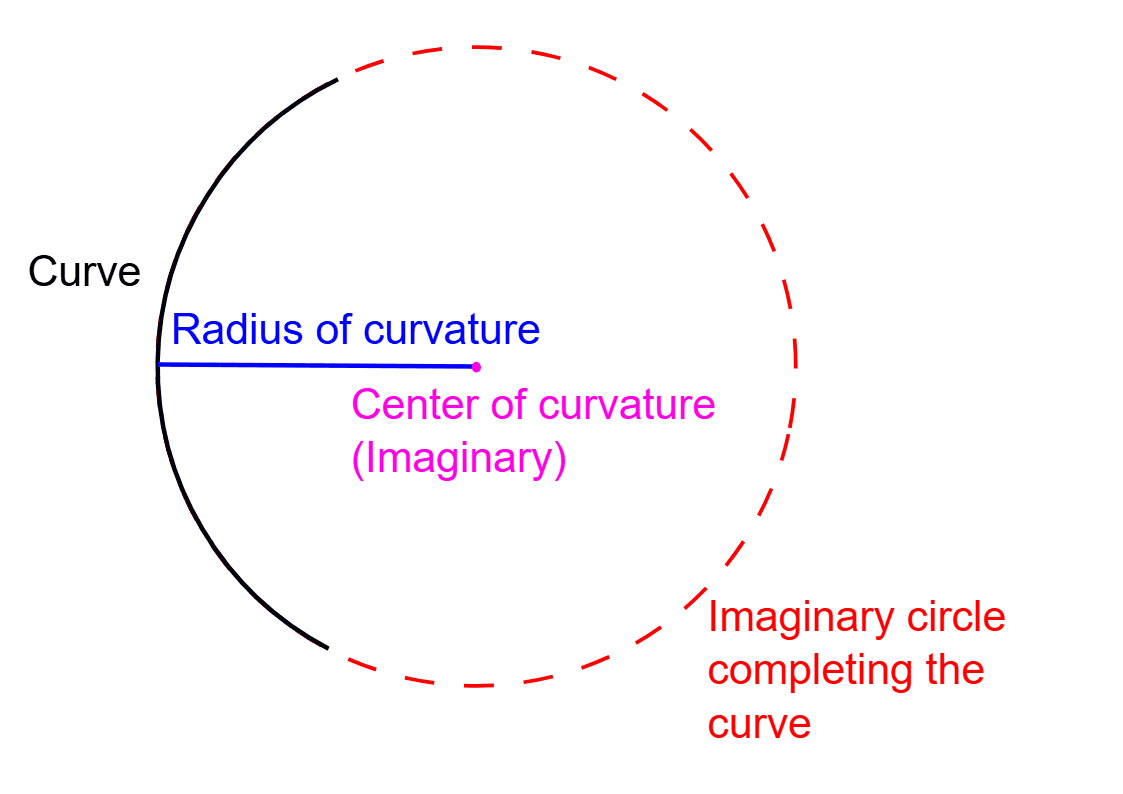
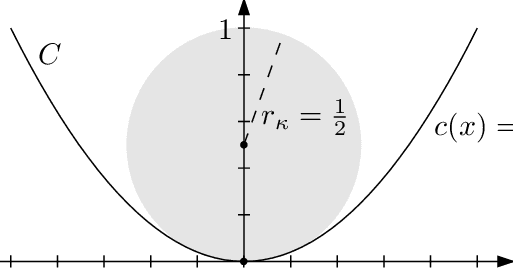
A circle gives one of the clearest examples of curvature. Every point on a circle bends in the same way. The direction changes at a steady rate. Because of this, a circle has constant curvature.
The curvature of circle formula helps describe this idea mathematically:
[\text{Curvature} = \frac{1}{r}]
Here, r represents the radius of the circle.
A small radius means tight bending.
A large radius means gentle bending.
This rule matches real-life experience. A small coin bends more sharply than a large wheel. Students remember this idea easily because it feels logical.
Why Radius Controls Curvature
Radius decides how tight or loose a curve feels.
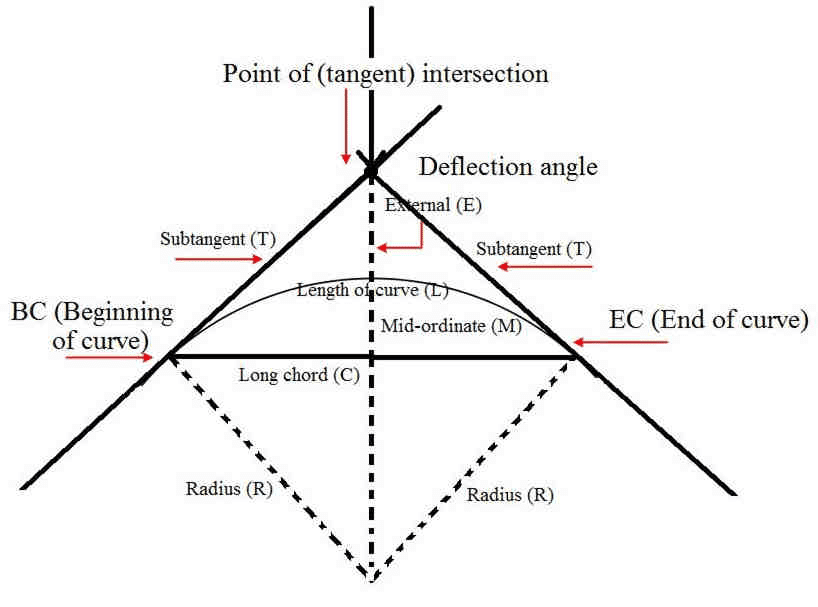
Imagine driving on two roads. One road turns sharply within a short distance. Another road curves slowly over a long stretch. The sharp road has smaller radius and higher curvature. The gentle road has larger radius and lower curvature.
Curvature gives engineers a way to compare these turns. Students who link this idea to roads and tracks remember it better than memorizing formulas alone.
Curvature in Non-Circular Shapes
Most graphs in school maths do not look like circles.
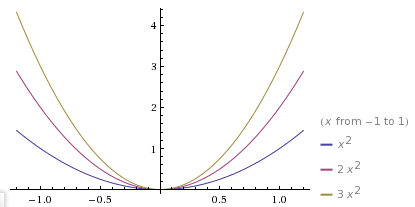
Parabolas, sine curves, and cubic graphs change curvature from point to point. Some parts bend sharply. Some parts flatten out. This change creates confusion if students expect constant curvature everywhere.
In these curves, curvature depends on position. Maths checks bending at each point instead of across the whole curve. This idea helps students understand why graphs behave differently in different regions.
Reading Curvature from Graphs
Graphs provide strong visual clues about curvature.
- Flat regions show low curvature
- Sharp turns show high curvature
- Smooth gradual bends show moderate curvature
Students should always pause and look at the graph before calculating. Visual prediction builds confidence and reduces careless mistakes.
Understanding what is curvature allows students to describe graphs instead of guessing answers.
Common Mistakes Students Make with Graphs
Many students rush into calculations and ignore shape.
They often:
- Skip sketching rough graphs
- Focus only on numbers
- Miss turning behavior
- Ignore flat sections
These habits weaken graph understanding. Teachers often advise students to “look at the graph first” for this reason.
Why Shapes Build Stronger Curvature Intuition
Shapes act as training tools for the brain.
When students study straight lines, circles, and curves side by side, patterns emerge. They start comparing bending naturally. Over time, this habit strengthens intuition.
Students who learn curvature through shapes perform better in calculus and physics later. They do not rely on memorization. They rely on understanding.
Understanding curvature through shapes and graphs forms a strong bridge between visual thinking and mathematical reasoning.
Curvature in Calculus and Higher Maths
How calculus connects with curvature
Calculus studies change. Curvature studies the change in direction. Slope comes from the first derivative. Curvature depends on how the slope changes. This link helps students move smoothly toward advanced topics.
Role of derivatives in curvature
The derivative of curvature shows how bending itself changes along a curve. It helps locate points where curves bend more or less. Engineers and scientists rely on this idea. Students fear derivatives because the meaning stays unclear. Visual learning reduces this fear.
Curvature and the second derivative
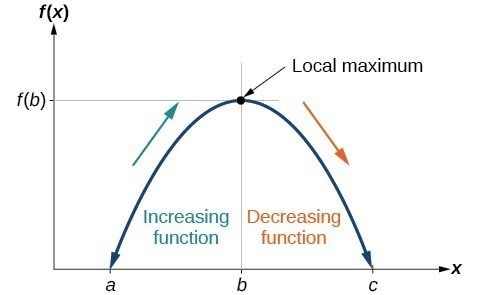
Second derivatives give strong curvature clues.
- Positive value shows upward bending
- A negative value shows downward bending
- Zero value shows a change in bending
These clues help identify important points on graphs.
Inflexion points explained simply
An inflection point marks a change in curvature direction. A curve may bend upward first. Then it bends downward. The turning point between these bends matters in exams and applications.
Curvature vs slope comparison
Slope gives direction. Curvature completes shape understanding. Students who learn curvature early handle calculus better. This step forms a strong introduction to calculus for school students.
Why Curvature Matters Beyond Exams
Curvature in daily life
Curvature appears everywhere.
- Roads curve for safety
- Railway tracks avoid sharp bends
- Roller coasters control speed
- Phone screens use smooth curves
Maths explains these choices clearly.
Curvature in physics
Physics uses curvature to study motion.
- Cars turning follow curved paths
- Planets move in curved orbits
- Balls travel along curved paths
Higher curvature means tighter turns. Lower curvature means smoother motion.
Curvature in engineering and architecture
Engineers depend on curvature.
- Bridges use curved arches
- Tunnels follow smooth curves
- Tracks avoid sudden bends
Mistakes in curvature lead to real danger. Strong maths basics prevent errors.
Curvature and problem-solving skills
Understanding curvature improves:
- Logical thinking
- Visual reasoning
- Application skills
- Exam accuracy
These skills support real-life applications of maths across subjects and careers.
Nirvana Mehta Wins First Prize with Confident Poem Recitation

Nirvana Mehta shines as the First Prize Winner in the Intersection Poem Recitation category, showcasing remarkable confidence, expression, and voice control. Her journey reflects the power of strong communication and public speaking skills nurtured through consistent practice and guided learning at PlanetSpark.
How PlanetSpark Builds Maths Clarity for Students
PlanetSpark focuses on understanding, not memorization. It trains students to think and explain.
At PlanetSpark, teachers guide students to describe curves in words before using formulas. This habit builds deep clarity. Students learn what is curvature through visuals, real-life examples, and guided questions.
PlanetSpark uses discussion-based learning. Students speak their reasoning aloud. Teachers correct gaps instantly. Lessons move at the right pace.
Parents trust PlanetSpark for online maths classes for students because progress stays visible. Confidence grows steadily. Maths stops feeling scary. Foundations become strong.
Conclusion
Curvature explains how curves bend and change direction. It connects geometry, calculus, and real life. Students who understand what is curvature read graphs better and solve problems faster. Clear basics remove fear. Right guidance builds confidence.
PlanetSpark provides that guidance. It turns confusion into clarity and prepares students for advanced maths with ease.
Also Read:
- Tips to Improve Speed and Accuracy in Maths Quiz for Class 7
- How to Build a Strong Foundation in Basic Math Concepts
Frequently Asked Questions
Curvature in maths explains how much a curve bends at a specific point. A straight line has no curvature because it does not bend at all. Circles and curved graphs show different levels of bending. Beginners understand curvature best by comparing shapes and observing graphs visually.
Many students struggle with curvature because they try to memorize formulas without understanding the idea behind them. They often confuse slope with bending, which leads to wrong conclusions. Graph-based questions increase this confusion. Clear visual explanation helps fix this issue.
PlanetSpark teaches curvature using visuals, real-life examples, and guided discussions. Students explain their thinking aloud during class, which helps teachers correct gaps instantly. This method improves clarity and long-term understanding. Learning feels simple and stress-free.
PlanetSpark focuses on concept clarity rather than rote learning. Students practice step by step with expert guidance and regular feedback. This approach removes fear and builds confidence over time. Students start enjoying maths instead of avoiding it.
PlanetSpark builds strong basics that prepare students for calculus topics. Concepts like graphs, derivatives, and curvature are taught gradually. Students understand the logic behind formulas instead of memorizing them. This method makes higher maths easier to handle.
Students can start learning basic curvature concepts in middle school when they begin working with graphs. Early exposure builds strong visual and logical skills. PlanetSpark adapts lessons based on age and learning level. This ensures steady progress without pressure.