
10 Points on Self-Confidence for Students | PlanetSpark
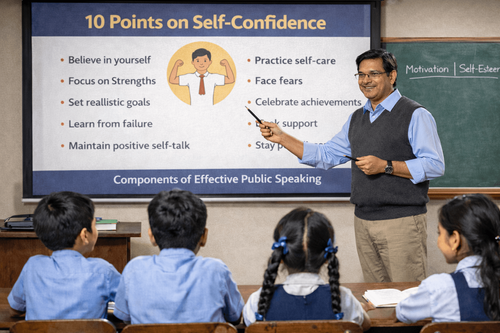

Table of Contents
- Understanding Self-Confidence Through the Lens of Communicat
- The 10 Points on Self-Confidence Every Student Should Master
- Why Confidence Development Must Go Beyond Academics
- How PlanetSpark Builds Confidence Through Personality Develo
- Personalised Learning That Accelerates Confidence
- Learning Beyond Classes: Communities and Recognition
- A Confident Voice Is a Lifelong Superpower
Self-confidence is not an inborn trait but a skill that can be learned and strengthened through practice. When parents, educators, and students search for 10 points on self-confidence, they seek practical, actionable ideas that help learners speak clearly, express opinions, handle mistakes positively, and interact comfortably. This blog goes beyond surface motivation to explain what self-confidence truly means, why it matters for students, and how communication practice builds lasting confidence. You’ll find structured explanations, real-life examples, and strategies designed for students. The guide also shows how a personality development and public speaking ecosystem like PlanetSpark supports confidence-building step by step across academic, social, and leadership contexts.
Understanding Self-Confidence Through the Lens of Communication
Self-confidence is the belief in one’s ability to express thoughts, handle situations, and take action without excessive fear or hesitation. For students, confidence is closely linked to communication. A child may understand concepts well but still struggle if they cannot express ideas clearly in English or speak comfortably in front of others.
This is why most educators agree that confidence is not just an emotional trait,it is a communication skill. When children learn how to structure sentences, control their voice, maintain eye contact, and organise their thoughts, confidence naturally follows.
Students searching for 10 points on self-confidence for students are usually dealing with real challenges such as:
Fear of speaking in class
Hesitation while answering questions
Low participation in group activities
Difficulty introducing themselves
Nervousness during presentations
Addressing these challenges requires consistent practice, guidance, and feedback,exactly what structured public speaking and spoken English programs are designed to provide.
The 10 Points on Self-Confidence Every Student Should Master
1. Clear Self-Expression Builds Inner Confidence
True confidence begins when students can express their thoughts clearly and without hesitation. Many students struggle with confidence not because they lack ideas, but because they find it difficult to organise thoughts into meaningful sentences. When a child cannot express themselves, they often feel misunderstood, ignored, or insecure.
Practising sentence formation, storytelling, structured speaking, and everyday conversations helps students turn thoughts into words with ease. As they learn how to communicate clearly, they begin trusting their own voice. This trust gradually transforms into inner confidence, making students more willing to participate in class discussions, group activities, and presentations.
2. Body Language Shapes How Confidence Is Perceived
Confidence is communicated as much through body language as through words. A student may speak well, but poor posture, lack of eye contact, or nervous gestures can weaken the message. Body language signals how confident a speaker feels,even before they start talking.
Teaching students how to stand straight, maintain eye contact, use natural hand gestures, and control facial expressions helps them appear more confident. Over time, this outward confidence reinforces inner belief. When students see themselves being perceived as confident, they start feeling confident internally as well.
3. Voice Modulation Enhances Authority
A shaky, low, rushed, or monotone voice often reflects nervousness and lack of confidence. Students may know the right answer but hesitate to speak because they fear sounding unsure or making mistakes. Voice modulation training helps students control pitch, pace, volume, and pauses.
When students learn to slow down, speak clearly, and emphasise key points, their speech sounds confident and authoritative. This not only improves public speaking skills but also helps students communicate effectively in classrooms, debates, and everyday interactions.
4. Emotional Awareness Strengthens Self-Belief
Self-confidence grows when students understand and manage their emotions instead of being controlled by them. Feelings such as fear, nervousness, excitement, or self-doubt are natural, especially while speaking in front of others. The problem arises when students do not know how to handle these emotions.
Social-Emotional Learning (SEL) helps students recognise what they are feeling and why. When children learn that nervousness is normal and manageable, they stop seeing it as a weakness. Emotional awareness builds resilience, helping students bounce back from mistakes and believe in their ability to improve.
5. Preparation Reduces Fear
Fear often comes from uncertainty. When students feel unprepared, their confidence drops instantly. Structured preparation,such as planning ideas, practising delivery, and rehearsing responses,gives students a sense of control.
Whether it is a speech, self-introduction, oral exam, or classroom response, preparation helps students know what to say and how to say it. Practising in a safe and supportive environment further reduces fear of judgment. The more prepared students feel, the more confident they become while speaking.
6. Constructive Feedback Encourages Growth
Feedback plays a crucial role in shaping a student’s confidence. Negative or vague feedback can discourage learners, while constructive, specific feedback helps them grow. When students are told exactly what they did well and what can be improved, they gain clarity and direction.
Supportive feedback shifts the focus from mistakes to progress. Students begin seeing errors as learning opportunities rather than failures. This mindset builds long-term confidence and motivates students to keep practising instead of giving up.
7. Leadership Opportunities Create Self-Assurance
Confidence grows when students are trusted with responsibility. Leadership opportunities,such as leading group discussions, presenting ideas, or coordinating activities,push students out of their comfort zones in a positive way.
Through leadership training, students learn assertiveness, empathy, teamwork, and decision-making. As they experience success in leading others, their self-belief strengthens. Leadership roles teach students that their voice matters and that they are capable of influencing others positively.
8. Consistent Practice Makes Confidence Habitual
Confidence is not built overnight. It develops through regular practice and repetition. Occasional speaking activities may boost confidence temporarily, but consistent practice turns confidence into a habit.
Daily speaking exercises, journaling, reflection, storytelling, and structured conversations help students internalise communication skills. Over time, confidence becomes natural rather than forced. Students stop overthinking and start expressing themselves effortlessly.
9. Safe Environments Encourage Risk-Taking
Students cannot build confidence if they are afraid of being judged or ridiculed. A safe, supportive environment allows learners to experiment, make mistakes, and learn without fear. Peer-supported spaces encourage students to speak up and take risks.
When students feel respected and accepted, they are more willing to try new things,whether it is speaking on stage, sharing opinions, or expressing creativity. This willingness to take risks is essential for confidence growth.
10. Recognition Reinforces Positive Behaviour
Acknowledging effort and improvement plays a powerful role in confidence-building. Recognition does not always have to be about winning or being the best,it can simply highlight progress and consistency.
When students see their growth being noticed and appreciated, they feel motivated to continue improving. Recognition reinforces positive behaviour and helps students associate communication efforts with success. Over time, this builds strong self-esteem and lasting confidence.
These 10 points on self-confidence for students form the foundation of effective communication, public speaking, and leadership skills. When practised consistently, they help students become self-assured individuals who can express ideas clearly, face challenges confidently, and succeed both academically and personally.
Why Confidence Development Must Go Beyond Academics
Traditional education focuses heavily on academics, but confidence is rarely taught directly. This gap often leads to students excelling in exams but struggling in interviews, group discussions, and leadership roles later in life.
A holistic curriculum focuses on:
Communication etiquette
Self-introduction skills
Goal setting
Peer interaction
Leadership development
Self-awareness
Critical thinking
Such an approach ensures that confidence is built as a life skill, not just a classroom requirement.
How PlanetSpark Builds Confidence Through Personality Development Course
Holistic Curriculum Beyond Academics
PlanetSpark’s curriculum focuses on real-world communication. Children learn how to introduce themselves confidently, interact with peers, express opinions respectfully, and think critically,all essential components of self-confidence.
Social-Emotional Learning (SEL) Based Design
Especially for younger learners, emotional awareness and regulation are emphasised. Children learn how to handle nervousness, fear, and self-doubt while speaking.
Practical, Activity-Based Learning
Mock interviews, role plays, journaling, feedback sharing, and real-life scenario simulations ensure that confidence is practised, not preached.
Leadership & Self-Presentation Training
Students participate in challenges that develop empathy, responsibility, teamwork, and assertiveness. Regular presentations and storytelling sessions help children own the stage.
Confidence Meter & Parent Consultations
Teachers and parents regularly discuss the child’s growth in confidence, communication, and leadership during structured PTMs.
Etiquette and Body Language Sessions
Eye contact, posture, tone modulation, and respectful communication are taught as part of complete personality grooming.
Personalised Learning That Accelerates Confidence
1:1 Personal Trainers for Every Child
Each student is paired with a certified communication expert who understands their learning style and personality. Immediate feedback and personal attention ensure faster improvement and deeper engagement.
Personalised Curriculum and Learning Roadmap
Assessments help identify gaps in grammar, fluency, confidence, and content structuring. Learning paths are regularly updated to match the child’s progress.
SparkX – AI-Enabled Video Analysis
Students upload speaking videos that are analysed for voice clarity, body language, grammar, organisation, and confidence. Detailed reports highlight strengths and improvement areas.
AI-Led Practice Sessions
Virtual AI coaches help students practise speeches, storytelling, and structured responses outside live classes, reinforcing confidence through repetition.
Spark Diary – Digital Journaling
Daily writing builds clarity of thought and expression, which directly enhances speaking confidence.
Gamified Learning
Vocabulary games, grammar challenges, and quizzes make learning enjoyable and consistent.
Structured PTMs and Progress Reports
Parents receive detailed evaluations covering content quality, critical thinking, grammar, body language, voice modulation, and confidence delivery.
Learning Beyond Classes: Communities and Recognition
PlanetSpark encourages collaborative learning through debate clubs, storytelling circles, comedy clubs, podcasting communities, and writing guilds. These platforms help students practise confidence socially.
Sparkline, the safe internal sharing platform, allows students to post speeches and writing while receiving moderated peer appreciation.
Regular contests, showcases, and open mic events provide real-world exposure and recognition, reinforcing self-belief.
A Confident Voice Is a Lifelong Superpower
Confidence is not about being perfect,it is about being comfortable expressing who you are. The 10 points on self-confidence for students discussed in this blog show that confidence is built through communication, emotional awareness, consistent practice, and supportive feedback.
When children learn how to speak clearly, think critically, and present themselves confidently, they unlock opportunities in academics, leadership, and future careers. Platforms like PlanetSpark ensure that confidence-building is not left to chance but developed systematically through personalised coaching, technology, and real-world practice.
Frequently Asked Questions
These points help students overcome fear, communicate clearly, and develop leadership skills essential for academics and life beyond school.
Public speaking builds clarity, voice control, body language awareness, and emotional regulation, all of which strengthen confidence.
Self-confidence is a learnable skill. With structured practice, feedback, and guidance, any student can become confident.
Confidence-building should start early, as communication habits formed in childhood shape long-term personality development.
PlanetSpark combines personalised coaching, AI feedback, activity-based learning, and safe social platforms to help students practise, improve, and gain confidence consistently.