
How AI in Performance Management Improves Results
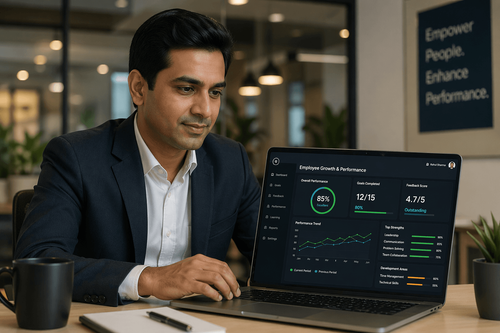

Table of Contents
- What Is AI in Performance Management?
- Why Traditional Performance Management Often Fails
- Key Benefits of AI in Performance Management
- How AI in Performance Management Improves Business Results
- Real Applications of AI Performance Management
- Challenges and Risks of AI in Performance Management
- Skills Professionals Need in the AI Era
- Why Working Professionals Need Personality Development Today
- How to Implement AI Performance Management Successfully
- PlanetSpark Personality Development Classes helps you Build
- Build the Skills the Future Rewards
What if employee performance could improve every single week instead of waiting for one annual review?
Many organizations still depend on outdated performance systems that rely on yearly appraisals, delayed feedback, and subjective evaluations. These traditional methods often leave employees confused about expectations and managers overwhelmed with paperwork. In a fast-moving workplace, waiting months to address issues can slow growth, reduce engagement, and hurt productivity.
This is where AI in performance management is changing the game. Artificial intelligence helps businesses move from reactive reviews to proactive development. It uses data, automation, and smart insights to improve goal setting, provide real-time coaching, identify skill gaps, and support fairer evaluations.
In this blog, you will learn how AI in performance management works, its top benefits, real business applications, challenges to watch for, and why communication and personality development remain essential in an AI-powered future.

What Is AI in Performance Management?
AI in performance management refers to the use of artificial intelligence technologies such as machine learning, natural language processing, predictive analytics, and automation to improve how employee performance is tracked, measured, and developed.
Traditional performance systems usually focus on annual or quarterly reviews. AI-based systems, however, continuously gather and analyze performance data from multiple sources such as:
- Project management AI tools
- Attendance systems
- CRM dashboards
- Peer feedback forms
- Learning platforms
- Productivity metrics
- Goal tracking systems
- Collaboration tools like Slack or Teams
This enables organizations to gain a more complete and ongoing view of employee performance.
Instead of asking managers to rely only on memory or recent events, AI highlights patterns over time. It may identify who needs support, who is excelling, which teams are disengaged, and where coaching can make the biggest impact.
For employees, this creates greater transparency. They know what goals matter, how progress is measured, and where they can improve.
AI does not replace managers. It strengthens decision-making and allows leaders to spend more time coaching rather than compiling reports.
Still using outdated yearly reviews?
Book a free demo session today and discover future-ready growth strategies before competitors do.
Why Traditional Performance Management Often Fails
Many companies still rely on performance management systems designed for a slower and more predictable business environment. In today’s workplace, teams need speed, flexibility, and regular guidance to stay productive. Traditional methods often fail because they focus more on evaluation than development. As a result, employees may feel unsupported, and managers may struggle to drive improvement.
1. Delayed Feedback
In many organizations, employees receive formal feedback only once or twice a year. This creates a long gap between actions and correction. If an employee is making mistakes, missing expectations, or using inefficient methods, those issues may continue for months before anyone addresses them.
Delayed feedback also reduces motivation. Employees perform better when they know what they are doing well and where they need to improve in real time. Frequent feedback creates faster learning, stronger accountability, and better results.
2. Subjective Reviews
Traditional reviews often depend heavily on a manager’s memory or personal perception. This can lead to unfair evaluations based on recent events, favoritism, or isolated mistakes rather than overall performance.
For example, an employee who performed well for most of the year may receive a poor review because of one recent error. Another employee with strong relationships may be rated higher despite average results. Subjective reviews can damage trust and reduce morale.
3. Lack of Goal Clarity
Many employees are expected to perform well without clearly understanding what success looks like. Goals may be vague, outdated, or disconnected from business priorities.
When employees do not know how their tasks contribute to larger company objectives, they may focus on low-value work or waste time on the wrong priorities. Clear goals help employees stay aligned, motivated, and accountable.
4. Administrative Burden
Traditional appraisal systems often involve long forms, rating scales, spreadsheets, approval chains, and time-consuming review meetings. Managers may spend weeks collecting information and completing paperwork.
This reduces the time available for meaningful coaching conversations, team development, and problem-solving. Performance management should improve people, not create excessive administrative work.
5. Low Employee Engagement
Employees often see outdated review systems as stressful, unfair, or irrelevant. If reviews happen only once a year and do not lead to growth opportunities, they can feel like judgment rather than support.
When people do not trust the system, engagement drops. Disengaged employees are less productive, less innovative, and more likely to leave the company.
AI helps solve these issues by making performance management faster, smarter, and more focused on continuous growth.
Key Benefits of AI in Performance Management
AI transforms performance management from a reactive process into an ongoing improvement system. It helps managers make better decisions while giving employees more clarity and support.
1. Continuous Feedback and Real-Time Coaching
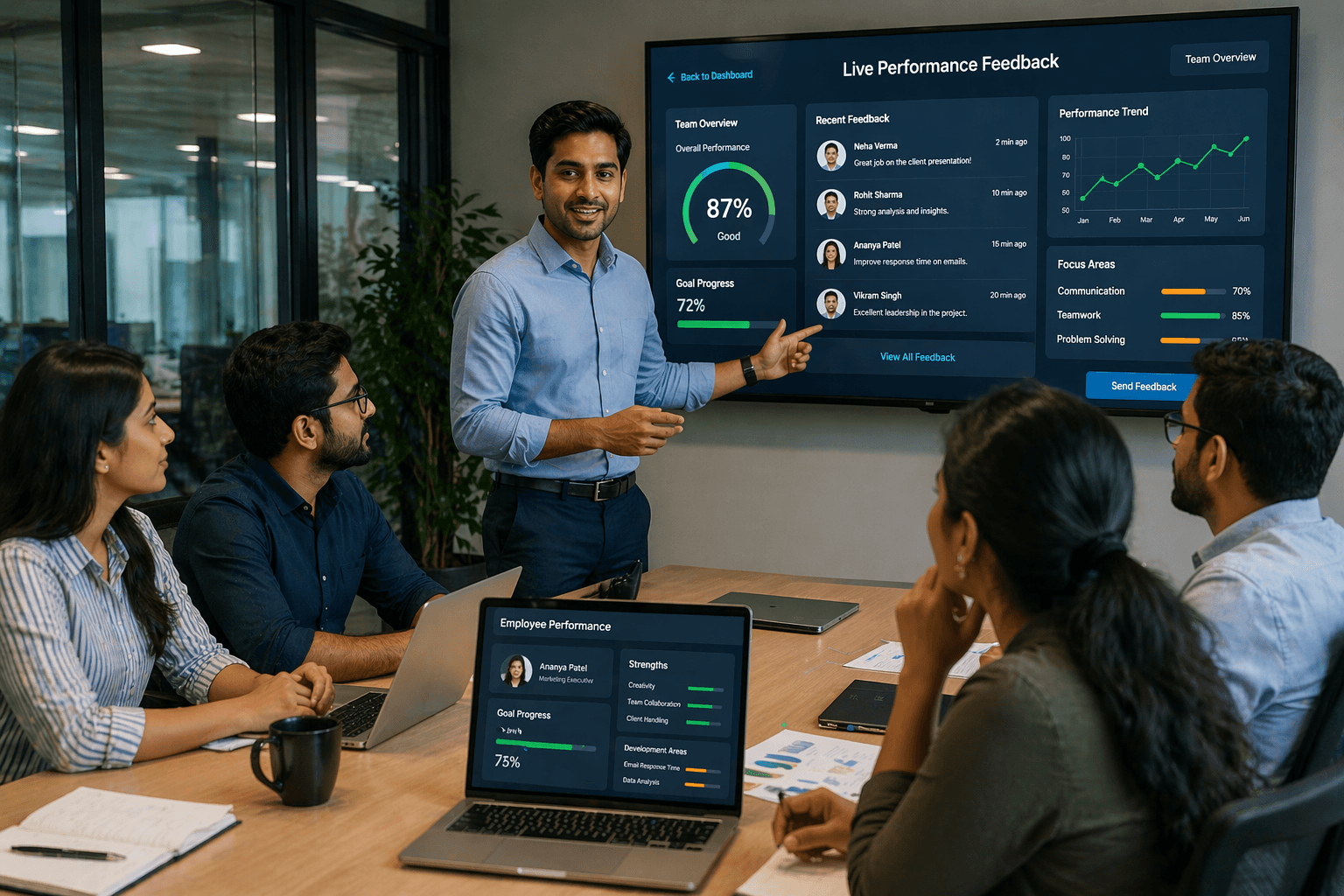
AI systems track progress regularly and can alert managers when feedback is needed. Instead of waiting for annual reviews, employees receive guidance while projects are still active.
Examples include:
- Missed deadlines triggering coaching reminders
- Strong performance prompting recognition messages
- Goal dashboards showing progress instantly
- Declining productivity highlighting a need for support
This allows employees to correct mistakes faster and repeat successful behaviors more consistently.
2. Better Goal Setting
Many teams underperform because goals are unclear or unrealistic. AI can analyze historical performance, role responsibilities, and business priorities to recommend smarter goals.
For example, instead of telling a sales employee to “do better,” AI may suggest increasing qualified leads by 15% over the next quarter based on past trends. Specific goals improve focus and motivation.
3. Reduced Bias
AI can bring more consistency to evaluations by analyzing structured data from multiple sources rather than relying only on opinions.
It may help reduce:
- Recency bias – focusing only on recent events
- Halo effect – letting one strength influence the whole review
- Personal favoritism – rating based on relationships
- Inconsistent standards – judging employees differently
Human oversight is still necessary, but AI can support fairer and more transparent reviews.
4. Personalized Development Plans
Every employee has different strengths and growth areas. AI can recommend learning paths based on performance trends, career goals, and skill gaps.
Examples:
- A manager weak in communication may receive leadership speaking coaching
- A sales employee may be assigned negotiation training
- A team lead may receive conflict resolution modules
- A new employee may get time management support
This creates targeted growth instead of one-size-fits-all training.
5. Time Efficiency
HR teams and managers often spend hours on reminders, reports, documentation, and review preparation. AI automates many of these tasks.
This saves time and allows leaders to focus on what matters most:
- Coaching employees
- Solving team challenges
- Improving culture
- Building future leaders
Want to become promotion-ready in an AI-driven workplace?
Book your trial class now and start building leadership skills before opportunities pass.
How AI in Performance Management Improves Business Results
Companies invest in AI because it creates measurable outcomes across productivity, engagement, and decision-making.
Higher Productivity
When employees know their priorities and receive quick feedback, they can work more efficiently. Problems are corrected earlier, and time is spent on high-impact work.
Better Retention
AI can identify warning signs of burnout or disengagement, such as missed goals, reduced participation, or negative sentiment. Managers can intervene before valuable employees resign.
Stronger Goal Alignment
AI helps connect individual goals to team and company objectives. Employees understand how their work contributes to broader success, which increases ownership.
Faster Decision-Making
Leaders no longer need to wait for monthly or quarterly reports. Real-time dashboards help them respond quickly to performance issues or opportunities.
Better Employee Experience
Employees appreciate regular recognition, growth opportunities, and clarity around expectations. This improves morale and trust.
More Accurate Talent Decisions
Promotions, succession planning, bonuses, and training investments become more data-informed. Companies can better identify high-potential talent and future leaders.
Organizations that modernize performance systems often see stronger accountability, execution, and employee satisfaction.
Real Applications of AI Performance Management
AI is already being used in practical ways across industries.
Smart Dashboards
Dashboards combine data from multiple systems into one place. Managers can instantly see progress, productivity, and team trends without manual tracking.
Sentiment Analysis
AI can review employee surveys, comments, and feedback to understand morale. If frustration or stress levels rise, leaders can act early.
Predictive Turnover Alerts
AI can detect patterns linked to resignations, such as lower engagement or reduced performance, helping managers retain talent proactively.
Automated Review Summaries
Instead of manually collecting feedback, AI organizes comments into themes such as teamwork, communication, leadership, or execution.
Learning Recommendations
Employees receive personalized courses, coaching suggestions, or practice tasks based on their development needs.
Recognition Systems
AI can identify strong contributions and remind managers to celebrate achievements, improving motivation and culture.

Challenges and Risks of AI in Performance Management
AI can be powerful, but poor implementation creates risks.
1. Data Privacy Concerns
Employees need transparency about what information is collected, how it is used, and who can access it. Trust is essential.
2. Over-Measuring Everything
Not all valuable contributions can be measured with numbers. Creativity, mentoring, innovation, and emotional support often require human judgment.
3. Algorithm Bias
If AI is trained on unfair historical data, it may repeat those same patterns. Systems should be reviewed regularly.
4. Lack of Human Touch
Employees still need encouragement, empathy, and meaningful coaching conversations. Technology cannot replace genuine leadership.
5. Change Resistance
Some employees may fear being monitored or replaced. Leaders should communicate that AI is a support tool, not a threat.
The best model is AI + Human Leadership, where technology provides insights and humans provide wisdom.
Need confidence to stay valuable in the age of AI?
Reserve your demo class today and gain communication skills employers notice first.
Skills Professionals Need in the AI Era
As automation grows, technical skills alone are no longer enough. Human strengths are becoming even more valuable.
Communication
Professionals must explain ideas clearly, present updates confidently, write effective emails, and collaborate across teams. Strong communication often separates average performers from future leaders.
Adaptability
Technology changes quickly. Professionals who learn new systems, accept change, and stay flexible are more likely to succeed.
Critical Thinking
AI can provide data, but humans must interpret it. Employees need to question assumptions, analyze trends, and make sound decisions.
Emotional Intelligence
Understanding people, managing emotions, resolving conflict, and building trust are deeply human strengths that remain essential.
Executive Presence
How you speak, lead meetings, stay calm under pressure, and carry yourself influences promotions and leadership opportunities.
This is why personality development training is becoming increasingly important for working professionals who want long-term career success.
Why Working Professionals Need Personality Development Today
Technical knowledge alone is no longer enough. Many promotions now depend on how well professionals communicate, influence, and lead.
PlanetSpark helps professionals improve:
- Meeting confidence
- Interview performance
- Public speaking fear
- Leadership presence
- Business communication
- Networking confidence
- Clear thinking under pressure
Professionals who communicate strongly often earn more trust and faster career growth.
How to Implement AI Performance Management Successfully
Managers can maximize AI results with the right strategy.
Define Clear Objectives
Know whether you want better productivity, retention, coaching, or engagement.
Combine Human Judgment
Use AI insights, but keep final decisions human-led.
Train Managers
Leaders must know how to interpret dashboards and coach effectively.
Protect Privacy
Use transparent policies and ethical data practices.
Review Impact Often
Measure whether AI is improving performance, trust, and engagement.
PlanetSpark Personality Development Classes helps you Build Skills That AI Cannot Replace
In a world where technology is automating routine work, communication, confidence, leadership, and executive presence are becoming career-defining skills. PlanetSpark personality development classes are designed for students, college learners, adults, and working professionals who want to grow faster in academics, interviews, workplace communication, and leadership roles.
PlanetSpark combines expert-led live learning with structured practice, AI-enabled feedback tools, and measurable progress systems to help learners become confident speakers and impactful communicators.
Whether you want to speak better in meetings, crack interviews, lead teams, or express ideas confidently, PlanetSpark offers a structured path to growth.
Why PlanetSpark Stands Out
1. 1:1 Personal Trainers
Each learner gets personalized attention from trained communication experts who understand learning style, pace, strengths, and improvement areas.
2. Customized Growth Roadmap
Learners receive structured plans focused on:
- Confidence building
- Public speaking
- Vocabulary growth
- Grammar improvement
- Leadership communication
- Presentation skills
3. SparkX AI Video Analysis Tool
Learners can record speeches or presentations. AI-based analysis helps evaluate:
- Voice clarity
- Confidence
- Body language
- Structure of ideas
- Delivery style
- Fluency
4. AI Practice Sessions
Independent speaking practice with smart prompts and instant feedback.
5. Spark Diary
A digital journaling space to improve structured thinking, writing, and expression.
6. SparkBee Gamified Learning
Fun quizzes, rewards, spelling games, vocabulary challenges, and grammar activities that build consistency.
7. SparkShop eBooks
Affordable learning resources covering grammar, reading, vocabulary, writing, and communication skills.
8. Regular Progress Reports
Track growth in confidence, speaking, grammar, creativity, and delivery.
9. Clubs and Communities
Learners can join:
- Debate Club
- Storytelling Club
- Podcasting Club
- Writers Guild
- Speech Circles
10. Contests and Recognition
Regular competitions, showcases, open mic events, and certificates that build confidence.

Build the Skills the Future Rewards
AI will continue changing how companies manage performance, measure productivity, and develop talent. But technology alone does not create exceptional careers. The professionals who grow fastest will combine digital awareness with strong communication, confidence, adaptability, and leadership.
Use AI as a tool. Build human strengths as your advantage.
Your future success may depend less on what software can do and more on what only you can do.
Frequently Asked Questions
AI in Performance Management uses artificial intelligence to improve employee evaluations, feedback, goal tracking, and development planning through data-driven insights.
It makes reviews more continuous, objective, and personalized instead of relying only on annual ratings.
No. AI supports managers with insights, but leadership, empathy, and final judgment still require humans.
It can improve fairness when systems are transparent, audited regularly, and responsibly implemented.
Because communication, leadership, confidence, and emotional intelligence are skills AI cannot replace.
PlanetSpark helps learners improve communication confidence, writing clarity, speaking skills, and professional expression through live expert-led classes.
Yes, PlanetSpark provides free trial classes for children to experience live interactive sessions. This allows parents and students to understand the teaching style and course structure before making a commitment.
With regular practice and expert feedback, many learners begin noticing progress in confidence and speaking within weeks.
Personalized Communication Roadmaps
Record a video to get a AI generated personalized communication reports