
Behavioral Skills for Kids: How PlanetSpark Helps
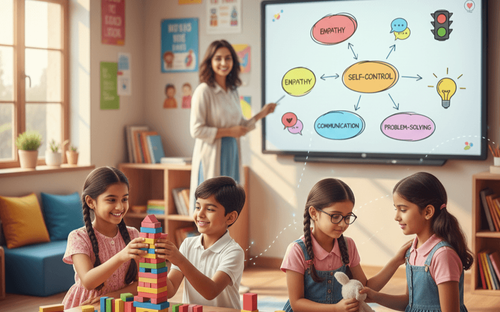

Table of Contents
- Understanding Behavioural Skills for Kids
- Behavioural Skills Examples for Kids
- Why Behavioural Skills Matter in Early Childhood Development
- How to Build Behavioural Skills in Kids
- Skills Every Child Needs for Good Behaviour
- Child Behaviour Management Strategies
- Treatment of Child Behaviour Problems: Using Behaviour Thera
- How Does PlanetSpark Help in Improving Behavioural Skills?
- Shape Confidence and Behavioural Skills with PlanetSpark
Behavioural skills for kids form the foundation of emotional intelligence and social success. These skills enable children to navigate relationships, manage emotions, and thrive in diverse environments. Kids grow, learn, and adapt with everything they encounter in their daily lives. During early development, one of the most important foundations they build is the behavioural skills. These skills shape how a child interacts with others, manages emotions, follows rules, and handles challenges. This blog by PlanetSpark covers everything you need to know about behavioural skills for kids and how to manage them effectively.
Understanding Behavioural Skills for Kids
Behavioural skills encompass the abilities children use to interact positively with others and respond appropriately to situations. They include emotional regulation, communication, empathy, self-control, and problem-solving, enabling kids to exhibit positive behaviour in children. These skills go beyond academics, focusing on how children behave in social settings like home, school, and playgroups. To be precise, these skills help children understand what kind of behaviour is expected from them in different environments, such as home, school, playground, or social gatherings. Behavioural skills include: self-control, following instructions, sharing and cooperating, managing emotions, problem-solving, communication, respect for others and rules, patience and discipline. According to some child development experts, behavioural skills create the basis or foundation of social development, emotional regulation, and positive behaviour in children.
Why Behavioural Skills Are Needed For Kids?
Kids are not born understanding the rules, regulations, and acceptable behaviour in this world. They learn them through proper guidance, observation, consistency, and positive reinforcement. Thus, kids require behavioural skills development to handle daily challenges effectively. Without them, they may struggle with frustration, leading to tantrums or withdrawal, which hinders learning and friendships. These skills promote resilience (the ability to recover from difficulties), teaching kids to cope with disappointment or conflict. In fast-paced environments, behavioural skills equip children to self-regulate, fostering independence and reducing reliance on adults for every decision. The skills are needed for:
- Helps build strong social relationships
- Improves emotional intelligence
- Supports academic success
- Encourages independence
- Creates a positive environment
Importance of Behavioural Skills For Kids
When children lack behavioural skills, issues like aggression, tantrums, defiance, fearfulness, and emotional outbursts become frequent. Thus, behavioural skills matter immensely in early childhood development, influencing cognitive growth and mental health. Children with strong skills form secure attachments, perform better academically, and exhibit fewer conduct issues.
Research highlights that preschoolers with solid behavioural foundations achieve higher school readiness. These skills prevent long-term problems like anxiety or aggression by promoting positive behaviour in children. Building behavioural skills early has long-term benefits:
- It helps in preventing behaviour problems later in life.
- It makes the children more adaptable in every kind of situation.
- It reduces stress for parents and teachers.
- It prepares children for real-world problems and situations.
- It encourages responsibility and discipline within them.
- It builds resilience and emotional stability within them.
Behavioural Skills Examples for Kids
Common behavioural skills examples include:
- Empathy: Understanding a friend's sadness and offering comfort.
- Self-Control: Waiting patiently for a turn during play.
- Communication: Expressing needs clearly without yelling.
- Distinguishing Right from Wrong: Teaching children the difference between right and wrong is one of the most fundamental roles of an adult
- Problem-Solving: Finding a fair way to share toys.
- Cooperation: Working as a team on a group activity.
- Active Listening: Understanding instructions and paying attention during interactions.
- Responsibility: Completing tasks, cleaning up after play, and following rules.
- Emotional Regulation: Identifying emotions, calming down, and expressing feelings safely.
- Respect for Others: Considering others’ feelings, respecting boundaries, and using kind behaviour.
Why Behavioural Skills Matter in Early Childhood Development?
The early years, ages 2 to 7, are very crucial because the brain develops rapidly. During this stage, children learn through observation, imitation, emotional bonding, repetitive experiences, and environmental cues. If behavioural skills are taught early, children develop lifelong habits that become beneficial for their personality.
Developing these skills naturally reduces behaviour problems, supporting holistic growth. Kids who learn them early also adapt faster to school transitions. Also, parents and educators see long-term benefits, including improved self-esteem and social competence.
Explore how skill-based learning empowers kids to shine—book a free demo class today!
How to Build Behavioural Skills in Kids
Building behavioural skills involves consistent, positive reinforcement across settings.
- Modelling: Show them what to do. Kids learn by watching. If you want them to behave politely, you should do it first so that they can copy you.
- Giving Proper Instructions: Give clear instructions by first getting your child’s attention, speaking calmly at their level, and using short, simple words. Reduce distractions, use gestures or pictures, and slowly reduce reminders as your child learns to do the task independently.
- Step-by-Step Guide: Break big tasks into small, easy steps, teach one step at a time, let your child practise, and move to the next step once they are confident.
- Practice with them: Engage in small role plays like how to say “thank-you”, how to share, and how to speak politely.
- Appreciate small improvements: Praise them whenever you see them doing something good, that may even be a small thing.
- Set Clear and Simple Rules: kids are naive and thus need clarity. Create simple rules such as cleaning the toys after playing, waiting for their turn to come, keeping their clothes and shoes properly, keeping their books organised, etc.
- Offer choices, not commands: Choices help in decision-making. Give them choices on their food, games, clothes, etc. Avoid giving them strict instructions.
- Teach Problem Solving: Guide the kids to find ways to solve questions. Problem-solving naturally boosts independence.
Skills Every Child Needs for Good Behaviour
- Understanding Social Situations: Children need to learn how to read the social cues around them, identify who is friendly and who may cause trouble, and how to behave in various settings, such as school or the playground. This helps them avoid problems and get along with others. For example, if your child sees a group of kids in school or at the park who usually tease and bully others, the skill of reading social situations will help them avoid that particular group, rather than being drawn to them.
- Managing Emotions Properly: Feeling angry or upset is normal, but children must learn safe and respectful ways to express those emotions. Being angry does not mean hurting others with words or actions. Parents should guide kids to calm down and choose better responses. They must learn that feeling angry does not give them the right to hurt others.
- Solving Problems in Healthy Ways: There are no “bad kids”, only kids who haven’t learned how to solve problems yet. Children who act out often don’t know what else to do. Teaching them to think, choose better actions, and ask “What can I do differently next time?” helps build good behaviour. As children develop, they have to continually adjust their problem-solving skills and learn new ones. For instance, for a five-year-old kid, being told “no” is the biggest problem in their life. For five-year-olds, the problem may be dealing with the first day of school. For nine-year-olds, the problem may be dealing with a bully.
Child Behaviour Management Strategies
Effective behaviour management prevents problems and builds cooperation. Effective strategies include positive reinforcement over punishment. Also, ignoring minor misbehaviours while rewarding good ones. Below are strategies commonly recommended by PlanetSpark:
- Ignore minor misbehaviours- Do not give attention to every small issue. Ignoring minor whining or unnecessary demands teaches the child that bad behaviour does not bring rewards.
- Use time-out when needed: Use time-out wisely. A calm time out works when a child becomes too aggressive, hitting or biting, uncontrollable anger. The time-out should teach calming down, not punishment.
- Establish natural consequences- When a child breaks a pencil, they lose that pencil, or if they spill water, they clean it up. This also teaches responsibility organically.
- Creating a positive environment: A predictable and organised environment helps children feel safe and behave better. Also, clear routines and rules make it easier for them to learn and grow positively.
- Modelling and Social Skills: Modelling means children learn by watching you. When you show good behaviour or skills through your actions, your child copies and learns naturally.
- Maintain consistency: Mixed reactions from parents confuse the children. Consistent rules and consequences build clarity.
- Communicate expectations clearly- Use simple and direct communication. Example: Walk inside the house, do not run.
- Build a positive environment: Reduce triggers that cause misbehaviour, such as hunger, overstimulation, low sleep, and stress. A happy and rested child behaves better.
- Seeking Professional Help: Getting help from a child therapist or counsellor is the best step when problem behaviours continue or feel hard to manage. Child therapists use proven methods like CBT to support children and guide families effectively.
Ways to Improve a Child’s Behaviour Naturally
Parents can dramatically improve behaviour using natural methods:
- Ensure ample sleep and nutrition.
- Limit screen time to boost attention.
- Encourage outdoor play for energy release.
- Make them practice mindfulness, like deep breathing, as this calms them down quickly.
- Maintain a calm tone with them.
- Provide nutritious food and avoid sugary snacks, as this increases impulsive behaviour.
These build self-regulation without external aids.
How to Teach Behavioural Skills to Kids at Home
At home, you can teach via structured play and routines. Reading stories highlighting emotions also works. Also, involve the whole family for consistency. Some more practical home-based methods are:
- Role playing: Acting out situations like sharing, greeting someone, solving a problem, or asking politely.
- Household chore assignments: Small tasks like making beds or keeping shoes properly on the rack build responsibility.
- Storytelling: Stories that showcase moral lessons help children understand values.
- Family Rules Poster: Place a colourful chart of house rules in common areas.
- Calm down corner: Build a cosy and safe spot with toys, books, pillows, cartoon characters, etc., where kids can go and relax easily.
Treatment of Child Behaviour Problems: Using Behaviour Therapy for Kids
Behavior therapy helps children and toddlers manage emotional and behavior problems in a healthy way. Today, approaches like CBT (Cognitive Behavioral Therapy), ACT (Acceptance and Commitment Therapy), DBT (Dialectical Behavior Therapy), and mindfulness teach kids how thoughts, feelings, and actions are connected. Research shows CBT is especially effective for problems like anxiety, stress, trauma, and emotional issues, making it one of the most trusted therapies for children.
3 Techniques of Behaviour Therapy
- Developing Fear Hierarchies: Developing a fear hierarchy helps children face fears step by step instead of all at once. With guidance, the child breaks a big fear into smaller, manageable steps, starting with the least scary situation and slowly moving to harder ones. This gradual approach builds confidence and helps children recognise progress at each stage. For example, a child scared of crowds may first walk on a quiet street, then visit a small park, and slowly progress to a busy playground, gaining confidence at each step.
- Graded Exposure: This means helping a child face their fears slowly, step by step, starting with the easiest situation and moving to harder ones. With the therapist’s support, the child learns that avoiding fear only helps for a short time, but facing it safely helps reduce anxiety and build confidence. The child can also rate their fear at each step, notice it decreases, celebrate progress, and then move on to the next goal.
- Response Prevention: Children with OCD often repeat habits like cleaning, checking, or counting to reduce fear. These habits give short-term relief but don’t solve the problem. Response prevention helps the child face their fear without doing the habit, so they slowly learn that nothing bad happens and the anxiety goes down on its own. For example, if a child fears germs, they may be asked to touch a toilet seat and wait before washing their hands, helping them learn that they can handle the fear without doing the compulsive behavior.
Behaviour Therapy for Schools
- Reward Strategies: Children may forget their small and daily achievements, so rewards help them repeat good behavior. Positive rewards increase good actions, while negative consequences reduce unwanted ones. The rewards always do not have to be gifts or money, they can be praise, attention, or extra playtime.
How it works (with examples):
a. Clear behavior: Instead of saying “be good,” say “sit quietly during meals” or “share toys politely.”
b. Meaningful reward: Praise, a star on a chart, or extra time to play a favorite game.
c. Achievable goal: For example, sitting quietly at dinner for 10 minutes to earn a reward.
d. Consistency: Reward the behavior every time it happens.
e. Encouragement: Praise effort and remind the child of their progress, even on hard days.
f. Reward systems at home or school make good behavior more motivating and enjoyable. - Role-Play: It helps children practice coping and communication skills by acting out real or future situations. It allows them to understand feelings and learn better ways to respond.
Example: A child acts out a team-project situation and practices saying, “I felt upset last time, so next time I will stay calm and ask for help.” - Play therapy: It helps young children express feelings and cope with anxiety through play instead of talking. It uses games and activities to support emotional and behavioral growth, especially in school settings.
How it helps (with simple examples):
a. Problem-solving: A child uses toys to act out and solve a problem.
b. Flexible & creative thinking: They try different ways to handle a situation during play.
c. Coping skills: Playing out stressful situations helps them learn calm responses.
d. Emotional expression: Children safely show feelings like fear, anger, or happiness.
e. Empathy: Role-playing helps them understand how others feel.
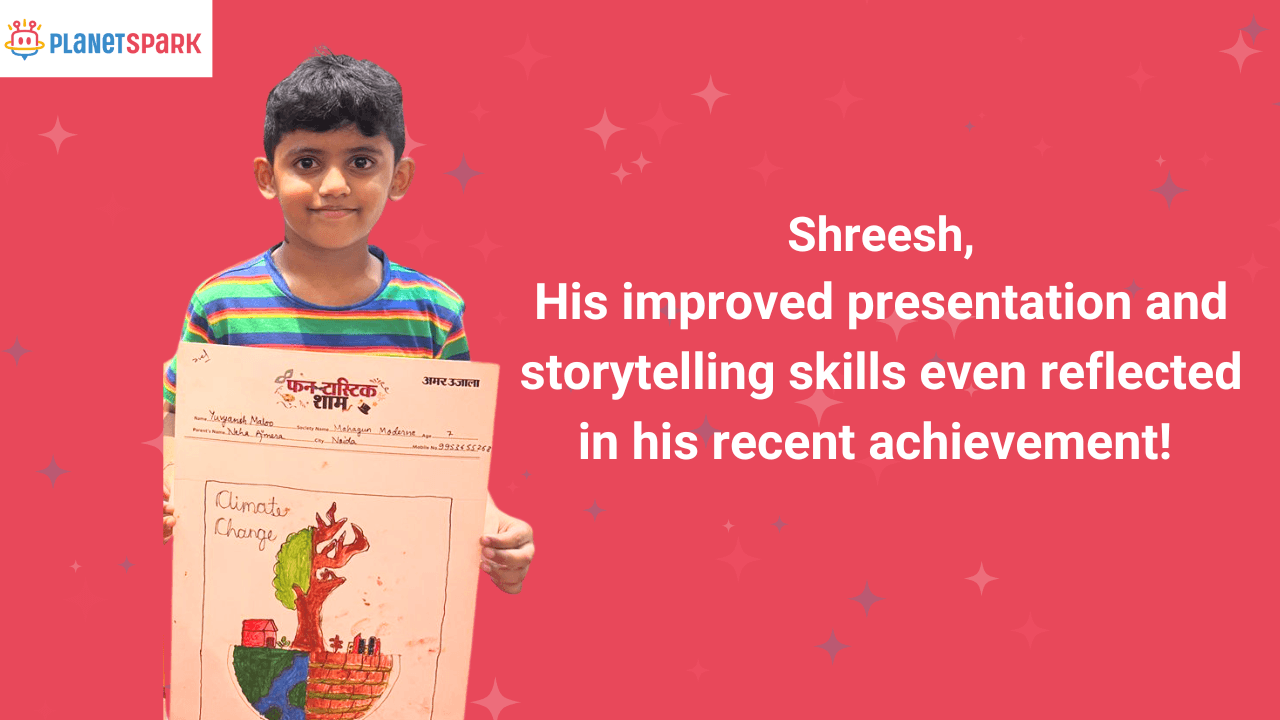
PlanetSpark has helped Shreesh express his ideas creatively and confidently. His improved presentation and storytelling skills were clearly reflected in his recent achievement—winning second place in the Junior Category of a drawing competition on “Climate Change,” organized by the Amar Ujala team.
Book a free PlanetSpark demo class and let your child experience it too!
How Does PlanetSpark Help in Improving Behavioural Skills?
PlanetSpark focuses on building effective study skills from the core by developing confidence, discipline, leadership, and intelligence. The courses of PlanetSpark go beyond academics to help every student manage their time better, enhance their study skills, communicate effectively, & stay motivated.
- 1:1 Coaching from Experts- Every child at PlanetSpark gets personal attention from certified and industry-expert trainers for gaining personality development for behavioural skills, such as good behaviour. They guide students to use the right procedures to behave, react to particular situation, study, provide tricks to learn a topic or subject, memorising strategies, etc. This makes them feel confident and natural by boosting their academic confidence.
- Wide Curriculum- The lessons at PlanetSpark cover a range of topics, including time management, note-taking techniques, memory techniques, reading skills, exam preparation skills, stress management, mindset training, critical thinking and problem-solving, presentation and communication skills, etc. All of this helps students get skilled up by improving their behavioural skills.
- TED-style Training Modules- Students at PlanetSpark practice delivering powerful speeches, such as TEDx speakers, by using the “hook, message, story, call to action” model, which is crucial for developing effective communication skills.
- Practice with Global Leaders- The students are given an opportunity to speak with peers from over 13 countries through group discussion, storytelling, debating, etc, on various academic topics. This practice helps them to understand the way to figure out how they study and brings confidence in their academics as well as the body language.
- Video-based Feedback and Growth- Children get the chance to watch recordings of their performances. With feedback from experts, they learn to take corrective action to improve their skills and techniques for reading and writing.
- Public Speaking Competition- PlanetSpark regularly organises speaking competitions and leagues at the national level. These platforms help kids apply their learning in academics. They can always be polished; stay curious and adaptable.
Shape Confidence and Behavioural Skills with PlanetSpark
Behavioural skills are essential for a child’s emotional growth, confidence, and long-term success. When nurtured early through positive guidance, structured practice, and consistent reinforcement, children learn to manage emotions, communicate effectively, and adapt to real-life challenges. PlanetSpark plays a powerful role in this journey by going beyond academics and focusing on confidence-building, discipline, leadership, and communication. Through expert 1:1 coaching, interactive modules, real-world speaking opportunities, and personalised feedback, PlanetSpark helps children transform their behavioural skills naturally and effectively by preparing them to thrive in school, relationships, and life.
Frequently Asked Questions
Teachers manage via proactive setups:
- Clear rules with visuals.
- Positive attention for compliance.
- Break tasks into steps.
- Peer buddy systems for support.
The skills are:
- Self-Control & Emotional Regulation
- Communication
- Empathy & Respect
- Cooperation & Sharing
- Following Instructions
- Responsibility
- Conflict Resolution
Behavioural skills should be introduced as early as 2–3 years of age, when children begin learning through observation and imitation. Early childhood (ages 2–7) is the most critical period for developing lifelong behavioural habits.
Professional help should be considered if behaviour problems are persistent, severe, or interfere with daily life, school, or relationships. Child therapists can provide structured support using evidence-based methods like CBT.
PlanetSpark focuses on confidence-building, communication, discipline, leadership, and emotional intelligence through 1:1 expert coaching, interactive learning, public speaking practice, and personalised feedback.
Yes. Children with strong behavioural skills concentrate better, follow instructions, manage stress, and participate actively in learning, leading to better academic performance and classroom behaviour.