
Big Five Personality Test: Understand Your Traits
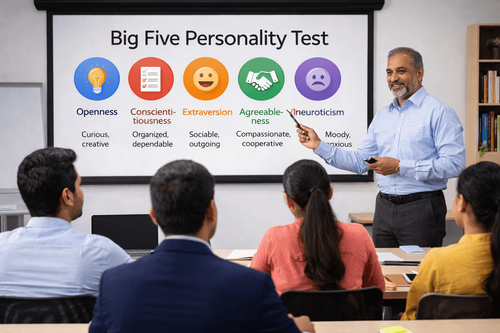

Table of Contents
- What is the Big Five Personality Test
- The Five Core Traits Explained
- Why the Big Five Personality Test Matters
- How the Big Five Personality Traits Test is Used Today
- How to Take the Big Five Personality Test
- Interpreting Your Results
- Can You Improve Your Personality Traits
- Common Misconceptions About the Big Five Personality Test
- How Professionals Can Use This Test
- PlanetSpark Personality Development Course
- Turn Self-Awareness into Growth
If you’re searching for a big five personality test, you’re likely looking to understand your behaviour, strengths, and how you interact with the world. This blog breaks down the big five personality traits test, explains each trait in depth, and shows how these insights can improve your personal and professional life. You’ll also learn how to apply these traits for growth, communication, and success.
What is the Big Five Personality Test
The big five personality test is one of the most scientifically validated frameworks in psychology. It categorises human personality into five broad traits that shape how we think, feel, and behave.
Unlike vague personality quizzes, this model is backed by decades of research and is widely used in:
- Psychology and behavioural studies
- Corporate hiring and leadership assessment
- Personal development programs
- Career guidance and coaching

The Core Idea
Instead of putting people into fixed “types,” the test measures personality on a spectrum.
For example:
- You are not just “extroverted” or “introverted”
- You fall somewhere in between, depending on your traits
This makes the big five personality traits test highly practical and realistic.
The Five Core Traits Explained
1. Openness to Experience
Openness reflects how imaginative, curious, and open-minded you are.
High Openness Traits
- Creative thinking
- Interest in new ideas
- Love for art, culture, and innovation
- Adaptability to change
Low Openness Traits
- Preference for routine
- Practical mindset
- Resistance to change
Real-World Example
Someone high in openness may enjoy exploring new career paths or experimenting with creative solutions at work.
2. Conscientiousness
This trait measures discipline, organisation, and responsibility.
High Conscientiousness
- Goal-oriented
- Strong work ethic
- Reliable and structured
- Good time management
Low Conscientiousness
- Procrastination
- Lack of organisation
- Difficulty sticking to plans
Why It Matters
Conscientious individuals often perform better in professional environments due to their consistency and reliability.
Looking to improve discipline and structured thinking? PlanetSpark’s Personality Development Course helps you build these traits with expert guidance.
3. Extraversion
Extraversion determines how outgoing and energetic you are in social settings.
High Extraversion
- Talkative and energetic
- Enjoy social interactions
- Strong networking skills
Low Extraversion (Introversion)
- Prefer solitude
- Reflective thinking
- Deep focus
Workplace Insight
Extroverts thrive in collaborative roles, while introverts excel in analytical and focused tasks.
4. Agreeableness
Agreeableness reflects how cooperative and compassionate you are.
High Agreeableness
- Empathetic
- Helpful and trusting
- Strong team player
Low Agreeableness
- Competitive
- Direct and critical
- Less emotionally driven
Impact
High agreeableness improves relationships, teamwork, and leadership effectiveness.
5. Neuroticism
This trait measures emotional stability and stress response.
High Neuroticism
- Anxiety and stress sensitivity
- Emotional fluctuations
Low Neuroticism
- Calm and composed
- Emotionally stable
- Resilient under pressure
Key Insight
Lower neuroticism often leads to better decision-making and mental well-being.
Want to strengthen your personality and confidence? Explore PlanetSpark’s Personality Development Course designed for real-world impact.
Why the Big Five Personality Test Matters
Understanding your personality is not just interesting, it’s transformative.
Key Benefits
1. Self-Awareness
- Helps you understand your strengths and weaknesses
- Improves decision-making
2. Career Growth
- Aligns your personality with suitable roles
- Enhances workplace performance
3. Better Relationships
- Improves communication
- Builds empathy and understanding
4. Leadership Development
- Helps identify leadership style
- Enhances team management skills
How the Big Five Personality Traits Test is Used Today
The big five personality traits test is widely used across industries.
In Corporate Hiring
Companies use it to:
- Assess cultural fit
- Evaluate leadership potential
- Predict job performance
In Personal Development
- Coaching and mentoring programs
- Skill-building frameworks
- Behavioural improvements
In Education
- Helps students identify strengths
- Builds communication and confidence
Whether you’re a professional or a parent ,PlanetSpark’s Personality Development Course helps build communication and confidence.
How to Take the Big Five Personality Test
Taking the big five personality test may seem simple, but getting accurate and meaningful insights depends on how thoughtfully you approach it. This is not just about answering questions, it’s about understanding your real behavioural patterns and using the results to grow.
Steps to Follow
Step 1: Answer Honestly
The foundation of an accurate result lies in honesty. The test is designed to capture your natural tendencies, not the version of yourself you wish to be.
- Avoid selecting answers that sound “ideal” or socially acceptable
- Focus on how you actually behave, not how you behave in rare situations
- Think about your actions over the past few months, not just today
- Don’t overthink each question, your first instinct is often the most accurate
Pro Tip: If you hesitate between two options, choose the one that reflects your most frequent behaviour.
Step 2: Reflect on Behavioural Patterns
Once you start answering, it’s important to think in terms of patterns rather than isolated events. Personality is about consistency over time.
- Consider how you react in different situations like work, social settings, and stress
- Identify recurring habits, for example, do you often plan ahead or act spontaneously
- Think about feedback you’ve received from colleagues, friends, or family
- Observe emotional responses, especially in challenging situations
Example: Instead of recalling one instance where you were confident, ask yourself, “Am I generally confident in most situations?”
Step 3: Analyse Your Results
After completing the test, you’ll receive scores across the five traits - openness, conscientiousness, extraversion, agreeableness, and neuroticism.
To interpret them effectively:
- Look at your score on each trait as a spectrum, not a label
- Compare traits with each other to understand your personality combination
- Identify strengths, such as high conscientiousness or strong emotional stability
- Recognise growth areas, like improving communication or managing stress
Deeper Insight:
- High openness + high extraversion → Creative and expressive
- High conscientiousness + low neuroticism → Reliable and composed
- High agreeableness + low extraversion → Supportive but reserved
Step 4: Apply Insights in Real Life
The real value of the big five personality traits test lies in how you use the results. Awareness without action has limited impact.
Personal Growth
- Build habits aligned with your strengths
- Work consciously on weaker areas
Professional Development
- Choose roles that match your personality
- Improve workplace communication and productivity
Communication Improvement
- Adapt your interaction style based on your traits
- Understand how others may perceive your behaviour
Emotional Intelligence
- Recognise triggers linked to neuroticism
- Practise mindfulness and stress management
Action Tip: Create a simple improvement plan, for example:
- If low in extraversion → practise speaking in group settings
- If low in conscientiousness → set daily goals and track progress
Step 5: Revisit and Reassess Regularly
Personality evolves with experiences, learning, and environment. Taking the test once is helpful, but revisiting it can give deeper insights.
- Retake the test every 6 to 12 months
- Track improvements in specific traits
- Compare past and present results to measure growth
- Adjust your development strategies accordingly
Interpreting Your Results
The results are usually presented as scores across all five traits.
Example Interpretation
- High openness + high extraversion = Creative leader
- High conscientiousness + low neuroticism = Reliable performer
- High agreeableness + moderate extraversion = Team collaborator
Important Note
There is no “good” or “bad” personality type.
The goal is:
- Awareness
- Growth
- Application
Can You Improve Your Personality Traits
Yes, personality is not fixed.
Ways to Improve
Build Awareness
- Track your behaviour
- Identify patterns
Practice New Habits
- Improve communication
- Build discipline
Learn New Skills
- Public speaking
- Emotional intelligence
Get Expert Guidance
- Structured coaching programs
- Personalised feedback
Common Misconceptions About the Big Five Personality Test
Myth 1: Personality is Fixed
Reality: Traits can evolve over time
Myth 2: One Trait Defines You
Reality: All five traits interact together
Myth 3: It’s Just Another Quiz
Reality: It’s a scientifically validated framework
How Professionals Can Use This Test
Career Planning
- Choose roles aligned with your personality
Leadership Development
- Improve decision-making and team management
Communication Skills
- Adapt your style based on others
Stress Management
- Understand emotional triggers

PlanetSpark Personality Development Course
PlanetSpark’s Personality Development Course is designed to transform communication, confidence, and overall personality through a structured, technology-driven approach.
The program offers 1:1 personal trainers who understand individual learning styles and provide real-time feedback, ensuring faster and more meaningful improvement. Every learner follows a personalised curriculum and roadmap, identifying gaps in communication, grammar, fluency, and confidence.
With SparkX AI video analysis, users receive detailed feedback on voice clarity, body language, and presentation skills. Additionally, AI-led practice sessions allow consistent learning outside live classes through simulated speaking activities.
The platform also includes Spark Diary, encouraging daily writing habits to improve clarity and creativity. Learning is made engaging through gamified modules, including vocabulary quizzes, grammar challenges, and interactive exercises.
Regular parent-teacher meetings and progress reports ensure transparency and measurable growth across communication, critical thinking, and confidence.
Beyond classes, learners participate in exclusive clubs, such as debate, storytelling, and podcasting, building real-world skills. The Sparkline platform allows safe content sharing, while contests and showcases provide recognition and confidence-building opportunities.
This comprehensive ecosystem ensures consistent, measurable personality development for long-term success.
Turn Self-Awareness into Growth
The big five personality test is more than just a psychological tool, it’s a roadmap to understanding yourself better. By analysing traits like openness, conscientiousness, extraversion, agreeableness, and neuroticism, you gain powerful insights into your behaviour, strengths, and growth areas.
When applied effectively, these insights can improve communication, enhance career decisions, strengthen relationships, and build emotional intelligence. However, awareness alone is not enough. Real transformation happens when you actively work on developing these traits through consistent practice, feedback, and structured learning.
Whether you are a working professional aiming for career growth or someone looking to improve personal effectiveness, understanding your personality is the first step. The next step is action.
You can also read:
Frequently Asked Questions
The Big Five personality test is used to measure five core personality traits that influence behaviour. It helps in self-awareness, career planning, and improving relationships. It is widely used in psychology, corporate hiring, and personal development.
The big five personality traits test is considered highly reliable and scientifically validated. It is based on decades of research and provides consistent results when taken honestly. However, accuracy depends on self-awareness and truthful responses.
Yes, personality traits can evolve through experiences, learning, and conscious effort. For example, someone can improve conscientiousness through discipline or reduce neuroticism by managing stress and emotions effectively.
No single trait is most important. All five traits work together to shape behaviour. However, conscientiousness is often linked to professional success, while emotional stability supports mental well-being.
Improving personality involves consistent effort, skill-building, and feedback. Structured programs like PlanetSpark’s Personality Development Course help individuals develop communication, confidence, and leadership skills through personalised coaching, AI-driven feedback, and practical learning experiences.
Download Free Worksheets
Personalized Communication Roadmaps
Record a video to get a AI generated personalized communication reports