
Best Books About Plants for Students | Learning with Nature
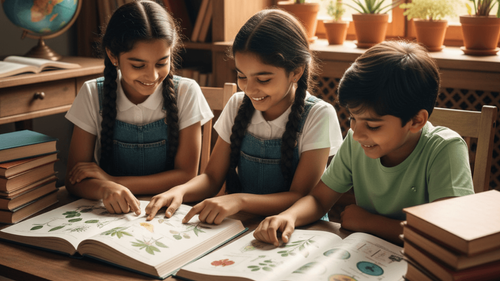

Table of Contents
- Why Students Should Read Books About Plants
- Top 10 Books About Plants for Students
- How to Use Plant Books in Class or Home
- The Skills Students Build from Reading Plant Books
- PlanetSpark: Building Young Minds Beyond Books
- How PlanetSpark Connects with Plant Learning
- Practical Ways to Blend Plant Books and PlanetSpark Skills
- Conclusion
Learning about plants opens young minds to science and nature. When students read books about plants for students, they see how nature works. They understand how seeds grow, how roots support plants, and how flowers help the cycle of life. These books bring lessons to life in simple, fun ways.
Plant books teach observation, responsibility, and curiosity. Students become more aware of the environment. They learn how plants clean the air, protect soil, and feed animals. Most importantly, they realise that learning can happen anywhere in a book, a garden, or even in a small pot on a windowsill.
This blog gives a long, simple guide to the best books about plants for students. It also shows how reading about plants connects to life skills, confidence, and curiosity. Before we finish, you’ll also learn how PlanetSpark can help students grow as readers, speakers, and learners.
Why Students Should Read Books About Plants
Plants are part of our daily life. They give us food, air, and medicine. Yet, many students only see them as green shapes around them. Reading books about plants changes that view.
Here’s how plant books help students grow:
- They build a connection with nature.
When students read about seeds, leaves, and flowers, they start noticing them outside too. They connect what they read to what they see.
- They improve observation.
Plant books teach students to look closely. They see colours, shapes, textures, and changes over time.
- They make science easy.
Complex ideas like germination, photosynthesis, and pollination become simple through pictures and stories.
- They inspire creativity.
After reading, students draw, paint, or even grow small gardens. Creativity grows naturally from curiosity.
- They promote care for the environment.
Students learn the importance of protecting plants, water, and soil. They understand how their small actions matter.
Reading books about plants for students helps them think, question, and develop the skills every learner needs.
Top 10 Books About Plants for Students
Here’s a detailed list of excellent books for students of different ages. Each book builds a unique way of looking at plant life.
1. The Tiny Seed by Eric Carle
This story follows a small seed as it travels with the wind. Some seeds fall in water, some on rocks, and one lands in soil. It grows into a strong flower. The book shows how every small effort can lead to growth.
It teaches about seasons, survival, and nature’s cycle. The colourful art keeps children engaged. This book suits students aged 4 to 8.
2. Up in the Garden and Down in the Dirt by Kate Messner
This book looks both above and below the ground. Students learn what happens under the soil, worms, roots, and bugs, while seeing what grows above, flowers and leaves.
It explains how all parts of a garden connect. Students begin to see that every living thing has a role. Ideal for ages 6 to 10.
3. From Seed to Plant by Gail Gibbons
This book explains how a plant grows step by step from seed germination to pollination. The simple diagrams make science easy to grasp.
Students who read this book understand the life cycle of plants in detail. It fits students aged 8 to 12.
4. A Seed Is Sleepy by Dianna Hutts Aston and Sylvia Long
This poetic and factual book shows how seeds rest, wait, and then wake to grow. Each page shows a different seed type.
Students learn about the size, colour, and shapes of seeds. It builds patience and curiosity about nature’s design. Best for ages 7 to 10.
5. Planting a Rainbow by Lois Ehlert
This bright and simple book teaches how to plant seeds that grow into colourful flowers. It helps students learn colour names and plant parts together.
It encourages kids to see gardening as fun and creative. Great for preschool and early primary students.
6. The Curious Garden by Peter Brown
This story shows how one boy starts a small garden in a grey city. Slowly, the city turns green and bright.
It helps students understand how one action can change the world. They see how plants improve places and lives. Best for ages 8 to 12.
7. Oh Say Can You Seed? by Bonnie Worth
This Dr Seuss-style book adds humour to learning. It introduces terms like roots, stems, leaves, and pollen through rhyme.
Students remember facts better through rhyming lines and colourful pictures. Ideal for ages 7 to 10.
8. The Magic School Bus Plants Seeds by Joanna Cole
The Magic School Bus series takes readers on a science adventure. This book shows how seeds travel, grow, and produce food.
Students love Ms Frizzle’s humour and visual style. Great for ages 8 to 12 who enjoy interactive science.
9. Tree: A Peek-Through Picture Book by Britta Teckentrup
This book uses holes cut through pages to show a tree through different seasons. Students learn how leaves change and animals depend on trees.
It’s an interactive visual treat that explains the rhythm of nature. Great for early learners aged 5 to 8.
10. Botanicum by Kathy Willis
A visual museum of plants. Each page offers stunning art and science facts. Students explore trees, flowers, algae, and ferns.
This is perfect for older students who want more than a storybook. Suitable for ages 10 to 15.
How to Use Plant Books in Class or Home
A good book works best when students interact with it. Here are simple, active ways to make learning deeper.
- Start with a seed.
After reading, plant a real seed. Let students water and observe it daily.
- Keep a plant journal.
Students draw their plant, note dates, and describe changes.
- Group reading.
Read together in class and ask each student to explain one thing they learned.
- Connect with art.
Draw leaves, make clay models, or create seed collages.
- Discuss in class.
Ask: “What helps a plant grow?” or “Why are roots important?”
- Show and tell.
Students bring a leaf, seed, or flower and talk about it.
By keeping learning active, reading books about plants for students becomes fun and memorable.
The Skills Students Build from Reading Plant Books
Plant books do more than teach science facts. They shape skills that last beyond school.
- Patience: Watching a seed sprout takes time. Students learn that growth happens step by step.
- Observation: Seeing changes helps them focus better.
- Responsibility: Watering and care teach discipline.
- Curiosity: Questions lead to discovery.
- Expression: Talking about what they learn improves speech and writing.
- Empathy: Caring for plants builds kindness and understanding of living things.
These qualities go beyond academics. They build character, confidence, and curiosity the same skills that programs like PlanetSpark nurture in young learners.
PlanetSpark: Building Young Minds Beyond Books
Books about plants for students spark curiosity. But curiosity must turn into confidence. That’s where PlanetSpark helps.
PlanetSpark is a learning platform that builds personality, communication, and confidence in children. It helps students express what they learn whether from plant books, school lessons, or experiences.
Here’s how PlanetSpark stands out.
1. One-on-One Live Classes
Every student gets a personal trainer. Sessions happen live and interactive, not recorded. Each class focuses on student needs. Students ask questions freely and learn through discussion.
2. Structured Personality Development Courses
PlanetSpark offers courses for all age levels. From kindergarten to grade 9, every learner finds the right stage. The program builds speaking, leadership, and social skills.
It helps students become confident when presenting what they learn even about plants or science.
3. Expert-Designed Curriculum
The curriculum is made by experts from top schools and institutes. It blends psychology, communication, and education. Students learn not only “what” to say but “how” to say it.
This is useful when they talk about topics like plant life, environment, or projects in class.
4. Interactive and Fun Activities
PlanetSpark uses storytelling, debates, and role plays. Students take part in real conversations, not just lessons.
When a student explains how a seed grows or how trees clean the air, they learn science and public speaking together.
5. Regular Progress Reports
Parents receive updates on student performance. Teachers track speaking, writing, and confidence growth.
This clear feedback keeps learning transparent and measurable.
6. Global Community
Students meet peers from different regions online. They exchange ideas, share stories, and learn teamwork.
Learning with others improves communication and understanding essential for personal development.
How PlanetSpark Connects with Plant Learning
Reading plant books builds knowledge. Speaking about them builds expression.
When a student explains “how roots absorb water,” they use both science and communication. PlanetSpark gives them the confidence to do that.
By mixing plant learning with personality development, students grow in all directions. They learn to observe, understand, and speak the perfect mix of mind and expression.
Practical Ways to Blend Plant Books and PlanetSpark Skills
- After reading The Tiny Seed, students can narrate the story in their own words during PlanetSpark class.
- After From Seed to Plant, they can make a short speech explaining the process to others.
- After The Curious Garden, they can discuss how one small idea can change a city.
Each reading turns into a speaking or storytelling opportunity. The student not only learns science but also learns to communicate ideas with confidence.
Conclusion
Books about plants for students do more than teach science. They teach observation, patience, and connection with nature. They help students see beauty in growth and change. But knowledge grows stronger when shared. That’s why combining plant reading with personality development builds the complete learner. PlanetSpark helps students speak clearly, think deeply, and express freely. Together, plant books and PlanetSpark create young minds that grow like trees, rooted, curious, and confident.
So start today. Pick a plant book. Read it with your student. Watch their mind bloom one page, one seed, one word at a time.
Frequently Asked Questions
Choose based on the child’s age and reading comfort. Young students like picture books, while older ones prefer facts and diagrams. Always pick something that encourages curiosity and observation.
Teachers can add activities like planting seeds, drawing plant parts, or discussing real examples. Reading becomes more exciting when students do something related to what they read.
Students learn patience, care, and attention. They see nature as a living system, not just theory. They also improve language and communication while describing what they discover.
PlanetSpark teaches communication, leadership, and self-expression through live interactive sessions. Children speak, debate, and present confidently under expert trainers.
PlanetSpark uses one-on-one live classes and real-life speaking practice. Children present ideas, tell stories, and learn stage confidence. Trainers guide them step by step.
Yes. Confident students learn new skills like storytelling, body language, and emotional intelligence. The program refines communication and develops leadership and empathy.