
Boost Your Child’s Verbal Spontaneity & Confidence with PlanetSpark

Table of Contents
- What Is Verbal Spontaneity in Children?
- Signs Your Child Struggles With Verbal Spontaneity
- Why Many Children Lack Verbal Confidence Today
- How Verbal Spontaneity Impacts Academic and Social Growth
- Practical Ways Parents Can Improve Verbal Spontaneity at Hom
- How PlanetSpark Builds Verbal Confidence and Spontaneity
- Success Story: Ashwin Sathish – From Classroom Speaker to TE
- When Should Parents Seek Structured Speaking Support?
- How Long Does It Take to See Improvement?
- How Verbal Spontaneity Supports Clear Thinking and Expressio
- Common Myths Parents Believe About Confident Speaking
- The Role of Listening Skills in Building Verbal Spontaneity
- How Vocabulary and Verbal Spontaneity Work Together
- Why Memorised Speeches Do Not Build Real Speaking Confidence
- How Group Speaking Activities Improve Verbal Confidence
- The Connection Between Emotional Safety and Spontaneous Spee
- How Verbal Spontaneity Prepares Children for Future Careers
- What Happens When Verbal Spontaneity Is Ignored for Too Long
- How Teachers Assess Verbal Confidence in Classrooms
- Mistakes Parents Make While Trying to Improve Speaking Skill
- How Online One-to-One Speaking Classes Help Reserved Childre
- Why Choose PlanetSpark?
- Conclusion
Many children understand what they want to say but struggle to express it confidently in the moment. You may notice your child hesitating before answering a question, giving very short responses, or staying quiet during class discussions even when they know the answer. This often points to a lack of verbal spontaneity, not a lack of knowledge. Verbal spontaneity is the ability to think quickly, organise thoughts, and respond naturally while speaking.
When verbal spontaneity is low, a child’s confidence also takes a hit. They may fear making mistakes, avoid conversations, or rely on memorised answers instead of sharing their own ideas. Over time, this can affect classroom participation, social interactions, and public speaking skills. In this article, we explain how verbal confidence and spontaneity are connected, why many children struggle with speaking on the spot, and how structured programs like PlanetSpark help children speak clearly, confidently, and without hesitation in real-life situations.
What Is Verbal Spontaneity in Children?
Verbal spontaneity meaning in simple terms
Verbal spontaneity is a child’s ability to think, frame thoughts, and speak naturally without long pauses or rehearsed responses. It is not about speaking fast or using complex words. Instead, it focuses on how easily a child can respond when asked a question, share an opinion, or join a conversation. A child with strong verbal spontaneity can organise ideas in their mind and express them clearly in real time.
Many children rely heavily on memorised answers. They may perform well in written exams or prepared speeches but struggle when the question changes slightly or when they are asked to speak without preparation. This is where the difference between memorised speech and spontaneous speech becomes clear.
Memorised responses usually sound safe and predictable but lack flexibility. Spontaneous speech, on the other hand, allows children to:
Respond naturally to new questions
Share original thoughts and opinions
Adjust their answers based on the situation
Communicate more confidently in daily life
Verbal spontaneity helps children move beyond rote learning and become expressive speakers who can handle real conversations with ease.
Why verbal spontaneity matters more than perfect grammar
While grammar is important, real-life communication depends far more on verbal spontaneity. In classrooms, playgrounds, competitions, and everyday conversations, children are rarely judged on perfect sentence structure. They are understood and appreciated for how clearly and confidently they express ideas.
A child who waits too long to form a “perfect” sentence may lose confidence or avoid speaking altogether. Verbal spontaneity allows children to speak first, refine later, and stay engaged in conversations. This skill plays a major role in:
Classroom discussions and oral exams
Group activities and teamwork
Presentations and public speaking
Social interactions and friendships
When children speak spontaneously, their confidence grows naturally. They stop fearing mistakes and start focusing on sharing ideas. Over time, clarity improves because confidence encourages practice. Strong verbal spontaneity builds fluent speakers who communicate with ease, even if their grammar is still developing.
Signs Your Child Struggles With Verbal Spontaneity
Many parents sense that something is holding their child back while speaking, but it is not always easy to identify the exact issue. A child may be intelligent and well prepared, yet still find it difficult to respond naturally in conversations. These struggles often point to low verbal spontaneity rather than a lack of understanding or vocabulary.
One of the most common signs is hesitation. Children may take a long pause before answering even simple questions. They might frequently say “I know the answer but I can’t say it” or ask for more time to think. In classroom settings, such children often avoid raising their hands or speaking unless they are completely sure of the answer.
Other visible signs include:
Giving very short or one-word responses
Repeating memorised lines instead of forming original sentences
Freezing when asked follow-up questions
Avoiding group discussions or oral activities
Speaking softly due to lack of confidence
Becoming nervous during impromptu speaking tasks
These patterns can affect a child’s confidence over time. When children feel they cannot express themselves quickly or clearly, they may withdraw from speaking opportunities. Identifying these signs early helps parents provide the right support and create a safe environment where children feel comfortable thinking aloud and speaking freely.
Why Many Children Lack Verbal Confidence Today
Many parents wonder why their child struggles to speak confidently even though they are smart, curious, and capable. In most cases, the issue is not ability but environment. Today’s children face several challenges that limit opportunities to think aloud, express ideas freely, and speak without fear.
Fear of making mistakes
One of the biggest reasons children hesitate to speak is the fear of being wrong. In classrooms and at home, children are often corrected immediately. Over time, this creates the belief that speaking is risky unless the answer is perfect. As a result, children pause excessively, replay sentences in their heads, or choose silence over expression.
Limited speaking opportunities
Many children spend more time listening than speaking. Traditional learning focuses on writing, worksheets, and passive responses. Without regular chances to explain ideas in their own words, verbal spontaneity does not develop naturally.
Screen-based learning and passive communication
Screens encourage one-way communication. Children consume content but rarely respond. This reduces real-time thinking, emotional expression, and conversational confidence.
Pressure to give “right answers” instead of real thoughts
When children feel judged on correctness instead of clarity, they stop sharing opinions. Verbal spontaneity grows only when children feel safe to think aloud.
How Verbal Spontaneity Impacts Academic and Social Growth
Verbal spontaneity plays a critical role in how children perform not just in school, but in everyday life. Children who can think and respond naturally are more confident learners and communicators.
In academics, verbal spontaneity directly affects:
Classroom participation and oral assessments
Children who respond quickly are seen as engaged and confident. They perform better in viva exams, discussions, and presentations.Group discussions and peer interactions
Spontaneous speakers collaborate easily, express ideas clearly, and build stronger peer relationships.Public speaking and stage confidence
Spontaneity helps children handle unexpected questions and think on their feet.Leadership and critical thinking skills
Leaders are not those with memorised answers but those who can express ideas clearly and adapt in the moment.
When verbal spontaneity is weak, children may appear underconfident despite strong knowledge. Improving this skill helps children express what they already know, boosting both academic performance and self-esteem.
Help your child speak with confidence and clarity, book a free PlanetSpark demo today.
Practical Ways Parents Can Improve Verbal Spontaneity at Home
Parents play a powerful role in developing verbal spontaneity. Small changes in daily interactions can make a big difference.
Here are simple but effective practices:
Encourage open-ended conversations
Instead of yes or no questions, ask questions that invite explanation. This pushes children to think and respond freely.Ask “why” and “how” questions
These questions help children organise thoughts instead of recalling facts.Give thinking time instead of correcting instantly
Pauses are part of thinking. Avoid finishing sentences or correcting grammar mid-speech.Create safe spaces for expression
Let children know it is okay to make mistakes. Confidence grows when judgment is removed.
Consistency matters more than perfection. When children feel heard and supported, verbal spontaneity develops naturally.
How PlanetSpark Builds Verbal Confidence and Spontaneity
While home support is important, structured guidance accelerates progress. PlanetSpark focuses on helping children speak confidently in real-life situations.
One-to-one speaking practice with expert trainers
Children receive personalised attention that helps them overcome hesitation and build clarity without fear.
Real-time thinking and response activities
Sessions include impromptu speaking, opinion sharing, and storytelling that strengthen verbal spontaneity.
Structured speaking frameworks for natural expression
Children learn how to organise thoughts quickly, respond logically, and speak fluently without memorisation.
These methods ensure children are not just learning what to say, but how to think and respond confidently.
Want your child to respond confidently without hesitation? Book a free PlanetSpark speaking skills demo.
Success Story: Ashwin Sathish – From Classroom Speaker to TEDx Stage
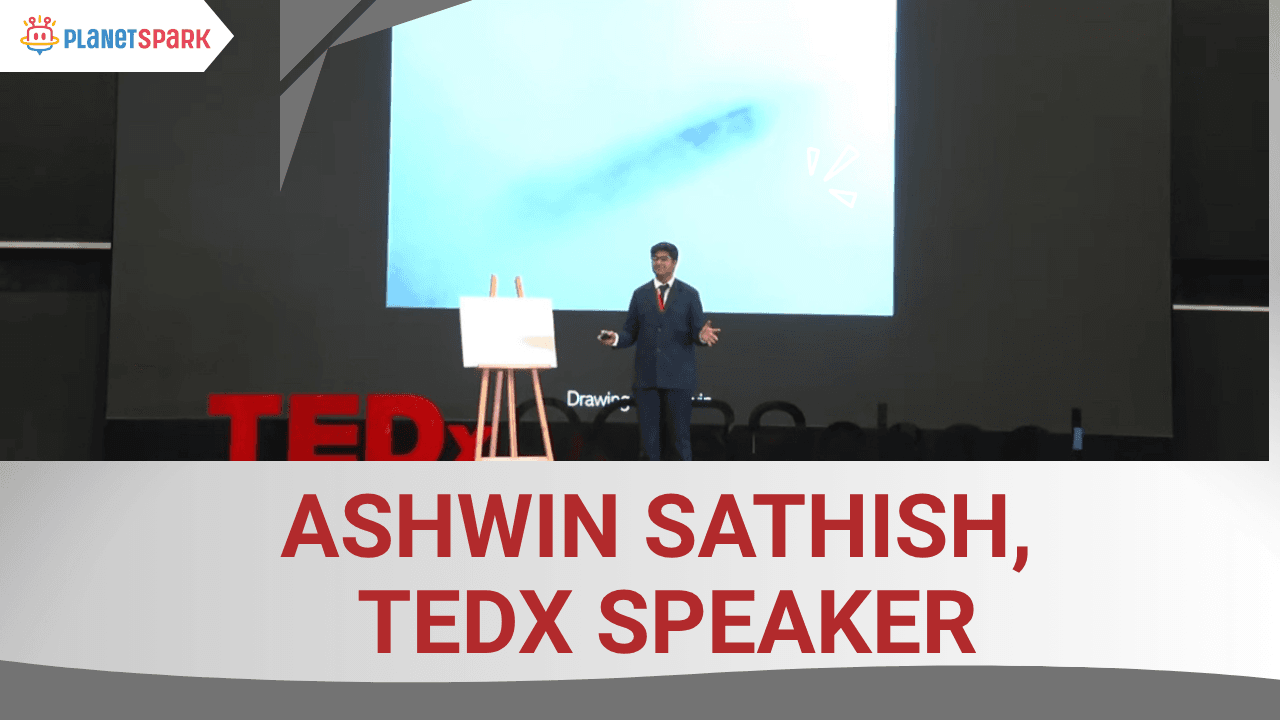
At just 13 years old, Ashwin Sathish, a Grade 8 student from New Delhi, achieved what many adults only dream of speaking confidently on a TEDx stage. Ashwin’s journey is a powerful example of how verbal confidence and spontaneity, when nurtured early, can help children express their ideas fearlessly and make their voices heard on global platforms.
Like many students, Ashwin initially struggled with organizing his thoughts and speaking spontaneously in front of an audience. Classroom discussions felt intimidating, and expressing complex ideas with clarity didn’t come naturally. However, with consistent practice, guided speaking activities, and structured communication training, Ashwin began to transform. He learned how to think on his feet, articulate his thoughts clearly, and speak with purpose rather than hesitation.
As his confidence grew, so did his ability to engage listeners. Ashwin didn’t just memorize speeches, he learned how to connect ideas, respond naturally, and communicate with conviction. This growth eventually led him to the TEDx stage, where he delivered a thought-provoking talk that sparked meaningful conversations and left a lasting impact on the audience.
When Should Parents Seek Structured Speaking Support?
Some children need more than casual practice. Parents should consider expert support if:
The child avoids speaking in class
Long pauses affect communication
Confidence drops during questions or presentations
Improvement is slow despite encouragement
Early intervention helps children build strong foundations before hesitation becomes a habit. Personalised coaching provides targeted feedback and faster improvement.
How Long Does It Take to See Improvement?
With consistent guided practice, parents often notice positive changes within 4 to 8 weeks.
Early signs of progress include:
Faster responses
Longer, clearer answers
Increased confidence in discussions
Reduced fear of making mistakes
Regular speaking practice and expert feedback are key. Verbal spontaneity improves steadily when children feel supported and challenged appropriately.
How Verbal Spontaneity Supports Clear Thinking and Expression
Verbal spontaneity is closely linked to how clearly a child thinks. When children are encouraged to respond naturally instead of memorising answers, they learn to organise their thoughts in real time. This process strengthens both thinking and expression. A child who speaks spontaneously is not just talking faster but is learning how to process information, make connections, and express ideas logically.
Children with strong verbal spontaneity can break complex thoughts into simple sentences. They learn to prioritise ideas instead of trying to say everything at once. This helps them sound clearer and more confident while speaking. Over time, spontaneous speaking trains the brain to work in a structured yet flexible way.
Verbal spontaneity supports clear expression by helping children:
Think while speaking instead of overthinking before speaking
Adjust responses based on the listener
Explain ideas in their own words
Stay engaged in conversations without freezing
When children practise spontaneous speaking regularly, clarity improves naturally. They stop searching for “perfect” sentences and start focusing on meaningful communication. This shift builds confidence, improves reasoning skills, and prepares children to express themselves effectively in both academic and social situations.
Common Myths Parents Believe About Confident Speaking
Many parents unknowingly hold beliefs that limit their child’s speaking growth. These myths often come from good intentions but can slow down the development of verbal spontaneity and confidence.
One common myth is that confident speakers are born, not made. In reality, speaking confidence is a learned skill. Children become confident when they are given repeated opportunities to speak without fear of judgment.
Another myth is that strong grammar leads to confident speaking. While grammar matters, focusing too much on correctness can make children anxious. Confidence comes first. Accuracy improves with practice.
Some parents also believe shy children cannot become confident speakers. Shyness is a personality trait, not a limitation. With the right support, even reserved children can develop strong verbal spontaneity.
Other common myths include:
Correcting mistakes immediately helps children learn faster
Memorising speeches builds real speaking skills
Children will “grow out of” hesitation naturally
Letting go of these myths allows parents to create a supportive environment where children feel safe to think aloud, experiment with words, and build confidence gradually.
The Role of Listening Skills in Building Verbal Spontaneity
Listening is a foundation skill for spontaneous speaking. Before children can respond confidently, they must understand what is being said and process information quickly. Strong listening skills help children grasp context, tone, and intent, making it easier to respond naturally.
Children who struggle with verbal spontaneity often focus so much on what they want to say that they stop listening actively. This leads to delayed responses or off-topic answers. Teaching children to listen fully improves their ability to respond clearly and confidently.
Good listening supports verbal spontaneity by helping children:
Understand questions accurately
Pick up cues from conversations
Respond appropriately instead of guessing
Build meaningful connections during discussions
Listening activities such as storytelling, summarising conversations, and guided discussions strengthen both comprehension and response skills. When children listen without pressure, they gain confidence in responding.
PlanetSpark integrates listening-based speaking exercises where children learn to respond thoughtfully rather than react impulsively. This balanced approach ensures children develop both clarity and spontaneity in communication.
How Vocabulary and Verbal Spontaneity Work Together
Vocabulary and verbal spontaneity grow together, not separately. A strong vocabulary gives children the words they need, while verbal spontaneity helps them use those words naturally in conversations.
Many children know a large number of words but hesitate to use them while speaking. This happens when vocabulary learning is limited to memorisation rather than usage. Spontaneous speaking encourages children to actively apply vocabulary in real-life contexts.
Verbal spontaneity improves vocabulary usage by helping children:
Recall words quickly while speaking
Use synonyms naturally instead of repeating the same words
Explain ideas even when exact words are missing
Build confidence to experiment with language
At the same time, a growing vocabulary supports spontaneity by reducing hesitation. When children are exposed to words through stories, discussions, and speaking exercises, they feel more prepared to express ideas.
PlanetSpark focuses on contextual vocabulary usage through speaking tasks, ensuring children learn how to use words confidently instead of just memorising meanings.
Why Memorised Speeches Do Not Build Real Speaking Confidence
Memorised speeches may help children perform well temporarily, but they do not build lasting speaking confidence. When children rely on memorisation, they are focused on recalling exact lines rather than understanding or expressing ideas.
This approach creates fear. If a child forgets a line, confidence drops instantly. There is little room for flexibility or recovery. Real-life communication does not follow scripts, which makes memorisation an incomplete solution.
Memorised speaking limits growth because:
It discourages independent thinking
It increases anxiety about forgetting content
It does not prepare children for questions or discussions
It reduces adaptability in real conversations
True speaking confidence comes from understanding ideas and expressing them naturally. Spontaneous speaking teaches children how to recover, rephrase, and continue speaking even when they make mistakes.
PlanetSpark moves children away from rote learning by focusing on structured yet flexible speaking frameworks that prepare them for real-world communication.
How Group Speaking Activities Improve Verbal Confidence
Group speaking activities play a powerful role in building verbal confidence. When children speak in groups, they learn that communication is a shared experience rather than a performance.
Group interactions expose children to different speaking styles and ideas. This helps them learn how to respond, agree, disagree, and build conversations naturally. Over time, children become more comfortable expressing thoughts without fear.
Group speaking activities improve verbal confidence by helping children:
Practise turn-taking and active listening
Respond to unpredictable questions
Express opinions respectfully
Build comfort speaking in front of others
Unlike solo speaking, group activities reduce pressure because attention is shared. Children feel less judged and more willing to participate.
PlanetSpark incorporates guided group interactions along with one-to-one sessions, ensuring children develop both individual confidence and collaborative communication skills.
The Connection Between Emotional Safety and Spontaneous Speech
Emotional safety is one of the most important foundations for verbal spontaneity. Children speak freely only when they feel safe from judgment, ridicule, or constant correction. If a child fears being laughed at, interrupted, or told they are wrong, they naturally hesitate before speaking. This hesitation directly affects their ability to respond spontaneously.
When emotional safety is present, children feel comfortable thinking aloud. They are more willing to experiment with words, share incomplete ideas, and correct themselves while speaking. This process is essential for developing natural communication skills. Emotional safety tells a child that their voice matters, even if their words are not perfect.
A lack of emotional safety can show up as:
Long pauses before speaking
Fear of answering questions
Overthinking simple responses
Avoiding conversations altogether
Creating emotional safety involves patience, encouragement, and active listening. Children need to know that mistakes are part of learning, not something to be punished. PlanetSpark focuses strongly on building a judgment-free environment where children feel supported while speaking. When children feel emotionally secure, verbal spontaneity grows naturally and confidence follows.
How Verbal Spontaneity Prepares Children for Future Careers
Verbal spontaneity is not just a childhood skill. It is a lifelong advantage that prepares children for future academic and professional success. Many careers today value communication, adaptability, and clear thinking more than memorised knowledge. Children who can express ideas quickly and confidently are better equipped to handle these demands.
In future careers, children will need to:
Answer questions in interviews
Share ideas in meetings
Collaborate with teams
Present thoughts clearly under pressure
Verbal spontaneity allows children to respond naturally without freezing or overthinking. It helps them adapt their language based on the situation and audience. These skills are essential in leadership roles, creative fields, and even technical professions.
Children who practise spontaneous speaking early develop confidence that carries into adulthood. They learn how to explain ideas, defend opinions, and communicate effectively in unpredictable situations. PlanetSpark’s speaking frameworks focus on real-world communication, ensuring children are prepared not just for exams, but for future careers where confident expression makes a real difference.
Give your child the skills to express freely, book a free PlanetSpark demo.
What Happens When Verbal Spontaneity Is Ignored for Too Long
When verbal spontaneity is ignored, hesitation can slowly turn into a habit. Children may begin to believe that they are “not good at speaking” or that their thoughts are not worth sharing. Over time, this mindset can deeply affect confidence and self-esteem.
Without support, children may:
Avoid classroom participation
Depend heavily on memorisation
Struggle in group discussions
Feel anxious during oral tasks
Withdraw socially
These challenges often grow with age. As academic and social demands increase, children who lack verbal spontaneity may find it harder to keep up. They may know the answers but feel unable to express them clearly.
Ignoring the issue does not make it disappear. In fact, hesitation often becomes more difficult to overcome later. Early guidance helps children unlearn fear and rebuild confidence. Structured speaking programs like PlanetSpark address this early by helping children practise real-time speaking in a safe and encouraging environment.
How Teachers Assess Verbal Confidence in Classrooms
Teachers observe verbal confidence daily, even when they are not explicitly grading it. A child’s ability to respond, explain, and participate plays a significant role in how they are perceived in class.
Teachers often assess verbal confidence through:
Willingness to answer questions
Clarity while explaining ideas
Participation in discussions
Ability to respond without long pauses
Confidence during presentations
Children with strong verbal spontaneity are often seen as more engaged and confident learners. They are able to express understanding even if their answers are not perfect. On the other hand, children who hesitate may be misunderstood as unprepared or uninterested.
Verbal confidence influences oral assessments, group work, and even leadership opportunities in school. Developing verbal spontaneity helps children communicate what they know clearly, ensuring their abilities are accurately reflected in the classroom.
Mistakes Parents Make While Trying to Improve Speaking Skills
Parents want the best for their children, but certain well-meaning actions can unintentionally slow down speaking development. One common mistake is correcting children too often. Constant interruptions make children self-conscious and hesitant.
Another mistake is focusing only on grammar and vocabulary. While these are important, overemphasis on correctness increases fear of mistakes and reduces spontaneity.
Other common mistakes include:
Finishing sentences for the child
Comparing them with more confident peers
Forcing performance instead of encouraging practice
Expecting instant improvement
Speaking confidence grows gradually. Children need encouragement, patience, and space to think aloud. Instead of pushing for perfection, parents should focus on progress and effort. PlanetSpark guides parents on how to support speaking development effectively while providing expert-led practice for children.
How Online One-to-One Speaking Classes Help Reserved Children
Reserved children often need personalised attention to build confidence. Online one-to-one speaking classes provide a safe and focused environment where children can speak freely without fear of judgment from peers.
In one-to-one sessions, children receive:
Individual attention from trained mentors
A comfortable space to express ideas
Personalised feedback and encouragement
Structured activities that build spontaneity
Reserved children benefit greatly from this format because it reduces pressure. They do not have to compete for attention or worry about being compared. Over time, confidence builds naturally.
PlanetSpark’s one-to-one classes are designed to help reserved children open up at their own pace. With guided practice and emotional support, children develop verbal spontaneity and gradually become confident speakers in both small and larger groups.

Why Choose PlanetSpark?
Personalized Learning: PlanetSpark offers customized sessions designed around each child’s learning style, interests, and pace. Whether a child enjoys storytelling, debating, or creative expression, mentors use tailored techniques to spark imagination and strengthen verbal skills.
Creative Speaking & Expression Activities: Children participate in storytelling, impromptu speaking, roleplay, and idea-building exercises that improve verbal spontaneity and help them express thoughts naturally.
Confidence & Communication Building: Through group discussions, presentations, and collaborative tasks, kids learn how to share their ideas confidently, listen actively, and respond clearly.
Engaging, Structured Learning Experience: Sessions are interactive, well-paced, and activity-driven, encouraging children to think creatively and communicate effectively without passive screen dependence
Conclusion
Verbal confidence and spontaneity are not inborn traits, they are skills that grow with the right guidance, practice, and encouragement. When children learn how to think clearly, organize their thoughts, and express ideas without fear, they begin to communicate with confidence in classrooms, social settings, and real-world situations. Building verbal spontaneity helps children respond naturally, speak fluently, and share opinions without hesitation, which plays a vital role in academic success and personal growth.
Frequently Asked Questions
Verbal spontaneity is a child’s ability to think quickly and respond naturally during conversations, without relying solely on memorized answers. It helps children express ideas clearly and confidently in real-time situations.
Verbal spontaneity improves classroom participation, public speaking, and social interactions. Children who can respond naturally develop confidence, clarity, and better communication skills, which benefit both academics and daily life.
While verbal spontaneity can begin developing as early as 5–6 years, consistent practice throughout elementary and middle school helps children strengthen quick thinking, confidence, and effective expression.
Parents can encourage open-ended questions, provide safe spaces for expression, allow thinking pauses, and engage children in storytelling or discussion activities to build verbal spontaneity naturally.
Yes! Shyness is not a barrier. With supportive environments, guided practice, and structured speaking activities like those at PlanetSpark, reserved children can gradually become confident and spontaneous speakers.
PlanetSpark offers personalized one-to-one and group speaking sessions, roleplay, storytelling, and interactive exercises. These activities teach children to think on their feet, respond naturally, and communicate confidently in everyday situations.