
Brain Gym Exercises for Kids: Boost Learning, Focus, and Memory Naturally
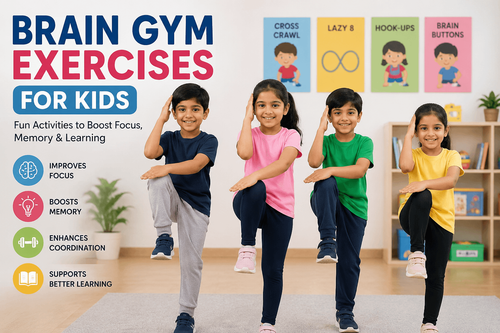

Table of Contents
- What Are Brain Gym Exercises?
- Benefits of Brain Gym Exercises for Kids
- Top Brain Gym Exercises for Kids
- Top Brain Gym Exercises for Kids
- How to Incorporate Brain Gym Into Daily Routine
- Age-Wise Brain Gym Activities
- Common Mistakes Parents Should Avoid
- Role of Brain Gym in Holistic Child Development
- How PlanetSpark Helps Enhance Brain Development
In today’s fast-paced digital world, children are constantly exposed to screens, structured academic pressure, and limited physical activity. While academic excellence remains a priority, many parents overlook a crucial element of learning—brain-body connection. This is where brain gym exercises for kids come into play. These simple yet powerful movements are designed to activate both hemispheres of the brain, improve coordination, and enhance cognitive abilities in a natural and engaging way.
Brain gym activities are not just physical exercises; they are structured movements that help children process information more efficiently. Whether a child struggles with concentration, memory retention, or emotional regulation, these exercises can significantly improve their learning readiness. Research-backed and widely used in classrooms worldwide, brain gym techniques support skills like reading, writing, listening, and comprehension.
In this blog, we will explore what brain gym exercises are, how they work, and why they are essential for your child’s overall development. We will also dive into the most effective brain gym exercises that you can easily incorporate into your child’s daily routine.
What Are Brain Gym Exercises?
Brain gym exercises are a series of simple physical movements designed to improve brain function and enhance learning abilities in children. These exercises are based on the concept that movement stimulates neural connections, helping the brain work more efficiently.
Origin and Concept of Brain Gym
Brain gym was developed by educator Paul Dennison as part of a method called educational kinesiology. This approach focuses on how physical movement influences learning and cognitive development. Dennison believed that many learning challenges in children are not due to lack of intelligence but rather a disconnect between different parts of the brain.
The concept emphasizes integrating the left and right hemispheres of the brain. While the left brain is associated with logic and language, the right brain handles creativity and imagination. Brain gym exercises help bridge this gap, allowing children to process information more effectively.
How Brain Gym Works
The effectiveness of brain gym exercises lies in their ability to activate neural pathways. When children perform coordinated movements—especially those that cross the midline of the body—it stimulates communication between both sides of the brain. This process improves skills such as concentration, memory, and problem-solving.
For example, activities like cross crawling or drawing infinity patterns require both sides of the body to work together. This coordination enhances bilateral integration, which is essential for reading, writing, and other academic tasks.
Additionally, these exercises improve blood flow and oxygen supply to the brain, making children more alert and ready to learn.
Why It Matters for Kids
Children often face challenges like short attention spans, difficulty in following instructions, or anxiety during learning. Brain gym exercises address these issues at a foundational level. Instead of forcing children to focus, these activities prepare the brain to focus naturally.
They are especially beneficial for:
- Kids with learning difficulties
- Children who struggle with coordination
- Students who experience stress or exam anxiety
By incorporating brain gym exercises regularly, parents and teachers can create a strong base for lifelong learning.
Benefits of Brain Gym Exercises for Kids
Brain gym exercises offer a wide range of cognitive, emotional, and physical benefits. Unlike traditional study methods, these exercises make learning more engaging and effective.
Improves Focus and Attention
One of the most noticeable benefits of brain gym exercises for kids is improved concentration. Many children struggle to stay focused for extended periods, especially in academic settings. Brain gym activities help activate the prefrontal cortex, which is responsible for attention and decision-making.
As a result, children become more attentive in class, follow instructions better, and complete tasks with greater accuracy.
Enhances Memory and Learning Ability
Memory plays a crucial role in a child’s academic success. Brain gym exercises strengthen neural connections, making it easier for children to retain and recall information. Activities that involve patterns, coordination, and repetition help reinforce learning pathways in the brain.
This is particularly useful for subjects that require memorization, such as languages, mathematics, and science concepts.
Boosts Coordination and Motor Skills
Physical coordination is closely linked to brain development. Brain gym exercises improve both fine and gross motor skills, helping children perform everyday tasks more efficiently. Better coordination also supports handwriting, sports performance, and overall physical confidence.
Reduces Stress and Anxiety
Children today face increasing levels of stress due to academic pressure and social expectations. Brain gym exercises include calming movements that help regulate emotions and reduce anxiety. Techniques like deep breathing and gentle pressure points promote relaxation and mental clarity.
When children feel calm, they are more open to learning and problem-solving.
Supports Academic Performance
All the above benefits collectively contribute to improved academic performance. Children who practice brain gym exercises regularly tend to perform better in reading, writing, and comprehension tasks. They also develop a positive attitude towards learning, which boosts their confidence and motivation.
Boost your child’s focus and brain power—Try a FREE PlanetSpark Demo Class today!
Top Brain Gym Exercises for Kids
Now that we understand the benefits, let’s explore some of the most effective brain gym exercises that can be easily practiced at home or in the classroom.
Cross Crawl Exercise
The cross crawl is one of the most fundamental brain gym exercises. It involves touching the right elbow to the left knee and vice versa in an alternating pattern.
This movement mimics the natural walking pattern and helps improve coordination between the left and right hemispheres of the brain. It is especially beneficial for reading and writing skills, as it enhances the brain’s ability to process information across both sides.
Regular practice of cross crawl exercises can significantly improve focus, balance, and cognitive flexibility in children.
Lazy 8 (Infinity Exercise)
The Lazy 8 exercise involves drawing a horizontal figure eight (∞) in the air or on paper. Children trace the shape slowly using their fingers or a pen while keeping their eyes focused on the movement.
This exercise is excellent for improving visual tracking, which is essential for reading. It also enhances hand-eye coordination and helps children develop better control over their writing movements.
The repetitive and rhythmic nature of this exercise makes it both calming and effective.
Brain Buttons
Brain buttons are simple yet powerful. In this exercise, children gently massage two points just below the collarbone while placing the other hand on the navel.
This activity increases blood flow to the brain and helps improve alertness and concentration. It is particularly useful before starting a study session, as it prepares the brain for learning.
Many teachers use brain buttons as a quick warm-up activity in classrooms.
Hook-Ups
Hook-ups are designed to promote relaxation and emotional balance. In this exercise, children cross their ankles and wrists, then gently press their tongue against the roof of their mouth while breathing deeply.
This posture helps calm the nervous system and reduce stress. It is especially helpful for children who feel anxious before exams or presentations.
Hook-ups also improve self-regulation, allowing children to manage their emotions more effectively.
Double Doodle
Double doodle is a creative brain gym exercise where children draw symmetrical patterns using both hands simultaneously.
This activity stimulates both hemispheres of the brain and enhances creativity. It also improves fine motor skills and coordination, making it beneficial for writing and artistic expression.
Children often enjoy this exercise because it feels like a fun art activity rather than a structured task.
Top Brain Gym Exercises for Kids
The Elephant Exercise
The Elephant exercise is a highly effective brain gym activity that combines movement, balance, and visual tracking. In this exercise, the child places one ear on their shoulder (as if it’s the elephant’s trunk) and extends the corresponding arm outward. The child then draws a large horizontal figure eight (∞) in the air using that arm while keeping their eyes focused on their fingertips.
This exercise is particularly beneficial for improving listening skills, coordination, and spatial awareness. It activates the vestibular system, which is responsible for balance and body orientation. Children who struggle with attention or auditory processing often benefit greatly from this activity.
Additionally, the Elephant exercise supports reading skills by enhancing visual tracking and eye movement control, which are essential for following lines of text smoothly.
Positive Points
Positive Points is a calming brain gym technique that helps children manage stress and improve mental clarity. In this exercise, children gently place their fingertips on two points on their forehead (just above the eyes) and apply light pressure while taking slow, deep breaths.
This activity helps redirect blood flow to the frontal lobes of the brain, which are responsible for decision-making, focus, and emotional regulation. It is especially useful during moments of frustration, anxiety, or mental fatigue.
When practiced regularly, Positive Points can help children develop better emotional control, improve problem-solving abilities, and approach learning tasks with a clearer and calmer mindset.
How to Incorporate Brain Gym Into Daily Routine
Consistency is the key to unlocking the full benefits of brain gym exercises for kids. These activities are most effective when they are seamlessly integrated into a child’s daily routine rather than treated as an occasional activity.
Morning Routine Ideas
Starting the day with brain gym exercises can set a positive tone for learning. A short 5–10 minute routine that includes exercises like cross crawl, brain buttons, and lazy 8 can help activate the brain and improve alertness.
Morning practice ensures that children begin their day feeling focused, energized, and ready to absorb new information. It also helps reduce morning sluggishness and improves mood.
Classroom Activities
Teachers can incorporate brain gym exercises as short breaks between lessons. These “brain breaks” help reset attention spans and prevent mental fatigue. For example, a quick round of hook-ups or cross crawl exercises can re-engage students and improve their participation.
Such activities also create a more interactive and dynamic classroom environment, making learning enjoyable rather than monotonous.
At-Home Practice Tips
At home, parents can turn brain gym exercises into fun bonding activities. Instead of presenting them as tasks, they can be introduced as games or challenges. Adding music, storytelling, or playful competition can make these exercises more engaging.
It is important to maintain consistency without forcing the child. Even 10–15 minutes of daily practice can yield noticeable improvements over time.
Age-Wise Brain Gym Activities
Not all exercises are equally suitable for every age group. Tailoring brain gym activities according to a child’s developmental stage ensures better results and engagement.
Preschoolers (3–5 Years)
For younger children, the focus should be on simple, playful movements. Activities like cross crawl, clapping patterns, and basic drawing exercises work well. At this stage, the goal is to develop coordination and body awareness.
Short sessions with lots of fun and encouragement are key to keeping preschoolers engaged.
Primary School Kids (6–10 Years)
Children in this age group can handle more structured exercises such as lazy 8, double doodle, and the Elephant exercise. These activities help improve reading, writing, and comprehension skills.
This is also the ideal age to introduce routines, as children begin to understand the connection between practice and improvement.
Pre-Teens (11–13 Years)
Older children benefit from exercises that focus on stress management and cognitive performance. Hook-ups, Positive Points, and more advanced coordination exercises can help them handle academic pressure and emotional challenges.
At this stage, brain gym exercises can also be linked to goal-setting and productivity.
Common Mistakes Parents Should Avoid
While brain gym exercises are simple, incorrect implementation can limit their effectiveness. One common mistake is forcing children to perform the exercises. This can create resistance and reduce their interest.
Another mistake is expecting immediate results. Brain development is a gradual process, and consistent practice is essential for long-term benefits.
Parents should also avoid overloading children with too many exercises at once. A small, consistent routine is far more effective than an intense but irregular approach.
Lastly, ignoring the fun element can make these exercises feel like a chore. Keeping the activities engaging and enjoyable is crucial for sustained participation.
Role of Brain Gym in Holistic Child Development
Brain gym exercises for kids go beyond academic improvement. They play a vital role in holistic development, which includes emotional, physical, and cognitive growth.
These exercises help children become more self-aware and confident. Improved coordination and focus lead to better performance not just in studies but also in extracurricular activities such as sports, music, and art.
Emotionally, brain gym techniques help children manage stress, build resilience, and develop a positive mindset. Socially, improved communication and confidence enable them to interact more effectively with peers and adults.
By nurturing multiple aspects of development, brain gym exercises lay the foundation for lifelong learning and success.
How PlanetSpark Helps Enhance Brain Development
In addition to brain gym exercises, structured learning platforms play a crucial role in shaping a child’s cognitive and communication abilities. PlanetSpark is one such platform that focuses on holistic development through innovative teaching methods.
Interactive Learning Approach
PlanetSpark uses highly interactive sessions that engage children in activities designed to stimulate thinking and creativity. This complements brain gym exercises by strengthening neural connections through active participation.
Focus on Confidence and Public Speaking
One of the standout features of PlanetSpark is its emphasis on communication skills. Public speaking, storytelling, and debates help children organize their thoughts, express ideas clearly, and build confidence.
These skills are closely linked to brain development, as they require coordination between language, memory, and reasoning.
Expert Trainers and Structured Curriculum
PlanetSpark provides access to trained educators who understand child psychology and learning patterns. Their structured curriculum ensures that children receive personalized attention and guidance.
This targeted approach helps reinforce the benefits of brain gym exercises by aligning them with skill-based learning.
Integration with Brain Development Techniques
The platform incorporates activities that promote critical thinking, creativity, and problem-solving. These elements work hand-in-hand with brain gym exercises to enhance overall cognitive development.
Frequently Asked Questions
Brain gym exercises for kids are simple physical movements designed to improve brain function and enhance learning abilities. These exercises are based on the concept that movement stimulates neural connections in the brain, helping children improve focus, memory, coordination, and comprehension. They are widely used by parents and educators to support academic performance and overall development in a fun and engaging way.
Brain gym exercises improve concentration by activating both hemispheres of the brain and enhancing neural communication. Movements like cross crawl and lazy 8 increase blood flow and oxygen supply to the brain, which helps children stay alert and focused. Regular practice trains the brain to process information more efficiently, allowing children to pay attention for longer periods without feeling mentally fatigued.
Children can start brain gym exercises as early as 3 years old. For preschoolers, simple movements like clapping patterns and cross crawl are effective, while older children can practice more structured exercises such as lazy 8, double doodle, and hook-ups. The key is to choose age-appropriate activities that match the child’s developmental stage and keep them engaged.
For best results, kids should practice brain gym exercises daily for about 10–15 minutes. Consistency is more important than duration, as regular practice helps strengthen neural pathways over time. These exercises can be included in morning routines, study breaks, or pre-homework sessions to maximize their effectiveness.
Yes, brain gym exercises can significantly improve academic performance. By enhancing focus, memory, and comprehension skills, these exercises help children perform better in reading, writing, and problem-solving tasks. They also reduce stress and anxiety, allowing children to approach learning with a more positive and confident mindset.