
Kids Career Counselling & Communication Skill Development


Table of Contents
- What Is Career Counselling?
- Why Career Counselling Is Important for Children
- Career Counselling Is Not Career Pressure
- When Should Career Counselling Begin?
- Understanding Yourself Through Career Counselling
- Identifying Interests Through Career Counselling
- Identifying Strengths and Abilities
- Difference Between Interest and Strength
- Role of Assessments in Career Counselling
- Exploring Career Options Through Counselling
- Talking Openly During Career Counselling
- Fun Activity: My Interest Map
- Checkpoint 1: What Have You Learned So Far?
- Role of Parents in Career Counselling
- Common Mistakes Parents Should Avoid
- Role of a Career Counsellor
- How Career Counselling Builds Confidence
- Career Counselling and Skill Development
- Importance of Communication Skills in Career Counselling
- How We Supports Career Counselling
- Career Counselling Through Activities and Discussions
- Understanding Career Pathways
- Importance of Exploration Over Early Decisions
- Group Career Counselling Benefits
- Career Counselling at School vs Outside
- Fun Activity: Career Role Cards
- Checkpoint 2: What Should Parents and Children Know?
- Career Myths and Misconceptions
- Understanding Career Confusion in Children
- How Career Counselling Handles Fear and Pressure
- Changing Interests and Career Flexibility
- Career Counselling for Different Personality Types
- Emotional Intelligence and Career Counselling
- Importance of Goal Setting in Career Counselling
- How Career Counselling Encourages Independent Thinking
- Role of Teachers in Career Counselling
- Career Counselling and Academic Choices
- Fun Activity: Career Timeline
- Table: Career Counselling Focus at Different Ages
- Checkpoint 3: What Have We Learned So Far?
- About PlanetSpark : Personality Development
As children grow, questions about the future naturally arise: What am I good at? What should I become? Career counselling helps answer these questions in a calm, structured, and supportive way without pressure or fear. For school-going children, career counselling isn’t about choosing a final profession. It’s about discovering interests, strengths, and learning styles while building confidence for the future.
PlanetSpark supports this journey by combining expert career guidance with communication and life skills that help children succeed in any path they choose.
What Is Career Counselling?
Career counselling is a guided process that helps children understand themselves better and explore different career paths. It includes discussions, activities, assessments, and guidance that support informed decision-making.
Career counselling helps children:
Discover their interests
Understand their strengths
Explore career options
Build confidence
Reduce confusion and stress
It is not about forcing choices but about opening doors.
Help your child discover their strengths early — “Book a Free Demo Class” today.
Why Career Counselling Is Important for Children
Many children feel confused when they are asked about their future. Career counselling provides clarity and direction at an early stage.
Career counselling helps children :
Feel less anxious about the future
Understand that career planning is a journey
Learn decision-making skills
Develop self-awareness
Explore careers beyond common options
Early guidance prevents confusion later.
Career Counselling Is Not Career Pressure
It is important to understand that career counselling is different from career pressure.
| Career Counselling | Career Pressure |
|---|---|
| Focuses on exploration | Focuses on results |
| Encourages curiosity | Creates fear |
| Supports interests | Forces expectations |
| Builds confidence | Causes stress |
Children should feel supported, not judged.
When Should Career Counselling Begin?
Career counselling can begin as early as Classes 5 and 6. At this stage, counselling focuses on awareness rather than decisions.
At this age, career counselling helps children:
Identify interests
Understand strengths
Explore hobbies
Build learning habits
Develop confidence
Early counselling lays a strong foundation.
Understanding Yourself Through Career Counselling
Self-understanding is the first step in career counselling. Children learn to recognise what they enjoy, what they find easy, and what excites them.
Career counselling encourages children to think about:
Favourite school subjects
Preferred activities
Learning style
Personal strengths
Areas for improvement
This self-awareness helps guide future choices.
Identifying Interests Through Career Counselling
Interests are activities that make children feel happy and engaged. Career counselling helps children identify and explore these interests.
Examples of interests:
Reading and writing
Speaking and storytelling
Solving puzzles
Drawing and designing
Playing sports
Helping others
Interests give clues about suitable career paths.
Identifying Strengths and Abilities
Strengths are things children do well. Career counselling helps children recognise and value their strengths.
Common strengths include:
Clear communication
Logical thinking
Creativity
Leadership
Observation skills
Patience
Every child has strengths. Counselling helps uncover them.
Difference Between Interest and Strength
Understanding this difference helps children make balanced choices.
| Interest | Strength |
|---|---|
| What you enjoy | What you do well |
| Creates excitement | Shows ability |
| Can change | Can improve |
| Guides exploration | Guides skill building |
A good career path usually matches both.
Role of Assessments in Career Counselling
Career counselling may include simple assessments or activities that help children understand themselves better.
Assessments may explore:
Interests
Personality traits
Learning styles
Skill preferences
These are tools for guidance, not exams.
Exploring Career Options Through Counselling
Career counselling introduces children to a wide range of careers. Many children only know a few common professions. Counselling helps them see more possibilities.
Career fields include:
Science and technology
Arts and creativity
Communication and media
Business and management
Education and social service
Sports and fitness
Exploration expands thinking.
Help your child explore their interests with confidence.
Book a free career guidance demo session with PlanetSpark today.
Talking Openly During Career Counselling
Career counselling encourages open and honest conversations. Children are encouraged to share thoughts without fear of judgment.
Good questions include:
What do I enjoy learning?
What makes me feel confident?
What do I want to improve?
What activities excite me?
Open discussion builds trust and clarity.
Fun Activity: My Interest Map
Activity steps:
Write your favourite activities
List subjects you enjoy
Draw connections between them
Discuss possible careers linked to them
This activity helps children visualise interests.
Checkpoint 1: What Have You Learned So Far?
Children should now be able to:
Explain what career counselling is
Understand its purpose
Identify interests and strengths
Feel less afraid about career planning
Parents should focus on listening and encouragement.
Role of Parents in Career Counselling
Parents play a very important role in career counselling. Children often look to their parents for guidance, approval, and encouragement. When parents are supportive, children feel safe exploring their interests and expressing their thoughts.
Parents can support career counselling by:
Listening without judging
Encouraging curiosity
Avoiding comparisons with others
Focusing on effort, not outcomes
Supporting skill development
A calm and open environment helps children grow.

Common Mistakes Parents Should Avoid
Even with good intentions, parents may sometimes create pressure. Career counselling helps parents recognise and avoid these mistakes.
Common mistakes include:
Forcing a specific career choice
Comparing children with peers or siblings
Ignoring a child’s interests
Linking self-worth to marks or results
Deciding too early
Career counselling encourages patience and understanding.
Role of a Career Counsellor
A career counsellor is a trained guide who helps children and parents understand career options and personal strengths. Counsellors act as neutral supporters rather than decision-makers.
A career counsellor helps by:
Asking the right questions
Conducting assessments
Providing career information
Offering unbiased guidance
Supporting emotional well-being
Their role is to guide, not decide.
How Career Counselling Builds Confidence
Career counselling helps children believe in themselves. When children understand their strengths and interests, they feel more confident about their future.
Confidence grows when children:
Feel heard
Understand their abilities
Explore without fear
Learn decision-making skills
Receive positive feedback
Confident children make better choices.
Career Counselling and Skill Development
Career counselling is closely connected to skill-building. Once children understand their interests, they can begin developing relevant skills.
Important skills include:
Communication skills
Critical thinking
Creativity
Problem-solving
Collaboration
Skill development prepares children for any career.
Give your child clarity, confidence, and direction: Read More
Importance of Communication Skills in Career Counselling
No matter which career a child chooses, communication skills are essential. Career counselling highlights the importance of speaking, listening, reading, and writing effectively.
Strong communication skills help children:
Express ideas clearly
Build confidence
Participate in discussions
Perform well in interviews
Work well in teams
These skills are useful for life.
How We Supports Career Counselling
PlanetSpark integrates communication skills with career counselling. Through structured programs, children develop skills that support future success.
PlanetSpark helps children:
Improve speaking skills
Build vocabulary
Enhance writing abilities
Develop confidence
Explore interests through communication
This holistic approach supports long-term growth.
Career Counselling Through Activities and Discussions
Career counselling is most effective when it is interactive. Activities and discussions make learning engaging and meaningful.
Examples include:
Role-play different professions
Group discussions
Storytelling activities
Creative writing tasks
Presentation exercises
Learning through doing makes counselling enjoyable.
Understanding Career Pathways
Career counselling helps children understand that careers are not single straight lines. There are multiple pathways to reach goals.
Children learn that:
Careers evolve over time
Skills can be transferred
Interests may change
Learning never stops
Mistakes are part of growth
This reduces fear of failure.
Importance of Exploration Over Early Decisions
Career counselling focuses on exploration rather than early commitment. Children are encouraged to try different activities and subjects.
Exploration helps children:
Discover new interests
Build diverse skills
Avoid regret
Stay motivated
Make informed choices later
Exploration keeps options open.
Every child has unique strengths waiting to shine.
Start your child’s career discovery journey with PlanetSpark.
Group Career Counselling Benefits
Group counselling sessions allow children to learn from peers. Sharing ideas helps children see different perspectives.
Benefits include:
Peer learning
Confidence building
Teamwork
Communication practice
Reduced anxiety
Group settings encourage participation.
Career Counselling at School vs Outside
Both school-based and external career counselling have benefits.
| School Counselling | External Counselling |
|---|---|
| Familiar environment | Personalised attention |
| Peer discussions | Specialised guidance |
| Basic awareness | In-depth exploration |
| Regular sessions | Flexible timing |
A combination works best.
Fun Activity: Career Role Cards
Activity steps:
Write different careers on cards
Pick one card randomly
Describe what the person does
Discuss skills needed for that role
This builds awareness and confidence.
Checkpoint 2: What Should Parents and Children Know?
By now, children should:
Understand the role of parents and counsellors
Feel supported and confident
Know the importance of skill development
Be open to exploration
Parents should encourage growth over results.
Career Myths and Misconceptions
Many children and parents believe myths about careers. Career counselling helps clear these misunderstandings and replaces fear with facts.
Some common myths include:
Only top scorers succeed in life
There are only a few “good” careers
One wrong choice can ruin the future
Talent is fixed and cannot grow
Success comes quickly
Career counselling teaches that success comes from effort, learning, and adaptability.
Understanding Career Confusion in Children
It is completely normal for children to feel confused about careers. At a young age, children are still discovering themselves and the world around them.
Children may feel confused because:
They have many interests
They lack exposure to careers
They feel pressure from adults
They fear making mistakes
They compare themselves with others
Career counselling reassures children that confusion is part of growth.
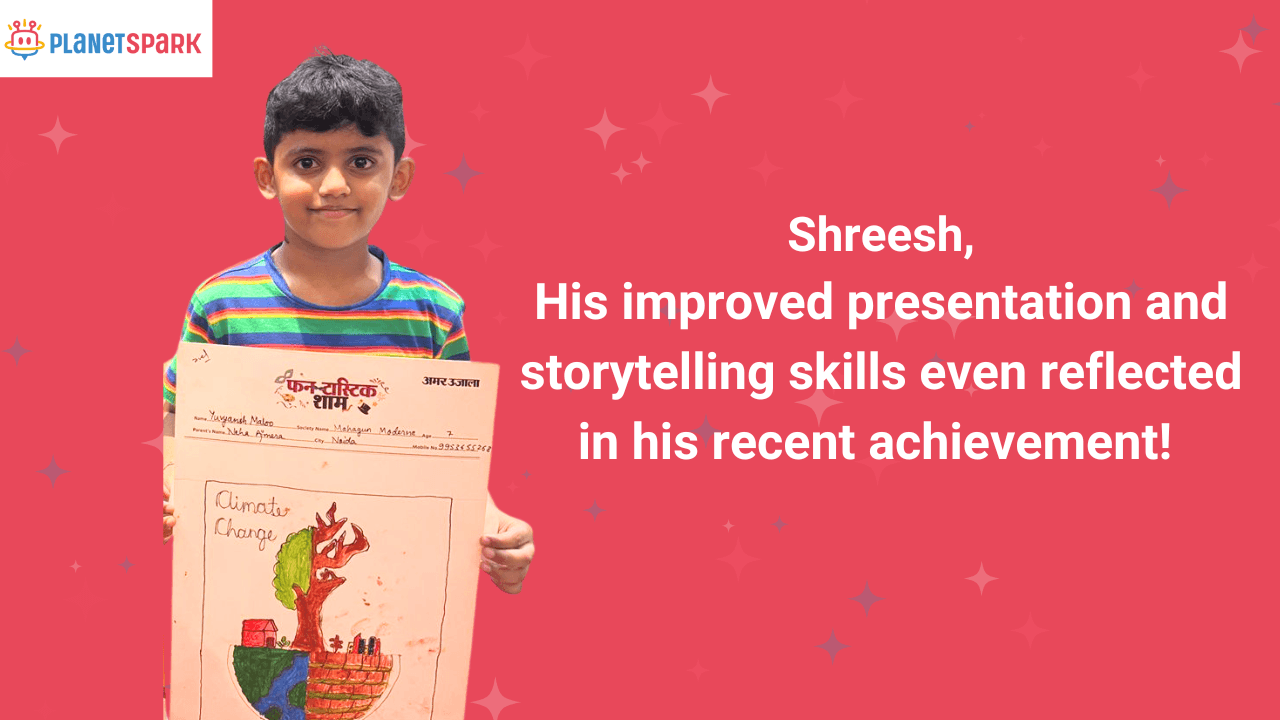
Success Story: Yuvyansh (Grade 1 | Age 6)
PlanetSpark has played a key role in helping Yuvyansh express his ideas with creativity and confidence. Through structured communication sessions, he developed strong presentation and storytelling skills, allowing him to articulate his thoughts more clearly.
This growth was proudly reflected in his recent achievement winning second place in the Junior Category of a ‘Climate Change’ drawing competition, organized by the Amar Ujala team. His ability to confidently explain the idea behind his artwork truly set him apart.
How Career Counselling Handles Fear and Pressure
Fear is a big part of career-related stress. Children may fear failure, disappointing parents, or choosing incorrectly.
Career counselling helps children:
Talk openly about fears
Understand that mistakes are learning steps
Focus on strengths instead of weaknesses
Learn coping strategies
Develop a growth mindset
Reducing fear helps children think clearly.
Changing Interests and Career Flexibility
Children’s interests often change as they grow, and this is perfectly healthy. Career counselling encourages flexibility instead of fixed plans.
Children learn that:
Interests evolve with experience
Skills can be applied in many fields
Changing paths is acceptable
Learning new things is valuable
Growth matters more than labels
This flexibility reduces anxiety.
Career Counselling for Different Personality Types
Every child is unique. Some children are outgoing, while others are quiet and thoughtful. Career counselling respects these differences.
Examples of personality-based guidance:
Talkative children may enjoy leadership roles
Creative children may enjoy artistic fields
Analytical children may like problem-solving
Caring children may enjoy helping professions
Curious children may enjoy research-based roles
There is no “one-size-fits-all” career.
Emotional Intelligence and Career Counselling
Career counselling focuses not only on careers but also on emotions. Emotional intelligence helps children understand themselves and others.
Career counselling builds:
Self-awareness
Empathy
Emotional control
Confidence
Decision-making skills
Emotionally strong children handle challenges better.
Importance of Goal Setting in Career Counselling
Career counselling teaches children how to set small, achievable goals instead of worrying about the distant future.
Examples of simple goals:
Improve reading skills
Participate in group discussions
Explore one new subject
Practice speaking confidently
Try a new activity
Small goals lead to big success.
How Career Counselling Encourages Independent Thinking
Career counselling helps children think for themselves instead of following others blindly.
Children learn to:
Ask questions
Explore options
Evaluate choices
Trust their abilities
Take responsibility
Independent thinking builds lifelong confidence.
Build clarity, confidence, and communication skills together.
Join PlanetSpark’s skill-based learning programs now.
Role of Teachers in Career Counselling
Teachers observe children daily and play a key role in identifying strengths and interests.
Teachers help by:
Encouraging participation
Giving constructive feedback
Noticing learning styles
Suggesting activities
Supporting confidence
Career counselling works best with teamwork.
Career Counselling and Academic Choices
Career counselling helps children connect academics with real-life applications.
Children understand:
Why subjects matter
How skills transfer across careers
That marks are only one factor
That learning is more than exams
That effort matters
This improves motivation.
Fun Activity: Career Timeline
Steps for the activity:
Draw a timeline from now to adulthood
Add skills to learn at each stage
Add interests to explore
Discuss how plans may change
This activity teaches flexibility and planning.
Table: Career Counselling Focus at Different Ages
| Age Group | Career Counselling Focus |
|---|---|
| 8–10 years | Self-awareness and exploration |
| 11–13 years | Skill discovery and confidence |
| 14–16 years | Subject choices and guidance |
| 17+ years | Career planning and decisions |
Early guidance builds strong foundations.
Checkpoint 3: What Have We Learned So Far?
At this stage, children should:
Understand that confusion is normal
Know that interests can change
Feel less pressure about careers
Believe in flexibility and growth
Parents should focus on support, not control.

About PlanetSpark : Personality Development
PlanetSpark nurtures confident, expressive, and self-aware children through structured personality development programs. Our curriculum builds communication etiquette, emotional intelligence, leadership, and self-confidence empowering kids to thrive socially and personally.
1. Holistic Personality Coaching (1:1)
Each child receives personalised guidance from trained mentors who focus on confidence-building, self-expression, and positive communication habits.
2. Structured Personality Development Path
A customised roadmap develops self-awareness, goal-setting, leadership skills, and social interaction through age-appropriate activities.
3. Confidence, Etiquette & Body Language Training
Children learn eye contact, posture, tone, and respectful communication essential skills for strong first impressions and effective interaction.
4. Activity-Based & Real Life Learning
Roleplays, mock interviews, journaling, and scenario-based activities help children practise real-world communication and decision-making skills.
5. Emotional Intelligence & Leadership Growth
Through guided feedback and reflection, kids build empathy, teamwork, assertiveness, and leadership confidence skills that last a lifetime.
Frequently Asked Questions
Career counselling is guidance that helps children understand their interests, strengths, and skills so they can make better choices about learning and future careers.
Career counselling can start as early as Classes 5 and 6. At this age, it focuses on self-awareness, confidence building, and exploration rather than final decisions.
No. Career counselling does not force children to choose a career. It helps them explore options and understand themselves better.
Yes. Career counselling helps children manage stress, fear, and confusion by teaching them that growth is a journey.
Yes. Even strong students benefit because career success depends on skills, interests, and mindset, not just marks.