
Understand Cognitive Load Management to Improve Work Efficiency


Table of Contents
- What Is Cognitive Load and Why Does It Matter
- The Three Types of Cognitive Load in Learning
- Signs You Are Experiencing Mental Overload
- Cognitive Load Theory Practical Use for Students and Kids
- Reduce Mental Overload Techniques for Working Professionals
- Managing Information Overload Skills for Everyday Life
- How Cognitive Load Management Supports Personality Developme
- How PlanetSpark Helps You Master Cognitive Load Management
- Quick Recap Before You Go
Have you ever sat down to study or work, only to find your brain completely shutting down halfway through? You are reading the same line three times, forgetting what you just did five minutes ago, or feeling exhausted even before the real work begins. That feeling has a name. It is called cognitive overload, and it happens to both students and working professionals more often than they realise.
Understanding cognitive load management can completely change how you learn, work, and perform every day. When you know how the brain handles information and what causes it to struggle, you gain a practical edge that no amount of motivation alone can give you. This blog explains what cognitive load is, how it affects your daily performance, and how you can apply real strategies to reduce mental overload and get more done with less effort.
What Is Cognitive Load and Why Does It Matter
Cognitive load refers to the total amount of mental effort being used in your working memory at any given moment. Working memory is the part of your brain that actively processes new information. It is powerful, but it has strict limits. It can only hold and process a small amount of information at one time.
Cognitive load theory, introduced by psychologist John Sweller in the 1980s, explains that learning and performance break down when working memory is pushed beyond its limits. This is not a sign of low intelligence or poor discipline. It is simply how the human brain is built.

For a student trying to learn fractions while also remembering grammar rules and managing a test deadline, the mental load adds up quickly. For a working professional attending back-to-back meetings while managing emails, deadlines, and decisions, the overload is just as real. Cognitive load management is about understanding that limit and working with it instead of against it.
When you manage cognitive load well, you think more clearly, retain more information, make better decisions, and feel less exhausted by the end of the day. That is why it matters so deeply for personality development, academic performance, and professional growth.
The Three Types of Cognitive Load in Learning
Not all mental effort is the same. Cognitive load in learning is divided into three distinct types, and knowing the difference helps you target the right problem.
Intrinsic cognitive load
Is the effort required by the material itself. Complex topics like algebra, business strategy, or a new language naturally demand more mental effort than simple ones. This type of load is built into the content and cannot be fully removed, but it can be managed by breaking complex topics into smaller, easier steps.
Extraneous cognitive load
Is the mental effort caused by poor presentation, confusing instructions, or cluttered environments. This type of load adds nothing useful to learning and is entirely avoidable. A badly designed worksheet, a noisy workspace, or unclear communication all increase extraneous load. Reducing this type is one of the fastest ways to improve focus and performance.
Germane cognitive load
Is the mental effort that actually builds understanding and long-term memory. This is the good kind of cognitive effort. When your brain works to make connections, spot patterns, and organise new knowledge, it is building schemas that make future learning faster and easier.
Effective cognitive load management means reducing extraneous load, supporting intrinsic load with the right structure, and maximising germane load so that real learning and skill-building take place.
Signs You Are Experiencing Mental Overload
Before you can manage cognitive load, you need to recognise when it is happening. Mental overload does not always feel dramatic. It can be subtle and mistaken for laziness, distraction, or lack of motivation.
Common signs of cognitive overload include difficulty concentrating even on tasks you understand well, frequent mistakes on simple things you normally handle easily, feeling mentally tired within a short time of starting work or study, a sense of confusion even after re-reading the same material, inability to make decisions or prioritise tasks clearly, irritability or frustration that seems out of proportion to the situation, and difficulty remembering what was just discussed or read.
Children often show cognitive overload through behavioural changes. They may become restless, refuse to continue a task, lose confidence, or become emotional during study time. Adults may experience decision fatigue, poor sleep quality, or a constant feeling of being behind despite working long hours. Recognising these signs early is a critical first step in managing information overload skills.
Cognitive Load Theory Practical Use for Students and Kids
Cognitive load theory has enormous practical value for how children study and how teachers and parents can support better learning. The goal is to design learning experiences that work with the brain's natural limits rather than overwhelming them.
- One of the most effective applications is chunking. Instead of presenting a large amount of information at once, breaking content into small, logical pieces gives the working memory a chance to process each part before moving to the next. A child learning multiplication tables, for example, benefits far more from mastering one table thoroughly before adding a new one than from trying to memorise all tables at once.
- Worked examples are another powerful tool. Showing a student a fully solved problem step by step before asking them to solve one independently reduces the intrinsic load significantly. The brain can focus on understanding the process rather than simultaneously figuring out the problem and executing it at the same time.
- Reducing unnecessary visual and auditory distractions during study time directly lowers extraneous cognitive load. A quiet, clean study space without open tabs, background noise, or device notifications allows the working memory to focus entirely on the material at hand.
- Spacing practice over multiple shorter sessions instead of cramming into one long session helps germane load build properly. Repetition over time strengthens memory pathways and makes future recall faster and more reliable. PlanetSpark's structured learning approach is built around exactly these principles, helping children learn more efficiently and with greater confidence.
Reduce Mental Overload Techniques for Working Professionals
For adults managing demanding careers, the challenge of cognitive overload is just as real. The workplace is filled with competing demands, constant communication, and the pressure to make good decisions under time constraints. Applying practical reduce mental overload techniques can make a significant difference in both productivity and wellbeing.
- Prioritisation is one of the most powerful tools available. Not everything on your list carries equal cognitive weight. Identifying the two or three tasks that genuinely require focused mental effort and completing those first, before attending to lower-effort tasks like emails or routine admin, protects your best mental energy for what matters most.
- Time blocking helps by designating specific windows for specific types of work. Deep work, which requires sustained concentration and complex thinking, should be scheduled during periods when you are naturally most alert. Reactive tasks such as messages and check-ins can be batched into separate windows. This prevents the constant context-switching that dramatically increases extraneous cognitive load throughout the day.
- Externalising information reduces the mental effort of trying to remember everything. Writing down tasks, decisions, and key information into a reliable system, whether a notebook, a task manager, or a calendar, frees up working memory for active thinking rather than storage. The brain is not designed to function as a filing cabinet. When you stop using it as one, clarity returns quickly.
- Single-tasking over multitasking is one of the most evidence-supported strategies for reducing cognitive load. Research consistently shows that switching between tasks increases errors, slows completion time, and adds significant mental fatigue. Doing one thing at a time with full attention is faster, more accurate, and far less exhausting than attempting to manage multiple streams of work simultaneously.
- Regular mental breaks, even five to ten minutes of true rest between focused work periods, allow the working memory to consolidate information and recover capacity. Walking, stretching, or simply sitting quietly away from screens gives the brain the reset it needs to sustain high performance throughout the day.
Managing Information Overload Skills for Everyday Life
In modern life, information arrives at a pace the human brain was never designed to handle. Every notification, news update, social media post, and email adds to the cumulative load on your attention and mental resources. Building managing information overload skills is no longer optional. It is a core life skill for both children and adults.
- Setting intentional boundaries around information consumption is one of the most effective starting points. Checking email and messages at set times rather than continuously, limiting social media to specific periods, and turning off non-essential notifications all reduce the background cognitive load that erodes focus and clarity throughout the day.
- Curating your information sources matters too. Not every piece of information is worth the mental effort of processing it. Teaching children to distinguish between information that is useful and relevant versus content that is simply stimulating but draining is a powerful cognitive habit that will serve them for life.
- Developing a simple daily structure reduces the number of decisions you need to make each day. Routine lowers cognitive load because familiar patterns require less active thought. When breakfast, exercise, and study or work schedules follow a consistent rhythm, the brain does not have to work to figure out what comes next. That saved mental energy can go toward learning, creativity, and performance instead.
- Mindfulness and focused breathing, even practiced briefly each morning or before a challenging task, have been shown to reduce stress hormones that impair working memory function. A calmer nervous system processes information more efficiently than one operating in a constant state of low-level anxiety.
How Cognitive Load Management Supports Personality Development
The connection between cognitive load management and personality development is direct and deeply practical. It is about building the internal clarity, self-awareness, and mental resilience that allow a person to show up as their best self consistently.
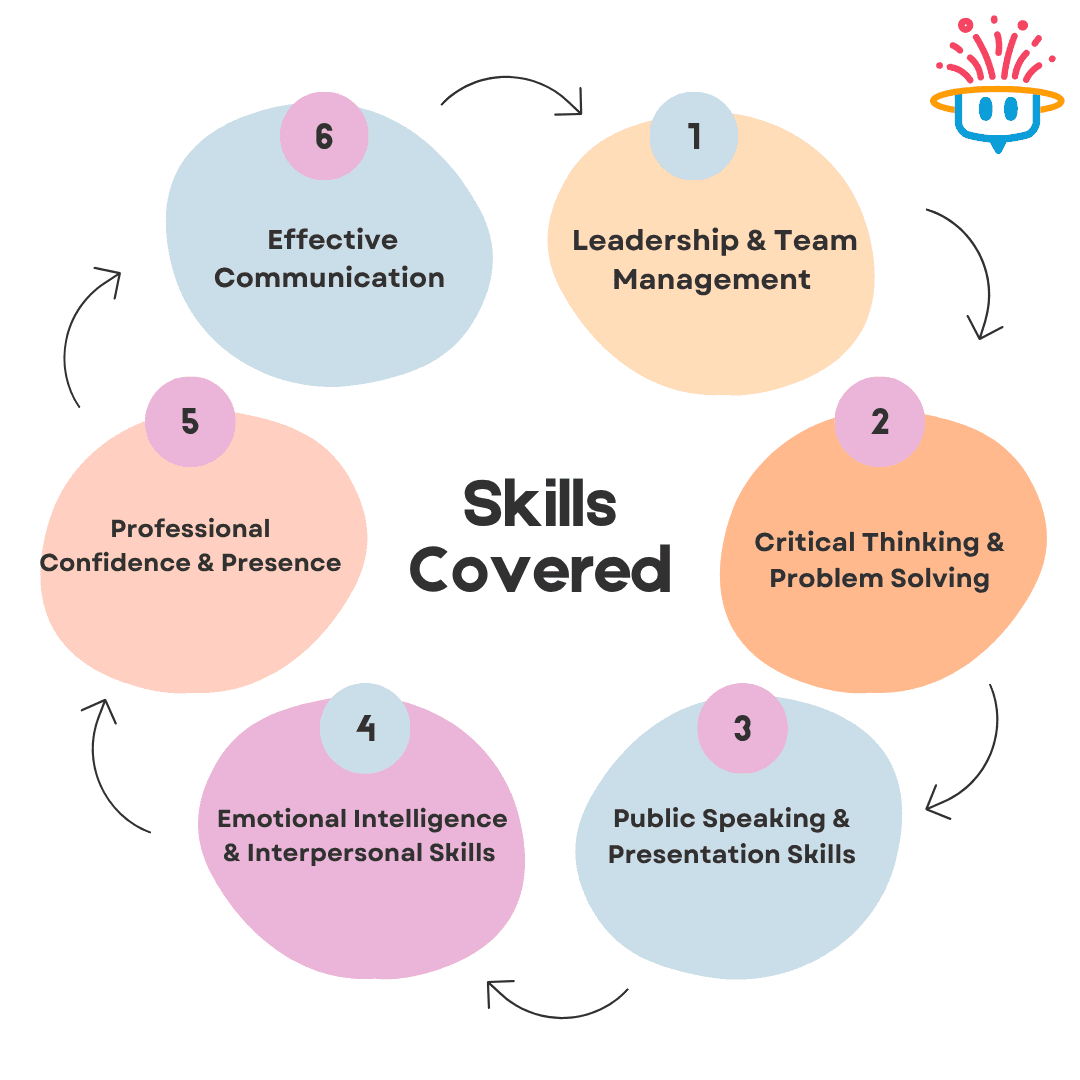
- When cognitive load is managed well, decision-making improves. A person who is not mentally overwhelmed makes more thoughtful choices, handles difficult conversations more calmly, and demonstrates the kind of reliable behaviour that builds trust and professional reputation.
- Emotional regulation also improves significantly when cognitive overload is reduced. Many emotional reactions that seem like personality issues, snapping at colleagues, becoming easily frustrated during study, losing motivation quickly, are actually symptoms of a brain that is simply too overloaded to manage both the task and the emotion at the same time. Managing the cognitive load reduces the emotional noise.
- Confidence grows naturally when a person consistently performs well. Students who learn effectively and retain what they study feel more capable and willing to engage in class. Professionals who manage their work clearly and make good decisions under pressure build a self-image of competence that expresses itself as genuine confidence over time.
PlanetSpark's personality development programs support learners in building exactly these habits. From structured communication practice to focused learning techniques, every part of the curriculum is designed to build the mental clarity and personal effectiveness that cognitive load management makes possible.
How PlanetSpark Helps You Master Cognitive Load Management
Learning about cognitive load management is one thing. Building the habits that put it into practice is another. PlanetSpark's live one-on-one coaching and structured learning programs are designed to support both children and working professionals in developing the cognitive skills that drive real performance improvement.
For children
PlanetSpark's expert mentors use concept-first learning, gradual skill progression, and structured practice sessions that are thoughtfully designed to reduce extraneous load, maximise understanding, and build the confidence that comes from genuinely mastering each step before moving to the next. Sessions are personalised to each child's learning pace, ensuring that no child is overwhelmed and every concept is properly consolidated before new material is introduced.
For working professionals
PlanetSpark's communication and personality development coaching builds the practical skills that directly reduce cognitive strain at work. Clearer thinking, stronger communication, better self-awareness, and more effective decision-making are all outcomes of the program that directly reflect well-managed cognitive load.
With AI-powered progress tracking
personalised learning roadmaps, and expert guidance in every session, PlanetSpark gives every learner the structured support needed to perform at their best without the mental exhaustion that comes from trying to figure it all out alone.

Quick Recap Before You Go
Cognitive load management is one of the most practical and underused tools available for improving how you think, learn, and perform. Here are the most important points to remember.
Cognitive load is the mental effort required by your working memory, and it has real limits. There are three types of cognitive load, intrinsic, extraneous, and germane, and managing each one differently produces better results. Reducing extraneous load through clear environments and focused attention is the fastest win available. Chunking information, using worked examples, and spacing practice are proven cognitive load theory practical use strategies for students. For professionals, prioritisation, time blocking, single-tasking, and externalising information are the most effective reduce mental overload techniques.
Managing information overload requires intentional habits around consumption, structure, and mental recovery. Cognitive load management directly supports personality development by improving decision-making, emotional regulation, and sustainable confidence.
Frequently Asked Questions
Cognitive load management is the practice of organising tasks, learning, and information in ways that keep the demands on your working memory within manageable limits. It is important because working memory has a finite capacity, and when that capacity is exceeded, learning slows down, errors increase, and mental fatigue sets in. Managing cognitive load helps both students and professionals perform more consistently and sustainably.
Cognitive load in learning affects students by determining how efficiently they can absorb and retain new information. When a student is asked to process too much at once, without adequate structure or support, the working memory becomes overwhelmed and learning breaks down. Symptoms include forgetting recently taught content, making careless mistakes, and losing confidence during study sessions. Structured pacing, worked examples, and distraction-free environments help keep cognitive load at productive levels.
The most effective techniques include single-tasking instead of multitasking, time blocking for different types of work, writing information down rather than trying to remember everything, setting clear priorities each day, taking regular short mental breaks, and reducing unnecessary notifications and distractions. These habits protect working memory capacity for the tasks that genuinely require focused cognitive effort.
Cognitive load theory explains that learning and performance depend on keeping the demands on working memory within its limits. Practically, this means breaking complex material into smaller steps, using worked examples before independent practice, reducing irrelevant information in learning environments, spacing practice sessions over time, and building on prior knowledge systematically. Both teachers and learners can apply these principles to make study and training significantly more effective.
Children can build these skills by learning to limit screen time to focused periods, organising their study materials before starting work, following consistent daily routines that reduce decision fatigue, practicing completing one task fully before moving to the next, and developing the habit of writing down tasks and important information rather than relying solely on memory. Adults play an important role by modelling these habits and creating structured, low-distraction environments that support focused thinking.
When cognitive load is well managed, decision-making becomes clearer, emotional reactions become more measured, and consistent performance builds genuine confidence over time. Many traits associated with strong personality, including calmness under pressure, reliability, clear communication, and self-awareness, are significantly easier to develop and sustain when the brain is not operating in a state of chronic overload. Cognitive load management creates the mental space in which real personality growth can take root and compound.