
Best Conflict Resolution Activities for Students to Build Strong Skills
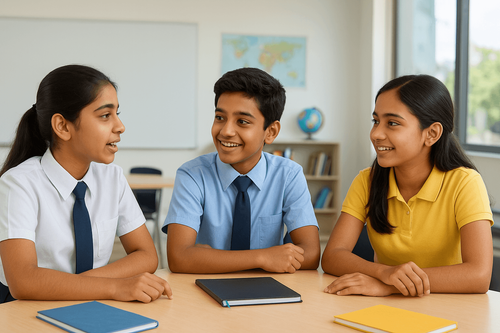

Conflicts are a natural part of growing up but knowing how to manage them is a life skill. This blog explores simple and powerful conflict resolution activities that help children express themselves better, stay calm, and solve problems peacefully. Each activity is explained with examples so that parents and teachers can use them easily.
In this blog, we’ll explore practical ways to resolve conflicts easily, understand why they matter, and see how platforms like PlanetSpark help students build these skills early in life.
What Is Conflict Resolution and Why Students Need It
Conflict resolution means understanding a disagreement, listening to others, finding a fair solution, and expressing emotions calmly. Students face conflicts daily in classrooms, group work, friendships, and even online interactions.
Here is why conflict resolution skills matter:
It builds emotional balance
When students know how to solve problems calmly, they stop reacting in anger. For example, a student who usually shouts during a disagreement learns to pause and think before responding.It improves classroom behaviour
Children who can communicate openly avoid fights and misunderstandings. A simple conversation between two confused teammates prevents unnecessary arguments.It strengthens teamwork
Group activities become smoother when children learn to listen to each other. For example, a project group can divide tasks peacefully when everyone feels heard.It boosts confidence
Kids who can express what they feel without fear become more confident in school and life.
Best Conflict Resolution Activities for Students
Below are the most effective conflict resolution activities used by teachers, coaches, and global communication programs. Every point has a clear explanation and example to help you understand how it works.
1. The Feelings Circle
This activity teaches children to recognise and express emotions correctly.
How it works
Students sit in a circle.
Each child shares how they feel using simple words like happy, upset, confused, or stressed.
The circle gives everyone a safe space to talk without interruption.
Why it helps
Many conflicts begin because kids cannot express emotions clearly. Sharing feelings teaches empathy and helps students realise that others experience similar emotions.
Example
If two students fought over a seat, they discuss their feelings. One might say, “I felt ignored.” The other might say, “I felt rushed.” Once feelings are clear, solutions become easier.
2. Role Play Situations
Role play helps children practise real world conflict situations without stress.
How it works
The teacher gives a common problem like sharing classroom supplies.
Students act out the conflict and then switch to acting out the solution.
This lets them explore perspectives.
Why it helps
Children learn what to do in real conflicts because they practise the steps in a safe environment. They gain control over their reactions.
Example
Two students pretend to fight over a cricket bat. They then act out how to politely request a turn. It teaches patience and communication.
3. Walk in My Shoes Activity
This encourages empathy and understanding from another person’s viewpoint.
How it works
Students pair up and explain their side of a conflict.
Each child then repeats the problem from the other person’s point of view.
They discover feelings they did not notice earlier.
Why it helps
Many conflicts continue because children think only from their angle. This activity helps them discover how the other person felt and why they reacted a certain way.
Example
If one student thinks their friend ignored them during lunch, they repeat the situation pretending to be the friend. They might understand the friend was stressed or distracted.
Help your child build confidence, clarity, and real world communication power.
Our sessions make learning enjoyable with activities kids love.
Book a Free Trial and begin the journey.
4. The Calm Down Corner
This teaches emotional regulation before solving a conflict.
How it works
Create a small space in the room with calming tools like soft toys, colouring sheets, or positive quotes.
Students go there when they feel overwhelmed.
After calming down, they return to solve the issue.
Why it helps
Kids cannot solve problems when they are angry or anxious. A calm mind makes better decisions and avoids hurtful words.
Example
A child upset after losing a game spends two minutes colouring. They come back ready to talk politely.
5. The Problem Solving Ladder
A step by step method to solve conflicts logically.
How it works
Students move through steps such as:
Identify the problem
Share feelings
Listen to the other person
Think of options
Agree on the best solution
Why it helps
Kids learn to approach problems systematically instead of acting impulsively.
Example
Two students disagree on who should lead the project. They use the ladder to discuss options like taking turns or dividing responsibilities.
6. The Three Choices Method
Students learn to recognise choices in any conflict.
How it works
They learn three actions:
Stay and talk
Walk away
Ask for help
Why it helps
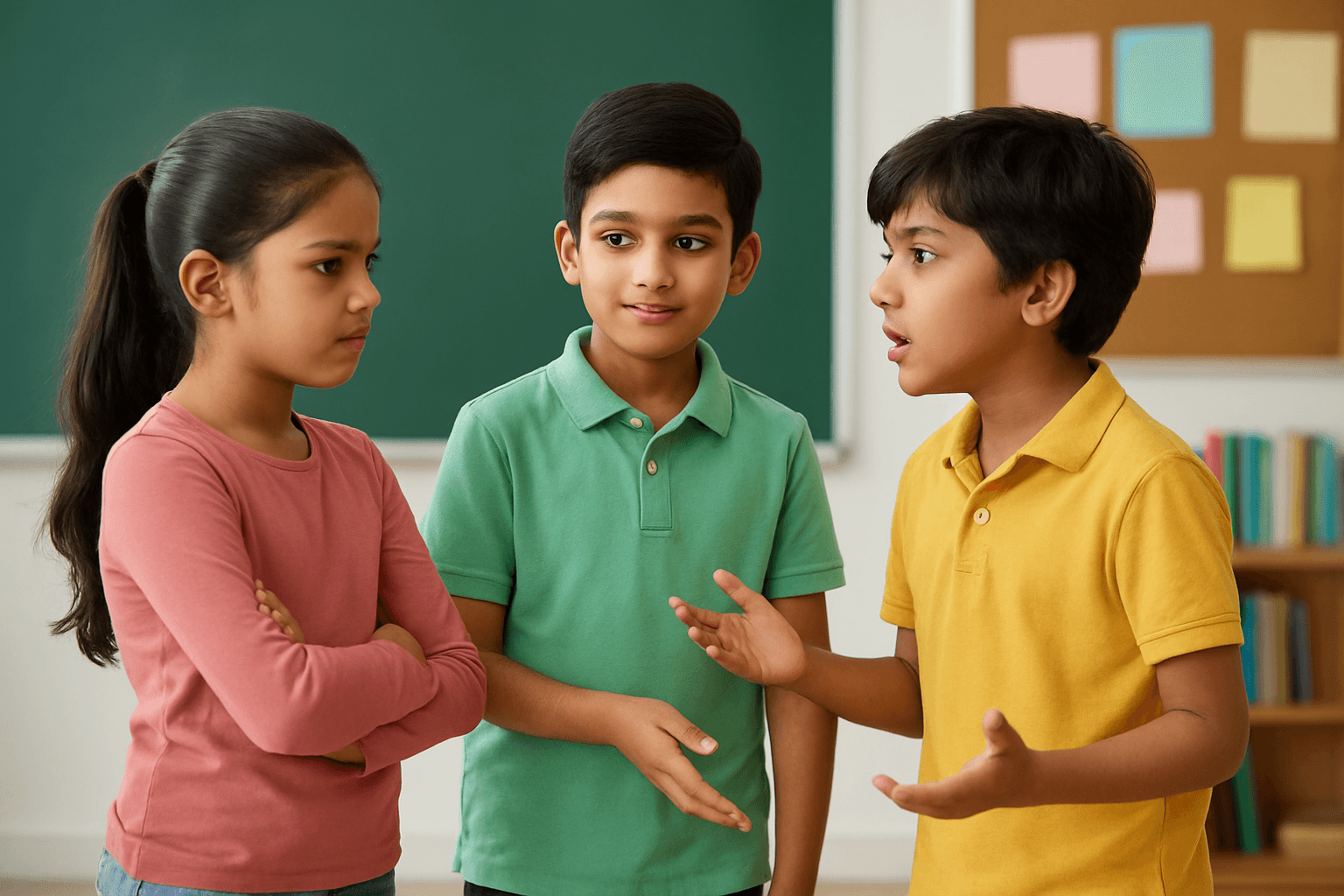
Kids realise that reacting aggressively is not the only option. This reduces fights and helps them take responsibility for their choices.
Example
If someone teases a student, they can choose to ignore and walk away or talk calmly instead of shouting.
Let your child experience learning that is fun, practical, and truly effective.
Discover how expert guidance can transform their personality and speaking skills.
Book a Free Trial and see the difference.
7. Reflection Journals
Writing helps children organise their thoughts and emotions.
How it works
Students write what happened, what they felt, and how they could handle it differently next time.
Teachers can guide them with prompts.
Why it helps
Writing slows down emotional reactions, builds self awareness, and helps kids notice patterns in their behaviour.
Example
If a child reacted angrily in a group activity, they write what triggered them and how they plan to stay calm in the future.
8. Respect Rules Agreement
A classroom agreement built by students for students.
How it works
The class brainstorms rules like listening quietly or taking turns.
They sign the agreement together.
This gives students ownership of their behaviour.
Why it helps
Kids follow rules better when they create them together. The agreement becomes a reminder whenever a conflict arises.
Example
A group fighting over noise levels revisits the agreement and solves the problem without adult intervention.
9. Positive Communication Cards
Cards guide students on how to express themselves respectfully.
How it works
Each card contains phrases like
I feel
I need
Can we discuss
I understand your point
Why it helps
Students learn polite language and clear communication, reducing conflicts caused by rude tone or unclear words.
Example
When frustrated, a child uses the card “I need a minute to think” instead of reacting emotionally.
Give your child the chance to grow with confidence and strong communication skills.
Watch them speak better, express clearly, and solve problems with ease.
Book a Free Trial today and get started.
10. Team Challenge Games
Games build cooperation and reduce competition based conflicts.
How it works
Teachers assign group challenges like building a paper tower.
Students must solve problems together.
They learn patience, listening, and sharing.
Why it helps
Working together teaches children how to deal with disagreements while focusing on a common goal.
Example
If two students argue during the game, the group encourages them to share ideas and create a combined plan.
Skills Improved Through Conflict Resolution Activities
These activities improve five core communication abilities:
Listening skills
Kids learn to focus on others instead of preparing a comeback. For example, listening carefully prevents misunderstandings in group tasks.Emotional control
Children learn to pause before reacting. If someone pushes them during a game, they respond calmly instead of starting a fight.Expression skills
Students express feelings with the right words. Instead of saying “You are rude,” they say “I felt hurt when you interrupted me.”Problem solving
Kids think through options and choose the best solution. It makes them more independent and mature.Empathy
Understanding others reduces judgement and strengthens friendships.
How Parents and Teachers Can Support Conflict Resolution
Model calm behaviour
Children copy what they see. When adults solve disagreements politely, kids learn to do the same.Encourage open conversations
Give children space to talk about what troubles them. A simple conversation can prevent a big conflict.Praise peaceful solutions
Celebrate when students resolve a problem without shouting. It motivates them to repeat the behaviour.Teach the pause rule
Encourage kids to pause for two seconds before responding in any conflict.
Conclusion
Conflict resolution activities give students the confidence to handle real life problems with calmness, clarity, and empathy. When children learn how to listen, express feelings, and find fair solutions, they grow into stronger communicators and better teammates. These skills make classrooms peaceful, friendships healthier, and learning more enjoyable. Every activity, from role play to reflection journals, helps children discover new ways to handle disagreements. With consistent practice, students learn to replace anger with understanding and confusion with confidence. Parents and teachers play an important role by encouraging positive communication every day. Programs like PlanetSpark further strengthen these skills through fun and structured learning. Together, we can help every child become emotionally strong and ready for the real world.
Frequently Asked Questions
Students from six to sixteen can benefit because these activities teach communication and emotional skills that support school and social life.
Yes. Teachers can use virtual role plays, discussion prompts, reflective writing tasks, and group games to teach conflict management online.
Most students show improvement within four to six weeks when activities are done consistently and supported by adults at home.
Yes. These activities build confidence slowly through guided practice, helping shy students express themselves more comfortably.
It reduces misunderstandings and teaches empathy, which helps prevent bullying and improves peer relationships.
PlanetSpark uses communication activities, role plays, emotional guidance, and personalised coaching to help children solve conflicts with confidence.