
Build Core Skills Needed For Career Success And Workplace Growth


Table of Contents
- What Are Core Skills?
- Importance of Core Skills in Career Success
- Key Core Skills Every Working Professional Should Develop
- How Core Skills Improve Workplace Performance
- How to Identify Your Current Core Skills Gap
- Core Skills vs Technical Skills: Key Differences
- How PlanetSpark Helps Working Professionals Build Core Skill
- Conclusion: Building Core Skills for Long-Term Success
In today’s fast-changing workplace, technical knowledge alone is not enough to ensure long-term career success. Organizations are no longer just looking for employees who can perform tasks; they want professionals who can communicate effectively, solve problems, adapt quickly, and work efficiently in teams. This is where core skills become essential.
For working professionals, developing strong core skills is the foundation of career growth, promotions, leadership opportunities, and overall workplace performance. Whether you are in marketing, finance, IT, healthcare, or any other industry, your ability to handle challenges, manage time, and collaborate with others directly impacts your success.
When people search for core skills meaning or ask what are core skills, they are usually trying to understand the fundamental abilities that go beyond technical expertise. These are the skills that shape how you think, how you work, and how you grow in your career.
Core skills are not industry-specific. They are universal. That means once you develop them, they can be applied in any job role or career path. This makes them extremely valuable for working professionals who want to stay competitive in a rapidly evolving job market.
What Are Core Skills?
When we talk about core skills meaning, we refer to the essential abilities that help an individual perform effectively in any professional environment. These skills are also known as foundational skills because they form the base of all workplace performance.
In simple terms, core skills are the personal and interpersonal abilities that help you work better with others, manage your responsibilities, and adapt to different situations. Unlike technical skills, which are job-specific, core skills are transferable across all industries and roles.

Key Characteristics of Core Skills
Core skills share some important features that make them essential for working professionals:
- They are applicable in every job role and industry
- They improve communication, productivity, and efficiency
- They help in solving real workplace problems
- They support career growth and leadership development
- They remain relevant even when tools and technologies change
Examples of Core Skills in the Workplace
To better understand what are core skills, here are some common examples used in professional environments:
- Communication skills for clear interaction with colleagues and clients
- Problem-solving skills to handle challenges effectively
- Time management skills to meet deadlines efficiently
- Critical thinking skills to make better decisions
- Adaptability skills to adjust to changing work environments
Core Skills in Everyday Work Life
In real workplace situations, core skills are used constantly. For example:
- A marketing professional uses communication skills to present campaign ideas
- A project manager uses time management to meet deadlines
- A team leader uses problem-solving skills to resolve conflicts
- An analyst uses critical thinking to interpret data accurately
These skills are not optional. They are essential for anyone who wants to grow in their career and take on higher responsibilities.
Importance of Core Skills in Career Success
Core skills play a major role in determining how far a working professional can grow in their career. While technical knowledge helps you get hired, it is your core skills that decide how well you perform, collaborate, and progress within an organization.
In modern workplaces, employers are increasingly focusing on behavioral and cognitive abilities because tools and technologies are constantly evolving. This makes core skills even more important than before.
Why Core Skills Matter for Professionals
Core skills directly impact multiple aspects of career development:
- Job Performance: Professionals with strong core skills complete tasks more efficiently
- Career Growth: Employees with better interpersonal skills get promoted faster
- Workplace Relationships: Strong communication improves teamwork and collaboration
- Problem Handling: Better decision-making leads to fewer workplace errors
- Adaptability: Professionals can adjust to new roles and technologies easily
Core Skills vs Career Stability
In competitive industries, job roles are changing rapidly. Automation and AI are replacing repetitive tasks, but core skills remain uniquely human. This makes them essential for long-term job security and career stability.
For example:
- A data analyst who can only use tools may struggle when tools change
- But a data analyst with strong critical thinking and adaptability can easily learn new systems
Employer Expectations from Working Professionals
Most employers now evaluate candidates and employees based on core skills such as:
- Communication clarity in meetings and emails
- Ability to manage deadlines and pressure
- Team collaboration and leadership potential
- Logical thinking and problem-solving ability
This shift shows that core skills are no longer optional but a requirement for career success.
Impact on Leadership Opportunities
Employees who develop strong core skills often move into leadership roles faster. This is because leadership is not just about technical knowledge but about guiding teams, making decisions, and managing people effectively.
In summary, core skills act as the foundation of professional growth. Without them, even highly skilled technical professionals may struggle to reach higher levels in their careers.
Unlock the confidence that already lives within you.
Join PlanetSpark Personality Development Course and become your best version.
Key Core Skills Every Working Professional Should Develop
In any professional environment, success is not determined by technical expertise alone. Working professionals need a balanced mix of behavioral, cognitive, and interpersonal abilities to perform effectively. These abilities are what we refer to when discussing core skills. Understanding what are core skills in practical terms helps professionals focus on the right areas for growth instead of only upgrading technical knowledge.
Below are the most essential core skills every working professional should focus on developing for long-term career success.
Communication Skills
Communication is one of the most critical workplace skills. It is not limited to speaking well; it includes writing clear emails, presenting ideas confidently, and actively listening to others.
Strong communication helps professionals avoid misunderstandings, build better relationships, and express ideas effectively in meetings and discussions.
Key areas of communication skills:
- Clear verbal communication in meetings and presentations
- Professional email writing and documentation
- Active listening and feedback handling
- Confidence in expressing opinions respectfully
In most workplaces, professionals who communicate effectively are more trusted and often given leadership responsibilities earlier in their careers.
Problem-Solving Skills
Problem-solving is the ability to analyze a situation, identify challenges, and find practical solutions. Employers highly value this skill because every job role involves unexpected challenges.
Professionals with strong problem-solving abilities can think calmly under pressure and make better decisions.
Components of problem-solving skills:
- Analytical thinking to understand issues deeply
- Ability to break complex problems into smaller parts
- Logical decision-making
- Creativity in finding alternative solutions
For example, in a marketing role, if a campaign is underperforming, a professional with strong problem-solving skills will quickly identify the issue and adjust strategy instead of waiting for instructions.
Time Management Skills
Time management is the ability to prioritize tasks and complete work within deadlines. In fast-paced work environments, this skill is essential for maintaining productivity and reducing stress.
Professionals who manage time well are more organized and consistent in their performance.
Important aspects include:
- Prioritizing tasks based on urgency and importance
- Avoiding procrastination
- Using planning tools and calendars effectively
- Balancing multiple responsibilities efficiently
Good time management directly improves workplace efficiency and reduces last-minute pressure.
Critical Thinking Skills
Critical thinking refers to the ability to evaluate information logically and make informed decisions. It helps professionals avoid assumptions and focus on facts.
Core elements of critical thinking:
- Objective analysis of situations
- Evaluating multiple perspectives before decisions
- Questioning assumptions
- Making data-driven decisions
This skill is especially important in roles involving strategy, analysis, and planning, where decisions must be accurate and well thought out.
Adaptability and Learning Ability
In today’s evolving workplace, adaptability is one of the most important core skills. Professionals must be open to learning new tools, technologies, and processes.
Why adaptability matters:
- Work environments change frequently
- New technologies are introduced regularly
- Job roles evolve over time
Professionals who adapt quickly remain relevant and valuable in their careers.
Growth begins when confidence meets action.
Build communication, confidence, and leadership skills with PlanetSpark.
How Core Skills Improve Workplace Performance
Core skills directly influence how effectively a professional performs in their daily work. While technical knowledge helps in executing tasks, core skills determine the quality, speed, and consistency of that execution.
When working professionals develop strong core skills, their overall productivity and contribution to the organization increase significantly.
Better Collaboration and Teamwork
Workplaces are built on collaboration. Employees rarely work in isolation, and most tasks require coordination with teams, managers, or clients.
Strong core skills improve teamwork by:
- Encouraging clear communication between team members
- Reducing misunderstandings and conflicts
- Improving coordination across departments
- Building trust within teams
For example, a project team with strong communication and adaptability can complete tasks faster and with fewer errors.
Improved Efficiency and Productivity
Core skills such as time management and prioritization directly impact productivity. Professionals who manage their time effectively are able to complete more work without compromising quality.
Productivity improvements include:
- Meeting deadlines consistently
- Handling multiple tasks efficiently
- Reducing unnecessary delays
- Maintaining focus on high-priority tasks
This leads to better performance reviews and increased chances of career growth.
Stronger Decision-Making Ability
Decision-making is a key part of every job role. Whether it is choosing a strategy, solving a problem, or handling a client issue, professionals must make decisions regularly.
Core skills like critical thinking and problem-solving help professionals:
- Analyze situations more accurately
- Avoid impulsive decisions
- Choose better long-term solutions
- Reduce workplace errors
Better decisions ultimately lead to better outcomes for both individuals and organizations.
Higher Workplace Confidence
Professionals with strong core skills tend to feel more confident in their roles. This confidence comes from the ability to handle challenges, communicate clearly, and manage responsibilities effectively.
Confident employees are more likely to:
- Take initiative in projects
- Participate actively in discussions
- Take ownership of tasks
- Grow into leadership roles
This confidence also improves overall workplace presence and credibility.
How to Identify Your Current Core Skills Gap
Understanding your current level of core skills is an important step toward professional growth. Many working professionals assume they are performing well simply because they are completing their tasks. However, when it comes to core skills, there is often a gap between expected performance and actual ability.
Identifying this gap helps you understand what are core skills you already possess and what areas still need improvement. This self-awareness is essential for long-term career success.
Self-Assessment of Daily Work Performance
One of the simplest ways to identify your core skills gap is by analyzing your daily work routine.
Ask yourself:
- Do I communicate ideas clearly in meetings and emails
- Am I able to manage deadlines without stress
- Do I face difficulty in solving unexpected problems
- Do I depend on others for basic decision-making
- Am I able to adapt quickly to new tools or processes
If the answer to many of these questions is “no” or “sometimes,” it indicates areas where your core skills need improvement.
Feedback from Managers and Colleagues
Feedback is one of the most reliable ways to understand your performance. Often, others can observe gaps that you may not notice yourself.
Useful feedback sources include:
- Performance reviews from managers
- Peer feedback during team projects
- Client feedback in service-based roles
- Informal workplace observations
Common feedback patterns that indicate skill gaps:
- Poor communication clarity
- Missed deadlines or delays
- Difficulty in handling pressure situations
- Lack of initiative in tasks
Workplace Challenges as Indicators
Your daily challenges often highlight your weak areas. For example:
- Struggling with time management may indicate poor prioritization skills
- Frequent misunderstandings may point to communication gaps
- Difficulty in decision-making may show weak critical thinking
Instead of ignoring these challenges, analyzing them helps in building stronger core skills over time.
Skill Gap Analysis Table
| Core Skill Area | Current Level | Desired Level | Action Needed |
|---|---|---|---|
| Communication | Basic | Advanced | Practice presentations, improve writing |
| Time Management | Moderate | Advanced | Use planning tools, prioritize tasks |
| Problem-Solving | Basic | Advanced | Work on case studies, real scenarios |
| Critical Thinking | Moderate | Advanced | Analyze decisions more deeply |
| Adaptability | Basic | Advanced | Learn new tools and workflows |
This simple table helps working professionals visually understand where improvement is needed.
Ways to Develop and Improve Core Skills
Once you identify your skill gaps, the next step is improvement. Developing core skills is a continuous process that requires consistent practice and real-world application.
Unlike technical skills that can be learned through one-time training, core skills are built over time through habits and experience.
Online Courses and Certifications
Structured learning is one of the most effective ways to improve core skills. Many online platforms provide focused training in communication, leadership, problem-solving, and productivity.
Benefits of online learning:
- Flexible learning schedules for working professionals
- Structured modules for step-by-step improvement
- Practical exercises and real-world examples
- Certification for career enhancement
However, learning alone is not enough. It must be combined with practice.
On-the-Job Learning
The workplace itself is the best environment to develop core skills. Every task, meeting, and challenge provides an opportunity to improve.
How to learn on the job:
- Volunteer for new responsibilities
- Participate actively in meetings and discussions
- Observe experienced professionals
- Ask for feedback regularly
For example, taking ownership of a small project helps improve time management, communication, and problem-solving simultaneously.
Self-Practice and Habit Building
Core skills improve significantly when they become part of daily habits.
Practical habit-building strategies:
- Write daily task plans to improve time management
- Practice speaking or presenting ideas regularly
- Reflect on daily decisions to improve critical thinking
- Take small challenges to build adaptability
Consistency is key. Even small improvements done daily lead to major career growth over time.
Your personality is your strongest first impression.
Enhance it with PlanetSpark Personality Development Course today.
Core Skills vs Technical Skills: Key Differences
In the professional world, both core skills and technical skills are important, but they serve very different purposes. Many working professionals focus heavily on technical knowledge, assuming it alone will drive career growth. However, understanding the balance between the two is essential when learning what are core skills and how they support long-term success.
Core skills define how you work, while technical skills define what you do. Together, they shape overall job performance and career progression.
Understanding the Difference
To clearly understand the distinction, it is important to break both skill types into simple terms.
Core skills meaning:
Core skills are foundational abilities such as communication, problem-solving, time management, and adaptability. These skills apply to every job role and industry.
Technical skills meaning:
Technical skills are job-specific abilities required to perform particular tasks. For example, using software tools, coding, financial modeling, or operating machinery.
Comparison Table: Core Skills vs Technical Skills
| Aspect | Core Skills | Technical Skills |
|---|---|---|
| Nature | Behavioral and interpersonal | Job-specific and technical |
| Usage | All industries and roles | Specific to job function |
| Examples | Communication, teamwork, time management | Coding, data analysis, accounting tools |
| Learnability | Developed over time through practice | Learned through training or courses |
| Career Impact | Long-term career growth and leadership | Job performance and task execution |
Why Core Skills Are Equally Important
While technical skills help you get hired, core skills determine how far you grow in your career. A professional with strong technical knowledge but weak communication or adaptability may struggle in leadership roles.
For example:
- A software developer may write excellent code but fail to collaborate effectively in a team
- A marketing professional may know tools but struggle to present ideas clearly
- A manager may understand processes but fail in decision-making under pressure
In all these cases, missing core skills limits career growth.
How Both Skills Work Together
The most successful professionals combine both skill sets effectively:
- Technical skills help complete tasks efficiently
- Core skills ensure those tasks are done correctly, on time, and collaboratively
For instance:
- A data analyst uses technical tools to analyze data
- But uses critical thinking and communication to present insights clearly
This combination is what makes a professional truly valuable in any organization.
How PlanetSpark Helps Working Professionals Build Core Skills
PlanetSpark helps working professionals strengthen their core skills by focusing on structured communication and personality development training. In today’s workplace, skills like communication, confidence, and clarity of thought play a major role in career growth. However, many professionals struggle with expressing ideas clearly, handling meetings, or presenting themselves confidently in front of teams or clients. PlanetSpark addresses these gaps through guided learning that focuses on real-world application rather than just theory. The programs are designed to help individuals improve how they speak, think, and respond in professional environments, which directly enhances workplace performance and career opportunities.
With consistent practice and expert feedback, professionals can gradually build stronger communication habits and improve their overall professional presence. PlanetSpark emphasizes active learning, where individuals participate in live sessions, role plays, and practical exercises that simulate workplace situations. This helps in developing confidence and clarity, which are essential parts of core skills meaning in a professional context. Over time, learners become more effective in expressing ideas, managing conversations, and handling workplace challenges with ease.
- Structured communication-focused learning programs
- Live practice sessions with real workplace scenarios
- Personalized feedback from trained mentors
- Confidence building through speaking and presentation practice
- Improvement in professional writing and expression
- Development of clarity, fluency, and workplace communication skills

From Shy Speaker to Confident Communicator
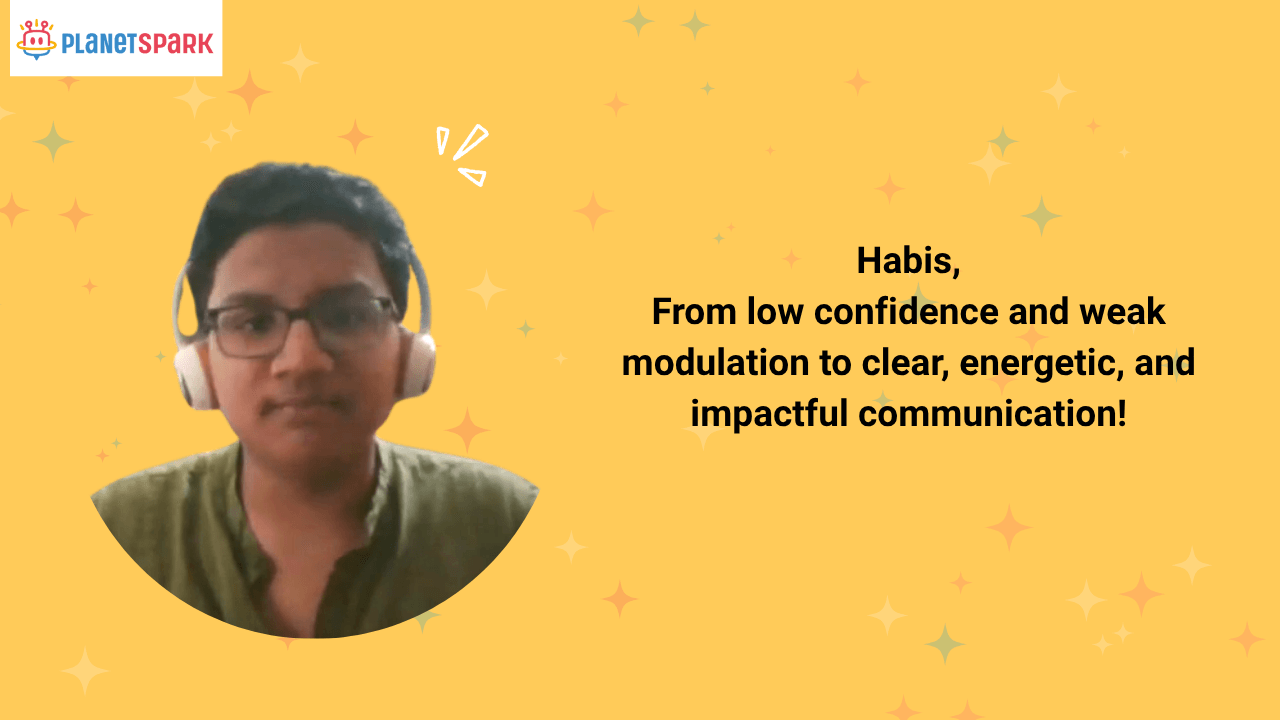
Meet Habis, once a shy speaker who lacked confidence while expressing himself. With consistent practice and guidance, he transformed into a confident communicator who now delivers every message with clarity, confidence, and strong stage presence.
Conclusion: Building Core Skills for Long-Term Success
In today’s competitive and constantly evolving workplace, developing core skills is essential for long-term career success. While technical knowledge helps professionals perform job-specific tasks, it is the strength of core skills that determines overall growth, leadership potential, and workplace effectiveness. Understanding core skills meaning clearly shows that abilities like communication, problem-solving, time management, critical thinking, and adaptability are not optional but necessary for every working professional.
Professionals who continuously invest in improving their core skills are better equipped to handle challenges, collaborate effectively with teams, and adapt to changing work environments. These skills also help in building confidence, improving productivity, and making better decisions in real-time workplace situations. Over time, strong core skills create a solid foundation for career advancement and long-term professional stability.
Ultimately, success in any career is not just about what you know, but how effectively you apply it in real situations. By consistently working on core skills, professionals can ensure steady growth, stronger performance, and better opportunities in their career journey.
Success speaks through confidence and clarity.
Learn to speak, lead, and shine with PlanetSpark.
You must read:
Top 10 Soft Skills for Professional Growth
What Are Soft Skills? A Complete Guide for Working Professionals
Frequently Asked Questions
Core skills are essential abilities that help professionals perform effectively at work. These include communication, problem-solving, time management, teamwork, critical thinking, and adaptability.
Core skills meaning refers to the foundational skills that support career success across all industries. They are transferable skills useful in any job role.
Core skills improve productivity, confidence, teamwork, and decision-making. They also increase promotion opportunities and long-term career success.
Technical skills are job-specific abilities, while core skills are universal skills such as communication and leadership that apply to every profession.
Professionals should first focus on communication, time management, problem-solving, adaptability, and critical thinking for faster workplace growth.
Yes, core skills can be developed through regular practice, training programs, mentorship, and real workplace experience.
Personalized Communication Roadmaps
Record a video to get a AI generated personalized communication reports