
Build Strong Delegation Skills for Team Success


Table of Contents
- What Are Delegation Skills?
- Why Delegation Skills Matter More Than Most Professionals Re
- Common Delegation Techniques Every Professional Should Know
- Task Delegation Training: What It Covers and Why It Works
- Effective Delegation Skills for Students and Early Career Pr
- How This Helps in Personality Development
- Work Delegation Training with PlanetSpark
- Who Should Consider Delegation Skills Training?
- Strong Teams Are Built by Leaders Who Delegate Well
There is a moment most managers and team leaders recognise. The work keeps growing, the to-do list never shrinks, and no matter how hard you push, you feel like the only person truly responsible for results. You are doing the work of three people while your team sits underutilised. That is not a productivity problem. That is a delegation problem.
Delegation skills are among the most powerful and most overlooked capabilities any professional can develop. They determine how effectively you lead, how well your team grows, and how fast your career moves. Yet most professionals never receive structured task delegation training. They are expected to figure it out on the job, which often means they never figure it out at all.
This blog will help you understand what effective delegation skills look like, how to build them, and why structured work delegation training makes a lasting difference for professionals at every stage of their career.
What Are Delegation Skills?
Delegation skills are the abilities that allow a professional to assign the right tasks to the right people with the right level of support, clarity, and accountability to ensure strong outcomes without constant oversight.
Strong delegation is not simply handing off tasks you do not want to do. It is a deliberate leadership behaviour that requires judgement, communication, trust, and structured follow-through.
Effective delegation skills include:
Task Assessment and Prioritisation Knowing which tasks to delegate, which to keep, and which to eliminate entirely. Not everything on your plate belongs to someone else, and not everything should stay with you. Developing the judgement to tell the difference is the starting point of every effective delegation approach.
Team Capability Mapping Understanding what each member of your team can do today and what they are ready to stretch toward. Effective delegation is also a development tool. The right task given to the right person at the right time builds both confidence and capability.
Clear Communication of Expectations Delegating a task without clear expectations is not delegation. It is offloading. Strong delegation skills include the ability to communicate the outcome required, the standard expected, the timeline, and the level of authority the person has to make decisions independently.
Accountability Without Micromanagement Delegation without follow-through leads to dropped balls. Micromanagement destroys the trust and autonomy that delegation is meant to build. Effective delegation skills include knowing how to check in, how often, and how to hold people accountable in ways that motivate rather than undermine.
Feedback and Development Integration Every delegated task is a development opportunity. Professionals with strong delegation skills use the outcomes of delegated work to provide coaching, recognise growth, and set up the next stretch assignment with greater confidence.
Why Delegation Skills Matter More Than Most Professionals Realise
Most working professionals understand delegation in theory. They know they should do it. They know it frees up time and develops their teams. But understanding the concept is not the same as having the skill. And the consequences of weak delegation skills are significant.
For Individuals Professionals who cannot delegate effectively hit a ceiling. There are only so many hours in a day, and a manager who does too much themselves will always be limited by their own capacity. Career advancement consistently goes to those who can multiply their impact through others, not just maximise their own output.
For Teams When leaders hold too much, team members stay underutilised, underconfident, and underdeveloped. The best people on your team will eventually seek out environments where they are trusted with meaningful work. Weak delegation drives away the professionals you most want to keep.
For Organisations Teams where delegation is poor are slower, less adaptive, and more dependent on single points of failure. When strong delegation skills exist throughout a leadership structure, teams become resilient, capable, and self-sufficient in ways that deliver consistent performance.
The gap between a good professional and a genuinely effective leader almost always comes down to this: can you get results through others, or only through yourself? Task delegation training gives you the structured path to build that capability.
Common Delegation Techniques Every Professional Should Know
Delegation techniques are the practical frameworks and approaches that make delegation work in real team environments. Here are the most effective ones to understand and apply:
The Eisenhower Matrix for Task Prioritisation Before you can delegate, you need to know what to delegate. The Eisenhower Matrix helps you sort tasks by urgency and importance. Tasks that are important but not urgent and tasks that are urgent but not high-skill are typically the strongest candidates for delegation. Tasks that are both urgent and high-stakes may require your personal attention.
Delegation by Development Level Match the task to the team member based not just on current skill but on growth readiness. A team member who is fully capable should receive the task with clear expectations and high autonomy. A team member who is still developing should receive the task with stronger support, clearer structure, and more frequent check-ins. This approach builds both team performance and individual confidence.
The SMART Delegation Framework Effective delegation techniques often rely on clearly structured briefings. When delegating, make sure the task is Specific, the expected outcome is Measurable, the scope is Achievable given the person's current ability, the task is Relevant to both the team's goals and the individual's development, and the timeline is clearly Time-bound. This removes ambiguity and creates shared accountability.
Graduated Authority Delegation This technique involves explicitly telling the person how much decision-making authority they have over the delegated task. Can they make all decisions independently and report back at completion? Should they decide but inform you before acting? Should they bring options and let you decide? Being explicit about authority level removes the ambiguity that causes most delegation to break down.
Structured Check-Ins Define the check-in structure before the task begins. How often will you connect? What format will updates take? What does the person do if they hit a blocker? Structured check-ins allow you to stay informed without hovering, which is the balance that makes effective delegation sustainable.
Task Delegation Training: What It Covers and Why It Works
Most professionals learn to delegate through trial and error. They delegate poorly, something goes wrong, they lose confidence in the approach, and they fall back into doing everything themselves. Task delegation training breaks this cycle by building the skill deliberately and systematically.
Effective work delegation training covers:
Mindset Shift from Doer to Leader The biggest barrier to delegation is not skill. It is belief. Many professionals, especially high performers, believe that doing the work themselves is faster, safer, and more reliable. Task delegation training addresses this belief directly by helping professionals see that investing time in clear delegation and team development always delivers stronger results over time than individual effort alone.
Practical Skill Building in Real Scenarios Strong work delegation training does not just teach theory. It puts professionals in realistic delegation situations, including delegating to a team member who pushes back, managing a delegated task that goes off track, and giving feedback after a delegated task is completed poorly. Practice in realistic scenarios builds the confidence to apply delegation skills in real environments.
Communication and Expectation Setting Delegation lives or dies on how clearly expectations are communicated. Training develops the specific communication skills needed to brief tasks effectively, set standards clearly, and give feedback in ways that build rather than discourage.
Accountability Frameworks Effective delegation training builds the habits and structures professionals need to follow through on delegated work without falling into micromanagement or complete disengagement. Finding the right level of oversight is a skill, and it can be developed.
Feedback and Coaching Integration Delegation and coaching are deeply connected. Professionals who receive structured work delegation training learn how to use delegated assignments as genuine development tools, not just productivity mechanisms.

Effective Delegation Skills for Students and Early Career Professionals
Delegation is not only a management skill. Students and early career professionals who develop effective delegation skills early build a leadership mindset that accelerates their entire professional trajectory.
For students working on group projects, student committees, or early internship responsibilities, effective delegation skills include:
Understanding Strengths in a Team Context Before you can delegate well, you need to observe what your teammates do well and where they are developing. Effective delegation starts with knowing your team, a skill that takes practice and intentionality.
Taking Initiative on Coordination Professionals who naturally step into a coordination role, who clarify who is doing what, who follows up without being asked, and who structures group work toward clear outcomes, build visible leadership credibility early in their careers.
Learning to Communicate Without Authority Early career professionals often need to delegate in environments where they have no formal authority. Learning how to frame tasks as collaboration, recognise contribution, and create accountability through relationship rather than hierarchy is one of the most valuable professional skills you can develop.
Building Comfort with Trusting Others Many early career professionals struggle to let go of tasks because they worry the quality will not be there. Task delegation training builds the trust, the communication, and the follow-through habits that allow you to rely on others confidently without losing accountability for outcomes.
PlanetSpark's training is designed for both working professionals and students, giving every learner the structured foundation and practical skill development they need to grow as leaders regardless of where they are in their career.
How This Helps in Personality Development
Personality development is not about surface-level confidence or generic self-improvement. It is about building the internal clarity, communication ability, and behavioural consistency that directly impact how you are perceived in professional and real-world environments.
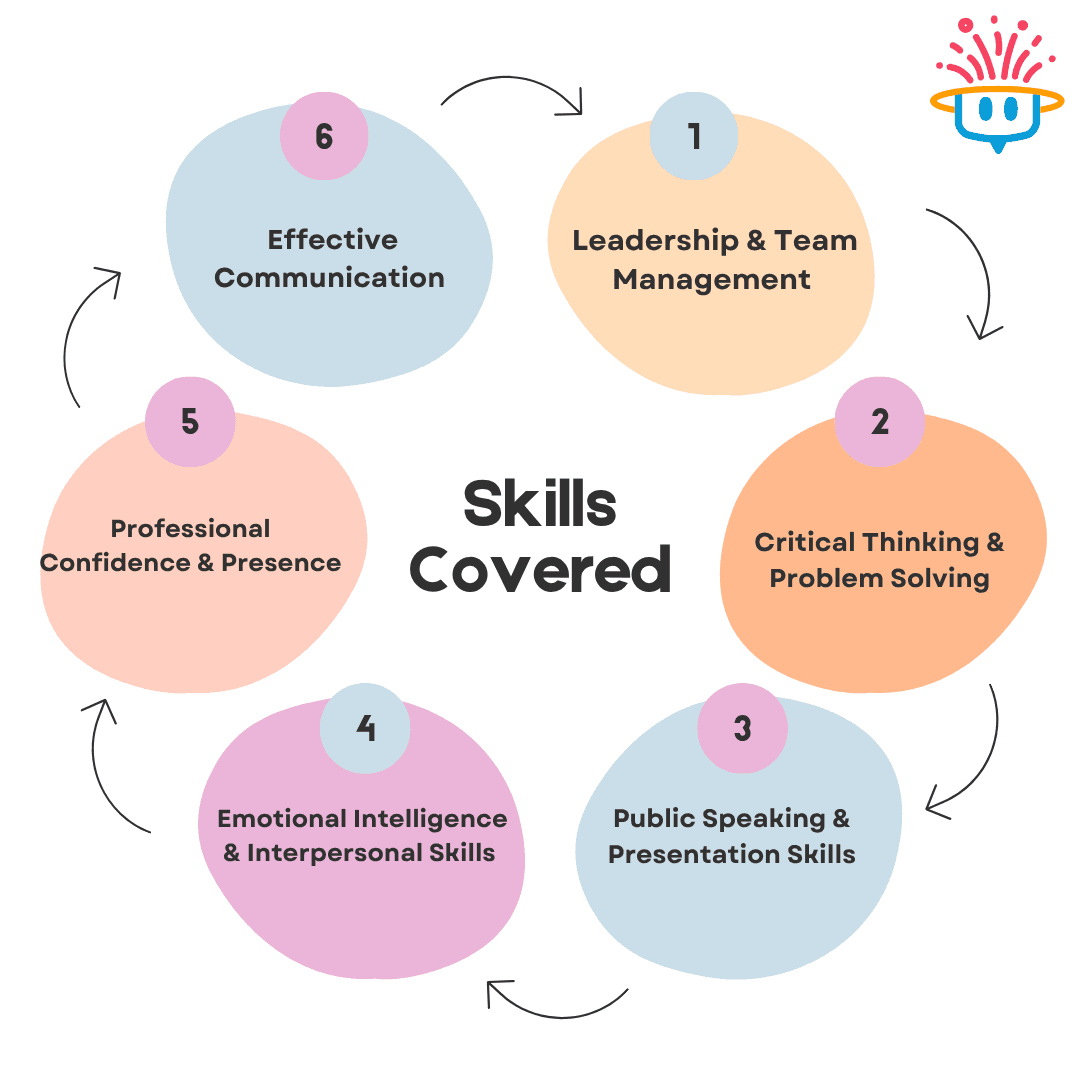
Developing strong delegation skills contributes to personality development in specific and measurable ways:
Clarity in Thinking and Expression Delegation requires you to think clearly about what a task actually involves, what outcome you need, and what the other person needs to know. This habit of structured thinking improves how you communicate across every professional context.
Confidence in Leadership Situations Every time you delegate well and the outcome is strong, your confidence as a leader grows. Task delegation training builds this confidence systematically through practice, feedback, and repeated success in realistic scenarios.
Self-Awareness and Behavioural Control Effective delegation requires you to recognise your own tendencies, including the pull toward doing everything yourself, the discomfort with imperfect outcomes, and the instinct to hover. Developing awareness of these tendencies and learning to manage them builds the emotional maturity that defines strong leaders.
Professional Presence and Credibility Leaders who delegate well carry themselves differently. They are more composed, more strategic, and more focused on outcomes than on activity. This shift in presence is visible to peers, managers, and senior stakeholders, and it directly influences how you are perceived and how fast you advance.
Ownership and Decision-Making Mindset Strong delegation is an act of ownership. It requires you to take responsibility for outcomes even when the work is being done by someone else. This ownership mindset is one of the most valued professional attributes at every level of an organisation.
All of these connect to the core of what most professionals are actually searching for when they think about growth: becoming more effective, more confident, and more influential as a person. That is exactly what structured delegation skill development enables.
Work Delegation Training with PlanetSpark
PlanetSpark's work delegation training gives professionals and students the structured, expert-led development experience they need to build real delegation skills that hold up in real team environments.
Here is what the training includes:
Live One-on-One Coaching Every learner receives dedicated one-on-one sessions with a certified PlanetSpark trainer. This personalised approach means your specific delegation challenges, team context, and career goals are addressed directly, not through a generic curriculum.
Personalised Development Roadmap PlanetSpark begins with a structured assessment of each learner's current strengths and development gaps. Based on this, a tailored roadmap is built that connects every delegation skill goal to a real professional outcome.
Real-World Delegation Scenario Practice Sessions include practice in realistic delegation situations including briefing a resistant team member, recovering a delegated task that has gone off track, giving feedback after underdelivery, and building accountability structures for ongoing work. This practice builds the confidence that theory alone cannot deliver.
Structured Feedback and Accountability PlanetSpark builds consistent feedback and progress tracking into every engagement. Development goals are revisited regularly, behavioural progress is measured, and every learner has the accountability structure needed to translate training into lasting change.
AI-Powered Progress Tracking PlanetSpark's platform provides detailed insights on communication effectiveness, delegation confidence, and skill development milestones. This data-driven approach ensures every professional development goal is measurably tracked and genuinely achieved.
Book Your Free Trial with PlanetSpark today and start building the delegation skills that make you a stronger leader, a more effective professional, and a person your team can genuinely grow under.

Who Should Consider Delegation Skills Training?
PlanetSpark's delegation skills training is valuable across a wide range of learners:
First-Time Managers Professionals stepping into their first leadership role benefit enormously from building strong delegation habits from the beginning rather than developing poor habits that take years to unlearn.
Mid-Level Managers and Senior Leaders Experienced managers who want to increase team performance, reduce personal overload, and build a more capable and self-sufficient team will find structured delegation training delivers immediate and measurable results.
Students and Early Career Professionals Learners who want to develop a leadership mindset from the start of their career and build the coordination, communication, and accountability skills that create early visibility and career momentum.
Business Owners and Entrepreneurs Owners whose ability to scale depends directly on their ability to trust others with meaningful work will find that structured work delegation training removes the single biggest bottleneck in most growing businesses.
Wherever you are in your career, if delegation is limiting your impact, your team's performance, or your own growth, PlanetSpark's training gives you the structure, coaching, and practice to move forward.
Strong Teams Are Built by Leaders Who Delegate Well
Think about the leaders in your organisation or career who stand out. The ones who build teams that consistently perform, retain great people, and develop the next generation of leaders. Almost without exception, they are strong delegators. They know how to trust, how to communicate, how to hold people accountable, and how to develop others through the work they give them.
Effective delegation skills are not innate. They are built through structured learning, deliberate practice, and the kind of personalised feedback that only comes from expert coaching.
Goals build direction. Direction builds skills. Skills build teams. Teams build careers.
If you are serious about becoming a stronger leader, building a higher-performing team, and accelerating the career trajectory your ambition deserves, PlanetSpark's delegation skills training is where that journey begins.
Frequently Asked Questions
Delegation skills are the abilities that allow a professional to assign tasks to the right people with clear expectations, appropriate authority, and structured accountability. They matter because no leader can scale their impact through individual effort alone. Professionals who delegate well consistently build stronger teams, advance faster in their careers, and achieve better outcomes than those who try to do everything themselves.
Delegation techniques are the specific frameworks and approaches used to assign and manage work, such as matching tasks to team capability levels or using graduated authority models. Delegation skills are the broader set of abilities that make those techniques work in practice, including clear communication, trust, judgment, and follow-through. Both are developed through structured task delegation training.
PlanetSpark's task delegation training is delivered through live one-on-one coaching sessions with certified trainers. Each learner receives a personalised development roadmap, real-world scenario practice, structured feedback, and AI-powered progress tracking. The program is designed to build practical delegation skills through deliberate, coached practice rather than theory alone.
The most common barriers are the belief that doing the work yourself is faster or more reliable, discomfort with imperfect outcomes from team members, poor communication of expectations, and lack of structured accountability after the task is assigned. Work delegation training addresses all of these through mindset coaching, communication skill building, and real-world practice.
Most professionals notice meaningful improvement in their delegation confidence and team outcomes within the first few weeks of consistent coaching. Deeper and more sustainable change in delegation habit and leadership style develops over the course of a structured program. PlanetSpark's approach combines frequent sessions, structured feedback, and accountability to accelerate progress at every stage.
Yes. Students who develop delegation skills early build a leadership mindset and coordination ability that creates visible professional credibility from the start of their career. Whether working on group projects, student committees, or early professional roles, effective delegation skills help students take initiative, earn trust, and position themselves as future leaders.