
Best Design Thinking Process for Kids Learn Step by Step
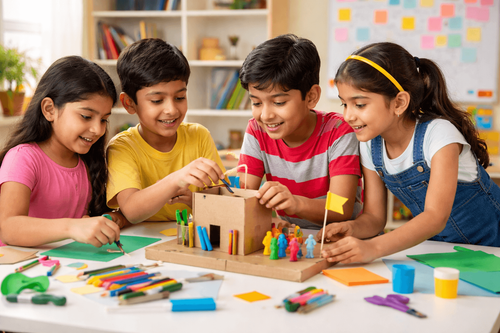

Table of Contents
- What Is the Design Thinking Process for Kids
- Step-by-Step Design Thinking Process for Kids Explained Simp
- Fun Activities to Teach Design Thinking at Home
- Tips by PlanetSpark to Help Kids Master Design Thinking
- Common Mistakes Kids Make in the Design Thinking Process
- How Design Thinking Builds Future-Ready Skills in Kids
- Transform Your Child with PlanetSpark Personality Developmen
- Raise Creative Thinkers and Confident Problem Solvers
What if your child could solve real-world problems like a young innovator instead of feeling stuck or confused? Many kids struggle to think creatively or express ideas clearly. The design thinking process for kids gives them a structured yet fun way to solve problems with confidence.
In this guide, you will learn each step of the process with simple examples and activities. We will explore empathy mapping for children, effective brainstorming techniques for students, and practical ways of building a prototype for school projects.
By the end, you will know how to help your child become a confident problem solver.
What Is the Design Thinking Process for Kids
The design thinking process for kids is a structured yet creative approach that helps children solve problems by focusing on people, ideas, and real-world solutions. Instead of memorizing answers, kids learn how to think, explore, and create. This method is widely used in modern classrooms and innovation programs because it builds essential life skills early on.
At its core, design thinking teaches children to look at problems from different perspectives and come up with thoughtful, practical solutions.
This process follows five simple steps:
- Empathize: Children learn to understand how others feel and what they need. This builds emotional awareness and helps them create meaningful solutions.
- Define: Kids clearly identify the problem they want to solve. This step improves focus and prevents confusion.
- Ideate: They generate multiple ideas without fear of being wrong. This encourages creativity and boosts confidence.
- Prototype: Children build a simple model or version of their idea. This helps them turn thoughts into action.
- Test: They try out their solution, gather feedback, and improve it. This builds resilience and a growth mindset.
Unlike traditional learning methods that focus on right or wrong answers, design thinking encourages children to explore freely. It shifts them from passive learners to active creators who can think independently.
Why is it important for children?
- Builds creativity and innovation: Kids learn to think beyond obvious answers and explore unique ideas. This prepares them for future challenges where creativity is key.
- Improves communication and expression: As children share ideas, ask questions, and present solutions, they become more confident speakers and better listeners.
- Encourages teamwork and collaboration: Many design thinking activities involve group work. Kids learn how to respect different opinions and work together effectively.
- Develops resilience through trial and error: Children understand that mistakes are part of learning. They become more confident in trying again and improving their ideas.
Real-life example
Imagine a child who feels their classroom is too noisy during study time. Instead of complaining, they follow the design thinking process. They talk to classmates, understand the issue, brainstorm solutions like quiet zones or signals, and test what works best.
This approach makes learning more meaningful because children see the impact of their ideas in real life.
Is your child struggling to think creatively or speak confidently? Book a free PlanetSpark trial class today and unlock their true potential before it’s too late.
Step-by-Step Design Thinking Process for Kids Explained Simply
The design thinking process for kids becomes truly powerful when children follow each step with curiosity and purpose. Let’s break down each stage in a more detailed and practical way so parents can guide their children effectively.
Step 1: Empathy Mapping for Children
Empathy is the starting point of design thinking. Before solving any problem, children must understand the people they are solving it for.
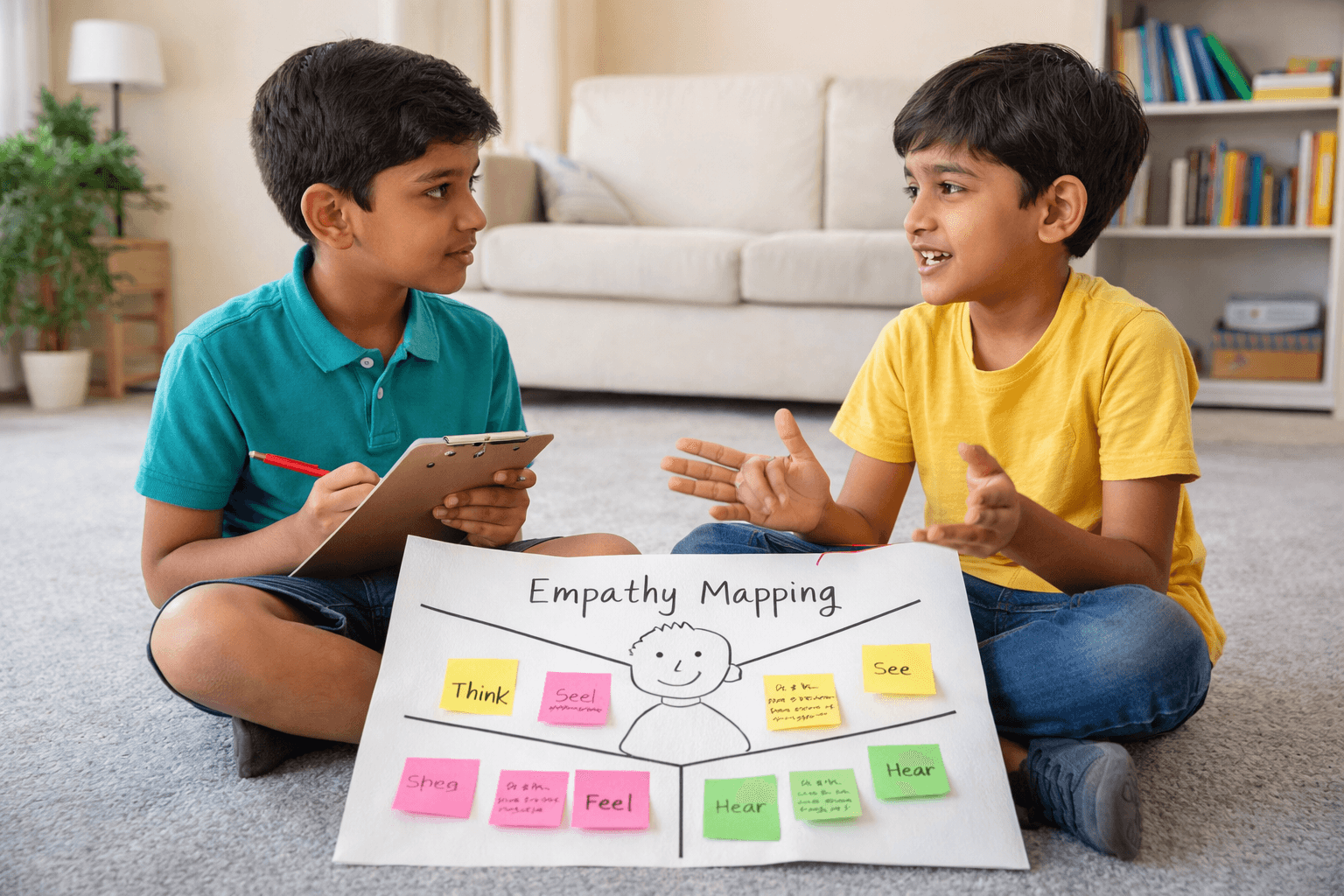
Empathy mapping for children helps kids go beyond assumptions and truly connect with others’ experiences. It teaches them to observe carefully, listen actively, and ask thoughtful questions.
Activities to build empathy:
- Observation walks at home or school where kids notice daily challenges
- Interviewing family members or friends about their problems
- Paying attention to emotions, body language, and reactions
- Drawing or writing what someone says, thinks, feels, and does
Example:
A child observes that their grandparent struggles to hold gardening tools due to weak grip strength. Instead of guessing, they ask questions like, “What feels difficult?” or “What would make it easier?”
This step develops:
- Emotional intelligence by understanding feelings
- Listening skills through meaningful conversations
- Awareness of real-life problems around them
When children truly understand people, they create solutions that are thoughtful and useful rather than random guesses.
Step 2: Define the Problem Clearly
After gathering insights, the next step is to clearly define the problem. Many children skip this step and jump straight to solutions, which often leads to confusion.
A well-defined problem acts like a clear goal. It guides the thinking process and ensures that kids focus on solving the right issue.
Example of a strong problem statement:
"Grandpa needs an easier and more comfortable way to hold gardening tools because his hands get tired quickly."
Encourage kids to:
- Focus on one specific problem at a time
- Use simple and clear language
- Explain why the problem matters
- Avoid vague or broad statements
You can also introduce the “How might we” method:
- How might we make school bags lighter for students?
- How might we help children organize their stationery better?
This step strengthens logical thinking and clarity. It helps children understand that defining the problem correctly is half the solution.
Step 3: Brainstorming Techniques for Students
Now comes the most exciting stage where creativity flows freely. In this step, kids are encouraged to think of as many ideas as possible without worrying about whether they are right or wrong.
Using effective brainstorming techniques for students, children learn to explore possibilities and push their imagination.
Popular techniques include:
- Mind mapping where ideas branch out visually from one central problem
- Crazy Eights, where kids sketch eight ideas in eight minutes to boost speed and creativity
- Group brainstorming, where children build on each other’s ideas
- Sketching solutions instead of only writing them
Rules to follow:
- No idea is wrong or silly
- Focus on quantity before quality
- Encourage wild and creative thinking
- Combine and improve ideas
Example ideas for solving heavy school bags:
- Switching to digital books
- Using rolling backpacks
- Creating classroom storage systems
- Designing ergonomic smart bags
This stage builds confidence and removes fear of failure. Children understand that creativity is about exploration, not perfection.
Worried your child runs out of ideas quickly? Give them expert guidance with PlanetSpark’s creative thinking classes. Book your trial now before seats fill up.
Step 4: Building a Prototype for School Projects
After selecting the best idea, children move to creating a prototype. This is a simple version or model of their solution.
Building a prototype for school projects allows kids to turn abstract ideas into something tangible that can be tested.
Materials kids can use:
- Cardboard and paper
- Clay or Play-Doh
- LEGO blocks
- Recycled materials like bottles or boxes
Important points to remember:
- Keep it quick and simple
- Focus on testing the idea, not making it perfect
- Be open to making changes
Example:
A child designing a better pencil holder creates a rough model using cardboard and tape. It may not look perfect, but it helps test whether the design works.
Benefits of prototyping:
- Encourages hands-on learning
- Helps children understand their ideas better
- Identifies problems early before finalizing
This stage is often the most exciting because kids can see their imagination come to life in a physical form.
Step 5: Test and Improve Solutions
Testing is where learning becomes complete. Children present their prototype to others and gather feedback.
They ask questions like:
- What works well?
- What does not work?
- How can this be improved?
Based on feedback, they refine their solution. This process may repeat multiple times until the idea becomes better.
Testing teaches important life skills:
- Resilience by learning from mistakes
- Adaptability by making improvements
- Growth mindset by understanding that learning never stops
Children begin to see failure not as something negative, but as a step toward success.
In the end, this step helps kids become confident problem solvers who are not afraid to experiment, learn, and grow.
Fun Activities to Teach Design Thinking at Home
Parents can easily introduce the design thinking process for kids through simple, everyday activities. The goal is not to teach theory but to let children experience problem-solving in a fun and practical way.
Here are some engaging activities explained in more detail:
- Redesign your child’s study table: Ask your child what they find difficult while studying. Is the table messy? Are supplies hard to find? Guide them to observe the problem, think of solutions, and rearrange the space. This builds organization skills and problem awareness.
- Create a better lunchbox system: If your child often complains about their lunch, involve them in improving it. Ask what they like or dislike. Let them design compartments, choose food combinations, or even sketch a “perfect lunchbox.” This teaches empathy and creativity.
- Design a toy using recycled materials: Give children items like cardboard, bottles, or old boxes and challenge them to create a new toy. This activity encourages imagination and helps them understand prototyping in a hands-on way.
- Plan a surprise gift experience: Ask your child to design a surprise for a family member. They must think about what the person likes, plan the experience, and execute it. This strengthens empathy and planning skills.
These activities help children connect learning with real-life situations. Instead of memorizing concepts, they experience them. Over time, this builds confidence and independent thinking.
Want your child to learn through fun activities instead of boring theory? Book a PlanetSpark demo class today and watch them transform into confident thinkers.
Tips by PlanetSpark to Help Kids Master Design Thinking
To truly benefit from the design thinking process, children need consistent habits and the right mindset. Here are some practical tips explained by our experts at PlanetSpark in detail:
- Use an idea journal for daily thoughts: Encourage your child to maintain a notebook where they can write or draw ideas. This helps them capture creativity anytime and builds a habit of thinking regularly.
- Encourage saying “not yet” instead of “I can’t”: Replace negative thinking with a growth mindset. When children say “I can’t do this,” guide them to say “I can’t do this yet.” This small shift builds resilience and confidence.
- Focus on learning, not perfection: Help children understand that the goal is to learn, not to create perfect results. Mistakes are part of the process and help improve ideas.
- Celebrate effort and creativity: Appreciate your child’s attempts, even if the result is not perfect. This motivates them to keep trying and experimenting without fear.
These habits gradually shape children into confident thinkers who are not afraid to explore new ideas. With regular practice, they become better problem solvers both in school and in everyday life.
Common Mistakes Kids Make in the Design Thinking Process
While the design thinking process for kids is simple and fun, children often make a few common mistakes when they are just starting out. Understanding these mistakes can help parents guide them better.
Here are some common challenges:
- Jumping directly to solutions: Many kids skip the empathy and define stages. They quickly suggest ideas without fully understanding the problem. This can lead to ineffective solutions.
- Fear of sharing “silly” ideas: Children may hesitate during brainstorming because they worry their ideas might be wrong. This limits creativity and reduces the number of possible solutions.
- Trying to make the prototype perfect: Kids sometimes spend too much time making their model look perfect instead of focusing on whether it works. This slows down learning.
- Ignoring feedback during testing: Some children feel disappointed when they receive feedback and may not want to improve their idea further.
How parents can help:
- Encourage kids to follow each step patiently
- Remind them that all ideas are welcome
- Focus on learning rather than results
- Teach them that feedback helps improvement
By addressing these mistakes early, children can fully benefit from the design thinking process and grow into confident problem solvers.
How Design Thinking Builds Future-Ready Skills in Kids
The design thinking process for kids is not just about solving small problems. It prepares children for real-world challenges and future careers.
Here is how it helps:
- Critical thinking skills: Kids learn to analyze situations deeply before making decisions. This improves their academic performance and real-life judgment.
- Creative confidence: Children become comfortable sharing ideas and thinking differently. This is a key skill in today’s innovation-driven world.
- Better communication skills: As kids explain their ideas and gather feedback, they learn to express themselves clearly and confidently.
- Collaboration and teamwork: Working on group projects teaches kids how to listen, respect opinions, and work together effectively.
- Problem-solving mindset: Instead of feeling stuck, children start looking for solutions in every situation.
Real-world impact:
A child who learns design thinking early is more likely to become a confident speaker, a creative thinker, and a proactive learner. These skills are valuable not just in school but throughout life.
Transform Your Child with PlanetSpark Personality Development Classes
PlanetSpark personality development classes are designed to turn children into confident speakers, creative thinkers, and future leaders. These programs go beyond academics and focus on real-world skills that children need to succeed.
Who is it for? Children who want to improve communication, confidence, and creative thinking.
What problems does it solve? It helps kids overcome hesitation, lack of ideas, and low confidence in expressing themselves.
Why structured learning matters? Without proper guidance, kids may struggle to develop these skills consistently. A structured approach ensures steady growth.
Key Features and USPs
- 1:1 personal trainers for every child with customised learning paths
- AI-powered SparkX video analysis for instant performance feedback
- AI-led practice sessions for speech and storytelling improvement
- Spark Diary to build writing and creative thinking habits daily
- Gamified learning tools like SparkBee for fun skill development
- Interactive clubs like Debate, Podcasting, and Story Writing communities
- Safe platform Sparkline for sharing content and boosting confidence
PlanetSpark ensures that every child receives personalised attention, making learning engaging, measurable, and effective.

Raise Creative Thinkers and Confident Problem Solvers
Helping your child learn the design thinking process is one of the best ways to prepare them for the future. It builds creativity, confidence, and the ability to solve real-world problems. Encourage your child to observe, think, and create every day.
With consistent practice and the right guidance, they will grow into confident individuals ready to face any challenge.
Frequently Asked Questions
At PlanetSpark, we explain it as a five-step method that helps children solve problems creatively using empathy, ideas, and testing.
It helps kids understand emotions and real needs, which leads to better and more thoughtful solutions.
They can use simple materials like cardboard, clay, or LEGO to create quick models and test ideas.
Techniques like mind mapping, Crazy Eights, and group discussions help generate creative ideas quickly.
Yes. At PlanetSpark, we integrate design thinking with communication training to boost confidence and expression.
Children as young as 6 years can start with basic activities and gradually build advanced skills.
Parents can encourage curiosity, ask open-ended questions, and allow kids to experiment freely.