
Digital Hygiene Skills for Kids: Safety & Smart Habits
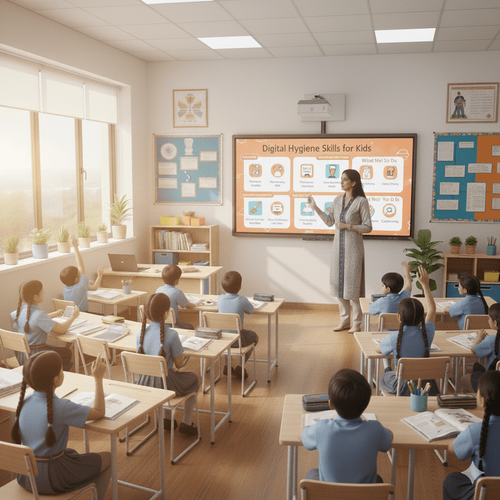

In today’s technology-driven world, Digital Hygiene Skills for Kids are no longer optional,they are essential life skills every child must develop for safe and responsible digital growth. As children navigate smartphones, online classes, video platforms, gaming, and social media, they need strong awareness and disciplined habits to stay protected in the digital space. This blog covers everything parents must know,safe browsing, device hygiene, screen-time balance, cyber awareness, responsible content consumption, and healthy digital behaviour. You will also learn how building these skills early improves academic performance, mental well-being, creativity, and communication skills.
Why Digital Hygiene Skills for Kids Matter Today
Digital hygiene is far more comprehensive than simply teaching children to stay away from harmful websites,it is about shaping their discipline, awareness, emotional intelligence, and sense of responsibility in an increasingly digital-first world. Today, children interact with technology from the moment they wake up,online classes, educational apps, YouTube tutorials, gaming, virtual social interactions, and sometimes even AI-powered tools. This constant connectivity makes digital hygiene a core life skill, just like physical hygiene or academic learning.
As children grow, their learning, friendships, entertainment, creativity, and even identity-building are influenced by digital platforms. Without proper digital hygiene skills, they become vulnerable to:
• Frequent distractions and reduced attention span
Unfiltered digital exposure can fragment focus, reduce concentration, and affect academic performance.
• Misinformation and unreliable content
Kids often trust what they see online. Without critical thinking, they may absorb false information or unhealthy trends.
• Cyber risks like bullying, scams, and privacy breaches
A lack of awareness can expose them to strangers, harmful comments, or unsafe sharing habits.
• Emotional and mental overload
Excessive screen time, overstimulation, and exposure to negative content can lead to anxiety, irritability, burnout, and comparison-based stress.
• Digital dependence and unhealthy screen habits
Kids may struggle with sleep, routine, creativity, and social interactions if devices dominate their daily life.
Teaching digital hygiene early empowers children to use technology as a tool,not a trap. It helps them:
Become confident digital explorers
Build self-control and healthy digital boundaries
Develop judgment and decision-making skills
Communicate responsibly and respectfully
Strengthen online safety and privacy awareness
Balance screen time with real-world activities
Build resilience against online pressure or negativity
In this section, we’ll dive deeper into each component of digital hygiene,safe browsing, emotional regulation, cyber-smart behaviour, digital footprint awareness, content selection, and device care,and understand how each contributes to a child’s long-term digital well-being, personality development, and responsible online citizenship.
Understanding Digital Hygiene Skills for Kids
Digital hygiene refers to the awareness, habits, and behaviours that help children use technology safely, responsibly, and mindfully. It involves a blend of internet hygiene habits, screen-time discipline, cyber-smart behaviour, and emotional well-being practices. Just like physical hygiene keeps the body healthy, digital hygiene keeps a child’s mind, privacy, and online identity safe.
Below are the fundamental pillars.
Safe Browsing & Cyber Awareness
One of the most critical aspects of digital hygiene is ensuring kids understand how to browse safely. Children often click on links without reading, download files unknowingly, or access unreliable sources.
Key Safe Browsing Habits
Avoiding suspicious links, pop-ups, or unknown downloads
Checking website authenticity (https, spelling errors, security icons)
Understanding what phishing scams look like
Knowing what personal information should never be shared online
Using secure passwords and updating them regularly
Reporting unsafe or uncomfortable online interactions
Teaching these skills early builds online safety skills for children,skills they will carry into adulthood.
Screen-Time Discipline & Digital Well-Being
Digital well-being for kids requires balance. Excessive screen time affects sleep, creativity, emotional stability, and focus.
Healthy Screen-Time Practices
Setting screen-time schedules
Taking 20-minute breaks following the 20-20-20 eye care rule
Avoiding screens during meals and before bedtime
Prioritizing offline hobbies like reading, sports, and art
Maintaining digital detox hours
Using screens for creativity rather than passive scrolling
When children learn responsible screen-time practices early, they develop healthier lifelong digital routines.
Responsible Social Media & Communication Etiquette
Even if kids are not on major social media platforms, they interact digitally through messaging apps, video calls, school platforms, and gaming chats.
They must understand:
Respectful online communication
Avoiding harmful comments or teasing
Not responding to strangers
Reporting bullying or inappropriate posts
Understanding digital footprints and online reputation
Being mindful of tone, emojis, and written communication
Digital etiquette teaches children emotional intelligence,how their actions affect others online.
Privacy Protection & Digital Footprint Awareness
Children often overshare without realizing the risks.
Teach Them:
Not to share real-time locations
Not to upload personal images publicly
To avoid revealing school names, addresses, or schedules
That once posted, content stays online
How to use privacy settings
To decline friend requests from unknown people
Building awareness of digital footprint helps kids protect themselves and think before posting.
Device Hygiene & Cybersecurity Basics
This part of digital hygiene is often ignored, but essential.
Teach Kids To:
Update apps regularly
Install antivirus with parental supervision
Delete unnecessary apps
Avoid using unknown USBs
Keep devices password-protected
Log out after using shared devices
Use secure Wi-Fi networks only
These habits create confident, cyber-smart users.
Teaching Digital Hygiene Skills for Kids Effectively
Digital hygiene is best absorbed through consistent, practical learning. Let’s explore how parents and educators can shape strong digital citizens.
Building Awareness Through Conversations
Start by discussing:
How online platforms work
Why some platforms are unsafe
What healthy vs. unhealthy usage looks like
What to do if the child encounters something disturbing
Regular conversations build trust, encourage sharing, and reduce fear.
Setting Boundaries & House Digital Rules
Create rules such as:
“No screens after 9 PM”
“Read for 30 minutes before bedtime instead of watching videos”
“Ask before downloading apps”
“Devices stay in common areas,not bedrooms”
Children thrive with structure.
Modeling Digital Hygiene as Parents
Kids imitate adults.
When parents:
Avoid scrolling during meals
Prioritize offline hobbies
Maintain calm digital habits
children naturally adopt similar behaviours.
Building Digital Resilience
Digital resilience means teaching children how to:
Handle online negativity
Ignore inappropriate messages
Report cyberbullying
Avoid peer pressure in digital spaces
Stay emotionally balanced despite trends
Resilience makes children stronger digital users.
PlanetSpark Personality Development Course: Transforming How Kids Communicate, Interact & Learn
PlanetSpark’s Personality Development Course goes far beyond academics. It blends communication excellence, emotional intelligence, leadership, self-awareness, and digital confidence,essential for today’s online world.
Below is the detailed breakdown as requested.
Holistic Curriculum Beyond Academics
The course covers:
Communication etiquette
Self-introduction
Goal setting
Peer interaction
Leadership
Self-awareness
Critical thinking
These help children become confident, expressive, and emotionally balanced,skills necessary for digital hygiene as well.
Social-Emotional Learning (SEL)-Based Design
For younger kids especially:
Emotional regulation
Awareness
Expression
Self-control
allow them to handle digital spaces more responsibly.
Leadership & Self-Presentation Training
Children learn:
Empathy
Responsibility
Assertiveness
Teamwork
Presentation skills
Storytelling
These shape thoughtful digital citizens who understand respectful online behaviour.
Etiquette & Body Language Sessions
Kids learn:
Eye contact
Posture
Respectful communication
Tone modulation
These support strong digital communication skills as well.
1:1 Personal Trainers
Each child is paired with a certified communication expert who:
Understands learning style
Offers immediate feedback
Helps improve grammar, fluency, storytelling, public speaking
This builds a strong foundation for digital etiquette and safe online communication.
Personalised Curriculum & Learning Roadmap
Each roadmap:
Identifies gaps
Builds skills gradually
Evolves with progress
A personalised approach creates powerful communicators and responsible digital users.
SparkX – AI Video Analysis Tool
Evaluates:
Voice
Body language
Confidence
Grammar
Idea flow
Making digital communication measurable and improved over time.
AI-Led Practice Sessions
Children practise:
Speeches
Stories
Prompts
Grammar
They receive instant AI feedback,boosting fluency, confidence, and clarity.
Spark Diary – Writing Habit Builder
Kids write:
Stories
Reflections
Speeches
Poems
Improves creativity, digital expression, and structured thinking.
Gamified Learning
Includes:
Quiz games
Vocabulary challenges
Grammar competitions
Daily quizzes
Making learning fun, interactive, and consistent.
Exclusive Learning Clubs
Kids join:
Debate Club
Story Writing Club
Comedy Club
Writers Guild
Podcasting Club
These build communication excellence and safe social engagement.
Sparkline – Safe Social Media Platform for Kids
This child-safe content-sharing space helps:
Build confidence
Learn digital behaviour
Receive feedback
Understand online interaction responsibly
Contests & Real-Time Recognition
Kids participate in:
Storytelling contests
Speech battles
Poetry events
Talent showcases
These build confidence, stage presence, and social communication skills.
Building Confident Digital Citizens for Tomorrow
In a world where digital screens shape how children learn, communicate, explore ideas, and express themselves, nurturing Digital Hygiene Skills for Kids is no longer just an option,t is a responsibility, a priority, and an investment in their future. As technology becomes a constant companion, children must be equipped not only to use it but to use it wisely, safely, and meaningfully.
When kids learn safe browsing habits, understand privacy, practice respectful digital etiquette, balance screen time, and develop emotional regulation, they gain far more than technical skills,hey build self-awareness, discipline, confidence, and critical thinking. These abilities shape them into thoughtful digital citizens who can make smart choices even when faced with online challenges or overwhelming digital noise.
Strong digital hygiene empowers children to:
Stay focused and avoid distractions
Protect their identity and personal information
Communicate with clarity and kindness
Navigate social platforms responsibly
Build resilience against cyberbullying and peer pressure
Use technology for learning, creativity, and growth
Maintain a healthy balance between digital and real-world experiences
Ultimately, digital hygiene lays the foundation for a future where children are not just technology users but confident, ethical, and empowered individuals who lead with awareness and emotional intelligence. As parents and educators, guiding them toward this balanced digital lifestyle ensures they grow into compassionate leaders, innovative thinkers, and responsible global citizens.
Frequently Asked Questions
Digital hygiene skills are the habits and behaviours that help children use technology safely and responsibly. They include safe browsing, privacy protection, online etiquette, screen-time balance, device care, and emotional well-being practices. These skills protect kids from cyber risks, build critical thinking, and help them navigate digital spaces confidently.
Parents can teach digital hygiene by setting rules, modelling healthy screen habits, monitoring online activities, using parental controls, having regular conversations about safety, and encouraging offline activities. Building trust and openness ensures kids share concerns freely and learn to make safer digital choices.
Digital hygiene can be taught as early as age 5, when children begin exploring digital devices. At young ages, basic rules like asking before downloading, limiting screen time, and avoiding stranger chats can be introduced. As kids grow, advanced skills like privacy, digital footprint awareness, and online communication etiquette should be taught.
Digital hygiene strengthens discipline, emotional balance, responsible behaviour, decision-making, and communication. Children become confident digital users who can handle technology positively. It also enhances focus, creativity, empathy, and leadership—core aspects of a strong personality.
PlanetSpark’s Personality Development and Creative Writing Courses help kids become confident communicators, emotionally aware individuals, and responsible digital users. Through AI tools, personalised trainers, SEL-based activities, writing practice, safe content-sharing communities, and interactive learning clubs, children learn how to express themselves clearly and navigate digital spaces with confidence. PlanetSpark nurtures responsible communication—both online and offline.