
Educational Learning Toys: Smart Play for Lifelong Skills
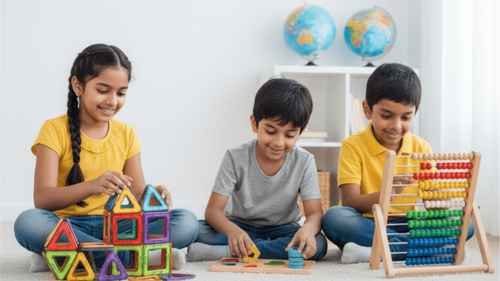

Table of Contents
- Why Educational Learning Toys Matter
- Choosing the Right Educational Learning Toys
- Major Categories of Educational Learning Toys
- How to Use Educational Learning Toys Effectively
- Examples of Popular Educational Learning Toys
- The Lasting Benefits of Educational Learning Toys
- The Role of Parents and Teachers
- How Educational Toys Prepare Children for Communication
- PlanetSpark: Turning Curiosity into Communication
- Conclusion
Imagine your child learning math while building a tower, or improving vocabulary while telling stories through blocks. That’s the power of educational learning toys and tools that turn simple playtime into a journey of discovery. These toys combine fun and function. They teach children to think, create, and solve problems while enjoying every moment.
In today’s digital world, where screens dominate, educational learning toys offer a hands-on, mindful way for children to explore ideas. They bridge the gap between play and learning, shaping skills that stay for life.
This blog dives deep into how these toys help in development, how to choose them, what makes them special, and how platforms like PlanetSpark complement these toys to build strong communication skills.
Why Educational Learning Toys Matter
1. They Make Learning Natural
Children learn best through play. It’s instinctive and enjoyable. Educational learning toys make complex ideas simple. For example, a puzzle teaches logic, and a building block set introduces balance and structure. These toys turn learning into something kids want to do, not something they have to do.
2. They Build Cognitive Skills
When a child figures out which piece fits where, their brain forms new connections. Activities like sorting, matching, or pattern recognition improve reasoning. Over time, this enhances problem-solving ability, memory, and decision-making.
3. They Improve Language and Communication
Toys that involve letters, words, or storytelling nurture vocabulary and self-expression. When children talk about what they build or imagine, they practise articulation and narration. It’s not just about knowing words; it’s about using them meaningfully.
4. They Strengthen Motor Skills
Handling toys involves grasping, pushing, pulling, or placing. Each of these actions refines hand-eye coordination and fine motor control. As kids play, they also improve balance, strength, and control, all while having fun.
5. They Spark Creativity
Educational learning toys often come without strict rules. A child can turn a few blocks into a spaceship or a zoo. This open-ended play builds imagination. It encourages children to think differently and find unique solutions.
6. They Teach Patience and Focus
When a puzzle doesn’t fit or a model collapses, kids learn to try again. Educational learning toys build patience, focus, and persistence, essential life skills for any learning journey.
Choosing the Right Educational Learning Toys
1. Match the Toy to the Age
The best toy is one that matches a child’s developmental stage. Toddlers benefit from sensory toys or simple stacking blocks. Preschoolers enjoy puzzles, shapes, and musical instruments. Older kids thrive with science kits or coding games. The right level keeps them engaged and challenged.
2. Look for Purposeful Play
Every educational learning toy should have a learning outcome. Ask yourself, “What will this toy teach?” A toy that teaches letters should also encourage word-building. A math toy should challenge number sense. Purposeful play makes learning focused and effective.
3. Go for Open-Ended Options
Open-ended toys can be used in many ways. Building blocks, art sets, or storytelling kits grow with your child. They keep offering new challenges as creativity expands.
4. Ensure Safety and Durability
Since kids handle toys roughly, choose high-quality, non-toxic materials. Avoid toys with small detachable parts for young children. Durable toys last long and maintain their educational value.
5. Prioritise Fun
A child learns best when they’re enjoying themselves. Avoid toys that feel too much like lessons. A playful design invites curiosity and makes learning effortless.
Major Categories of Educational Learning Toys
1. Language and Literacy Toys
These include alphabet blocks, magnetic letters, flashcards, and story-building kits. They teach reading, writing, and speaking. Word games encourage children to form sentences, tell stories, and express feelings.
2. STEM Toys (Science, Technology, Engineering, Math)
STEM toys make complex subjects simple and fun. Robotics kits, building sets, and science experiments introduce logic and problem-solving. These toys build curiosity about how things work.
3. Art and Creativity Toys
Drawing kits, clay, craft tools, and musical instruments inspire creative thinking. Kids learn colours, patterns, and self-expression through art. Creativity supports emotional balance and innovation.
4. Sensory and Motor Skill Toys
Sensory bins, stacking rings, threading beads, and clay tools develop fine motor skills and focus. These toys help young children control movement and understand textures.
5. Social and Emotional Learning Toys
Board games, teamwork puzzles, and role-play kits teach empathy, sharing, and communication. They prepare children to collaborate and manage emotions in group settings.
Ignite your child’s curiosity with PlanetSpark Learning Programs. Book a Free Trial Class today!
How to Use Educational Learning Toys Effectively
1. Create a Routine
Regular exposure helps children develop habits. Schedule 20–30 minutes of educational play daily. It keeps learning consistently and predictably.
2. Join the Fun
Participate in your child’s play. Ask questions like, “What happens if we try it another way?” or “Why did you choose that piece?” This interaction supports thinking and language growth.
3. Let Children Take the Lead
Avoid giving step-by-step instructions. Let your child explore. When children make their own choices, they learn independence and confidence.
4. Add Challenges Gradually
Increase difficulty as your child progresses. Move from simple puzzles to complex building sets. Gradual challenges keep engagement high without causing frustration.
5. Rotate Toys Regularly
Keep things fresh by rotating toys every few weeks. Children rediscover interest and explore new ways to play.
6. Avoid Pressure
Play should remain joyful. If a toy doesn’t interest the child, take a break and try later. Learning happens best when there’s no pressure.
Examples of Popular Educational Learning Toys
- LEGO Building Sets – Great for spatial reasoning, creativity, and problem-solving.
- Magnetic Tiles – Help children explore shapes, symmetry, and design.
- Story Cubes – Encourage storytelling and vocabulary development.
- STEM Robot Kits – Introduce coding, electronics, and logical thinking.
- Math Board Games – Build number sense through play.
- Puzzle Boards – Improve focus, patience, and pattern recognition.
- Art & Craft Sets – Encourage creativity and self-expression.
The Lasting Benefits of Educational Learning Toys
1. School Readiness
Children who engage with learning toys early find school more manageable. They’re familiar with letters, numbers, and structured thinking.
2. Confidence in Learning
Completing a puzzle or building something builds confidence. Kids realise effort leads to results, a lesson that transfers to academics.
3. Better Focus and Memory
Repetitive play strengthens memory. Focus improves as children stay engaged with one task for longer periods.
4. Teamwork and Communication
Toys that require collaboration help children express ideas and listen to others. They learn how to share, negotiate, and lead.
5. Lifelong Curiosity
Children who explore through play grow into curious learners. They’re more likely to ask questions, seek answers, and keep learning beyond the classroom.
Turn play into progress through PlanetSpark’s Learning Courses. Reserve your Free Trial Session now!
The Role of Parents and Teachers
Educational learning toys work best when guided by adults who support exploration.
- Parents can encourage curiosity, listen to children’s ideas, and celebrate effort over results.
- Teachers can integrate toys into lessons for hands-on learning. This helps children see connections between play and academics.
Adults shouldn’t “teach” with these toys but rather facilitate discovery. Ask open-ended questions, observe, and let children lead.
How Educational Toys Prepare Children for Communication
Playing isn’t just physical, it’s also verbal. Toys often trigger storytelling and conversation. When children describe their actions or creations, they practise speech and logical flow.
For example:
- While playing with a building set, a child explains what they’re making.
- During a story game, they narrate adventures or have dialogues.
- While solving puzzles, they share reasoning: “This fits because it’s blue and round.”
Each of these activities builds speaking confidence, a foundation that platforms like PlanetSpark take further through structured learning.
PlanetSpark: Turning Curiosity into Communication
After exploring educational learning toys, you might wonder how to extend these skills into real-world expression. That’s where PlanetSpark comes in.
PlanetSpark focuses on developing communication and public speaking skills in children through live online classes. The platform’s unique teaching model builds confidence, fluency, and creative expression.
Why PlanetSpark Stands Out
- Personalized 1:1 Classes: Each child learns at their own pace with expert mentors.
- Comprehensive Curriculum: Covers public speaking, creative writing, storytelling, and grammar.
- Global Community: Over a million classes taught to students in 13+ countries.
- Interactive Learning: Games, activities, and role-plays make classes engaging and practical.
- Performance Opportunities: Debates, podcasts, and writing contests let children showcase their skills.
- Transparent Progress Reports: Parents receive detailed updates on progress and learning milestones.
PlanetSpark transforms communication into a life skill. Where educational learning toys start curiosity, PlanetSpark shapes it into confident expression.
Visit planetspark. To explore courses that complement your child’s growth journey.
Conclusion
Educational learning toys are more than playthings; they are learning tools that shape young minds. They build curiosity, confidence, and creativity. Through play, children learn to think critically, speak clearly, and imagine freely.
By combining such toys with structured programs like PlanetSpark, parents give children the best of both worlds: playful discovery and purposeful expression.
Learning doesn’t start in school; it starts in play. Bring home the right toys, engage with your child, and watch learning unfold naturally. And when they’re ready to express their thoughts, let PlanetSpark guide their voice to shine.
Frequently Asked Questions
Toys build basic thinking and creativity. PlanetSpark develops communication skills, helping kids express what they learn through confident speech and writing.
Start as early as two years. Early exposure helps build focus, motor control, and curiosity that prepare kids for structured learning later.
At least 20–30 minutes daily or several times a week keeps learning consistent and effective. Short, regular sessions work best.
PlanetSpark covers public speaking, storytelling, creative writing, and grammar. It helps children build clarity, vocabulary, and stage confidence.
Every session is one-on-one. Trainers adjust the pace, topics, and methods to match each child’s personality, goals, and comfort level.
Yes. Students become more confident in school presentations, group talks, and interviews as they practise structured communication regularly.