
Growth Mindset for Success | Personality Development by PlanetSpark
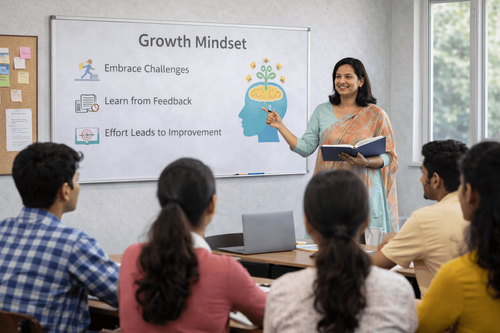

Table of Contents
- What is Growth Mindset
- Growth Mindset vs Fixed Mindset
- How a Growth Mindset Impacts Personality Development
- Growth Mindset Quotes That Inspire Learning
- What Are Growth Mindset Strategies
- How to Develop a Growth Mindset
- How to Build a Growth Mindset in Daily Life
- Why Growth Mindset Matters in Career Success
- PlanetSpark Personality Development Course for Adults
- Why Developing a Growth Mindset is the Key to Lifelong Succe
A strong growth mindset plays a crucial role in personal success, professional development, and long-term learning. Many adults struggle with self-doubt, fear of failure, or stagnation because they unknowingly operate with a fixed mindset. This blog explores what is growth mindset, the difference between growth mindset vs fixed mindset, and practical ways to build a mindset that encourages progress and resilience. You will also learn growth mindset strategies, how to develop a growth mindset in everyday life, and how this mindset supports confidence, adaptability, and leadership.
What is Growth Mindset
A growth mindset is the belief that abilities, intelligence, and talents can be developed through effort, learning, and persistence.
The concept was popularized by psychologist Carol Dweck, who demonstrated that people who believe they can improve tend to achieve more than those who believe their abilities are fixed.
Key characteristics of a growth mindset
Viewing challenges as opportunities to learn
Believing intelligence and skills can improve with effort
Embracing feedback and constructive criticism
Persisting even when progress is slow
Learning from mistakes instead of fearing them
Individuals with a growth mindset understand that success is a process. They focus on continuous improvement rather than immediate perfection.
Why growth mindset matters in adult life
For adults, adopting a growth mindset helps in multiple areas:
Career development
Leadership and management
Communication and relationships
Learning new skills
Overcoming professional setbacks
A growth mindset makes individuals adaptable in changing environments, which is essential in modern workplaces.
Growth Mindset vs Fixed Mindset
Understanding the difference between growth mindset vs fixed mindset is essential for personal development.
What is a Fixed Mindset
A fixed mindset is the belief that intelligence, abilities, and talents are static traits that cannot change significantly.
People with a fixed mindset often avoid challenges because they fear failure or judgment.
Fixed Mindset vs Growth Mindset Comparison
Response to Challenges
Growth mindset
Embraces challenges
Sees them as learning opportunities
Fixed mindset
Avoids challenges
Fears failure and embarrassment
Reaction to Feedback
Growth mindset
Accepts feedback for improvement
Fixed mindset
Takes criticism personally
Approach to Effort
Growth mindset
Effort is necessary for mastery
Fixed mindset
Effort signals lack of talent
View of Failure
Growth mindset
Failure is a learning experience
Fixed mindset
Failure defines ability
How mindsets shape long-term success
People with a growth mindset often achieve higher levels of success because they:
Learn continuously
Adapt quickly to change
Develop stronger resilience
In contrast, individuals with a fixed mindset may remain stuck in their comfort zones.
How a Growth Mindset Impacts Personality Development
Personality development is not only about confidence or communication, it is also about mental attitudes toward learning and self-improvement.
A growth mindset directly influences how individuals build their personality.
Key personality traits strengthened by growth mindset
Self Confidence
People with a growth mindset believe improvement is possible, which naturally boosts confidence.
Resilience
Setbacks are treated as lessons rather than failures.
Adaptability
Growth-oriented individuals adjust quickly to new environments and challenges.
Leadership
Leaders with growth mindset encourage team learning and innovation.
Growth Mindset Quotes That Inspire Learning
Many influential thinkers and leaders have emphasized the value of learning and persistence.
Here are some powerful growth mindset quotes.
“Becoming is better than being.” – Carol Dweck
“Success is not final, failure is not fatal, it is the courage to continue that counts.” – Winston Churchill
“Mistakes are proof that you are trying.”
“The expert in anything was once a beginner.”
“Challenges are what make life interesting.”
These quotes highlight the essence of a growth mindset, progress comes from effort and persistence.
What Are Growth Mindset Strategies
Adopting a growth mindset requires intentional habits and strategies.
Here are some proven growth mindset strategies.
Reframe Failure as Feedback
Instead of asking
“Why did I fail?”
Ask
“What can I learn from this experience?”
This shift encourages learning rather than discouragement.
Embrace Continuous Learning
Successful individuals actively pursue new knowledge.
Ways to do this include
Reading regularly
Attending workshops
Learning new skills
Practice Reflective Thinking
Reflecting on experiences helps identify areas of improvement.
You can do this by
Writing a journal
Evaluating daily decisions
Asking for feedback
Celebrate Effort, Not Just Results
Acknowledging effort encourages persistence.
This mindset supports long-term growth.
How to Develop a Growth Mindset
Developing a growth mindset is a gradual process that involves awareness and practice.
Recognize Your Current Mindset
Start by observing your reactions to challenges.
Ask yourself
Do I avoid difficult tasks?
Do I feel threatened by criticism?
These questions help identify fixed mindset patterns.
Replace Negative Self Talk
Instead of saying
“I cannot do this”
Say
“I cannot do this yet”
The word “yet” keeps the door open for improvement.
Seek Constructive Feedback
Feedback helps identify blind spots and accelerates learning.
Constructive feedback should be viewed as guidance rather than criticism.
Learn From Role Models
Studying successful individuals helps understand how persistence leads to achievement.
Many entrepreneurs and leaders emphasize the importance of growth mindset.
How to Build a Growth Mindset in Daily Life
Building a growth mindset requires consistent effort.
Here are practical ways to integrate it into everyday routines.
Set Learning Goals
Instead of focusing only on results, focus on skill improvement.
Example
Learning better presentation skills
Improving communication clarity
Developing leadership abilities
Step Outside Comfort Zones
Growth happens when individuals challenge themselves.
This could include
Speaking in public
Taking leadership roles
Learning unfamiliar skills
Surround Yourself With Growth Oriented People
The environment strongly influences mindset.
Being around positive and ambitious individuals encourages personal development.
Track Progress
Monitoring improvement helps maintain motivation.
You can track progress through
Journaling achievements
Reflecting on past challenges
Setting milestone goals
Why Growth Mindset Matters in Career Success
In the modern professional world, success is rarely based only on technical knowledge.
Employers increasingly value adaptability, learning ability, and resilience.
A growth mindset supports career success because it encourages:
Continuous learning
Innovation
Problem solving
Leadership development
Emotional intelligence
Professionals who continuously learn and adapt are more likely to succeed in dynamic industries.
PlanetSpark Personality Development Course for Adults
Personality development becomes truly impactful when it blends mindset training, communication mastery, and practical real-world application. The PlanetSpark Personality Development Course is designed to help professionals and young adults strengthen confidence, leadership presence, and communication clarity through structured learning and guided practice.
One of the most powerful elements of the program is 1:1 personalised coaching. Each learner is paired with a certified communication expert who conducts live sessions tailored to the learner’s goals, career needs, and personality traits. Trainers focus on improving professional communication, articulation, storytelling, grammar accuracy, and presentation impact, while offering immediate feedback and practical improvement strategies.
The journey begins with a personalised learning roadmap based on an initial skill assessment. This evaluation identifies gaps in areas such as speaking confidence, vocabulary usage, thought structuring, and professional communication etiquette. Based on the results, trainers design a progressive learning plan that helps learners move from basic clarity in communication to confident presentations and leadership communication.
PlanetSpark also incorporates SparkX, an AI-powered video analysis tool that evaluates recorded speeches and presentations. The system provides detailed feedback on voice modulation, clarity, body language, grammar usage, confidence level, and idea organisation, allowing learners to track measurable progress over time.
Adults also benefit from AI-guided practice sessions, where they can practise delivering speeches, presentations, or storytelling formats while receiving instant feedback on fluency, pacing, and expression.
To strengthen written communication, the program includes Spark Diary, a digital writing space where learners practise structured writing, reflections, and professional communication exercises.
PlanetSpark further enhances engagement through interactive learning modules and skill-building activities focused on vocabulary development, communication clarity, and critical thinking.
Learners can also participate in collaborative communication communities such as debate circles, storytelling groups, podcast discussions, and writing forums, enabling them to practise public expression, leadership, and networking in a supportive learning environment.
Through this structured and technology-enabled approach, the PlanetSpark Personality Development Course empowers adults to become confident communicators, influential leaders, and growth-oriented professionals.
Why Developing a Growth Mindset is the Key to Lifelong Success
Success in life and career is rarely determined by talent alone. More often, it is shaped by mindset, learning attitude, and resilience. A growth mindset empowers individuals to see challenges as opportunities, embrace learning, and continuously improve themselves.
When adults adopt a growth mindset, they become more confident learners, better communicators, and stronger leaders. Instead of fearing failure, they focus on progress and personal growth.
Developing this mindset requires consistent practice. Reframing failures, seeking feedback, learning new skills, and stepping outside comfort zones are all part of the journey.
In today’s rapidly changing world, the ability to learn and adapt is more valuable than ever. A growth mindset ensures individuals remain curious, motivated, and capable of achieving their goals.
You can also read:
Frequently Asked Questions
A growth mindset is the belief that abilities and intelligence can improve through effort, learning, and persistence. Instead of assuming talent is fixed, individuals with a growth mindset focus on developing skills over time.
For example, someone learning public speaking may initially struggle but improves through practice and feedback.
This mindset encourages continuous learning and resilience.
The difference between fixed mindset vs growth mindset lies in how individuals view their abilities.
Fixed mindset
Believes abilities are permanent
Avoids challenges
Fears failure
Growth mindset
Believes abilities can improve
Accepts challenges
Learns from mistakes
This difference significantly influences long-term success.
Effective growth mindset strategies include:
Viewing challenges as learning opportunities
Practicing self reflection
Accepting feedback
Setting learning goals instead of performance goals
Celebrating effort and improvement
These strategies help individuals gradually shift their thinking patterns.
Adults can develop a growth mindset by:
Replacing negative self talk with positive learning language
Seeking mentorship and feedback
Practicing new skills regularly
Reflecting on failures as learning opportunities
Surrounding themselves with growth-oriented individuals
Over time, these habits build a mindset focused on progress.
Personality development programs provide structured learning environments where individuals practise communication, leadership, and critical thinking.
Programs like the PlanetSpark Personality Development Course focus on confidence building, communication etiquette, leadership training, and real-life scenario practice. With personalised coaching, AI-powered learning tools, and structured feedback, learners gradually build a strong growth mindset while improving their communication and self-expression skills.