
Unlock The Habit of Planning For Lifelong Success
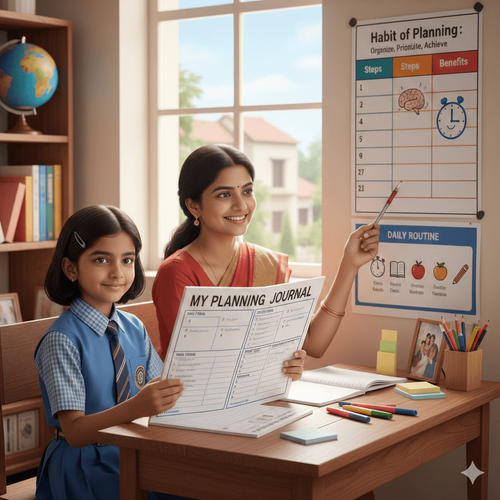

Table of Contents
- What is the Habit of Planning?
- Why is the Habit of Planning Important for Students?
- How Planning Reduces Stress and Builds Confidence?
- Practical Ways to Develop Your Planning Habit
- The Power of Goal Setting and Prioritization
- Overcoming Common Planning Challenges
- Real-World Planning Scenarios
- How Planning Enhances Communication Skills?
- Building Planning as a Lifelong Habit
- Master The Habit of Planning with PlanetSpark
Have you ever felt overwhelmed by homework, projects, and extracurricular activities all piling up at once? Do you find yourself rushing to complete assignments at the last minute?
If yes, then you're not alone! Many students struggle with managing their time and tasks. But here's the good news: developing the habit of planning can completely transform your academic journey and life beyond school.
At PlanetSpark, we believe that strong communication and organizational skills go hand-in-hand. Through our 1:1 live classes in Public Speaking and Creative Writing, we help students not just express themselves better but also develop essential life skills like planning, time management, and goal-setting. When students learn to plan effectively, they become confident communicators who can articulate their thoughts clearly and manage their responsibilities with ease.
What is the Habit of Planning?
The habit of planning refers to the consistent practice of organizing your tasks, setting goals, and creating actionable steps to achieve them. It's about thinking ahead before you act, whether it's planning your study schedule, preparing for exams, or organizing a school project. Planning is a fundamental skill that helps you break down complex tasks into manageable parts and gives you a clear direction to follow.
Think of planning as creating a roadmap for your journey. Just like you wouldn't start a road trip without knowing your destination and route, you shouldn't approach your studies or daily activities without a clear plan. Planning skills for students involve setting priorities, managing time wisely, and following through on commitments. It's the difference between wandering aimlessly and walking purposefully toward your goals.
Unlock Your Communication Potential with PlanetSpark.
Why is the Habit of Planning Important for Students?
Planning might seem like extra work at first, but it actually saves you time and energy in the long run. When you have a solid plan, you eliminate confusion, reduce stress, and create space for the things you truly enjoy. Student planning habits are crucial because they teach you how to take control of your life rather than letting circumstances control you.
Key benefits of developing planning habits include:
- Reduced stress and anxiety about deadlines and assignments
- Improved academic performance and better grades
- Enhanced time management skills that last a lifetime
- Greater self-discipline and personal responsibility
Students who develop effective planning habits early often find that school becomes less overwhelming and more manageable. They have time for their hobbies, can balance multiple activities, and still maintain good grades. The habit of planning transforms chaos into clarity.
How Planning Reduces Stress and Builds Confidence?
Imagine waking up on Monday morning and knowing exactly what your week looks like. You know when your math test is scheduled, when your science project is due, and which evenings you have free for playing with friends. This clarity eliminates the constant worry of "What am I forgetting?" that many students experience. Time management for students becomes natural when planning is part of your routine.
Planning also builds confidence because you experience the satisfaction of completing tasks on time. Each checked-off item on your to-do list gives you a sense of achievement. Over time, you start believing in your ability to handle challenges, and this confidence spills over into other areas of your life, from public speaking to trying new activities.
At PlanetSpark, we've seen how planning skills directly enhance communication abilities. When students learn to organize their thoughts before writing a story or structuring a speech, they become clearer and more confident in their expression. Our curriculum integrates planning exercises into creative writing and public speaking lessons, helping students develop both organizational and communication excellence.
Unlock Your Communication Potential with PlanetSpark.
Practical Ways to Develop Your Planning Habit
Starting the habit of planning doesn't require fancy tools or complicated systems. You can begin with simple methods and gradually build more sophisticated planning skills. The key is consistency, doing a little planning every day rather than trying to plan everything perfectly once in a while.
Start with these simple planning techniques:
- Create a daily to-do list every morning or the night before
- Use a student planner or calendar to track important dates
- Break large projects into smaller, manageable steps
- Set aside 10 minutes each Sunday to plan your upcoming week
Begin with daily planning for students by writing down three important tasks you want to complete tomorrow. As this becomes comfortable, expand to weekly planning where you map out your entire week, including study time, activities, and breaks. The progression from daily to weekly to monthly planning happens naturally as your skills grow.
The Power of Goal Setting and Prioritization
Goal setting for students becomes much more effective when combined with planning. A goal without a plan is just a wish, but a goal with a clear action plan becomes achievable. Start by identifying what you want to accomplish—whether it's improving your math grade, reading more books, or learning a new skill. Then create a plan with specific steps to reach that goal.
Prioritization is equally important in effective planning for school success. Not all tasks are equally urgent or important. Learning to prioritize means asking yourself which tasks will have the biggest impact and which ones have approaching deadlines. Focus on high-priority items first, and you'll find that your productivity skyrockets.
For example, if you have homework due tomorrow and a project due next week, completing today's homework takes priority. However, you should also allocate some time to your project so you're not scrambling at the last minute. This balanced approach to prioritization prevents crisis situations and keeps you in control.
Overcoming Common Planning Challenges
Even with the best intentions, students often face obstacles when trying to maintain planning and organizational skills. One common challenge is overplanning, trying to schedule every single minute of the day, which feels restrictive and unsustainable. The solution is to plan your important tasks and commitments while leaving buffer time for flexibility and spontaneous activities.
Another challenge is not following through on plans. Creating a beautiful plan feels good, but execution is where the real work happens. Start small to build momentum. If you plan to study for two hours but only manage 30 minutes, that's still progress. Gradually increase your goals as your planning skills strengthen.
Common mistakes to avoid:
- Planning without leaving time for breaks and relaxation
- Ignoring review time when creating study schedules
- Setting unrealistic goals that lead to disappointment
- Forgetting to adjust plans when circumstances change
Remember, planning is a skill that improves with practice. Be patient with yourself and celebrate small victories along the way.
Unlock Your Communication Potential with PlanetSpark.
Real-World Planning Scenarios
Let's look at how project planning for students works in real situations. Suppose you have a history presentation due in three weeks. Instead of procrastinating until the night before, use backward planning. Start from the due date and work backward, assigning tasks to each week. Week one might be research and topic selection, week two could be creating the presentation, and week three would be practice and final touches.
Another scenario involves balancing multiple commitments. If you play sports, take music lessons, and have regular homework, you need a visual planning system. Use a weekly calendar to map everything out. This helps you identify time conflicts and ensures you're not overcommitting yourself. You'll also see at a glance when you have free time for relaxation or socializing.
At PlanetSpark, students regularly work on long-term creative writing projects and prepare for public speaking performances. Our teachers guide them through the entire planning process from brainstorming and outlining to drafting and revising. These study planning strategies become second nature and transfer to all academic work and personal projects.
How Planning Enhances Communication Skills?
The connection between planning and communication might not be obvious at first, but they're deeply linked. When you plan what you want to say, whether writing an essay, delivering a speech, or participating in a class discussion, your message becomes clearer and more persuasive. Effective planning habits teach you to organize your thoughts logically, which is essential for powerful communication.
Think about giving a presentation without planning. You might ramble, forget important points, or lose your audience's attention. But when you plan your presentation, create an outline, identify key messages, and prepare examples, your delivery becomes confident and engaging. The same principle applies to writing essays, stories, or even emails.
This is why PlanetSpark integrates planning into every aspect of our curriculum. Students learn to structure their creative writing pieces, outline their speeches, and organize their arguments for debates. These planning skills make them not just better students but better communicators who can express themselves clearly in any situation.
Unlock Your Communication Potential with PlanetSpark.
Building Planning as a Lifelong Habit
The habit of planning extends far beyond school years. Adults who plan effectively are more successful in their careers, manage their finances better, and achieve their personal goals more consistently. By developing planning skills now, you're investing in your future success. The time you spend planning today will pay dividends for decades to come.
Make planning a permanent part of your life with these habits:
- Start each day by reviewing your plan and setting intentions
- End each day by reflecting on what you accomplished and planning tomorrow
- Use Sunday evenings for weekly planning sessions
- Regularly review and adjust your long-term goals
The beauty of planning is that it creates a positive cycle. When you plan, you accomplish more. When you accomplish more, you feel confident. When you feel confident, you set bigger goals. And bigger goals require better planning, which further develops your skills. This upward spiral leads to continuous growth and achievement.
Master The Habit of Planning with PlanetSpark
The habit of planning is one of the most valuable gifts you can give yourself as a student. It transforms overwhelming chaos into manageable order, helps you achieve your goals, and builds confidence that extends into every area of your life. Whether you're planning your daily homework routine, a big school project, or your dreams for the future, planning gives you the power to turn aspirations into reality.
Remember that planning isn't about being perfect or controlling every moment. It's about being prepared, staying organized, and making intentional choices about how you spend your time. Start small, be consistent, and watch how this simple habit creates profound changes in your academic performance and personal growth.
At PlanetSpark, we're committed to helping students develop not just communication skills but the complete toolkit for success including planning, organization, critical thinking, and confidence. Our personalized 1:1 classes in Public Speaking and Creative Writing integrate these essential life skills into every lesson, preparing students for excellence in school and beyond.
The journey to becoming an organized, successful, and confident individual begins with a single step: deciding to plan. Take that step today, and you'll be amazed at how far you can go. Your future self will thank you for the planning habits you build right now.
Frequently Asked Questions
The habit of planning means regularly organizing tasks, setting goals, and creating steps to finish them. For students, it reduces last-minute stress, improves time management, boosts grades, and builds long-term confidence and responsibility.
Begin small: each morning or night list 3 priority tasks for the next day. Spend 10 minutes on weekly planning every Sunday. Consistency matters more than perfection small daily steps build momentum.
Planning breaks big tasks into manageable chunks, creates clear deadlines, and prevents last-minute cramming. When students see a roadmap, uncertainty and panic drop which reduces stress and improves focus during studying and tests.
Simple options work best: a paper planner, a weekly calendar, or a phone notes app. Combine a daily to-do list with weekly blocks for study, activities, and breaks. Visual planners reduce conflicts and show available free time.