
Healthy Screen Time for Students: Balance in a Digital Age!
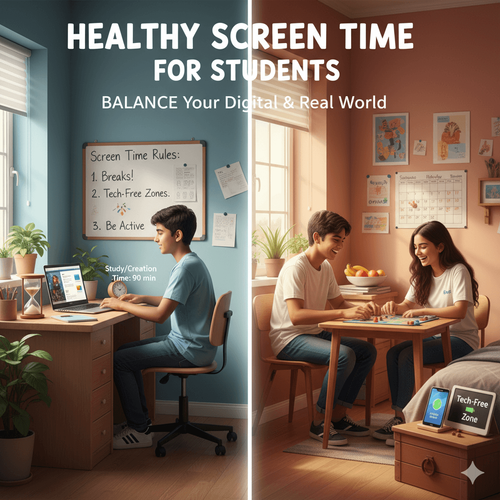

Table of Contents
- How Much Screen Time is Healthy for Students
- What Healthy Screen Time Really Means
- Why Students Need Balanced Screen Time
- Everyday Signals That Screens Are Taking Over
- A Student’s Day: Balanced VS Unbalanced
- How Too Much Screen Time Affects Students
- The Positive Side: How Screens Can Help Students Grow
- Real-Life Tip: Practice the “Screen Purpose Question”
- 20-20-20 Eye Reset Ritual
- Creating a Screen-Smart Home Routine
- Turning Boredom Into Creativity
- Making Screen Time Productive and Fun
- Personality Development at PlanetSpark: Building Confident a
- Final Thoughts: Students Can Shape Their Digital Future
In the digital age, healthy screen time is necessary to ensure that students learn, develop, and remain mentally and physically healthy. The blog discusses intelligent screen time, how to use it, and how to balance studying, entertainment, and offline life. Students at PlanetSpark master the confidence of communicating, managing time, and disciplining themselves digitally using a structured learning process, live classes, and fun activities. This helps them to create healthy tech habits that would carry them to lifelong success.
How Much Screen Time is Healthy for Students
Scholars all over the globe, including the WHO and pediatric organizations, acknowledge that students are best to limit recreational screen time to 1-2 hours a day in addition to schoolwork.
Then, when a person questions, how much screen time is healthy, I would respond straightforwardly:
You know enough to learn, grow, and connect, but not to the extent that it supersedes movement, sleep, concentration, or the real world.
The goal is not a rigid timer. The goal is balance.
What Healthy Screen Time Really Means
Healthy screen time is not an absolute, but rather a moderated approach. It implies that students select activities that can facilitate learning, inquisitiveness, communication, and creativity. It implies that they know when to use devices - and when to lay them and go to sleep, move, speak, and experience real life.
It is one thing to spend two hours on a science project research and another one two hours scrolling through random videos. They are both screen time, but only one of them is value-added.
The intensity of good screen habits is an intention rather than minutes.
Why Students Need Balanced Screen Time
Imagine two students:
Student A: Completes online lessons, spends one hour playing outside, reading a book, performing household tasks, and then watches a watch show. Their existence is a combination of both digital and real life, which provides their thoughts and bodies with diversity.
Student B: On the other hand, transitions to online classes to games and videos, barely leave the seat, and scrolls in the late hours. Their eyes strain, their sleep becomes worse, and they are not able to concentrate in school the following morning.
They both made use of their screens--and one only made wise use of them.
Screens are neutral in nature; it is unbalanced habits that are harmful.
Empower your child with emotional intelligence, confidence, and real-world skills through interactive learning at PlanetSpark.
Everyday Signals That Screens Are Taking Over
Unhealthy screen time seldom comes as an unexpected event. It sneaks in quietly:
You look at your phone at the table without even noticing it.
Your eyes are sore after school.
Five minutes of play lead into an hour.
You check the time at midnight and ask yourself where did the time went.
You begin to like screens more than outside games or activities.
You are uncomfortable when you are not with your phone.
These are not signals of failure but messages of reminder. Technology is powerful. Unless we control it, it starts to control us. Once they know about it, they can work on other areas of personality development and become a top student. Click here to discover these areas.
A Student’s Day: Balanced VS Unbalanced
Picture two routines
Routine 1: Balanced
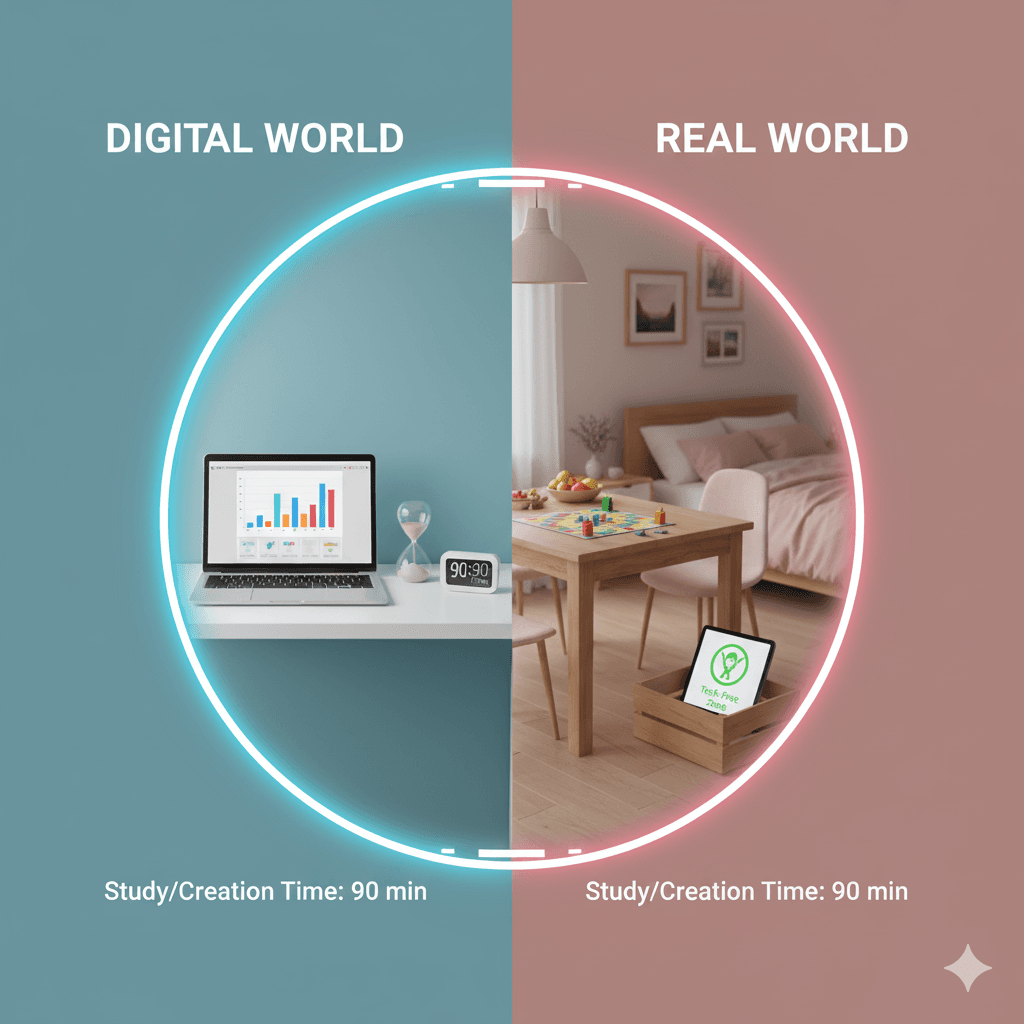
A student comes to online school with brief breaks, does his homework using the laptop, plays outside with friends, assists in the kitchen, and then watches a show with the family. They write or read a journal rather than scroll through before going to sleep.
They rest and rise fresh and clear.
Routine 2: Unbalanced
A second student rises up and checks the messages right after getting up, heads to classes, and does multiple tasks simultaneously on tabs, spends breaks watching videos, does homework half-concentrated, and spends the evening playing video games. They write until late at night, they do not sleep, and mornings are boring.
Same world. Same screens. Utterly contrasting results.
The device isn't the problem. Habits are.
Help your child develop public speaking, etiquette, and self-presentation skills that last a lifetime.
How Too Much Screen Time Affects Students
As screens take over life, students can observe:
Blurry vision or dry eyes
Headaches
Hunch back or neckache.
Difficulty attending to attention without electronic stimulation.
Feeling bored quickly
Lack of irritability or stress without machines.
Decreased physical fitness
Difficulty falling asleep
There exists an emotional layer as well. Online students can compare them to others, they might experience a sense that they must keep abreast of it or have digital FOMO - fear of missing out.
Young children and adolescents are still growing emotionally and psychologically. Screens have the capacity to facilitate that growth - but when they are not managed with care, they can also be disruptive.
The Positive Side: How Screens Can Help Students Grow
Technology is not the enemy. It really opens the doors that the previous generations could not imagine.
A student can now study French, learn how to code, attend a science conference around the world, watch video history lessons, use Photoshop, and draw a comic, all without stepping outside. Digital platforms allow students to connect with mentors, explore careers early, and sharpen their communication skills.
Healthy screen time also transforms devices into a learning lab, rather than a machine of distraction.
Screens: When used deliberately, screens:
Build digital literacy
Enhance educational knowledge.
Expand creativity
Improve language skills
Encourage global awareness
Support reluctant students.
Encourage the next generation of occupations in technology-oriented sectors.
Digital skills have become the norm in the world. Students need to know how to use screens, but not become lost in screens.
Boost your child’s personality and soft skills while making learning engaging and fun at PlanetSpark.
Real-Life Tip: Practice the “Screen Purpose Question”
Before opening a device, ask:
"Why am I using this right now?"
If the answer is:
To study
To research
To communicate
To create something
To learn a skill
Then it's purposeful.
If the answer is:
I'm bored
Everyone else is online
I just want to scroll
I do not know, I simply pressed the app.
Then it could be time to select another activity.
This question brings about self-awareness, which is the most effective habit that a student can have in the digital world. This self-awareness can be helpful in knowing about the activities to improve the mental health of students. Click here for detailed information.
20-20-20 Eye Reset Ritual
An easy-to-follow routine would allow keeping the eyes of students safe from digital strain. They need to view an object that is approximately 20 feet distant, after every 20 minutes, with a duration of 20 seconds. This is a simple exercise that relaxes the muscles of the eye and helps prevent fatigue that comes as a result of long hours on the screen.
Constantly practicing this habit does not only helps in avoiding eye strain but also in getting the mind refreshed. Students who practice it regularly have said that it has helped them become more energized and focused. Integrating these brief breaks in the study sessions will enhance good health of the eye and concentration during the day.
Nurture leadership, creativity, and social confidence in your child with PlanetSpark’s holistic personality development programs.
Creating a Screen-Smart Home Routine
Making a Screen-Smart Home Routine.
Families can develop tiny routines that change digital life:
No screens at meals.
No cell phones during discussions.
Devices are kept out of the bedroom at night.
Evening routines involve something offline - a walk, puzzle, or story time.
Students are the natural followers of what they observe. Children can easily learn the balance when adults model balance on screen.
Turning Boredom Into Creativity
There are occasions when screens take over life, just because students have no idea what to do. It is uncomfortable when we are bored, and we pick up a device. But it is not boredom as the enemy but rather the commencement of imagination.
When screens are off, students rediscover:
Drawing
Dancing
Making crafts
Reading funny books
Writing poems or stories
Playing outdoor games
Helping with cooking
Talking to grandparents
Exploring nature
Trying musical instruments
Real-world life develops confidence and emotional resilience.
A student once wrote, When the Wi-Fi switched off, I discovered myself.
That is the magic of walking away.
Making Screen Time Productive and Fun
Screen time does not necessarily need to be a break during studies or infinite scrolling. The digital hours can be converted into time spent by students learning, creating, and developing skills. Screen use can be meaningful by watching educational videos, playing with interactive learning applications, writing code, or generating digital art. Even such activities as learning a new language, online science competition, or virtual practice with public speaking can turn the screen time into productive, enjoyable experiences contributing to personal development.
Personality Development at PlanetSpark: Building Confident and Skilled Students
At PlanetSpark, personality development goes beyond academics. The program is designed to nurture self-confidence, leadership, emotional intelligence, and social etiquette in students. Through a holistic approach, children develop skills that help them succeed not only in school but in real-life interactions.
Key Features and Services
Holistic Curriculum Beyond Academics:
Covers communication etiquette, self-introduction, goal setting, peer interaction, leadership, self-awareness, and critical thinking.Social-Emotional Learning (SEL) Based Design:
Designed in line with CASEL (Collaborative for Academic, Social, and Emotional Learning) to foster personal and interpersonal growth.Practical, Activity-Based Learning:
Includes mock interviews, public introductions, journaling, feedback sharing, and real-life scenario simulations.Leadership & Self-Presentation Training:
Cultivates soft skills like empathy, responsibility, assertiveness, and teamwork through engaging challenges.Confidence Meter & Parent Consultations:
Regular consultations with parents to track progress in traits like confidence, openness, and leadership orientation.Etiquette and Body Language Sessions:
Children learn essential skills such as eye contact, posture, respectful communication, and tone modulation to present themselves effectively.
By integrating structured learning with interactive activities, PlanetSpark ensures every child not only excels academically but also grows into a confident, articulate, and socially aware individual ready to take on challenges in any environment.
Final Thoughts: Students Can Shape Their Digital Future
Technology is the future, and the future generation that will lead the way in technology is students. Today, healthy screen habits will make happier, sharper, stronger young adults tomorrow.
How much screen time is healthy, then?
It is not too much to make you learn, develop, and connect, but not too little to restrain movement, rest, curiosity, or joy in the real world.
Screens are tools. They are capable of enlivening or distracting life.
All students have the right to make decisions.
The digital version of life cannot be made healthy overnight, but in small daily decisions:
turning off a tab to concentrate, going outside to enjoy the air, reading a book before sleep, putting aside the phone to speak, and choosing to live rather than just observe it via a screen.
There is no rule of balanced screen time, it is a life skill.
And learning to do it is one of the most intelligent things a student can learn.
Frequently Asked Questions
Healthy screen time for students means using devices purposefully for learning, creativity, or communication, while limiting recreational screen use to 1–2 hours daily and balancing it with offline activities.
Yes. Too much screen exposure, especially before bedtime, can disrupt sleep patterns, reduce focus, and increase fatigue, negatively impacting academic performance and overall health in students.
Students can follow the 20-20-20 rule: every 20 minutes, look at something 20 feet away for 20 seconds, maintain proper posture, and take regular breaks from screens.
PlanetSpark provides structured, live classes that balance learning and practice. With personalized attention and engaging activities, students develop focus, time-management, and healthy digital habits effectively.
No. Productive screen time, like educational apps, coding, research, and creative projects, supports learning and skill development, while unproductive scrolling or excessive gaming should be limited.
Students can use digital devices for learning new skills, interactive educational apps, coding, online creative projects, or participating in challenges, ensuring that screen use supports growth instead of distraction.