
How to Be Assertive Without Sounding Rude


Table of Contents
- How to Be Assertive Without Sounding Rude
- What Does “Being Assertive” Mean?
- Why Is Being Assertive Important for Students?
- How to Be Assertive Without Sounding Rude
- How to Be Assertive Without Being Rude at Work (for Parents)
- How to Be Assertive Without Being Rude in a Relationship
- How to Be Assertive Without Being Rude Book Recommendation
- How to Be More Assertive Without Being Aggressive
- How to Be Assertive Without Hurting Others
- How to Be Assertive Without Being Mean
- Fun Activity 1: The “Polite Power” Game
- Fun Activity 2: The Mirror Practice
- Fun Activity 3: Assertive Charades
- Assertiveness at Home and School
- Checkpoints for Parents
- Common Mistakes When Learning Assertiveness
- Real-Life Story: Aarav Learns to Speak Up
- Fun Reflection Time
- Checkpoint: Assertiveness vs Aggressiveness Summary
- Assertiveness in Everyday Life
- In School
- About PlanetSpark – Personality Development
Have you ever wanted to say “no” but didn’t know how? Or maybe you agreed to something you didn’t like just to avoid hurting someone’s feelings? That’s where assertiveness comes in! Being assertive means speaking up for yourself clearly and kindly, without being rude or disrespectful. It’s an important life skill that helps you express your thoughts and feelings honestly while still caring about others.
At PlanetSpark, we help children learn to speak with confidence, kindness, and respect because strong communication starts with being assertive in the right way. Assertiveness builds confidence, reduces fear, and strengthens relationships at school, home, and even later in life. In this blog, we’ll explore what assertiveness means, why it matters, and how to practice it politely and effectively in any situation.
How to Be Assertive Without Sounding Rude
Being assertive doesn’t mean being loud or bossy it means expressing your thoughts and feelings honestly while still respecting others. The key is to use polite words, a calm tone, and confident body language. For example, instead of saying, “You’re wrong,” you can say, “I see it differently.” Using “I” statements like “I feel” or “I think” helps you share your opinion without blaming or upsetting others. Remember, it’s possible to stand up for yourself and be kind at the same time!
Start Your Confidence Journey Today!
Join PlanetSpark’s live classes and become a confident communicator.
What Does “Being Assertive” Mean?
Being assertive means expressing your feelings, thoughts, and needs honestly and respectfully.
It’s a middle ground between being too quiet (passive) and being too harsh (aggressive).
Comparison Table
| Style | What It Sounds Like | Effect on Others |
|---|---|---|
| Passive | “It’s okay, I’ll do it even if I don’t want to.” | Others may take advantage of you. |
| Aggressive | “Do it my way or else!” | Others may feel scared or hurt. |
| Assertive | “I’d like to help, but I have homework right now.” | Others respect your honesty and boundaries. |
In short: Assertiveness = Respect for yourself + Respect for others.
Why Is Being Assertive Important for Students?
Assertiveness helps students feel confident, set boundaries, and build strong friendships.
Benefits of Assertiveness for Kids
Helps express feelings clearly.
Reduces fear of speaking up in class.
Builds respect among friends.
Improves teamwork and leadership.
Teaches how to say “no” politely.
Read More Life Skills Blogs
Explore blogs on self-awareness, teamwork, and empathy!
How to Be Assertive Without Sounding Rude
Here are simple and powerful steps you can follow to be polite yet confident in your words and actions.
1. Use “I” Statements
Instead of blaming others, talk about your own feelings.
Example:
“You never listen to me!” (Wrong)
“I feel ignored when I’m not heard.” (Right)
Using “I” statements makes your message gentle and clear.
2. Keep Your Tone Calm
Your words matter, but your tone matters even more.
Even a kind message can sound rude if said angrily.
Tip: Before speaking, take a deep breath and smile.
3. Listen Before You Speak
Assertiveness isn’t just about talking it’s also about listening.
When you listen to others, they’re more likely to listen to you.
Example:
“I understand your point, but here’s how I feel…”
4. Be Honest, Not Harsh
You can be truthful without being mean.
Example:
“That idea is stupid.” (Wrong)
“I think we can try a different idea that might work better.” (Right)
5. Say “No” Politely
Sometimes you need to refuse and that’s okay!
Being assertive means knowing your limits.
Example:
“I’d love to help, but I already promised Mom I’d do my homework.”
6. Practice Body Language
Stand tall, make eye contact, and keep a relaxed face.
Assertive people look confident, not angry or shy.
Tip: Practice in front of a mirror with a smile!
7. Choose the Right Words
Avoid harsh words like “always,” “never,” or “must.”
Use gentle phrases like:
“I feel…”
“I would like to…”
“Can we…?”
This keeps your message positive and friendly.
How to Be Assertive Without Being Rude at Work (for Parents)
Even adults face this challenge!
| Situation | Aggressive Response | Assertive Response |
|---|---|---|
| Co-worker interrupts you | “Stop talking over me!” | “I’d like to finish my point, please.” |
| Too many tasks | “I can’t do all this!” | “I’ll finish this task first, then start the next.” |
| Disagreement in meeting | “That’s wrong.” | “I see it differently — here’s my view.” |
Assertiveness helps parents handle work stress calmly while setting good examples for their kids.
How to Be Assertive Without Being Rude in a Relationship
Whether it’s friendship or family, being assertive keeps relationships healthy.
Tips for kind communication:
Speak gently, even when disagreeing.
Express feelings instead of blame.
Be ready to listen and compromise.
Example:
“I feel sad when you cancel our plans. Can we plan better next time?”
This shows care and confidence.
How to Be Assertive Without Being Rude Book Recommendation
If you enjoy reading, here’s a great pick:
“The Assertiveness Workbook” by Randy J. Paterson.
It teaches children and adults how to express themselves confidently and calmly in all situations.
You can also explore PlanetSpark’s classes they’re like real-life workbooks where students practice speaking up politely every day!
How to Be More Assertive Without Being Aggressive
Here are a few simple checkpoints to remember
| Do This | Don’t Do This |
|---|---|
| Speak clearly and calmly | Shout or interrupt |
| Respect others’ opinions | Insult or mock others |
| Explain your needs | Demand what you want |
| Maintain eye contact | Roll your eyes or frown |
| Stay confident | Apologize unnecessarily |
How to Be Assertive Without Hurting Others
Being assertive should never mean being unkind.
It’s about balancing honesty and empathy.
Example:
Instead of saying, “You’re wrong,” try:
“I see it differently can we talk about it?”
This keeps conversations positive and shows respect.
How to Be Assertive Without Being Mean
Some people think assertive = rude or bossy but that’s not true!
Assertive people are actually the most respectful communicators because they value both themselves and others.
You can be kind and strong at the same time.
Fun Activity 1: The “Polite Power” Game
Goal: Practice saying “no” politely!
Take turns with your friends or parents. One person makes a request, and the other says “no” politely.
Example:
Friend: “Can I copy your homework?”
You: “I’m sorry, I can’t. Let’s study together instead!”
You’ll soon find saying “no” feels strong, not rude.
Fun Activity 2: The Mirror Practice
Stand in front of a mirror and say sentences like:
“I can share my ideas confidently.”
“I respect myself and others.”
“I can say no politely.”
Your voice and posture will naturally grow more confident.
Turn your child’s voice into their biggest strength!
Join Planet Spark’s Public Speaking Program!
Fun Activity 3: Assertive Charades
Act out situations for example, a friend taking your toy or a teacher asking you to speak.
Family members guess whether your response is passive, aggressive, or assertive.
This fun game helps children learn real-world responses!
Assertiveness at Home and School
| At Home | At School |
|---|---|
| Ask politely for help or space. | Raise your hand to share ideas. |
| Say no respectfully when busy. | Tell a friend how you feel calmly. |
| Listen to family members. | Accept feedback without arguing. |
These daily habits build long-term confidence and empathy.
Checkpoints for Parents
| Checkpoint | How Parents Can Help |
|---|---|
| Model assertive behavior | Show kids how to say no politely. |
| Praise confidence | Appreciate honest and respectful speech. |
| Avoid yelling | Keep calm during disagreements. |
| Encourage decision-making | Let kids choose sometimes. |
| Practice role plays | Act out polite conversations. |
Common Mistakes When Learning Assertiveness
| Mistake | Better Way |
|---|---|
| Thinking assertive = rude | Assertive means respectful confidence. |
| Avoiding eye contact | Look friendly and confident. |
| Using harsh words | Use “I feel” statements. |
| Talking too much | Pause and listen. |
| Being afraid to say no | Practice polite refusal often. |
Real-Life Story: Aarav Learns to Speak Up
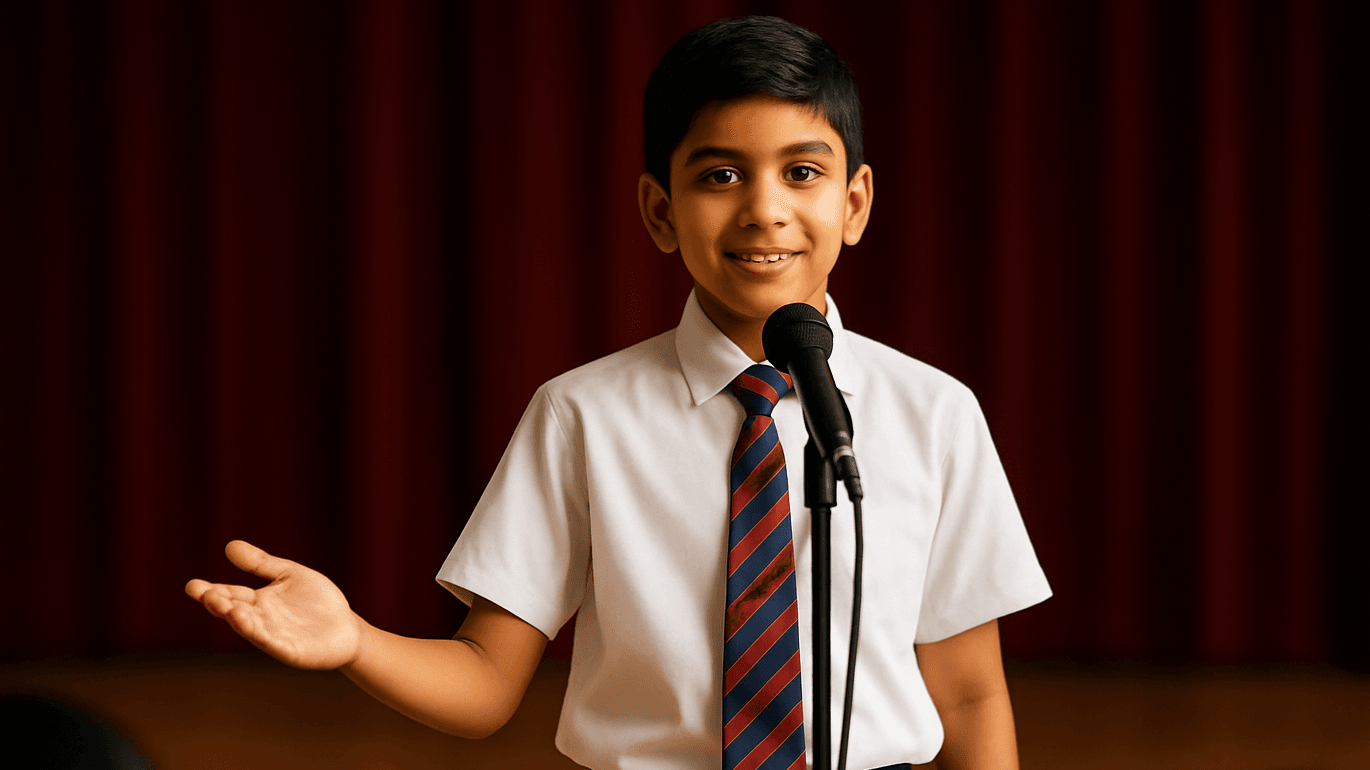
Aarav was shy in class and rarely spoke. One day, his group made fun of his project idea.
At PlanetSpark, his coach taught him how to say:
“I respect your opinion, but I worked hard on this idea and would like to explain it.”
Everyone listened and Aarav’s idea won the class competition!
He didn’t shout, he didn’t stay silent he was assertive!
Fun Reflection Time
Take a notebook and answer these:
When did I last say “yes” when I wanted to say “no”?
How could I have said it more politely?
Who do I know that communicates kindly and confidently?
These reflections help you practice self-awareness and emotional growth.
Checkpoint: Assertiveness vs Aggressiveness Summary
| Feature | Assertive | Aggressive |
|---|---|---|
| Tone | Calm and polite | Loud or rude |
| Respect | For both sides | Only for self |
| Goal | Mutual understanding | Winning argument |
| Example | “I feel sad when…” | “You make me mad!” |
Book a Free Trial Session
Let your child learn to speak politely, confidently, and kindly!
Assertiveness in Everyday Life
In School
Ask questions confidently.
Speak politely to teachers and classmates.
At Home
Tell parents how you feel respectfully.
Offer your opinion kindly.
Online
Think before commenting or posting.
Use positive words even when you disagree.
Assertiveness makes you stronger everywhere!
About PlanetSpark – Personality Development
PlanetSpark helps children build strong, confident, and expressive personalities through engaging 1:1 live classes. Our Personality Development Program nurtures communication skills, emotional intelligence, and leadership qualities helping kids grow into well rounded, self assured individuals ready to take on the world.
1. 1:1 Expert Mentorship
Each child learns with a certified mentor who understands their unique strengths and challenges. Personalised sessions focus on confidence, expression, and positive attitude ensuring holistic growth.
2. Personalised Growth Roadmap
Every learner follows a tailored plan that develops social skills, body language, emotional awareness, and conversation abilities step by step, at their own pace.
3. AI-Powered Communication Feedback
Through PlanetSpark’s AI-based tools like SparkX, students receive instant insights on tone, facial expressions, and clarity helping them refine confidence and presentation in real time.
4. Interactive & Activity-Based Learning
Fun modules, roleplays, storytelling sessions, and group activities make learning engaging and practical turning every class into a real-world confidence booster.
5. Confidence and Leadership for Life
Children learn to express themselves, lead conversations, and handle situations gracefully whether in school, on stage, or in daily interactions. PlanetSpark empowers them to grow not just as speakers, but as leaders of tomorrow.
Frequently Asked Questions
Assertive means speaking up for yourself clearly and kindly, without being rude.
By using polite words, calm tone, and showing respect for others’ feelings.
By modeling polite communication, encouraging open talks, and practicing role plays.
Assertive = polite confidence. Aggressive = rude or pushy behavior.
Yes! Assertiveness improves teamwork, communication, and emotional balance.