
How to Improve Focus and Concentration for Better Learning
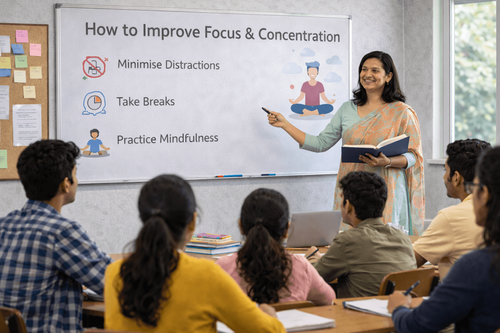

Table of Contents
- Why Focus and Concentration Matter for Learning and Producti
- Common Reasons People Struggle to Concentrate
- How to Improve Focus and Concentration Naturally
- How to Improve Concentration and Focus While Studying
- Daily Habits That Improve Focus and Mental Clarity
- Study Techniques That Improve Focus for Long Hours
- Digital Tools That Help Improve Focus
- Service Improvement Must Focus on Human Attention
- How PlanetSpark Personality Development Course Helps Build F
- Building Long-Term Focus for Learning and Success
Focus and concentration are essential for effective learning, problem-solving, and productivity in both academic and professional environments. However, distractions, digital overload, stress, and multitasking often make it difficult to stay attentive for long periods. This blog explains how to improve focus and concentration using research-backed techniques, lifestyle changes, and practical study methods. You will learn strategies that help students and professionals stay attentive, absorb information faster, and improve performance in studies, work, and daily life.
Why Focus and Concentration Matter for Learning and Productivity
Focus and concentration determine how effectively the brain processes information. Research in cognitive psychology shows that focused attention improves memory retention, problem-solving ability, and creative thinking.
Key Benefits of Strong Concentration
Improving concentration offers several advantages for both students and professionals.
Faster learning and better memory retention
Increased productivity and task completion speed
Higher academic and professional performance
Better decision-making ability
Reduced mental fatigue and stress
When people improve focus, they are able to spend less time re-reading information and more time understanding concepts deeply.

The Science Behind Concentration
Concentration is linked to the prefrontal cortex, the part of the brain responsible for attention control, planning, and decision-making.
Factors that influence focus include:
Sleep quality
Nutrition
Digital distractions
Stress levels
Learning environment
By addressing these factors, anyone can learn how to improve concentration and focus while studying or working.
Common Reasons People Struggle to Concentrate
Before exploring solutions, it is important to understand why focus problems occur.
Digital Distractions
Constant notifications from smartphones, social media, and messaging apps interrupt attention cycles.
Research suggests that even a brief distraction can take 20 to 25 minutes to fully regain focus.
Multitasking
Many people believe multitasking increases productivity, but studies show the opposite. Switching between tasks reduces efficiency and increases cognitive load.
Lack of Structured Learning Habits
Without clear goals or schedules, the brain struggles to maintain sustained attention.
Poor Lifestyle Habits
Lifestyle factors such as sleep deprivation, unhealthy diet, and lack of exercise can significantly reduce concentration levels.
How to Improve Focus and Concentration Naturally
Build a Distraction-Free Environment
Your environment directly affects your attention span.
Steps to create a focused workspace:
Choose a quiet and organized study or work area
Keep only essential materials on the desk
Turn off unnecessary notifications
Use website blockers for distracting platforms
A clean and organized workspace signals the brain that it is time to concentrate.
Use the Pomodoro Technique
The Pomodoro technique is a proven time management method.
How it works:
Work for 25 minutes with full focus
Take a 5 minute break
Repeat for four cycles
Take a longer 20 minute break
This technique helps prevent mental fatigue and improves sustained concentration.
Set Clear Goals Before Starting Work
Many people lose focus because they start working without clear objectives.
Instead of vague goals like:
Study mathematics
Use specific goals like:
Solve 10 algebra problems
Review two chapters of history
Write 500 words of an assignment
Clear goals help the brain stay engaged.
How to Improve Concentration and Focus While Studying
Students often face the biggest challenges when trying to concentrate for long study sessions.
Use Active Learning Techniques
Passive reading leads to poor focus and retention.
Active learning methods include:
Summarizing information in your own words
Teaching concepts to someone else
Writing notes while studying
Creating mind maps and diagrams
These techniques keep the brain actively involved in learning.
Take Strategic Breaks
Long study sessions without breaks reduce concentration.
Recommended approach:
Study for 45 to 50 minutes
Take a 10 minute break
Move around or stretch during breaks
This helps refresh the brain.
Practice Mindfulness and Meditation
Mindfulness training improves attention control.
Benefits of meditation include:
Reduced mental distractions
Improved emotional regulation
Better sustained attention
Even 10 minutes of daily meditation can improve concentration levels.
Daily Habits That Improve Focus and Mental Clarity
Maintain a Healthy Sleep Schedule
Sleep plays a crucial role in attention and memory.
Research suggests:
Adults require 7 to 9 hours of sleep
School students need 8 to 10 hours
Poor sleep reduces cognitive performance and concentration.
Eat Brain-Boosting Foods
Nutrition influences brain function.
Foods that support focus include:
Nuts and seeds
Berries
Whole grains
Green leafy vegetables
Omega-3 rich foods like fish
Avoid excessive sugar and processed foods that cause energy crashes.
Exercise Regularly
Physical activity improves blood flow to the brain and enhances cognitive performance.
Benefits of exercise include:
Improved attention span
Reduced stress
Better memory
Even 30 minutes of daily exercise can improve mental clarity.
Study Techniques That Improve Focus for Long Hours
Time Blocking Method
Time blocking involves dividing the day into dedicated blocks for specific tasks.
Example:
9:00 to 10:30 AM - Study science
10:30 to 11:00 AM - Break
11:00 to 12:30 PM - Mathematics practice
This approach eliminates decision fatigue and helps maintain focus.
Eliminate Cognitive Overload
Too much information at once can overwhelm the brain.
Strategies to avoid overload:
Break large topics into smaller sections
Study one subject at a time
Use revision intervals
Track Your Progress
Tracking progress motivates the brain to stay focused.
Methods include:
Study planners
Habit trackers
Weekly learning goals
Seeing progress boosts motivation and concentration.
Digital Tools That Help Improve Focus
Technology can be both a distraction and a solution.
Some useful tools include:
Focus timers
Task management apps
Note-taking platforms
Website blocking tools
Examples of productivity techniques supported by digital tools include:
Pomodoro timers
Digital flashcards
Study scheduling apps
These tools help maintain structure and discipline.
Service Improvement Must Focus on Human Attention
In modern workplaces and educational environments, service improvement must focus on attention and cognitive performance.
Organizations that prioritize focus training often see:
Higher employee productivity
Better learning outcomes in training programs
Improved decision-making and creativity
Schools, institutions, and training platforms increasingly integrate communication training, critical thinking exercises, and confidence building activities to improve overall cognitive performance.
This holistic approach ensures learners develop both technical and soft skills.
How PlanetSpark Personality Development Course Helps Build Focus and Confidence
Developing focus and concentration is not only about study techniques, it also involves confidence, communication skills, and structured learning support. The PlanetSpark Personality Development Course helps learners build these abilities through a comprehensive learning ecosystem designed for long-term growth.
PlanetSpark provides 1:1 personal trainers who deliver live, personalised classes based on each learner’s unique personality, learning pace, and goals. Trainers guide students in building fluency, storytelling skills, public speaking confidence, grammar accuracy, and structured communication.
The program also includes a personalised curriculum and learning roadmap, created after assessing each learner’s current strengths and gaps. This roadmap evolves continuously as learners progress, ensuring steady skill development.
One of the most innovative features is SparkX, an AI-enabled video analysis tool that evaluates voice clarity, body language, confidence level, sentence structure, and presentation style. Learners receive detailed performance reports that highlight strengths and improvement areas.
PlanetSpark also offers AI-led practice sessions where students rehearse speeches and storytelling with an AI coach that provides instant feedback. Writing skills are strengthened through Spark Diary, a digital journaling tool that encourages daily expression and creativity.
Learning becomes engaging through gamified modules such as vocabulary quizzes, grammar challenges, and listening exercises. Regular parent-teacher meetings and progress reports ensure transparency and continuous improvement.
Students also participate in clubs and communities like debate club, storytelling club, comedy club, and podcasting club. Through Sparkline, a safe internal platform, learners share their creative work and gain peer appreciation.
With contests, showcases, and public speaking opportunities, learners gradually build confidence, discipline, and strong communication skills that enhance both focus and overall personality development.
Building Long-Term Focus for Learning and Success
Improving concentration is a gradual process that requires the right combination of habits, environment, and learning strategies. When individuals understand how to improve focus and concentration, they unlock the ability to learn faster, work more efficiently, and achieve long-term personal and professional success.
Simple practices such as eliminating distractions, setting clear goals, following structured study methods, maintaining healthy lifestyle habits, and using productivity techniques can dramatically enhance attention levels.
For students, improving concentration leads to better academic performance and deeper understanding of subjects. For professionals, strong focus improves productivity, creativity, and decision-making.
However, focus is also connected to confidence, communication ability, and structured skill development. Programs that combine personality development with communication training help learners build discipline, clarity of thought, and stronger cognitive abilities.
You can also read:
Frequently Asked Questions
The most effective ways to improve focus include eliminating distractions, using structured study techniques such as the Pomodoro method, maintaining a healthy sleep schedule, and practising mindfulness. Creating a dedicated study environment and setting clear goals before starting work also significantly improves concentration levels.
Students can improve concentration by using active learning techniques such as summarizing information, creating mind maps, teaching concepts to others, and practising regular revision. Studying in shorter focused sessions with planned breaks also helps maintain attention.
Loss of focus is often caused by digital distractions, multitasking, stress, sleep deprivation, and lack of clear goals. Excessive screen time and social media notifications can interrupt attention cycles and reduce productivity.
Yes, meditation has been scientifically proven to improve attention control and mental clarity. Regular mindfulness practice strengthens the brain's ability to resist distractions and maintain sustained attention during learning or work tasks.
Personality development programs improve communication, confidence, and mental discipline, which indirectly strengthen concentration. Structured learning environments like the PlanetSpark Personality Development Course help learners practise speaking, storytelling, writing, and critical thinking regularly, building stronger focus and cognitive abilities over time.