
How to Improve Reading Skills for Students


Table of Contents
- Why Reading Skills Are Important for Students
- Common Problems Students Face While Reading
- How to Improve Reading Skills for Students – A Step-by-Step
- Tips for Parents and Teachers
- The Connection Between Reading and Personality Development
- PlanetSpark: The Smart Way to Build Reading and Personality
- 8. Conclusion
Reading helps students understand, learn, and grow. But many still ask how to improve reading skills for students. The answer is simple practice every day and follow the right methods. Reading builds knowledge, focus, and imagination. When students improve their reading skills, they learn faster in all subjects. Reading also boosts writing, speaking, and memory.
In school and life, strong reading habits create strong minds. Every successful learner starts by reading with purpose. This guide explains how to improve reading skills for students using simple and active strategies that anyone can follow.
Why Reading Skills Are Important for Students
Reading is the foundation of education. It helps students grasp ideas, understand concepts, and remember facts. Reading improves focus and thinking. It also sharpens language skills.
When a student reads well, every subject becomes easier. Reading builds vocabulary and grammar. It helps in writing better essays and answering questions with clarity. Reading also increases curiosity and creativity.
Good reading habits make students confident. They can speak better, express ideas clearly, and enjoy learning more. Reading trains the brain to think critically, analyze, and make connections between ideas.
Strong reading skills prepare students for success beyond school. Every career needs people who can read, understand, and explain information clearly. Reading is not just a school skill; it is a life skill.

Common Problems Students Face While Reading
Many students want to read better but face some challenges. Let’s understand these problems:
1. Lack of Concentration: Students get distracted easily. Phones, noise, or multitasking break focus. Reading needs attention, not background noise.
2. Weak Vocabulary: If students do not understand many words, reading feels difficult. They lose interest quickly.
3. Poor Comprehension: Some read fast but fail to grasp the meaning. They skip details or misunderstand ideas.
4. Lack of Interest: If reading feels like a task, students avoid it. They need topics they like to stay motivated.
5. Slow Reading Speed: Some students take too long to finish a small passage. It makes studying time-consuming and tiring.
Each problem has a solution. Students can fix these with simple and steady practice.
How to Improve Reading Skills for Students – A Step-by-Step Guide
Improving reading skills is easy with the right steps. Let’s go through each one carefully.
Step 1: Read Every Day
Read daily, even if it is just for 10 or 15 minutes. Daily reading builds rhythm and consistency. Read stories, news, or comics. The more you read, the better you get.
Step 2: Choose the Right Books
Pick books that match your age and level. Hard books can feel boring or confusing. Easy ones can build confidence. Read about things you love sports, travel, animals, or science.
When you enjoy a topic, you read more naturally. Gradually try tougher books to improve your level.
Step 3: Create a Reading Routine
Set a time for reading every day. Maybe after homework or before bed. A fixed routine makes reading a habit. Habits make improvement faster.
Step 4: Read Aloud
Reading aloud trains your brain and voice together. It builds fluency and pronunciation. When you hear your own voice, you understand words better.
You can also read aloud with friends or family. It builds confidence and improves speaking too.
Step 5: Build Vocabulary Every Day
Learn new words daily. Write them in a notebook. Use them in your speech or writing. Flashcards, sticky notes, or apps can help.
The more words you know, the faster you understand what you read. Try to learn five new words daily and revise them weekly.
Step 6: Ask Questions While Reading
Ask questions like:
- What is the main idea?
- What is the story trying to say?
- Why did the writer choose this example?
When you ask questions, your mind stays alert. You focus better and understand deeper.
Step 7: Summarize After Reading
After finishing a chapter, try to explain it in your own words. Write or say a short summary. This helps memory and comprehension.
Explaining what you read builds both reading and speaking confidence.
Step 8: Improve Reading Speed Gradually
Do not rush. Start slow, then increase speed. Use your finger or a pen to guide your eyes along the lines. Avoid reading each word aloud in your mind. Focus on groups of words instead.
Faster reading saves time and increases understanding.
Step 9: Avoid Distractions
Read in a quiet place. Turn off your phone and TV. Keep your desk clean. Distraction-free reading helps your brain stay focused for longer periods.
Step 10: Join a Reading Group or Club
Reading with others makes learning fun. Discuss books and share ideas. You can also join online reading communities. Sharing builds understanding and motivation.
Step 11: Use Audiobooks
Audiobooks help improve pronunciation and rhythm. Listen while you read. It trains your ears to catch tone and emotion.
Audiobooks are also great for long travels or when you feel tired to read visually.
Step 12: Practice Skimming and Scanning
Learn to skim for main ideas and scan for facts. These skills save time during exams and research. Try practicing with newspapers or study notes.
Step 13: Keep a Reading Journal
After reading, write what you learned. List new words and their meanings. A journal helps track your progress and strengthens memory.
Step 14: Re-Read Difficult Parts
If you do not understand something, read it again. Re-reading improves clarity and builds confidence in understanding complex topics.
Step 15: Stay Curious
Curiosity makes reading natural. Explore new subjects and styles. Ask questions about everything you read. The more curious you are, the more you will read.
Tips for Parents and Teachers
Parents and teachers play a big role in shaping reading habits.
Tips for Parents
- Read with your child daily.
- Visit libraries or book stores together.
- Reward reading time with appreciation.
- Discuss stories and characters.
Tips for Teachers
- Create group reading activities.
- Encourage students to share summaries.
- Recommend easy and fun books.
- Praise effort, not just accuracy.
Children who see adults reading naturally copy the habit. Reading becomes part of their daily life.
The Connection Between Reading and Personality Development
Reading builds not only knowledge but also personality. Here’s how:
- Improves communication: Students speak better when they read more.
- Boosts confidence: Understanding topics builds courage to talk about them.
- Develops empathy: Reading stories teaches emotions and compassion.
- Enhances creativity: Books open imagination and new ideas.
- Builds focus: Regular reading improves attention span.
Reading shapes thoughts, behavior, and emotional balance. A confident reader often becomes a confident speaker.
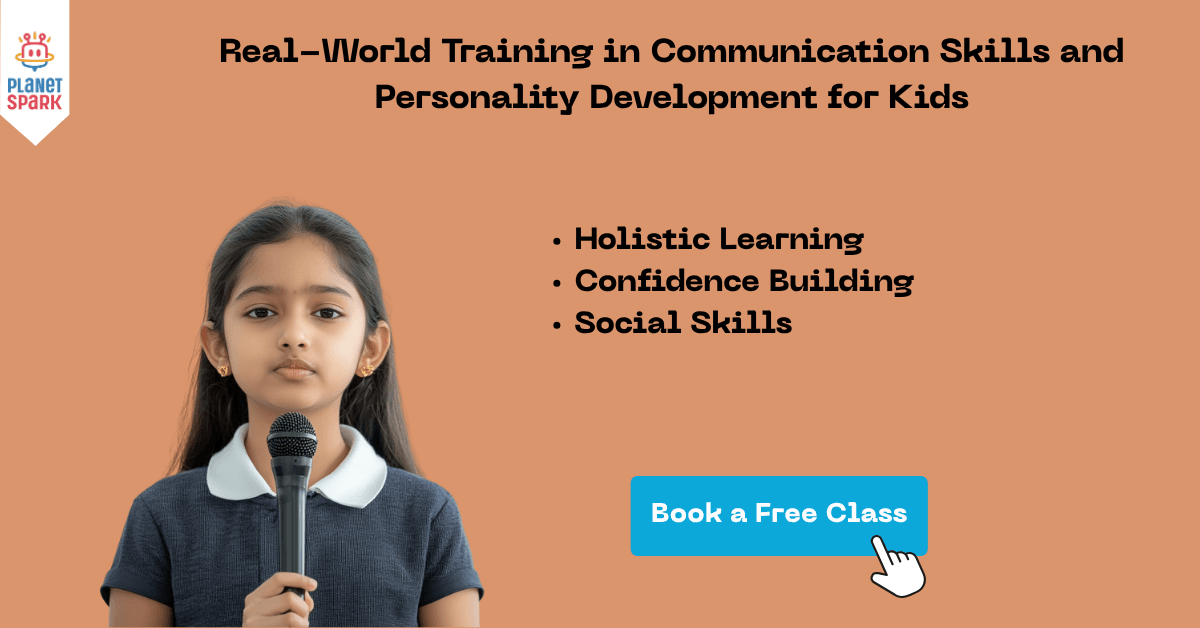
PlanetSpark: The Smart Way to Build Reading and Personality Skills
PlanetSpark helps students learn reading and communication in fun, live classes. It focuses on overall development through activity-based learning.
Here’s what makes PlanetSpark special:
1. Personalized Learning Paths: Every student gets a plan that matches their reading level and goals. Trainers track progress and adjust lessons as needed.
2. Interactive Live Classes: Students read aloud, act stories, and discuss ideas. Each class is fun and full of learning. Activities help build confidence and fluency.
3. Real-World Communication Skills: PlanetSpark trains students in reading, speaking, and presenting. Students not only learn to read but also to express ideas clearly.
4. Certified and Caring Mentors: Expert teachers guide students with patience and energy. They create a supportive space where students love learning.
5. Engaging Digital Tools: PlanetSpark uses videos, stories, and games. Learning feels like play. Students stay focused and excited about reading.
6. Personality Development Focus: PlanetSpark’s reading program connects directly to personality growth. Students gain leadership, speaking confidence, and social skills.
If you are serious about helping your child read better and grow stronger communication skills, PlanetSpark is the perfect place to start.
8. Conclusion
Reading is not just about finishing pages. It is about understanding, exploring, and thinking deeply. Students who learn how to improve reading skills develop sharp minds and strong personalities.
Daily reading, curiosity, and the right guidance can turn any student into an excellent reader. Parents and teachers can help by encouraging reading as a fun habit, not a duty.
And for those looking for expert help, PlanetSpark offers the perfect blend of reading improvement and personality development. It builds readers who think, speak, and lead with confidence.
So start today. Pick a book. Set a goal. Make reading part of your life and watch how your skills and confidence grow every day.
Frequently Asked Questions
Reading builds focus, memory, and understanding. It helps students learn faster, write better, and perform well in every subject.
Read a few pages daily at a fixed time. Pick books you like. Avoid distractions and increase reading time slowly as you enjoy more.
Start with short stories, comics, or simple novels. Choose easy language books that keep you interested and motivated to read more.
PlanetSpark combines reading, speaking, and listening. Students read stories aloud, build vocabulary, and learn to express ideas clearly.
PlanetSpark builds fluency, leadership, and confidence through live classes. Students grow into strong communicators with practical life skills.
Yes. Trainers guide students step by step. Fun activities, debates, and storytelling sessions slowly remove stage fear and build self-trust.