
PlanetSpark Guide to Independent Learning for Students

Last Updated At: 22 Jan 2026
10 min read
Independent learning helps kids learn on their own. It builds confidence. It builds skills for life. PlanetSpark helps students become independent learners. It gives them tools, support, and a clear path.
Independent learning helps students in school. It helps them in exams. It also helps them in real life. Students learn how to think, plan, and solve problems. They learn to trust their own skills. This makes them ready for bigger challenges.
What Is Independent Learning?
The Meaning
Independent learning means students take control of their learning. They decide what to learn, how to learn, and when to learn. They do not depend only on teachers or parents. They still ask for help, but they try first.
Why It Matters for Kids
Kids who learn independently do better in school. They become confident. They face new topics without fear. They also develop strong thinking skills. These skills help them in exams and in life.
How It Helps in School
Independent learners finish homework faster. They prepare for tests without panic. They understand topics deeply. They can revise quickly. They also improve their memory and focus.
Why Parents and Teachers Should Support It
Parents and teachers should encourage independent learning. It builds a strong foundation. It prepares kids for higher studies. It also makes them ready for real life challenges.
Key Independent Learning Skills for Kids and Teens
To become an independent learner, a child needs specific skills. These skills make learning easier and faster.
1. Self-Motivation
Self-motivation means students start learning without being pushed. They feel excited about learning. They set their own goals. PlanetSpark uses fun activities and rewards to build motivation. When students feel motivated, they learn more.
2. Time Management
Time management means planning your day. Students must know when to study and when to rest. Time management helps students stay consistent. PlanetSpark gives a clear study schedule. This helps students manage time well and stay disciplined.
3. Goal Setting
Goal setting means making small targets. It could be finishing a chapter. It could be solving 10 questions. Students should set goals daily or weekly. PlanetSpark helps students set clear goals and track them.
4. Problem Solving
Problem solving means trying to find solutions. It means thinking step-by-step. PlanetSpark teaches students to solve problems by breaking them into small steps. Students learn to think logically.
5. Self-Reflection
Self-reflection means checking what you did well and what you need to improve. It helps students grow. PlanetSpark encourages students to review their progress and work on weak areas.
6. Focus and Concentration
Focus means staying calm while studying. It means avoiding distractions. PlanetSpark uses interactive classes and short lessons. This keeps students focused.
7. Confidence
Confidence comes when students practice and improve. Independent learning builds confidence. PlanetSpark gives students regular tests. Students see their progress and feel confident.
Independent Learning at Home: Simple Tips for Parents
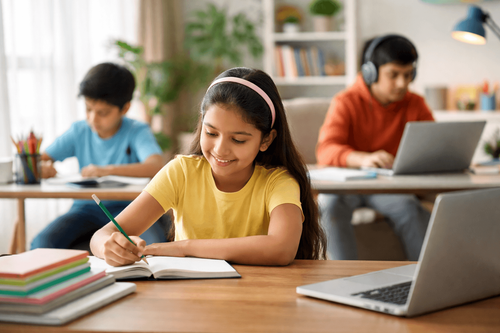
Parents play a big role in helping children become independent learners. Independent learning does not mean students must study alone. It means they learn to plan, solve problems, and take responsibility for their own learning. Parents can support this process without doing the work for them. With the right guidance, children can become confident and self-reliant learners.
Below are easy and practical tips parents can follow at home.
1. Create a Study Routine
A routine helps students stay consistent. It builds discipline and makes learning a habit. When children know what to expect, they feel more secure and calm. Parents can help by setting a fixed study time each day. It can be 45 minutes after school or 30 minutes after dinner. The key is to keep it consistent.
Here are some simple steps to create a routine:
- Choose a quiet place for study
- Set a fixed time every day
- Keep a simple timetable
- Include time for homework, reading, and revision
A routine also helps children avoid last-minute stress. When they follow a routine daily, studying becomes natural. They don’t need constant reminders. They learn to manage their time better.
2. Encourage Short Breaks
Many students try to study for long hours. This can cause stress and tiredness. Short breaks help students stay focused and calm. A good method is to study for 25 minutes and take a 5-minute break. This method is called the “Pomodoro Technique”.
During breaks, children can do simple activities like:
- Stretching
- Drinking water
- Taking a short walk
- Listening to music
Breaks help students refresh their mind. After a break, they return to studying with better focus. This also improves their memory and understanding. Parents should encourage breaks, but also ensure children don’t get distracted by phones or games.
3. Provide Study Tools
Study tools help students learn better. These tools make learning more fun and clear. Parents can provide simple tools like:
- Notebooks and sticky notes
- Charts and diagrams
- Highlighters and markers
- Flashcards
- Timers
These tools help children organize information. They can make notes, create mind maps, and revise easily. Visual tools like charts and diagrams help in understanding complex topics. When children have the right tools, they feel more confident to study alone.
4. Encourage Self-Checking
Self-checking is a powerful habit for independent learners. It teaches children to take responsibility for their work. Parents can ask children to review their homework before submitting it. They can check for mistakes in spelling, math, or grammar.
Here are easy ways to practice self-checking:
- Ask children to re-read their answers
- Encourage them to solve again if they make mistakes
- Let them compare answers with notes
- Encourage them to correct their own mistakes
Self-checking builds confidence. It also improves accuracy. Children learn to understand their mistakes and fix them. This habit helps them become more independent and responsible.
5. Avoid Overhelping
Parents often want to help children immediately. But overhelping can reduce independence. Children may start relying on parents for every answer. Instead, parents should let children try first.
Here’s how parents can support without overhelping:
- Ask guiding questions
- Encourage children to think before asking
- Let them try multiple solutions
- Offer help only when they are stuck
When parents avoid overhelping, children develop problem-solving skills. They learn to face challenges and find solutions. This builds strong independence and confidence.
Independent learning at home is a journey. Parents do not need to be perfect. They only need to support and guide. A good routine, short breaks, study tools, self-checking, and less help can make a big difference.
With these tips, children can learn to study on their own. They can become confident, disciplined, and independent learners.
Independent Learning Strategies That Work
Independent learning works best with strong strategies. Students can use these strategies at home and in class.
1. Daily Study Plan
A daily plan gives structure. Students can plan 30 minutes each day. They can list topics and tasks. PlanetSpark helps students follow a simple plan. It also helps them track progress.
2. Learn by Teaching
Teaching others is the best way to learn. Students can explain a topic to a friend or family member. This helps them remember better. PlanetSpark encourages group learning and peer discussions. Students learn to teach and explain.
3. Mini Projects
Mini projects make learning fun. Students can create posters or slides. They can do small research. This helps them learn creatively. PlanetSpark uses creative tasks to keep students engaged.
4. Practice Tests
Practice tests help students understand their strengths. They also show weak areas. PlanetSpark gives regular tests. Students can track their progress easily. This helps them improve faster.
5. Regular Reviews
Reviewing helps students remember better. Students should revise topics weekly. PlanetSpark encourages students to revise. This improves long-term memory.
6. Break Study into Small Tasks
Students feel overwhelmed with large tasks. Breaking tasks into small parts helps. Students can study 10–15 minutes at a time. This makes learning easier.
7. Use Notes and Mind Maps
Notes help students remember. Mind maps help students understand relationships between topics. PlanetSpark encourages note-making and concept mapping. This helps students learn independently.
Independent Learning Examples for Students
Here are some real examples of how students can practice independent learning:
Example 1: Self-Study
A student studies 30 minutes daily. They make notes. They solve questions. They revise weekly. This is independent learning.
Example 2: Learning with Friends
A student studies with friends. They discuss topics. They teach each other. This helps students learn independently.
Example 3: Learning by Practice
A student practices maths daily. They solve questions. They check answers. They correct mistakes. This builds strong skills.
Example 4: Project-Based Learning
A student creates a small project. They research, write, and present. This helps them learn independently and creatively.
How Independent Learning Helps in Exams
Independent learning helps students in exams. Here is how:
1. Better Revision: Students revise topics regularly. They remember more. They do not forget quickly.
2. Faster Problem Solving: Students solve questions quickly. They practice more. They gain confidence.
3. Less Exam Stress: Students feel prepared. They feel confident. They do not panic during exams.
4. Better Focus: Students focus more. They study with a clear plan. This improves their performance.
Independent Learning and Future Success
Independent learning prepares students for the future. It builds skills like:
- Critical thinking
- Problem solving
- Time management
- Confidence
- Self-motivation
- Self-discipline
These skills help students in school and in real life. Independent learning prepares students for higher education and career.
Thaksh Crowned TaleNt 2025 Winner
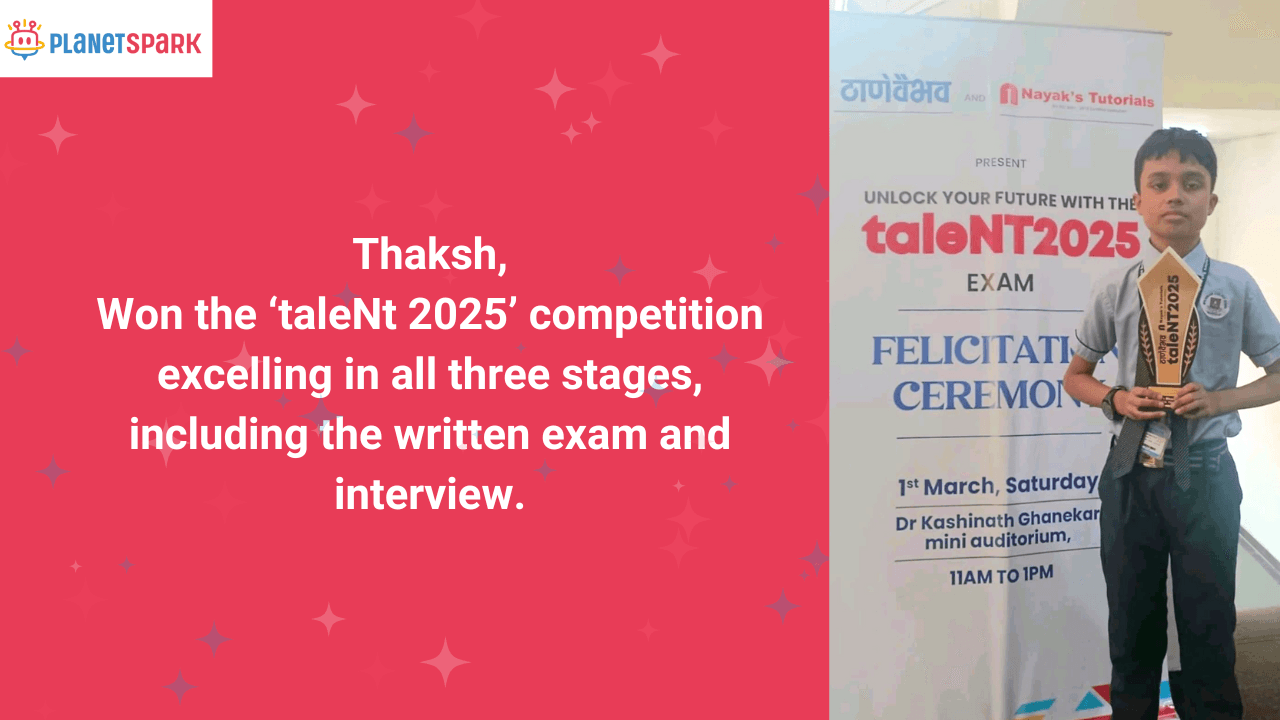
Thaksh entered the TaleNt 2025 competition with a mix of nerves and determination, but he felt confident thanks to his practice sessions on PlanetSpark. He nailed the written exam and impressed the judges in the interview, using strong communication skills he built through its coaching. After three challenging stages, his hard work and the platform’s guidance helped him win the championship, inspiring everyone around him.
Why PlanetSpark’s Personality Development Helps You Grow
PlanetSpark’s Personality Development program helps kids and teens build strong life skills. It focuses on communication, confidence, leadership, and self-expression. Students learn how to speak clearly, present ideas, and interact confidently in groups.
The classes use fun activities like storytelling, role-play, debates, and public speaking. This makes learning active and enjoyable. Students also get personalized feedback from trained mentors. This helps them improve quickly and stay motivated.
PlanetSpark also teaches emotional skills like handling stress, managing time, and staying positive. These skills help students perform better in school and life. With PlanetSpark, students not only grow academically but also become confident, responsible, and ready for the future.
Key Benefits of PlanetSpark Personality Development
- Builds communication and public speaking skills
- Improves confidence and self-expression
- Develops leadership and teamwork abilities
- Strengthens emotional and social skills
Master Independent Learning
Independent learning is the key to success for kids and teens. It builds confidence and skills. It helps students perform better in school. It also prepares them for real life.
PlanetSpark supports students to become independent learners. It provides structure, motivation, and guidance. Students learn at their own pace. They gain strong learning habits. PlanetSpark helps students unlock their full potential.
Frequently Asked Questions
The best strategies include daily study plans, practice tests, and self-reflection. Students should also break study into small tasks and use notes or mind maps. These strategies help them stay organized and learn faster.
Students can improve by setting daily goals and creating a study routine. They should practice regularly and review their work to find mistakes. Over time, they will become more confident and self-reliant.
Independent learning means students learn on their own by setting goals and practicing regularly. It helps them build confidence and self-discipline. It also prepares them for higher studies and real-life challenges.
Yes, PlanetSpark improves performance by strengthening core skills like problem solving and time management. Students get regular practice and review, which boosts memory and confidence. This helps them score better in exams and stay consistent.
PlanetSpark focuses on building learning habits, not just completing lessons. It offers real-time feedback, progress tracking, and personalized lessons based on the child’s level. This helps students learn at their own pace and become self-reliant.
PlanetSpark provides a clear learning path that helps students study step-by-step. It uses interactive classes and regular practice to build confidence. Students learn to solve problems on their own and ask for help only when needed.