
Top 10 Job Search Strategies for Working Professionals


Table of Contents
- Why Most Job Hunting Efforts Fail for Professionals
- Top 10 Job Search Strategies for Working Professionals
- Advanced Job Search Strategies for Faster Results By PlanetS
- How to Job Search Effectively in a Competitive Market
- Common Job Hunting Mistakes to Avoid
- PlanetSpark Personality Development for Career Success
- Your Career Growth Begins with the Right Strategy
Still applying to jobs but not getting interview calls? You are not alone. Many working professionals struggle with job hunting despite having the right skills. The real problem is not effort but using outdated job search strategies in a competitive market.
This blog will walk you through powerful, modern job search strategies that help you stand out, get noticed, and secure better opportunities. You will learn how to job search smartly, optimize your resume, build strong networks, and communicate confidently in interviews.
We will also explore common mistakes, advanced techniques, and how structured personality development can accelerate your success.
Let us begin by understanding why most job searches fail.
Why Most Job Hunting Efforts Fail for Professionals
Job hunting today is very different from what it was a few years ago. Professionals who rely only on job portals often face rejection or no response. This happens because recruiters now use advanced filtering systems and expect candidates to present themselves strategically. Simply applying is no longer enough. You need to position yourself as the right fit from the very beginning.
One of the biggest issues is lack of direction. Many professionals apply to dozens of roles without understanding whether they truly fit the requirements. This leads to mismatched applications and low response rates. Instead of a scattered approach, having clarity about your role, industry, and goals helps you apply more effectively and increases your chances of success.
Another major problem is poor positioning. A resume that lists responsibilities instead of achievements does not stand out. Recruiters want to see measurable impact. For example, instead of saying “handled client accounts,” a stronger statement would be “managed 15 client accounts and increased retention by 25 percent.” This shift from tasks to results makes a significant difference.
Networking is also underutilized. Many professionals depend only on job portals, missing out on hidden opportunities. A large number of roles are filled through referrals or internal recommendations. Building relationships, engaging on professional platforms, and reaching out to industry peers can unlock opportunities that are not publicly advertised.

Common Mistakes Explained
- Applying without customizing your resume: Sending the same resume for every job reduces relevance. Recruiters look for candidates who match specific job requirements. Customizing your resume with keywords and relevant achievements helps you pass screening systems and grab attention.
- Ignoring LinkedIn optimization: Your LinkedIn profile is often the first impression you make. An incomplete or inactive profile reduces visibility. A well-optimized profile with keywords, achievements, and regular engagement increases your chances of being discovered by recruiters.
- Not researching companies before applying: Applying without understanding the company can lead to poor interview performance. Knowing the company’s goals, culture, and challenges helps you tailor your application and answers more effectively.
- Weak communication during interviews: Many professionals struggle to clearly explain their experience and achievements. Even strong candidates can get rejected if they cannot communicate confidently. Practicing structured answers and improving speaking skills can significantly improve outcomes.
- No follow-up after applications: Following up shows professionalism and interest. Many candidates miss this step, losing opportunities to stay on the recruiter’s radar. A simple follow-up message can sometimes make a big difference.
To succeed, you need structured job search strategies that align with current hiring trends and expectations. A focused approach, strong communication, and consistent improvement can transform your job search results.
Struggling to stand out on LinkedIn and interviews? Book your FREE trial class today and build job-ready confidence before opportunities pass you by.
Top 10 Job Search Strategies for Working Professionals
1. Define Career Goals and Target Companies
Clarity is the foundation of effective job search strategies. Without a clear goal, you may end up applying to roles that do not align with your skills or long-term plans.
For example, if you are a marketing professional, decide whether you want to move into digital marketing, brand management, or performance marketing. Each path requires different skills and targets different companies.
Once you define your goal, create a list of 10 to 15 companies. Suppose you want to work in tech marketing. You can shortlist companies like SaaS startups or established tech firms. Research their hiring trends and required skills.
This focused approach helps you:
- Apply more strategically
- Prepare better for interviews
- Build relevant skills
2. Optimize LinkedIn and Digital Presence
Your LinkedIn profile is often your first impression. Recruiters use it to evaluate your profile even before shortlisting you.
For example, instead of writing “Software Engineer” as your headline, you can write:
“Software Engineer | Python | Built Scalable Applications Serving 1M+ Users”
Similarly, your summary should tell your story. Highlight your achievements and what makes you unique.
Posting regularly also helps. For instance, you can share insights from your work, comment on industry trends, or write about projects you have completed.
This increases your visibility and positions you as a knowledgeable professional.
Not confident about interviews or professional communication? Secure your trial session now and gain an edge before your next big opportunity.
3. Tailor Your Resume and Cover Letter for ATS
Most companies use software to scan resumes before a human sees them. If your resume does not match the job description, it gets filtered out.
For example, if a job description mentions “project management” and “Agile methodology,” your resume should include these exact terms if relevant.
Instead of writing:
“Responsible for managing projects”
Write:
“Led Agile project teams and delivered 5 projects on time, improving efficiency by 20 percent”
Customizing your resume for each role may take extra time, but it significantly increases your chances of getting shortlisted.
4. Network Strategically for Better Opportunities
Networking is not just about asking for jobs. It is about building relationships.
For example, if you see someone working in your target company, you can send a message like:
“Hi, I came across your profile and noticed your work in digital marketing. I would love to learn about your experience at your company.”
This approach feels natural and opens the door for conversation. Over time, this connection may lead to a referral.
Networking also includes attending webinars, joining professional groups, and engaging with posts. The more visible you are, the more opportunities you attract.
5. Use Industry-Specific Job Boards
Generic job portals have thousands of applicants for each role. Using niche platforms helps you stand out.
For example:
- A designer can use platforms like Behance or Dribbble
- A developer can explore GitHub jobs or Stack Overflow careers
- A marketer can check specialized marketing job boards
Also, applying early matters. If you apply within the first 2 to 3 days of a job posting, your chances of being noticed increase significantly.
6. Participate in Informational Interviews
Informational interviews are not job interviews. They are conversations to learn and build connections.
For example, you can request a 15-minute call with someone in your target role and ask:
- What skills helped you succeed in this role?
- What challenges should I prepare for?
- How did you get your first opportunity?
These conversations give you insider knowledge and can sometimes lead to referrals.
7. Leverage Recruitment Agencies and Headhunters
Recruiters often have access to roles that are not publicly advertised. They also understand what companies are looking for.
For example, if you are in finance, you can connect with recruitment agencies that specialize in finance roles. Share your resume and clearly explain your preferences.
Stay in touch with them regularly. If a role matches your profile, they may recommend you directly to the hiring manager.

8. Upskill to Stay Relevant
The job market keeps evolving, and skills that were relevant a few years ago may not be enough today.
For example, a traditional marketer can learn digital marketing tools like SEO, analytics, and paid advertising. Similarly, a software developer can learn new programming languages or frameworks.
Upskilling shows that you are proactive and willing to grow. It also makes your profile more attractive to employers.
9. Prepare Thoroughly for Interviews
Even strong candidates can fail interviews if they are not prepared. Preparation helps you communicate your value clearly.
For example, if asked, “Tell me about a challenge you faced,” you can use the STAR method:
- Situation: Describe the context
- Task: Explain your responsibility
- Action: Share what you did
- Result: Highlight the outcome
Example answer:
“In my previous role, our project was delayed due to resource issues. I reorganized the team’s workflow and coordinated with stakeholders, which helped us complete the project 2 weeks ahead of schedule.”
Structured answers make you sound confident and professional.
10. Track Applications and Follow Up
Job hunting can become overwhelming if you do not track your progress.
For example, create a simple spreadsheet with columns like:
- Company name
- Role applied
- Date of application
- Contact person
- Follow-up date
If you have not heard back in a week, send a polite follow-up message like:
“I wanted to check on the status of my application and express my continued interest in the role.”
This shows professionalism and keeps you on the recruiter’s radar.
Want to improve your speaking confidence and interview performance? Book your demo class now and start transforming your communication before your next opportunity arrives.
Advanced Job Search Strategies for Faster Results By PlanetSpark’s Experts
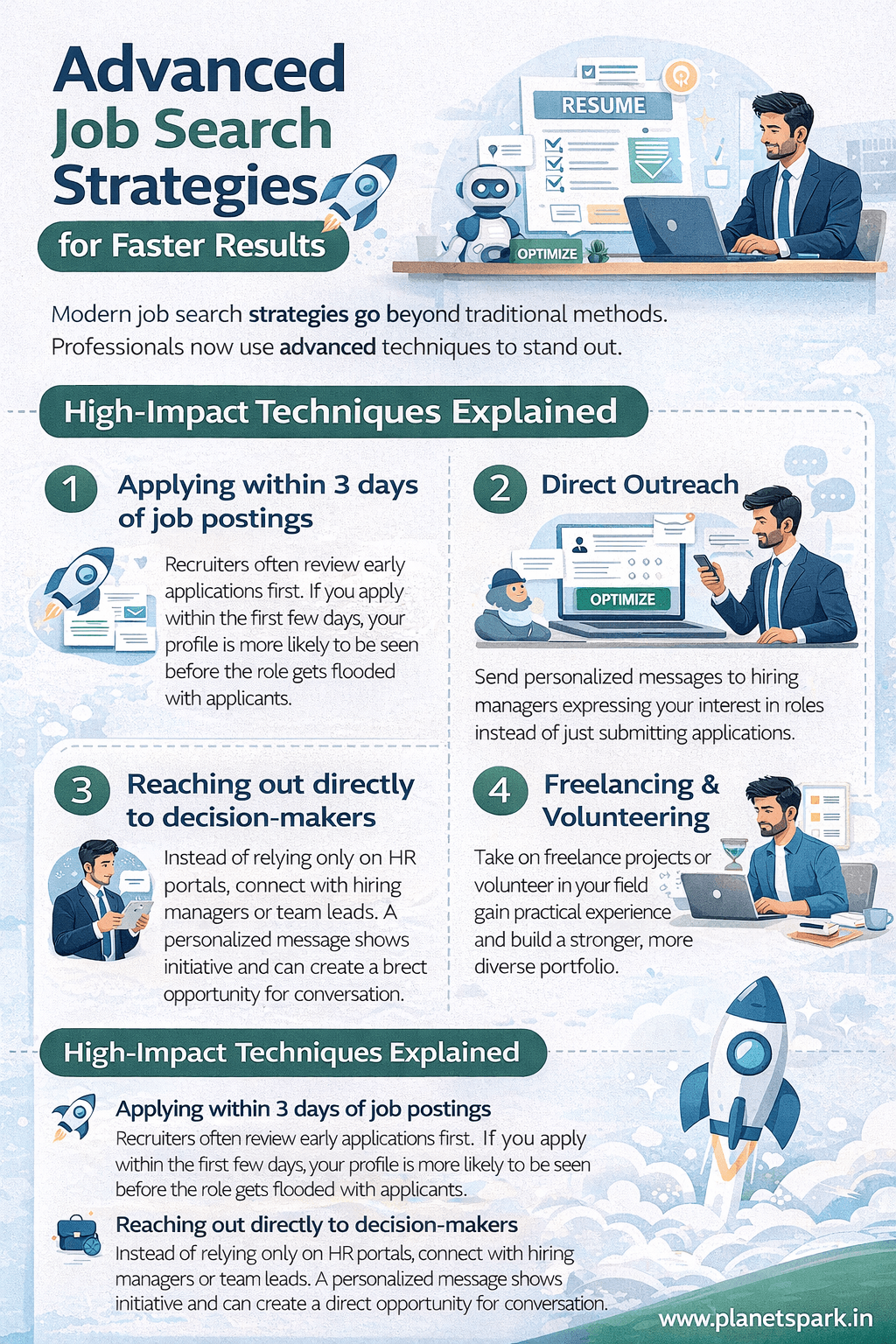
Modern job search strategies go beyond traditional methods. Professionals now use advanced techniques to stand out.
One effective approach is using AI tools to optimize resumes and prepare for interviews. These tools help identify gaps and improve presentation.
Another strategy is direct outreach. Instead of waiting for responses, connect with hiring managers and express your interest. A concise and personalized message can make a strong impression.
Volunteering or freelancing is also valuable. It helps you build a portfolio, gain experience, and demonstrate initiative.
High-impact techniques include:
High-Impact Techniques Explained
- Applying within 3 days of job postings: Recruiters often review early applications first. If you apply within the first few days, your profile is more likely to be seen before the role gets flooded with applicants.
- Reaching out directly to decision-makers: Instead of relying only on HR portals, connect with hiring managers or team leads. A personalized message shows initiative and can create a direct opportunity for conversation.
- Building a strong online presence: Sharing your knowledge online can position you as an expert. For example, posting about industry trends, writing articles, or showcasing your work builds credibility and attracts recruiters.
- Participating in industry events: Attending webinars, workshops, or conferences helps you learn and network at the same time. For example, after attending a webinar, you can connect with speakers or participants and continue the conversation.
These advanced job search strategies work because they shift your approach from passive to active. Instead of waiting for opportunities, you start creating them. This not only improves your chances of success but also builds long-term career growth.
How to Job Search Effectively in a Competitive Market
To succeed in today’s competitive environment, you need a structured and disciplined approach. Random applications may feel productive, but they rarely lead to meaningful results. Employers are looking for candidates who are intentional, prepared, and aligned with the role.
Start by creating a weekly job search plan. Instead of applying endlessly in one day and then stopping for a week, divide your time smartly. For example, you can dedicate:
- 2 to 3 days for applications
- 1 to 2 days for networking
- 1 to 2 days for skill development and interview practice
This balanced approach ensures that you are improving while applying, not just sending resumes. Consistency matters more than intensity because steady effort builds momentum over time.
Focus on building relationships rather than just applying. Many professionals miss this step and rely only on job portals. For example, if you attend a webinar, connect with the speaker or participants afterward. A simple message like “I enjoyed your session and would love to stay connected” can open doors in the future.
Visibility is equally important. When you engage in discussions, share insights, or comment on posts, you increase your chances of being noticed by recruiters and professionals in your field.
- Applying to relevant roles consistently: Instead of applying to every available job, focus on roles that match your skills and goals. For example, applying to 5 well-matched roles is more effective than applying to 20 random ones.
- Networking daily: Spend at least 15 to 20 minutes connecting with professionals. This could mean sending connection requests, replying to posts, or starting conversations. Over time, these small actions build a strong network.
- Improving one key skill every week: Identify a skill that is important for your target role and work on it consistently. For example, if you are aiming for a leadership role, you can focus on communication or decision-making skills.
- Practicing interview answers regularly: Many professionals prepare only when they get an interview call. Instead, practice regularly. Record your answers, review them, and improve clarity and confidence.
When you combine these actions with strong job search strategies, you create a system that leads to steady and predictable progress.
Still unsure how to improve your communication and confidence? Book a trial class today and take the first step before your next opportunity slips away.
Common Job Hunting Mistakes to Avoid
Avoiding common mistakes can significantly improve your job search results. Many professionals unknowingly limit their chances by overlooking small but important details.
One major mistake is applying without fully understanding the job description. For example, if a role requires strong client interaction and you focus only on technical skills in your resume, you may not get shortlisted. Carefully reading the job description helps you tailor your application effectively.
Using a generic resume is another common issue. Recruiters can easily identify when a resume is not customized. For instance, if your resume does not include keywords from the job description, it may not pass initial screening.
Lack of interview preparation is also a major drawback. Even highly skilled professionals can struggle if they cannot explain their experience clearly. Preparing structured answers and practicing them can make a big difference.
Ignoring follow-ups is another missed opportunity. After applying or attending an interview, a polite follow-up message shows professionalism and keeps you on the recruiter’s radar.
Confidence plays a crucial role as well. Many candidates hesitate while speaking or fail to present their achievements effectively. This creates a gap between their actual ability and how they are perceived.
- Applying without reading job descriptions carefully: This leads to mismatched applications. Always align your skills with the role before applying.
- Using a generic resume: A one-size-fits-all resume reduces your chances. Tailor it for each job to highlight relevant experience.
- Not preparing for interviews: Lack of preparation leads to unclear answers and low confidence. Practice is essential.
- Ignoring follow-ups: A simple follow-up message can remind recruiters about your application and show your interest.
- Lack of confidence during communication: Even strong candidates can get rejected if they cannot communicate effectively. Confidence comes from preparation and practice.
By identifying and correcting these mistakes, you can significantly improve your job hunting outcomes and move closer to your career goals.
PlanetSpark Personality Development for Career Success
PlanetSpark personality development programs are designed to help working professionals become confident communicators and strong performers in interviews and workplaces.
These programs focus on building essential soft skills like communication, leadership, emotional intelligence, and professional etiquette. Structured learning ensures consistent improvement and measurable results.
Key features include:
- Live 1:1 sessions with expert trainers
- Personalized learning roadmap based on your goals
- AI-powered tools like SparkX for performance analysis
- Mock interviews and real-life communication practice
- Confidence-building exercises and feedback sessions
- Access to exclusive speaking and writing communities
With guided training, professionals can overcome hesitation, improve clarity, and present themselves effectively in high-stakes situations.

Your Career Growth Begins with the Right Strategy
Success in job hunting comes from consistency, clarity, and confidence. When you apply the right job search strategies, you move from uncertainty to control.
Keep learning, keep improving, and keep showing up. Every effort builds your confidence and brings you closer to the career you deserve.
Frequently Asked Questions
The most effective strategies include targeted applications, networking, resume optimization, and strong communication skills.
Focus on quality applications, tailor your resume, and build strong professional connections.
Create a schedule, apply selectively, and use networking to explore opportunities efficiently.
Yes, LinkedIn is essential for networking, visibility, and connecting with recruiters.
Communication is crucial for interviews, networking, and presenting your skills effectively.
Yes, applying when you meet around 70 percent of requirements is often recommended.
Practice structured answers, research the company, and improve your communication skills.
Personalized Communication Roadmaps
Record a video to get a AI generated personalized communication reports