
Job Skills: Important Skills and Best Skills for Resume
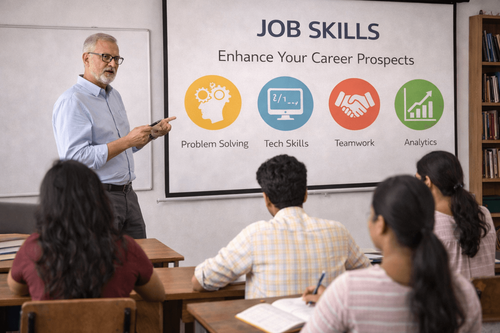

Table of Contents
- What Are Job Skills?
- Why Job Skills Are Important for Career Success
- Hard Skills vs Soft Skills in the Workplace
- Top Important Job Skills Employers Look for in 2026
- Comprehensive Job Skills List for Resume
- Best Job Skills to Add to Your Resume
- Job Skills Examples for Different Careers
- How to Add Job Skills to Your Resume
- How to Develop New Job Skills
- Future Skills That Will Dominate the Workplace
- Why Personality Development Matters for Career Growth
- PlanetSpark Personality Development Course for Professionals
- Why Job Skills Are the Key to Career Success
In today’s competitive job market, having the right job skills can determine whether your resume gets shortlisted or ignored. Employers are increasingly looking for candidates who combine technical expertise with strong interpersonal abilities. This guide explains important job skills, job skills examples, and the best job skills to add to your resume in 2026. You will learn the difference between hard and soft skills, explore a practical job skills list, and understand how to showcase your abilities effectively to stand out in hiring processes.
What Are Job Skills?
Job skills refer to the abilities, competencies, and knowledge required to perform tasks effectively in a workplace. These skills determine how well an individual can execute responsibilities, collaborate with teams, and solve problems.
A strong combination of technical and interpersonal abilities is essential for career success.
Key Characteristics of Job Skills
Help professionals perform tasks efficiently
Improve productivity and workplace performance
Increase employability and career opportunities
Support teamwork, leadership, and communication
Enhance problem-solving and decision-making abilities
Types of Job Skills
Job skills are generally divided into two categories:
Hard Skills – technical and measurable abilities
Soft Skills – interpersonal and behavioural abilities
Both types are equally important for career growth.
Examples of Job Skills
Some commonly recognised job skills examples include:
Communication skills
Leadership skills
Data analysis
Project management
Problem solving
Time management
Adaptability
Critical thinking
These skills form the foundation of most modern careers.
Why Job Skills Are Important for Career Success
Employers no longer hire candidates based solely on academic qualifications. They prioritise candidates who possess practical job skills and abilities examples that demonstrate real-world competence.
Benefits of Strong Job Skills
Professionals with strong job skills often experience:
Better employment opportunities
Higher salaries and promotions
Increased workplace confidence
Greater adaptability in changing industries
Stronger leadership potential
According to a LinkedIn Workplace Learning Report, nearly 89 percent of hiring managers believe that lack of soft skills is a major reason candidates fail in their roles.
This highlights the importance of developing a balanced skill set.
How Job Skills Impact Resume Selection
Recruiters typically scan resumes within 6 to 10 seconds. During this brief evaluation, they focus heavily on the job skills section.
A strong job skills list can:
Improve applicant tracking system (ATS) ranking
Showcase relevant capabilities quickly
Increase chances of interview selection
Demonstrate professional readiness
For job seekers and working professionals, continuously upgrading skills is essential.
Upgrade to confident, impactful communication - Enroll today..
Hard Skills vs Soft Skills in the Workplace
Understanding the difference between hard and soft skills helps professionals build a well-balanced resume.
Hard Skills
Hard skills are technical competencies that can be measured and learned through training.
Examples of Hard Skills
Programming languages
Data analysis tools
Financial modelling
Digital marketing
Graphic design
Machine learning
Project management software
These skills are often industry specific.
Soft Skills
Soft skills relate to personality traits and interpersonal abilities.
Examples of Soft Skills
Communication
Leadership
Teamwork
Emotional intelligence
Problem solving
Creativity
Adaptability
Employers increasingly prioritise soft skills because they determine workplace collaboration and leadership potential.
Top Important Job Skills Employers Look for in 2026
The workplace is evolving rapidly due to technology, automation, and AI adoption. Employers now seek professionals who combine technical expertise with human-centred abilities.
Below are some of the most important job skills in demand today.
1. Communication Skills
Communication remains one of the best job skills across industries.
Professionals must communicate effectively through:
Presentations
Emails
Meetings
Negotiations
Client interactions
Key Communication Abilities
Clear articulation of ideas
Active listening
Persuasive speaking
Professional writing
Cross-cultural communication
Strong communication improves collaboration and leadership.
2. Critical Thinking and Problem Solving
Employers value professionals who can analyse problems and identify effective solutions.
Problem Solving Skills Include
Analytical thinking
Decision making
Logical reasoning
Strategic planning
Risk evaluation
These abilities help organisations navigate complex challenges.
3. Leadership Skills
Leadership is no longer limited to managers. Even entry-level professionals are expected to demonstrate leadership potential.
Leadership Abilities Include
Team motivation
Conflict resolution
Decision making
Strategic vision
Delegation
Leadership skills often accelerate career growth.
4. Digital Literacy
As workplaces become increasingly digital, professionals must understand technology tools and platforms.
Digital Skills Examples
Data analysis tools
AI platforms
Cloud computing
Digital collaboration tools
CRM systems
Digital competence is now considered an essential job skill for resume.
5. Adaptability and Learning Agility
Industries evolve rapidly. Professionals who adapt quickly to new technologies and workplace changes remain highly valuable.
Adaptability Skills
Learning new tools quickly
Handling uncertainty
Reskilling regularly
Managing change effectively
Adaptable professionals thrive in dynamic work environments.
Comprehensive Job Skills List for Resume
A strong resume often includes a mix of technical and behavioural abilities.
Hard Skills List
Data analysis
Coding and programming
Digital marketing
Financial analysis
Project management
Cybersecurity
Artificial intelligence tools
UX/UI design
Soft Skills List
Communication
Leadership
Team collaboration
Emotional intelligence
Time management
Creativity
Negotiation skills
Conflict resolution
Hybrid Skills
Some skills combine technical expertise with human abilities.
Examples include:
Product management
Marketing strategy
Customer experience design
Business analytics
These hybrid capabilities are becoming increasingly valuable.
Best Job Skills to Add to Your Resume
Not all skills belong on a resume. Professionals should prioritise relevant and impactful abilities.
How to Choose the Best Job Skills
Consider the following factors:
Industry requirements
Job description keywords
Career goals
Demonstrated experience
Examples of Best Job Skills
Some widely valued good job skills include:
Strategic thinking
Communication skills
Data literacy
Leadership
Creativity
Project management
Highlighting these abilities improves resume strength.
Job Skills Examples for Different Careers
Different industries prioritise different skill sets.
Marketing Professionals
Important skills include:
SEO strategy
Content marketing
Data analytics
Customer research
Brand strategy
Technology Professionals
Key skills include:
Programming languages
Cloud computing
AI and machine learning
System architecture
Cybersecurity
Management Professionals
Essential abilities include:
Leadership
Strategic planning
Team management
Budget planning
Decision making
Customising your job skills list based on career goals increases hiring chances.
How to Add Job Skills to Your Resume
A well-structured resume clearly highlights your abilities.
Step 1 – Create a Dedicated Skills Section
List 8 to 12 relevant skills in bullet points.
Example:
Skills
Data Analysis
Strategic Planning
Leadership
Communication
Step 2 – Use Skills in Work Experience
Demonstrate skills through achievements.
Example:
Led cross-functional teams to deliver projects 30 percent faster
Implemented data-driven marketing strategies improving conversions by 20 percent
Step 3 – Include Skills in Summary
Example:
“Results-driven marketing professional with expertise in digital strategy, analytics, and leadership.”
This approach strengthens resume credibility.
How to Develop New Job Skills
Continuous learning is essential for career growth.
Practical Ways to Improve Skills
Professionals can develop skills through:
Online courses
Workshops and certifications
Mentorship programs
Industry conferences
Professional networking
Personal Skill Development Strategies
Practice public speaking
Improve writing and communication
Work on leadership abilities
Learn new digital tools
Accelerate your confidence and leadership - Start PlanetSpark..
Future Skills That Will Dominate the Workplace
The future workforce will prioritise human-centred and digital skills.
Emerging Job Skills
Experts predict strong demand for:
Artificial intelligence literacy
Data interpretation
Emotional intelligence
Creativity and innovation
Strategic decision making
According to the World Economic Forum Future of Jobs Report, nearly 50 percent of workers will need reskilling by 2030.
Professionals who continuously upgrade their job skills will remain competitive in the global workforce.
Why Personality Development Matters for Career Growth
Technical expertise alone is no longer enough for professional success. Employers increasingly value individuals who demonstrate strong interpersonal skills, emotional intelligence, and leadership abilities.
Key Personality Development Skills
These include:
Self-confidence
Communication etiquette
Leadership behaviour
Emotional intelligence
Professional presentation
Workplace Benefits
Professionals with strong personality skills often:
Communicate more effectively
Lead teams confidently
Build stronger professional relationships
Influence decision-making processes
Investing in personality development significantly enhances career opportunities.
PlanetSpark Personality Development Course for Professionals
The PlanetSpark Personality Development Course is designed to strengthen communication, leadership presence, and confidence for professionals seeking career advancement.
1. Personalised One-on-One Training
Each learner receives dedicated 1:1 guidance from certified communication experts who:
Understand individual learning styles and career goals
Provide real-time feedback during live sessions
Focus on storytelling, fluency, leadership communication, and structured thinking
This personalised approach accelerates learning outcomes.
2. Personalised Learning Roadmap
PlanetSpark begins with a comprehensive skill assessment that evaluates:
Communication clarity
Vocabulary and grammar
Confidence and presentation style
Thought structuring
Based on this assessment, a customised learning roadmap is created to guide continuous improvement.
3. SparkX AI Video Analysis Tool
Learners record speeches and presentations that are analysed by SparkX AI technology.
The system evaluates:
Voice clarity and modulation
Body language and posture
Grammar and sentence structure
Confidence and presentation flow
Detailed reports highlight strengths and areas for improvement.
4. AI-Led Practice Sessions
AI-powered coaching sessions simulate real communication scenarios such as:
Public speaking practice
Storytelling exercises
Structured presentation delivery
Instant feedback helps learners refine their skills consistently.
5. Spark Diary Digital Writing Tool
Spark Diary encourages consistent writing through:
Daily reflections
Creative writing exercises
Speech preparation
This improves clarity of thought and communication ability.
6. Gamified Learning Modules
Interactive tools make skill development engaging:
Vocabulary quizzes
Grammar challenges
Listening and spelling games
Gamified learning ensures continuous practice and retention.
7. Progress Tracking and Reports
Regular performance reports analyse:
Content quality
Critical thinking
Voice modulation
Confidence level
Communication clarity
These insights help learners track improvement over time.
8. Leadership and Communication Clubs
PlanetSpark communities include:
Debate Club
Story Writing Club
Podcasting Club
Public Speaking Circles
These environments encourage collaboration and leadership.
9. Safe Content Sharing Platform
Sparkline allows learners to share speeches, stories, and creative content in a moderated environment, boosting confidence and public expression.
10. Competitions and Showcases
Learners participate in:
Storytelling competitions
Speech contests
Creative writing challenges
These opportunities strengthen stage confidence and recognition.
Why Job Skills Are the Key to Career Success
The modern workplace demands more than just academic qualifications. Employers seek professionals who possess a strong combination of technical expertise, interpersonal abilities, and leadership potential.
Developing the right job skills allows professionals to adapt to changing industries, collaborate effectively, and take on leadership roles. From communication and problem solving to digital literacy and emotional intelligence, each skill contributes to long-term career growth.
Creating a powerful job skills list for resume is therefore essential for standing out in competitive job markets. By continuously learning, practicing new abilities, and strengthening personal confidence, professionals can unlock better opportunities and career advancement.
Programs such as the PlanetSpark Personality Development Course provide structured training that enhances communication, leadership presence, and confidence, helping individuals succeed in professional environments and build a lasting impact in their careers.
You can also read:
Frequently Asked Questions
Job skills are the abilities and competencies required to perform tasks effectively in a workplace. They include both technical abilities such as programming or data analysis and interpersonal skills such as communication and teamwork.
Employers evaluate these skills to determine whether a candidate can perform job responsibilities successfully and contribute to organisational goals.
Some of the best job skills include:
Communication skills
Leadership abilities
Data analysis
Project management
Critical thinking
Adaptability
Problem solving
Including these skills demonstrates that a candidate can handle complex tasks, collaborate with teams, and deliver results.
Hard skills are technical abilities learned through education or training, such as programming or accounting. Soft skills are behavioural traits that influence how individuals interact with others.
Examples:
Hard Skills
Coding
Data analysis
Soft Skills
Communication
Leadership
A strong combination of both types of skills improves employability.
Professionals can improve their job skills and abilities through:
Online courses and certifications
Professional workshops
Mentorship and coaching
Public speaking practice
Leadership training
Consistent practice and learning are essential for career development.
Personality development plays a crucial role in enhancing workplace skills such as communication, leadership, and emotional intelligence.
Structured programs like the PlanetSpark Personality Development Course help professionals build confidence, improve public speaking abilities, strengthen leadership behaviour, and develop effective interpersonal communication, all of which are essential for career growth and professional success.
Download Free Worksheets
Personalized Communication Roadmaps
Record a video to get a AI generated personalized communication reports