
Kids Speaking Confidently on Camera: Easy Tips for Online Classes
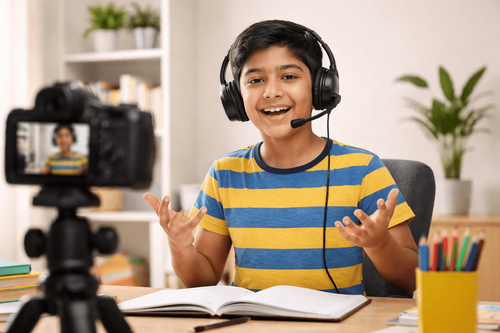

Table of Contents
- Why Kids Feel Shy on Camera and How to Fix It?
- Camera Confidence Tips for Kids That Actually Work
- How to Help Kids Speak Confidently on Camera in Online Class
- Activities to Improve Child Communication Skills Online
- The Role of Online Public Speaking Classes for Kids
- Common Mistakes Parents Should Avoid
- Advanced Techniques to Build Camera Confidence in Kids
- How Parents Can Support Kids in Online Learning Environments
- Tools and Resources to Improve Child Communication Skills On
- Quick Daily Practice Plan to Build Camera Confidence
- Signs Your Child Is Becoming Confident on Camera
- Long-Term Benefits of Camera Confidence for Kids
- PlanetSpark Online Public Speaking Classes for Kids
- Confidence Begins with Small Steps
Many children feel nervous when they see a camera. They hesitate, forget what to say, or avoid speaking altogether. Kids speaking confidently on camera is a skill that does not come naturally but can be learned with the right approach.
This blog explains why children feel shy on camera and how to fix it using simple, practical strategies. You will discover effective camera confidence tips for kids, activities to improve communication skills, and ways to make online classes more engaging.
By the end, you will have a clear roadmap to help your child express themselves confidently and naturally in front of the camera.
Why Kids Feel Shy on Camera and How to Fix It?
Understanding the root cause is the first step toward building confidence. Many parents assume that shyness is permanent, but it is often situational and fixable.
Common Reasons Kids Feel Camera Shy
- Fear of being judged or making mistakes
- Lack of practice speaking in front of others
- Over-awareness of appearance or surroundings
- Pressure to perform perfectly
- Unfamiliarity with online learning environments
Children often feel the camera is “watching” them, which increases anxiety. Unlike in-person communication, there are fewer natural cues, making them unsure about how they are doing.
How to Fix It?
Start by normalizing the experience. Let children use the camera casually during fun activities like storytelling or showing their favorite toy.
Encourage small steps:
- Begin with audio-only participation
- Gradually turn on the camera for short durations
- Appreciate effort, not perfection
Creating a safe, supportive environment helps reduce fear. When children feel accepted, they are more willing to speak up.
Camera Confidence Tips for Kids That Actually Work
Helping kids speaking confidently on camera requires consistent and structured practice. Simple habits can create a big difference over time.
Build Familiarity with the Camera
Children become confident when something feels familiar.
Try these:
- Record short videos at home
- Let them watch their recordings
- Practice greetings and introductions
This builds comfort and reduces fear of the unknown.
Focus on Body Language and Eye Contact
Teach kids to:
- Look at the camera instead of the screen
- Sit upright with relaxed shoulders
- Smile naturally
These small adjustments improve how they appear and feel on camera.
Use Simple Speaking Structures
Children struggle when they do not know what to say. Provide easy frameworks:
- Introduction: “Hi, my name is…”
- Main point: “Today I want to talk about…”
- Closing: “Thank you for listening”
This gives clarity and reduces hesitation.
Encourage Daily Practice
Confidence grows with repetition. Even 5 minutes a day can help.
- Speak about their day
- Describe a picture
- Share a short story
Consistency is more important than duration.
How to Help Kids Speak Confidently on Camera in Online Classes
Online classes can feel intimidating, especially for beginners. However, with the right strategies, they can become a powerful platform for growth.
Create a Comfortable Setup
A child’s environment directly affects their confidence.
Ensure:
- Good lighting
- Minimal background distractions
- Proper seating arrangement
A comfortable setup reduces external stress.
Prepare Before the Class
Preparation builds confidence.
Help your child:
- Review topics beforehand
- Practice key points
- Write short notes
When children know what to expect, they feel more in control.
Encourage Participation Gradually
Do not force immediate active participation.
Instead:
- Start with answering simple questions
- Move to short responses
- Gradually encourage longer speaking turns
This step-by-step approach builds confidence naturally.
Give Positive Reinforcement
Focus on effort rather than mistakes.
Say things like:
- “You spoke clearly today”
- “I liked your confidence”
Positive feedback boosts motivation and reduces fear.
Help your child speak with confidence in every class. Start their journey today.
Activities to Improve Child Communication Skills Online
Children learn best through engaging and interactive activities. Making practice fun is key to long-term improvement.
Role-Playing Games
Role-playing helps children think and speak spontaneously.
Examples:
- Pretend to be a teacher
- Act as a news reporter
- Play customer and shopkeeper
This improves both confidence and creativity.
Show and Tell Sessions
Ask children to present an object and talk about it.
They can:
- Describe their favorite toy
- Talk about a book
- Share a recent experience
This builds structured speaking skills.
Storytelling Practice
Storytelling improves fluency and expression.
Encourage children to:
- Create their own stories
- Retell known stories
- Use expressions and gestures
It also enhances imagination and clarity.
Mirror Practice
Speaking in front of a mirror helps children observe themselves.
They learn to:
- Adjust expressions
- Improve posture
- Build self-awareness
This is one of the simplest yet most effective techniques.
The Role of Online Public Speaking Classes for Kids
While home practice is helpful, structured learning accelerates progress. Online public speaking classes for kids provide a guided environment where children can develop communication skills systematically.
Why Structured Learning Matters
Children often need expert guidance to overcome hesitation.
Professional training helps in:
- Building confidence step by step
- Learning proper speaking techniques
- Receiving constructive feedback
What Makes These Classes Effective?
Good programs focus on real-world communication, not just theory.
Key benefits include:
- Regular speaking opportunities
- Interaction with peers
- Expert mentorship
Children also learn to handle different situations, such as presentations and discussions.
Long-Term Impact
Confidence developed early stays for life.
It helps children:
- Perform better academically
- Express ideas clearly
- Build leadership skills
Structured programs ensure that learning is consistent and measurable.
Give your child the confidence to speak, express, and shine on camera.
Common Mistakes Parents Should Avoid
Parents play a crucial role in shaping a child’s confidence. However, certain mistakes can unintentionally hold them back.
Forcing Immediate Confidence
Confidence cannot be rushed. Pushing children too hard can increase anxiety.
Instead, allow gradual progress.
Over-Correcting Mistakes
Constant correction can make children self-conscious.
Focus on:
- Encouragement
- Gentle guidance
- Celebrating small wins
Comparing with Others
Every child learns at a different pace.
Avoid comparisons like:
- “Look how confidently others speak”
This can lower self-esteem.
Ignoring Practice Opportunities
Confidence grows with practice.
Make speaking a regular part of daily life.
When parents create a positive environment, children feel safe to express themselves freely.
Advanced Techniques to Build Camera Confidence in Kids
Once the basics are in place, children benefit from slightly advanced techniques that strengthen both clarity and confidence. These methods are especially helpful for kids who are already participating but want to improve further.
Voice Modulation and Clarity
Children often speak in a flat tone when nervous. Teaching them voice modulation makes their speech more engaging and confident.
Help your child practice:
- Speaking loudly but clearly
- Changing tone based on emotion
- Pausing between sentences
A simple activity is reading stories aloud with expressions. This builds both fluency and confidence on camera.
Practicing with Real-Life Scenarios
Children gain confidence when they practice situations they might face in online classes.
Examples include:
- Answering a teacher’s question
- Presenting a small topic
- Introducing themselves to new classmates
Role-playing these scenarios at home reduces anxiety during actual classes.
Using Feedback Effectively
Constructive feedback is essential, but it must be delivered carefully.
Focus on:
- One improvement at a time
- Positive reinforcement first
- Clear and simple suggestions
For example, instead of saying “You were not confident,” say “Try looking at the camera more next time.”
Building Consistency Through Routine
Confidence grows when practice becomes a habit.
Create a daily or weekly routine:
- 5 minutes of speaking practice
- 1 short recorded video
- 1 feedback session
Consistency helps children become naturally comfortable on camera.
How Parents Can Support Kids in Online Learning Environments?
Parental involvement plays a major role in helping children develop confidence. Even small changes at home can make a big difference.
Create a Safe Communication Space
Children should feel safe to express themselves without fear of judgment.
Encourage them to:
- Share opinions openly
- Ask questions freely
- Speak without interruption
When children feel heard, their confidence improves significantly.
Be a Role Model
Children learn by observing adults.
Show them how to:
- Speak clearly and confidently
- Maintain eye contact during conversations
- Express thoughts calmly
Your behavior sets the foundation for their communication style.
Encourage Effort Over Perfection
Many children hesitate because they want to speak perfectly. This creates unnecessary pressure.
Teach them that:
- Mistakes are part of learning
- Progress matters more than perfection
- Confidence grows with practice
This mindset reduces fear and builds resilience
Celebrate Small Wins
Every small achievement matters.
Celebrate moments like:
- Turning on the camera
- Answering a question
- Speaking for a few seconds
These small wins build long-term confidence.
Tools and Resources to Improve Child Communication Skills Online
Technology can be a powerful tool when used correctly. There are several ways to make practice more engaging and effective.
Video Recording Apps
Recording helps children observe and improve themselves.
Benefits include:
- Self-awareness
- Improved clarity
- Better body language
Encourage kids to watch their videos and identify one thing they did well.
Interactive Learning Platforms
Platforms designed for communication skills provide structured practice.
They offer:
- Guided lessons
- Real-time feedback
- Peer interaction
This creates a more engaging and supportive learning environment.
Fun Communication Games
Games make learning enjoyable and less stressful.
Try:
- Guess the object
- Describe without naming
- Rapid question rounds
These activities improve thinking and speaking skills simultaneously.
Quick Daily Practice Plan to Build Camera Confidence
Consistency is the key to helping kids speaking confidently on camera. A simple daily routine can create noticeable improvement within weeks. The goal is to make speaking a natural habit rather than a forced activity.
10-Minute Daily Confidence Routine
You can follow this easy structure:
- 2 minutes: Warm-up conversation
Ask your child simple questions about their day to get them comfortable speaking - 3 minutes: Topic speaking
Give a small topic like “My favorite game” or “My best friend” - 3 minutes: Camera practice
Turn on the camera and let them speak while maintaining eye contact - 2 minutes: Feedback and appreciation
Highlight what they did well and suggest one small improvement
This short routine keeps practice stress-free and effective.
Weekly Confidence Boost Activities
Along with daily practice, add one engaging activity each week:
- Record a short video presentation
- Participate in a mock online class
- Do a storytelling session with family
- Practice a “show and tell” activity
These activities improve fluency, clarity, and comfort on camera.
Make Practice Fun, Not Forced
Children learn best when they enjoy the process. Avoid turning practice into a strict task. Instead:
- Use games and storytelling
- Allow creative expression
- Keep sessions light and encouraging
When children associate speaking with fun, their confidence grows naturally. Over time, they begin to enjoy expressing themselves, both on and off camera.
Signs Your Child Is Becoming Confident on Camera
Tracking progress helps parents understand what is working and where improvement is needed.
Positive Indicators to Look For
- Willingness to turn on the camera
- Clear and audible speech
- Better eye contact with the camera
- Reduced hesitation while speaking
- Active participation in online classes
Behavioral Changes
Confidence is not just about speaking. It also reflects in behavior.
You may notice:
- Increased enthusiasm during classes
- More willingness to share ideas
- Better engagement with peers
Gradual Improvement Matters
Do not expect instant transformation. Confidence builds step by step.
Focus on:
- Consistent improvement
- Comfort level
- Participation frequency
Recognizing progress keeps both parents and children motivated.
Long-Term Benefits of Camera Confidence for Kids
Helping kids speaking confidently on camera is not just about online classes. It prepares them for future opportunities.
Academic Benefits
Confident children:
- Participate actively in class
- Present ideas clearly
- Perform better in assessments
Communication skills directly impact academic success.
Social Development
Confidence improves interaction with others.
Children learn to:
- Express thoughts clearly
- Build friendships
- Handle conversations with ease
Future Career Skills
In today’s digital world, communication often happens through screens.
Camera confidence helps in:
- Interviews
- Presentations
- Virtual meetings
Developing this skill early gives children a strong advantage.
Emotional Growth
Confidence also affects emotional well-being.
Children become:
- More self-assured
- Less anxious
- More willing to try new things
This builds a strong foundation for overall development.
PlanetSpark Online Public Speaking Classes for Kids
PlanetSpark offers structured online public speaking classes for kids designed to build confidence and communication skills in a supportive environment. These classes are ideal for children who feel shy on camera or struggle to express their thoughts clearly.
With a focus on real-world communication, PlanetSpark helps children practice speaking regularly, receive expert feedback, and develop confidence step by step. Structured learning ensures consistent progress and long-term skill development.
Key Features:
Confidence Begins with Small Steps
Helping kids speaking confidently on camera is a journey, not a one-time effort. With patience, practice, and the right guidance, every child can learn to express themselves clearly and confidently.
Encourage your child to take small steps every day. Celebrate progress, support their efforts, and create opportunities for them to speak. Over time, these small actions build strong communication skills that last a lifetime.
Confidence on camera today can open doors to countless opportunities tomorrow.

Frequently Asked Questions
Children feel shy due to fear of judgment, lack of practice, and unfamiliarity with online communication. Gradual exposure helps overcome this.
Start with short practice sessions, use fun activities like storytelling, and provide positive feedback consistently.
Yes, they provide structured learning, expert guidance, and regular practice, which significantly improves confidence and communication skills. Platforms like PlanetSpark are designed for this purpose.
Encourage eye contact with the camera, practice daily, use simple speaking structures, and create a comfortable environment.
Absolutely. With the right support and training, even very shy children can develop strong communication skills. Programs like PlanetSpark help build this confidence step by step.
Use interactive activities, encourage participation, and consider structured programs like PlanetSpark to ensure consistent progress.