
Kindergarten Games: Fun Learning Games for Kids | PlanetSpark
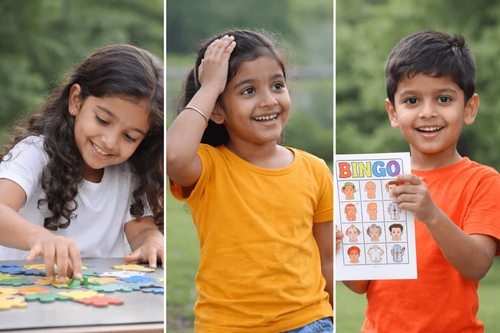

Table of Contents
- What Makes a Good Kindergarten Game?
- How PlanetSpark Uses Games to Make Kindergarten Learning Mor
- PlanetSpark Kindergarten Classroom Games for Fun and Learnin
- Fun Outdoor Kindergarten Games with PlanetSpark Approach
- Kindergarten English Games Designed for Better Speaking at P
- Fun Blending Games for Kindergarten
- Fun Body Parts Games for Kindergarten with PlanetSpark
- Fun Puzzle Games for Kindergarten
- Advanced Game Ideas for Better Learning
- How to Choose the Right Game for Child
- How PlanetSpark Helps Your Child Develop Personality
- The Power of Games in Early Learning
What if your child could learn faster without even realizing it?
That is exactly what kindergarten games do. Instead of forcing learning, they make it natural, fun, and engaging. Children remember more when they are moving, speaking, and interacting.
If you are searching for kindergarten games, the simple answer is this: the best games combine fun with skills like speaking, thinking, and creativity. In this blog, you will find easy-to-play games that help children improve communication, confidence, and learning ability at home and in classrooms.
What Makes a Good Kindergarten Game?
Not every game supports learning. Some only entertain, while others build real skills.
A good kindergarten game should be simple, engaging, and purposeful.
Key features of effective games:
- Easy to understand instructions so children can start quickly
- Short duration to match their attention span
- Active participation for all children
- A clear learning goal such as vocabulary, listening, or coordination
How PlanetSpark Uses Games to Make Kindergarten Learning More Effective
At PlanetSpark, learning for young children is designed to feel natural and engaging. Instead of traditional methods, the focus is on using interactive games that help children learn while enjoying the process. The goal is simple, when children have fun, they participate more and learn faster.
Simple and Easy-to-Understand Activities
Games are designed with clear and simple instructions so children can start quickly without confusion. This helps them stay involved from the beginning and reduces hesitation, especially for shy learners.
Short and Engaging for Better Attention
Each activity is kept short and focused to match a child’s attention span. This ensures that children stay interested and do not feel bored or distracted during learning.
Active Participation for Every Child
Every game encourages involvement from all children. Instead of just watching, each child gets a chance to speak, act, or respond. This builds confidence and improves communication over time.
Focus on One Skill at a Time
Each game is designed to target a specific skill, such as vocabulary, listening, or coordination. This makes learning clearer and more effective for young children.
Learning Through Movement and Speaking
Activities often combine physical movement with speaking. For example, children may jump to objects and name them or act while describing actions. This helps them learn faster because both body and mind are involved.
Repetition with Variation for Better Retention
Children learn best when concepts are repeated in different ways. Instead of doing the same activity again and again, the same concept is practised through different games, making it easier to understand and remember.
Consistent and Structured Progress
Since the games are part of a structured learning approach, children show steady improvement. Over time, they become more confident in speaking, better at expressing ideas, and more comfortable participating in activities.
PlanetSpark Kindergarten Classroom Games for Fun and Learning
Classroom games work best when they are not just fun but also structured to build real skills. At PlanetSpark, similar game-based activities are used to help children improve communication, confidence, and thinking in an engaging way.
These games are ideal for both teachers and parents who want to make learning interactive and effective.
1. Pass the Ball Game
This is one of the most engaging classroom games because it creates excitement and anticipation.
How to play:
Children sit in a circle. A ball is passed while music plays. When the music stops, the child holding the ball answers a question.
What kind of questions to ask:
- Name a fruit
- Say a color
- Name an animal
- Say a simple sentence
Why it works:
Children stay alert and actively participate. It also helps shy children speak without pressure.
2. Simon Says
A simple game that improves listening and focus.
How to play:
The teacher gives instructions like “Simon says touch your nose”. Children follow only if the phrase starts with “Simon says”.
Why it works:
It trains children to listen carefully and respond correctly.
3. Word Chain Game
A fun way to build vocabulary.
How to play:
One child says a word like “cat”. The next child says a word starting with the last letter, like “tiger”.
Why it works:
It improves vocabulary, memory, and quick thinking.
4. Mystery Bag Game
A sensory-based guessing game.
How to play:
Place objects in a bag. Children guess the object by touching it.
Why it works:
It improves descriptive speaking and observation skills.
5. Role Play Game
A powerful communication-building activity.
How to play:
Children act out roles like doctor, teacher, or shopkeeper.
Why it works:
It helps children use real-life language and builds confidence.
6. Show and Tell
A classic classroom activity.
How to play:
Children bring an object and talk about it in front of the class.
Why it works:
It improves public speaking and self-expression.
7. Action Word Game
A great way to learn verbs.
How to play:
The teacher says an action like “jump” or “run”, and children perform it.
Why it works:
It connects words with actions, making learning more effective.
8. Picture Story Game
Encourages creativity and speaking.
How to play:
Show a picture and ask children to create a short story about it.
Why it works:
It improves imagination and sentence formation.
9. Find the Object Game
A quick and engaging activity.
How to play:
The teacher asks children to find objects of a certain color or shape in the classroom.
Why it works:
It improves observation and vocabulary.
10. Question Ball Game
A variation of pass the ball with more focus on speaking.
How to play:
When the ball reaches a child, they must ask or answer a simple question.
Why it works:
It builds conversation skills and confidence.
Book a Free Demo Class for Your Child
If your child enjoys these games but still hesitates to speak or express ideas clearly, structured learning can help.
At PlanetSpark, children learn through similar interactive activities, but with a clear focus on improving communication and confidence step by step.
Fun Outdoor Kindergarten Games with PlanetSpark Approach
Outdoor games are more than just playtime. They help children build physical strength, improve coordination, and learn teamwork in a natural way. At PlanetSpark, similar activity-based learning is used to combine movement with communication, helping children become more active and expressive.
These games are perfect for schools, homes, and group activities where kids can learn while staying energetic.
1. Duck Duck Goose
How to play:
Children sit in a circle while one child walks around tapping others saying “duck”. When they choose someone as “goose”, that child gets up and chases them.
Why it works:
This game keeps children alert and active. It improves reaction time, speed, and encourages participation without making anyone feel pressured.
2. Treasure Hunt
How to play:
Hide small objects around the area and give simple clues for children to find them.
Why it works:
It builds curiosity and problem-solving skills. Children learn to think, explore, and connect clues with actions.
3. Red Light Green Light
How to play:
Children move forward on “green light” and must stop immediately when “red light” is called.
Why it works:
It improves focus, listening, and self-control. Children learn to react quickly while following instructions carefully.
4. Catch and Count
How to play:
Children throw and catch a ball while counting numbers aloud in sequence.
Why it works:
It combines physical movement with learning numbers. This makes counting more fun and easier to remember.
5. Animal Walk Race
How to play:
Children imitate animals like frogs, ducks, or crabs and move from one point to another.
Why it works:
It builds strength, coordination, and creativity. Children enjoy acting like animals while staying physically active.
6. Follow the Leader
How to play:
One child performs actions like jumping or clapping, and others follow exactly.
Why it works:
It improves observation and coordination. Children also learn to follow instructions and stay attentive.
7. Balloon Balance Game
How to play:
Children try to keep a balloon in the air by tapping it without letting it fall.
Why it works:
This game improves hand-eye coordination and focus. It also keeps children engaged without requiring complex rules.
8. Run and Freeze
How to play:
Children run freely, and when “freeze” is called, they must stop immediately.
Why it works:
It helps children control their movements and improves listening skills in a fun way.
9. Color Hunt Game
How to play:
The teacher calls out a color, and children run to find objects of that color nearby.
Why it works:
It improves observation skills and helps children connect learning with real-world objects.
10. Relay Race with Tasks
How to play:
Children run in teams and complete small tasks like picking objects or naming items before passing the turn.
Why it works:
It builds teamwork, speed, and quick thinking. Children also learn to work together and follow sequences.
Book a free demo class and help your child grow confidently.
Kindergarten English Games Designed for Better Speaking at PlanetSpark
English games help children learn language in a natural and stress-free way. Instead of memorising words, children learn by speaking, listening, and using language in real situations. At PlanetSpark, similar game-based techniques are used to build vocabulary, fluency, and confidence step by step.
These games are ideal for both classroom learning and practice at home.
1. Picture Naming Game
How to play:
Show flashcards or real objects and ask children to name them. You can also ask them to use the word in a simple sentence.
Why it works:
It builds vocabulary and helps children connect words with real-life objects, making learning more meaningful.
2. Fill the Missing Letter
How to play:
Write incomplete words like C_T or D_G and ask children to fill in the missing letters.
Why it works:
It improves spelling and helps children understand phonics and word formation.
3. Opposite Words Game
How to play:
Say a word like “big” and ask children to say its opposite, such as “small”.
Why it works:
It strengthens vocabulary and helps children understand word relationships.
4. Sentence Builder Game
How to play:
Give a few simple words and ask children to form a meaningful sentence.
Why it works:
It develops grammar skills and helps children understand how words come together to form sentences.
5. Storytelling Circle
How to play:
One child starts a story, and each child adds one line to continue it.
Why it works:
It improves creativity, imagination, and speaking fluency in a fun group setting.
6. Word Match Game
How to play:
Give children cards with pictures and separate cards with words. Ask them to match the correct pairs.
Why it works:
It improves word recognition and strengthens vocabulary through visual learning.
7. Action Word Game
How to play:
Say action words like “run”, “jump”, or “clap”, and children perform them.
Why it works:
It helps children understand verbs by connecting words with actions.
8. Rhyming Words Game
How to play:
Say a word like “cat” and ask children to think of rhyming words like “bat” or “hat”.
Why it works:
It improves phonemic awareness and helps children understand sound patterns in words.
9. Question and Answer Game
How to play:
Ask simple questions like “What is your name?” or “What is your favorite fruit?” and encourage children to answer in full sentences.
Why it works:
It builds conversation skills and helps children practise sentence formation.
10. Guess the Word Game
How to play:
Describe an object without naming it, and children guess what it is.
Example:
“It is red and we eat it” → Apple
Why it works:
It improves listening, thinking, and vocabulary while encouraging children to connect clues with words.
Book a free demo class and help your child grow confidently.
Fun Blending Games for Kindergarten
Blending is a key step in helping children learn how to read. It teaches them how to combine individual sounds to form complete words. Instead of memorising words, children start understanding how words are built, which makes reading easier and more natural. At PlanetSpark, similar phonics-based activities are used to strengthen reading and speaking skills step by step.
1. Sound Blending Game
How to play:
Say individual sounds slowly, such as C – A – T, and ask children to combine them to form a word.
Why it works:
This game helps children understand how sounds come together to form words. It builds a strong foundation for reading and pronunciation.
2. Jump on Sounds
How to play:
Place letters on the floor. Children jump on each letter while saying its sound and then blend the sounds together.
Why it works:
It combines physical movement with learning, making phonics more engaging and easier to remember.
3. Clap the Word
How to play:
Say a word and ask children to clap for each syllable, such as ap-ple or ba-na-na.
Why it works:
It helps children break words into parts, improving pronunciation and understanding of word structure.
4. Sound Train
How to play:
Each child represents a sound. When they say their sounds in order, the group forms a complete word.
Why it works:
It encourages teamwork and helps children clearly understand how individual sounds combine to make a word.
5. Spin and Blend
How to play:
Use a spinner with letters. Children spin it and create words using the letters they get.
Why it works:
It makes phonics practice exciting and interactive while improving word formation skills.
Fun Body Parts Games for Kindergarten with PlanetSpark
Learning about body parts becomes much easier when it is interactive and playful. These games help children understand their body, improve coordination, and build vocabulary in a natural way. At PlanetSpark, similar activity-based methods are used to combine movement with speaking, helping children learn faster and express better.
1. Touch and Tell
How to play:
The teacher calls out a body part like “touch your nose” or “touch your knees”, and children follow the instruction.
Why it works:
This game helps children quickly recognise body parts while improving listening skills. It also builds a strong connection between words and actions.
2. Body Part Bingo
How to play:
Give children bingo cards with pictures or names of body parts. Call out a body part, and children mark it on their cards.
Why it works:
It improves recognition and memory while keeping children engaged in a fun group activity.
3. Mirror Game
How to play:
One child or teacher performs actions, and others copy exactly like a mirror.
Why it works:
It improves observation skills, coordination, and body awareness. Children also learn to focus and follow movements carefully.
4. Action Song Game
How to play:
Play songs like “Head, Shoulders, Knees, and Toes” and ask children to perform actions along with the lyrics.
Why it works:
Music makes learning fun and memorable. Children easily remember body parts through rhythm and repetition.
5. Guess the Body Part
How to play:
Describe a body part without naming it, such as “we use this to see”, and children guess the answer.
Why it works:
It improves thinking, listening, and vocabulary by encouraging children to connect clues with the correct body part.
Fun Puzzle Games for Kindergarten
Puzzle games are a great way to develop a child’s thinking ability from an early age. They encourage children to observe carefully, solve problems, and stay patient while completing a task. At PlanetSpark, similar problem-solving activities are used to build logical thinking along with communication skills, helping children grow in a balanced way.
1. Jigsaw Puzzles
How to play:
Give children simple jigsaw puzzles with large pieces and clear images. Ask them to join the pieces to complete the picture.
Why it works:
It improves problem-solving and visual recognition skills. Children learn to identify patterns and understand how different pieces fit together.
2. Match the Pair
How to play:
Provide cards with pictures and matching pairs, such as animals and their homes or objects and their uses. Children match the correct pairs.
Why it works:
It strengthens memory and association skills. Children learn how different things are connected in a simple and engaging way.
3. Shape Sorting
How to play:
Give children different shapes and ask them to sort them based on type, size, or color.
Why it works:
It helps children recognise shapes and improves categorisation skills. It also builds a basic understanding of patterns and differences.
4. Spot the Difference
How to play:
Show two similar pictures and ask children to find small differences between them.
Why it works:
It improves observation and attention to detail. Children learn to focus and notice small changes.
5. Pattern Completion
How to play:
Create simple patterns using colors or shapes and ask children to complete the sequence.
Why it works:
It builds logical thinking and helps children understand sequences, which is important for early math and reasoning skills.
Each of these games not only improves logical thinking, observation, and patience but also helps children become more confident in solving problems on their own.
Book a free demo class and help your child grow confidently.
Advanced Game Ideas for Better Learning
To make learning more effective, it is important to combine different skills in one activity. When a game includes movement, speaking, and thinking together, children learn faster and stay more engaged.
Examples:
- A game where children run to objects and name them combines physical activity with vocabulary learning
- A storytelling game with actions helps improve language, imagination, and confidence at the same time
These kinds of games make learning more natural because children are not focusing on just one skill. Instead, they are learning in a more complete and practical way.
How to Choose the Right Game for Child
Choosing the right game is just as important as playing it. The right choice ensures that your child stays interested and actually learns something useful.
- Choose games based on your child’s interest and energy level
- Keep activities simple and short to avoid boredom
- Mix indoor and outdoor games for balanced development
- Focus on one main skill at a time for better understanding
When games are chosen thoughtfully, children enjoy the process and learn more effectively.
How PlanetSpark Helps Your Child Develop Personality
Games are a great start, but consistent improvement needs the right structure. PlanetSpark combines fun with focused learning to build strong communication skills.
Here’s how it helps:
- One-on-one personalised classes
- Structured learning for speaking and writing
- AI feedback with SparkX for improvement
- Daily practice through tools like SparkBee
- Interactive activities like storytelling and role play
- Regular progress tracking and feedback
This ensures children not only enjoy learning but also show clear and steady progress.
Want Structured Learning Along With Fun?
Games help children start learning, but structured programs help them improve consistently.
PlanetSpark helps children with:
- Public speaking
- Creative writing
- Grammar
- Confidence
The Power of Games in Early Learning
Kindergarten games are more than just fun activities. They are powerful tools that help children learn faster and grow with confidence.
When used regularly, they improve communication, creativity, and thinking skills.
However, for long-term improvement, children need structured guidance along with fun learning.
You May Also Read:
Kindergarten Math Activities Made Easy and Fun with PlanetSpark
Frequently Asked Questions
The best kindergarten games are those that combine fun with learning. Activities that involve speaking, movement, and thinking, such as storytelling games, role play, and action-based games, work very well for young children. These games keep kids engaged while helping them build important skills like vocabulary, listening, and confidence.
Games make learning natural and stress-free for children. They improve language skills, social interaction, problem-solving ability, and memory. At PlanetSpark, game-based learning is structured in a way that ensures children not only enjoy activities but also show consistent improvement over time.
PlanetSpark focuses on games like storytelling, sentence building, picture naming, and role play to improve English skills. These activities help children speak confidently and form sentences naturally. With personalised guidance, children gradually move from basic vocabulary to clear and confident communication.
Outdoor games play an important role in a child’s physical and social development. They improve coordination, teamwork, and energy levels. When combined with structured learning from PlanetSpark, children experience balanced growth in both physical activity and communication skills.