
How to Set Long-Term Career Goals for Professional Success
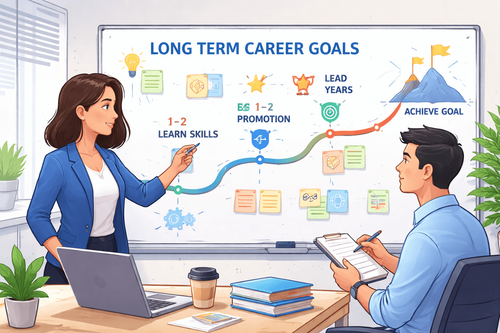

Table of Contents
- What Are Long-Term Career Goals?
- Why Long-Term Goals Matter for Professional Growth
- How to Set Long-Term Career Goals Effectively
- Long-Term Career Goals Examples for Different Professionals
- Common Mistakes to Avoid When Setting Long-Term Goals
- How to Stay Consistent with Long-Term Goals
- How Personality Development Helps Achieve Career Goals
- Build Career Confidence with PlanetSpark Personality Develop
- Shape Your Future with a Clear Career Vision
Ever felt like you are working hard but still not seeing meaningful progress in your career? That frustration often comes from a lack of clear direction.
Many working professionals struggle with confusion, slow growth, or lack of fulfilment because they do not define clear long-term career goals. Without a structured vision, career decisions become reactive instead of intentional. You may switch jobs, chase salary hikes, or follow trends without knowing if they align with your future.
This blog will help you understand what long-term goals are, why they matter, and how to set them effectively using proven frameworks such as SMART goal-setting and career-planning strategies. You will also explore examples of long-term career goals, practical execution tips, and common mistakes to avoid.
By the end, you will have a clear, actionable roadmap to build a strong career development plan and achieve sustainable professional success.
What Are Long-Term Career Goals?
Long-term career goals are strategic objectives that define your professional destination over the next five to ten years or even longer. These goals are not limited to promotions or salary growth. They reflect your overall vision, purpose, and impact.
Unlike short-term goals, which focus on immediate outcomes like completing a project or learning a tool, long-term goals provide a broader perspective. They guide your career success planning and help you make decisions aligned with your future.
Think of long-term goals as your career blueprint. Without it, you may stay busy but not necessarily move forward.
Examples of Long-Term Career Goals
- Becoming a senior leader or decision maker
- Building expertise in a niche domain
- Transitioning into a new industry
- Achieving financial independence
- Starting your own business or consultancy
- Becoming a recognised industry expert
When asked, “What are your long-term goals?”, employers want to understand your clarity, ambition, and alignment with growth.
A strong answer shows that you are not just focused on short-term gains but are committed to long-term value creation.
Difference Between Long-Term and Short-Term Goals
Both types of goals are important, but long-term goals give meaning to short-term efforts.
Why Long-Term Goals Matter for Professional Growth
Long-term goals are essential because they act as a guiding force in your career journey. They help you move from random effort to intentional growth, ensuring that every step you take contributes to a bigger purpose.
1. Provide Clarity and Direction
Without clear goals, professionals often feel stuck. You may work hard but still feel lost. Long-term goals eliminate this confusion by giving you a clear direction.
When you define where you want to go, your daily tasks start to make sense. Instead of feeling overwhelmed by multiple responsibilities, you can prioritise what truly matters.
For example, if your goal is to become a marketing manager, you will naturally focus on learning strategy, analytics, and leadership instead of just completing routine tasks.
This clarity reduces stress, improves productivity, and helps you avoid distractions that do not contribute to your growth.
Feeling stuck in your career despite working hard? Book your free demo class and get a clear career growth roadmap today.
2. Help You Make Better Career Decisions
Every career decision becomes easier when you have defined career planning goals.
For example:
- Should you switch jobs?
- Should you pursue a certification?
- Should you accept a leadership role?
When your goals are clear, these decisions become logical instead of emotional.
You stop chasing short-term benefits like salary alone and start evaluating opportunities based on long-term impact.
For instance, you might choose a role with better learning opportunities over a higher-paying but stagnant job.
This strategic thinking ensures that every decision aligns with your career development plan and moves you closer to your desired future.
3. Increase Motivation and Consistency
Motivation often fades when you do not see immediate results. Long-term goals keep you focused on the bigger picture.
They remind you why you started and why consistency matters.
In challenging times, such as facing rejection, workload pressure, or slow growth, your long-term goals act as a source of resilience.
Instead of giving up, you continue because you understand that progress takes time.
This mindset shift from instant results to long-term growth is what separates successful professionals from those who give up early.
4. Encourage Continuous Learning
Professional growth goals require constant skill development.
- Learning new technologies
- Improving communication
- Building leadership skills
This continuous learning ensures you stay competitive in a fast-changing world.
Industries evolve rapidly, and skills that are relevant today may become outdated tomorrow. Long-term goals push you to stay proactive rather than reactive.
For example, a professional aiming for leadership will actively develop soft skills, emotional intelligence, and decision-making abilities.
This habit of continuous improvement not only enhances your expertise but also increases your adaptability in uncertain situations.
5. Build Confidence and Professional Identity
Clarity leads to confidence. When you know your goals:
- You communicate better
- You negotiate confidently
- You present yourself as a focused professional
This directly impacts your career success planning.
A clear sense of direction helps you build a strong professional identity. People start recognising you as someone who is driven, reliable, and growth-oriented.
For example, during interviews or performance reviews, you can confidently articulate your aspirations and achievements.
This confidence creates trust, opens new opportunities, and positions you as a future leader in your field.
6. Create a Sense of Purpose and Fulfilment
Beyond success, long-term goals give your work meaning. Instead of just completing tasks, you feel connected to a larger purpose.
When your goals align with your values, your career becomes more fulfilling.
This sense of purpose improves job satisfaction, reduces burnout, and helps you stay engaged even during difficult phases.
Feeling unsure about your next career step? Book a free trial class and get expert guidance to build a clear career roadmap.
How to Set Long-Term Career Goals Effectively
Setting long-term career goals is not about guessing your future. It is about designing it intentionally. It requires self-awareness, strategic thinking, and consistent action. Instead of relying on luck or external opportunities, you take control of your career direction and build a clear path toward success.
1. Reflect Deeply on Your Values and Interests
Before setting goals, understand yourself.
Ask:
- What kind of work excites me daily?
- Do I prefer stability or growth?
- Do I enjoy leadership or individual work?
This step ensures your goals are meaningful and sustainable.
Many professionals skip this step and end up chasing goals that look attractive but do not align with their personality. This often leads to dissatisfaction or burnout.
For example, someone who values creativity may struggle in a highly structured role, even if it offers high pay. On the other hand, someone who values stability may not enjoy a fast-paced startup environment.
When your goals align with your core values, you are more likely to stay committed and satisfied in the long run.
2. Visualise Your Ideal Future
Imagine your life after 10 years.
- What role do you hold?
- What skills define you?
- What lifestyle do you have?
Visualisation creates clarity and emotional connection with your goals.
This step helps you move beyond vague thinking and create a vivid picture of success. The clearer your vision, the easier it becomes to plan your actions.
For instance, instead of saying “I want a better job,” visualise leading a team, presenting ideas confidently, and earning recognition in your organisation.
This mental clarity increases motivation and makes your goals feel real and achievable.
3. Apply the SMART Framework
SMART goals make your career development plan practical.
- Specific: Clearly defined goal
- Measurable: Track progress
- Achievable: Realistic
- Relevant: Aligned with interests
- Time-bound: Defined timeline
Example:
Instead of “I want to grow,” say:
“I want to become a senior manager within 5 years by developing leadership and communication skills.”
The SMART framework transforms vague intentions into actionable goals. It also helps you measure progress and stay accountable.
For example, instead of saying “I want to improve communication,” you can set a SMART goal like “I will deliver one presentation every month to improve my speaking skills.”
This level of clarity significantly increases your chances of success.
4. Create a Career Roadmap
Break your goals into phases:
- Year 1 to 2: Skill building
- Years 3 to 5: Role advancement
- Year 5+: Leadership or specialisation
This roadmap makes your journey structured and achievable.
A career roadmap acts like a navigation system. It connects your current position to your future goal through clear milestones.
For example, if your goal is to become a product manager, your roadmap may include learning product strategy, gaining cross-functional experience, and leading small projects before taking on a full role.
This structured approach reduces overwhelm and helps you focus on one step at a time.
5. Build Daily and Weekly Habits
Your habits determine your success.
- Reading industry content
- Practicing communication
- Networking with professionals
Small actions create big outcomes over time.
Consistency is more important than intensity. You do not need to make huge changes overnight. Instead, focus on small, repeatable actions.
For example, spending just 30 minutes daily on skill development can lead to significant improvement over the course of a year.
Habits also build discipline, which ensures progress even when motivation is low.

6. Seek Mentorship and Feedback
Mentors accelerate growth by:
- Providing clarity
- Sharing experience
- Helping avoid mistakes
A mentor can offer insights that you may not gain on your own. They can help you identify blind spots, refine your goals, and stay accountable.
For example, a mentor may guide you on which skills are truly valuable in your industry or how to prepare for leadership roles.
Feedback is equally important. Regular feedback helps you improve faster and align your efforts with your goals.
7. Review and Adjust Regularly
Your goals may evolve. Review them every 6 to 12 months.
Flexibility ensures long-term relevance and success.
Career paths are rarely linear. New opportunities, interests, and challenges may arise. Regular reviews help you adapt without losing direction.
For instance, you may discover a new passion or realise that your industry is changing. Adjusting your goals ensures you stay relevant and continue growing.
Think of goal setting as an ongoing process rather than a one-time activity.
8. Build Accountability Systems
One of the most overlooked aspects of goal setting is accountability. Without it, even the best plans fail.
You can stay accountable by:
- Sharing your goals with peers or mentors
- Tracking progress in a journal or app
- Setting deadlines and rewards
Accountability increases commitment and ensures you stay consistent with your efforts.
9. Develop a Growth Mindset
Your mindset plays a crucial role in achieving long-term goals. A growth mindset helps you see challenges as opportunities to learn rather than obstacles.
- Embrace failures as lessons
- Stay open to feedback
- Focus on improvement instead of perfection
This mindset keeps you resilient and adaptable in your career journey.
Not confident while speaking in meetings or interviews? Start your free trial and build powerful communication skills now.
Long-Term Career Goals Examples for Different Professionals
Understanding examples helps you create your own goals. The right examples not only inspire you but also help you visualise what success looks like in practical terms. Different professionals define success differently based on their roles, industries, and personal priorities.
1. Leadership Goals
- Become a team leader within 3 years
- Move into senior management roles
- Lead high-impact projects
Leadership goals require strong communication and decision-making skills.
These goals are ideal for professionals who want to take ownership, influence decisions, and drive organisational growth. Leadership is not just about authority, but about responsibility, vision, and the ability to guide others effectively.
For example, a software developer may aim to become a tech lead, while a marketing executive may aspire to become a marketing head. In both cases, the transition requires not only technical expertise but also people management and strategic thinking skills.
To achieve leadership goals, professionals must focus on building confidence, improving communication, and learning how to manage teams and conflicts effectively.
2. Skill Development Goals
- Master advanced technical tools
- Improve public speaking skills
- Gain industry certifications
These goals ensure long-term relevance.
In today’s rapidly evolving job market, skill development is not optional. Professionals must continuously upgrade themselves to stay competitive.
For instance, a data analyst may learn advanced analytics tools, while a sales professional may work on persuasive communication and negotiation skills.
Public speaking is one of the most valuable skills across industries. It helps you present ideas clearly, influence stakeholders, and build authority in your field.
Certifications also add credibility and open new career opportunities by validating your expertise.
3. Entrepreneurship Goals
- Start a business
- Build a personal brand
- Create passive income streams
Entrepreneurship goals are suitable for professionals who want independence, creativity, and control over their career path.
Starting a business requires a combination of skills, including problem-solving, communication, financial understanding, and risk management.
Building a personal brand has become equally important. Professionals today use platforms like LinkedIn to showcase their expertise, share insights, and attract opportunities.
Passive income streams, such as online courses or consulting, provide financial security and flexibility.
These goals require long-term planning, resilience, and a willingness to take calculated risks.
4. Career Transition Goals
- Switch industries within 3 years
- Move into strategic roles
- Transition into consulting
Career transitions are becoming increasingly common as professionals seek better alignment with their interests and market opportunities.
For example, someone in operations may move into strategy, or an engineer may transition into product management.
These transitions require careful planning, skill development, and networking. You may need to acquire new knowledge, build relevant experience, and position yourself effectively in the new domain.
Consulting roles, in particular, require strong problem-solving, communication, and analytical skills.
A well-planned transition can significantly accelerate your career growth and satisfaction.
5. Work Life Balance Goals
- Achieve flexible work schedules
- Reduce stress and burnout
- Build a stable income
Success is not only about growth but also about sustainability. Work-life balance goals focus on creating a career that supports your well-being.
Many professionals prioritise flexibility, remote work options, and a healthy work environment to maintain long-term productivity.
For example, a professional may aim to move into a role that offers better work hours or less travel. Others may focus on building financial stability to reduce stress.
These goals ensure that your career supports your overall quality of life, not just professional achievements.
6. Financial Growth Goals
Financial stability is one of the most common long-term career goals. Professionals often aim to achieve a certain income level or financial independence over time.
Examples include:
- Reaching a specific salary benchmark
- Building multiple income streams
- Investing for long-term wealth creation
These goals require strategic planning, budgeting, and smart financial decisions alongside career growth.
Financial goals also provide security and enable you to take calculated risks in your career.
7. Personal Branding and Influence Goals
In today’s digital world, building a strong personal brand is a powerful long-term goal.
Examples include:
- Becoming a thought leader in your industry
- Sharing insights through blogs or social media
- Speaking at conferences or events
A strong personal brand increases visibility, credibility, and career opportunities. It positions you as an expert and attracts recognition.
8. Impact Driven Goals
Some professionals are motivated by the impact they create rather than by titles or income alone.
Examples include:
- Mentoring junior professionals
- Contributing to social initiatives
- Driving innovation in your field
These goals provide deeper satisfaction and purpose, making your career more meaningful.
These long-term work goals highlight that career success is not one-dimensional. It varies based on your ambitions, values, and life priorities. The key is to choose goals that align with your strengths and vision, rather than following a generic path.
When your goals are personalised and intentional, your chances of achieving long-term success increase significantly.
Struggling to communicate your career goals confidently? Book your demo class today and learn real-world communication skills.
Common Mistakes to Avoid When Setting Long-Term Goals
Even experienced professionals make mistakes that slow their growth. While setting long-term career goals is important, avoiding these common pitfalls is equally critical to ensure consistent progress and meaningful results.
1. Setting Vague Goals
“I want success” is not a goal. Be specific.
Vague goals lack direction and make it difficult to take action. Without clarity, you may feel busy but not productive.
For example, instead of saying:
“I want to grow in my career,”
Say:
“I want to become a team leader within 3 years by improving my communication and leadership skills.”
Specific goals provide clarity, focus, and measurable outcomes. They also make it easier to track progress and stay motivated.
2. Ignoring Required Skills
Every goal requires skills. Identify and develop them.
One of the biggest mistakes professionals make is assuming that desire alone is enough. In reality, every career goal demands a specific set of competencies.
For example:
- Leadership roles require communication and decision-making skills
- Technical roles require domain expertise
- Client-facing roles require interpersonal and presentation skills
If you do not identify these skill gaps early, your progress may slow down or stop completely.
A practical approach is to list the skills required for your desired role and create a plan to acquire them step by step.
3. Lack of Execution
Planning without action leads to stagnation.
Many professionals spend time setting goals, attending workshops, or consuming content, but fail to take consistent action. This creates a gap between intention and results.
For example, you may plan to improve your communication skills but never practice speaking in real situations.
Execution requires discipline, consistency, and accountability. Even small actions, when done regularly, lead to significant progress over time.
Remember, progress is built through action, not just planning.

4. Comparing Yourself to Others
Your journey is unique. Focus on your progress.
In the age of social media and professional networking platforms, it is easy to compare your progress with others. However, this comparison often leads to frustration and self-doubt.
For example, seeing someone get promoted faster may make you feel behind, even if your path is different.
Each professional has different starting points, opportunities, and challenges. Comparing yourself to others can distract you from your own goals.
Instead, measure your progress against your past performance and focus on continuous improvement.
5. Not Tracking Progress
Measure achievements regularly.
Without tracking progress, it is difficult to know whether you are moving in the right direction. You may feel stuck even when you are making progress, simply because you are not measuring it.
For example:
- Skills learned
- Certifications completed
- Projects handled
- Feedback received
Tracking these milestones gives you a sense of achievement and helps you stay motivated.
It also allows you to identify areas that need improvement and adjust your strategy accordingly.
6. Fear of Failure
Fear prevents action. Growth requires risk.
Fear of failure is one of the biggest barriers to achieving long-term goals. It can stop you from applying for new roles, taking leadership opportunities, or trying something new.
For example, you may avoid speaking in meetings because you fear making mistakes.
However, growth always involves stepping out of your comfort zone. Mistakes are not failures but learning opportunities.
Professionals who embrace challenges and learn from setbacks are more likely to achieve long-term success.
7. Lack of Consistency
Consistency is often underestimated but plays a crucial role in achieving long-term career goals. Many professionals start with enthusiasm but lose momentum over time.
For example, you may begin learning a new skill but stop after a few weeks due to workload or distractions.
Long-term success requires sustained effort. Even small, consistent actions can lead to significant results over time.
8. Setting Goals Based on External Pressure
Sometimes, professionals set goals based on societal expectations, peer pressure, or trends rather than their own interests.
For example:
- Choosing a career path because it is popular
- Pursuing a role because others are doing it
Such goals may not align with your values and can lead to dissatisfaction.
Always ensure that your goals are personal, meaningful, and aligned with your long-term vision.
9. Not Reviewing or Updating Goals
Career paths evolve, and so should your goals. Sticking to outdated goals can limit your growth.
For example, you may discover new interests or opportunities that better align with your strengths.
Regularly reviewing your goals ensures they remain relevant and aligned with your current situation.
Avoiding these mistakes improves your goal-setting as a professional and increases your chances of achieving long-term success. The key is to stay aware, take consistent action, and continuously refine your approach.
Still unsure how to achieve your long-term career goals? Book a live 1:1 session and get expert guidance instantly.
How to Stay Consistent with Long-Term Goals
One of the biggest challenges is not setting goals but staying consistent with them.
1. Break Goals into Micro Actions
Instead of focusing on big outcomes, focus on daily tasks.
2. Track Progress Visually
Use journals or apps to track achievements.
3. Celebrate Small Wins
Recognising progress boosts motivation.
4. Stay Accountable
Share goals with mentors or peers.
5. Maintain Discipline Over Motivation
Motivation fluctuates. Discipline ensures consistency.
How Personality Development Helps Achieve Career Goals
Personality development is essential for achieving long-term career goals.
Why It Matters
Technical skills help you enter a field, but soft skills help you grow.
Key Skills That Impact Career Growth
- Communication
- Confidence
- Leadership
- Emotional intelligence
- Problem solving
Real Workplace Impact
Professionals with strong personality skills:
- Lead better meetings
- Handle conflicts effectively
- Influence decisions
Practical Ways to Improve
- Practice public speaking
- Improve body language
- Seek feedback
- Join skill development programs
Want to stand out in meetings and interviews? Book a free trial and start building confidence today.
Build Career Confidence with PlanetSpark Personality Development Classes
PlanetSpark personality development programs are designed for working professionals who want to improve communication, leadership, and confidence to accelerate career growth.
In today’s professional world, strong communication is not optional. It is a core skill that impacts promotions, leadership opportunities, and workplace influence.
PlanetSpark offers structured, practical learning that helps professionals overcome hesitation and express themselves confidently.
Who These Classes Are For
- Professionals aiming for promotions
- Individuals preparing for interviews
- Leaders looking to improve communication
- Anyone struggling with confidence
Why Structured Learning Matters
Self learning often lacks feedback and consistency. Structured programs provide guidance, accountability, and measurable improvement.
Key Features and USPs
- Live 1:1 interactive classes
- Expert trainers with real industry experience
- Real-world communication practice
- Personalised feedback and progress tracking
- Confidence-building framework
- AI-powered learning tools
- Global learning community across 13+ countries
With over 1 million classes delivered, PlanetSpark has helped learners build strong communication skills and career confidence.

Shape Your Future with a Clear Career Vision
Long-term career goals are the foundation of meaningful professional success. They provide clarity, direction, and purpose in an evolving world. When you define your goals clearly, take consistent action, and invest in continuous improvement, you unlock new opportunities and build lasting confidence.
Stay committed, embrace learning, and trust the process of steady growth toward a future that reflects your true potential.
Frequently Asked Questions
Every 6 to 12 months for best results.
It improves communication, confidence, and leadership skills, all of which are essential for growth.
Leadership, expertise, business ownership, and career transitions.
They help you stay competitive and aligned with your aspirations.
Use SMART goals, create a roadmap, and build consistent habits.
Examples include leadership roles, entrepreneurship, mastery of skills, and financial stability.
At PlanetSpark, we define long-term goals as a 5 to 10-year vision that guides your career direction and decisions.
Personalized Communication Roadmaps
Record a video to get a AI generated personalized communication reports