
MECE Framework Thinking Explained Simply


Table of Contents
- What Is the MECE Framework?
- Why MECE Framework Thinking Matters for Professionals and St
- The Two Pillars of MECE: A Closer Look
- How MECE Framework Thinking Works in Practice
- Structured Thinking in Problem Solving: Why Structure Comes
- Logical Structuring Skills: The Foundation of Clear Thinking
- Common Mistakes People Make When Applying MECE
- How This Helps in Personality Development
- How PlanetSpark Helps You Build MECE Framework Thinking
- Start Thinking in Structures That Actually Work
Most people have experienced this: you are in the middle of a meeting, a presentation, or an exam, and your thoughts feel scattered. You know the answer is somewhere in your head, but it comes out jumbled, incomplete, or overlapping. The ideas are all there, but the structure is missing.
MECE, which stands for Mutually Exclusive and Collectively Exhaustive, is one of the most powerful structured thinking skills used by consultants, analysts, business leaders, and students alike. It helps you organise your thinking so clearly that every point you make covers exactly what it needs to, with zero repetition and zero gaps.
Whether you are solving a business problem, building a presentation, preparing for a competitive exam, or trying to communicate an idea with confidence, MECE framework thinking gives you the mental architecture to do it well.
What Is the MECE Framework?
MECE is a principle for structuring information, ideas, and arguments so they are clean, complete, and logically airtight.
Breaking it down simply:
Mutually Exclusive means each idea, category, or point stands on its own. There is no overlap. If you are listing reasons for a business problem, each reason should be genuinely distinct and should not bleed into another.
Collectively Exhaustive means when you add all your points together, they cover the entire topic completely. Nothing important is left out.
Together, these two rules create a thinking structure that is both precise and comprehensive. No redundancy. No gaps. Every point belongs, and every point is necessary.
The MECE principle was popularised by McKinsey and Company and has since become a cornerstone of structured thinking in problem solving across industries, academic institutions, and professional training programs worldwide.

Why MECE Framework Thinking Matters for Professionals and Students
You may be wondering whether a framework originally designed for management consultants applies to your situation. The answer is yes, regardless of whether you are in your first year of college or your tenth year of corporate life.
Here is why MECE framework thinking is worth building early:
It forces clarity before communication. Before you can express an idea clearly, you need to think about it clearly. MECE makes you organise your thinking before you open your mouth or write a single word.
It prevents the most common communication mistake. The most common reason ideas land badly is not poor vocabulary or lack of knowledge. It is because the structure underneath is weak. Points overlap, key aspects are missed, and the audience loses confidence in the speaker. MECE fixes this at the root.
It builds credibility in professional settings. People who communicate with logical structuring skills are taken more seriously. They appear prepared, sharp, and trustworthy. In job interviews, boardrooms, and client meetings, this distinction is visible and it is valued.
It is directly applicable to academics. For students writing essays, answering case study questions, or preparing for group discussions and interviews, MECE provides a reliable structure that makes responses more thorough and more impressive.
It supports faster, better decision-making. When your thinking is organised in a MECE structure, options are clearly separated, trade-offs are easier to see, and decisions are made with greater confidence.
The Two Pillars of MECE: A Closer Look
Understanding MECE as a concept is one thing. Knowing how to apply it requires understanding both pillars in depth.
Mutually Exclusive: The Anti-Overlap Rule
Think of a wardrobe sorted into categories: formal wear, casual wear, sports wear, and winter wear. If you placed a formal winter coat in both the formal and winter categories, you would have overlapping buckets. That creates confusion, duplication, and inefficiency.
In MECE thinking, each category, reason, or argument should belong to exactly one bucket. When you are listing causes of a problem, analysing options for a decision, or structuring a presentation, every point must be genuinely distinct from every other.
Overlap is a signal that your thinking is not yet clear enough. It either means two categories are not truly different, or you are not being precise enough about what belongs where.
Collectively Exhaustive: The No-Gaps Rule
Now imagine you are surveying customer satisfaction and your only categories are "very satisfied" and "very dissatisfied." You have missed everyone in between. Your analysis is incomplete and your conclusions will be wrong.
Collective exhaustiveness means when you step back and look at all your categories or points together, they cover the entire space of the problem. There are no significant gaps. No important consideration has been left out.
Together, these two pillars ensure that your analysis is complete, your structure is clean, and your thinking can be trusted.
How MECE Framework Thinking Works in Practice
The best way to understand MECE is to see it applied to a real situation.
Example 1: A Business Problem
A company is experiencing declining sales. Without MECE, the team might brainstorm a long list of reasons: poor marketing, bad customer service, product quality issues, competitors are cheaper, team morale is low, and so on. These might overlap, and some important areas might be missed.
Using MECE, the team structures the analysis into three clean categories: External Factors (market conditions, competition, economic changes), Internal Factors (product quality, pricing, team performance), and Customer Factors (changing preferences, trust, retention issues). Each category is distinct. Together, they cover every possible dimension of the problem.
Example 2: A Student Essay or Answer
A student asked to discuss the causes of urban poverty might write a long answer that jumps between economic, social, and political points without clear separation, with some points appearing in multiple places.
With MECE structured thinking skills, the student organises the answer into three clean pillars: Economic Causes (unemployment, income inequality, lack of access to capital), Social Causes (poor education, health challenges, migration patterns), and Governance Causes (policy failures, lack of housing infrastructure, urban planning gaps). The answer is comprehensive, non-repetitive, and easy to follow.
Example 3: A Career Decision
Someone choosing between three job offers can apply MECE by defining mutually exclusive evaluation criteria such as financial growth potential, learning and development opportunities, work-life balance, and long-term career alignment. Each criterion is distinct, and together they cover every meaningful dimension of the decision.
Structured Thinking in Problem Solving: Why Structure Comes First
Most people approach problems by jumping straight to solutions. They generate ideas, debate options, and move toward action before they have fully understood what the problem actually is. This is why so many solutions fail to work.
Structured thinking in problem solving means you invest in the quality of your thinking before you invest in the quality of your output. MECE is the most useful tool for this because it forces you to:
Define the problem precisely before trying to solve it. Break the problem into genuinely distinct components so you can address each one properly. Ensure you have not missed any important dimension before committing to a direction. Build your solution or recommendation on a complete and logical foundation.
This is exactly how top consulting firms, strategy teams, and business leaders approach complex challenges. And it is a skill that can be learned and applied by anyone at any level.
When students and professionals build strong structured thinking in problem solving skills early, they consistently outperform peers who rely on instinct and improvisation alone.
Logical Structuring Skills: The Foundation of Clear Thinking
MECE framework thinking sits within a broader family of logical structuring skills. These are the thinking habits that allow you to organise information, construct arguments, analyse trade-offs, and communicate recommendations in a way that is easy to follow and difficult to dispute.
Key logical structuring skills that complement MECE include:
Issue Trees and Problem Decomposition Breaking a large, complex problem into smaller, manageable sub-problems that can be analysed individually before being reassembled into a complete picture.
Hypothesis-Driven Thinking Starting with a clear hypothesis about the likely answer or root cause, then organising your analysis to test, confirm, or disprove it rather than exploring randomly.
Pyramid Principle Communication Leading with your main conclusion or recommendation and then supporting it with structured, tiered evidence and reasoning. This is the opposite of the common mistake of burying the point at the end.
Root Cause Analysis Moving beyond symptoms to identify the true underlying cause of a problem, using structured questioning and logical decomposition rather than surface-level observation.
These skills are deeply interconnected. Professionals and students who build strong logical structuring skills develop a cognitive advantage that shows up in every setting where clear thinking matters.

Common Mistakes People Make When Applying MECE
Understanding the principle is the starting point. Applying it correctly takes practice. Here are the most common mistakes and how to avoid them:
Creating overlapping categories. This is the most frequent error. It happens when you define categories by feel rather than by logic. Always ask yourself: could the same item belong in more than one of my categories? If yes, your structure needs to be refined.
Leaving significant gaps. Some people focus so much on avoiding overlap that they create categories that do not cover the full picture. Always ask: is there any important dimension of this problem or topic that none of my categories address?
Confusing MECE with exhaustive lists. MECE is not about listing every possible point. It is about organising points into a structure where each component is distinct and the whole is complete. A MECE structure can have three categories, each with depth, and still be far more powerful than a list of twenty bullet points.
Applying MECE mechanically without judgment. The framework is a tool, not a rule. The best thinkers use MECE as a discipline to sharpen their thinking, not as a rigid formula that overrides common sense and context.
How This Helps in Personality Development
Personality development is not about changing who you are. It is about building the internal clarity, communication confidence, and behavioural consistency that make you more effective in every environment.
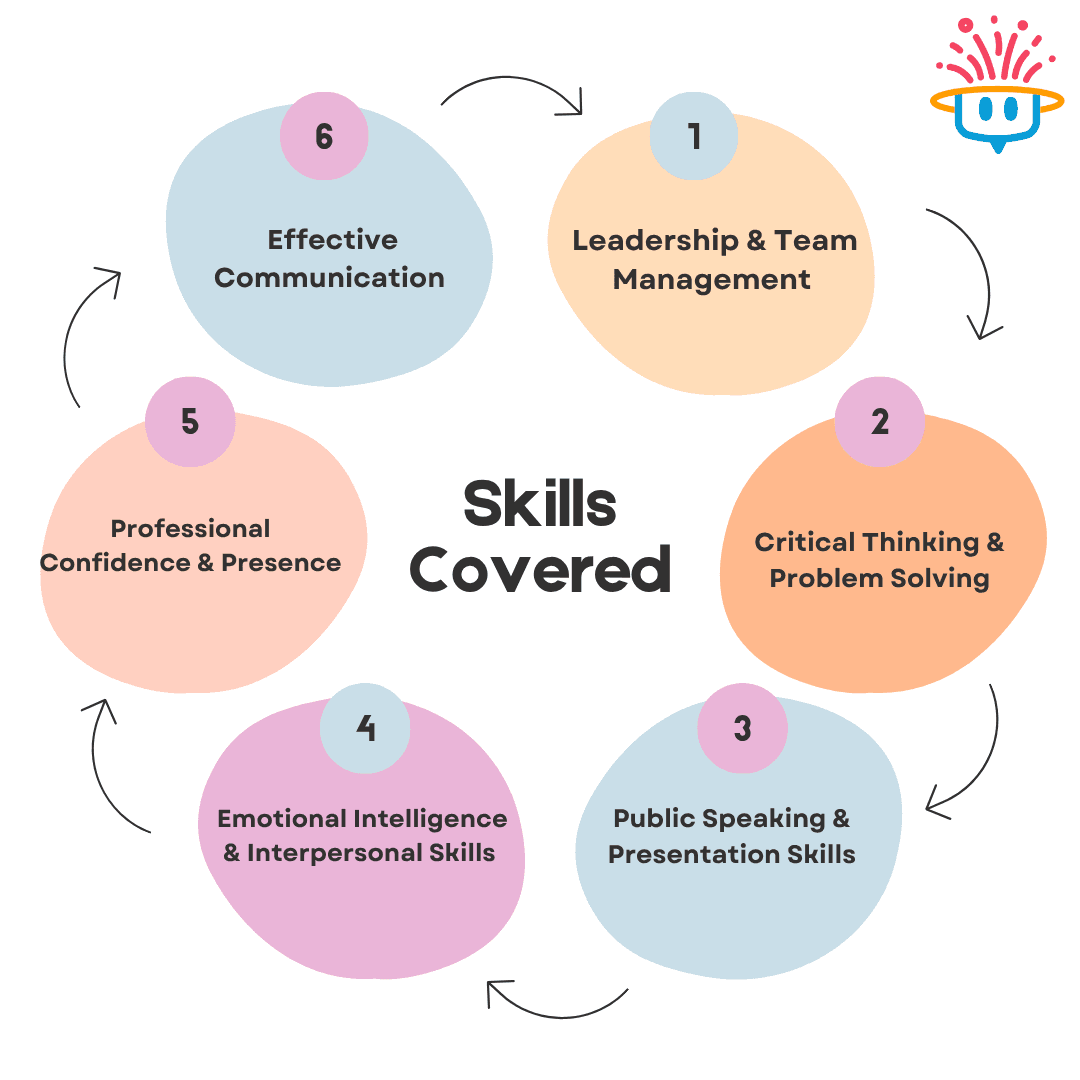
MECE framework thinking is one of the most powerful contributors to this kind of development because it changes how you think, and thinking is where personality shows up first.
Here is how building MECE thinking directly supports your personality development:
Clarity in thinking and expression. When your thinking is structured, your communication follows naturally. You stop fumbling for words, stop losing your train of thought mid-sentence, and start expressing ideas in a way that people understand and respect immediately.
Confidence in communication. Most people feel nervous when speaking or writing because they are not sure if they have covered everything or said it in the right order. MECE removes that uncertainty. When you know your thinking is complete and non-overlapping, confidence follows.
Self-awareness and intellectual discipline. Applying MECE regularly trains you to notice when your thinking is vague, repetitive, or incomplete. This kind of self-awareness is a foundational quality of people who are seen as sharp, reliable, and leadership-ready.
For students preparing for competitive exams, interviews, or group discussions, and for working professionals aiming to lead with greater impact, MECE framework thinking is a genuine personality development investment with practical, visible returns.
How PlanetSpark Helps You Build MECE Framework Thinking
Knowing about MECE and actually being able to apply it under pressure in real professional and academic situations are two very different things. The gap between them is closed by structured practice, expert guidance, and consistent feedback.
PlanetSpark's structured thinking and communication programs are designed to do exactly this. Here is what the training experience includes:
- Live, Expert-Led Sessions Every session is conducted live by a certified PlanetSpark trainer, not through pre-recorded videos. This allows real-time practice, immediate feedback, and skill building that actually sticks.
- Personalised Coaching and Feedback Trainers identify each learner's specific thinking and communication patterns and provide targeted, actionable guidance. The coaching is tailored to where you are and where you need to go, not a generic one-size-fits-all curriculum.
- Real-World Problem Practice Sessions are structured around real professional and academic scenarios. You practise applying MECE and structured communication skills in the kinds of situations you will actually face.
- Structured Progression PlanetSpark builds your skills in a logical sequence, from foundational logical structuring skills to advanced structured communication skills and executive-level application. You develop genuine capability at each stage before moving forward.
- AI-Powered Progress Tracking PlanetSpark's AI-enabled tools give you detailed insights into your progress, communication quality, and emerging strengths so you can see exactly how far you have come and what to focus on next.
Whether you are a student building the structured thinking skills needed for exams and interviews, or a working professional developing the logical structuring skills that will accelerate your career, PlanetSpark gives you the framework, the coaching, and the practice environment to make it real.
Start Thinking in Structures That Actually Work
MECE framework thinking is not a complicated concept. Its power is in its simplicity and in how consistently it works when applied with discipline.
Every time you structure your thinking before communicating, you reduce confusion for your audience and increase your own clarity. Every time you ensure your points are mutually exclusive and collectively exhaustive, you demonstrate the kind of logical structuring skill that separates good communicators from genuinely impressive ones.
This is a skill. It is learnable. And the earlier you build it, the longer you benefit from it.
PlanetSpark's structured thinking and communication training gives you the coaching, practice, and feedback to build MECE framework thinking into a genuine habit that shows up every time it matters.
Frequently Asked Questions
MECE stands for Mutually Exclusive and Collectively Exhaustive. It is a structured thinking principle that helps you organise ideas, arguments, and analyses so that no two points overlap and no important dimension is left out. It is widely used in consulting, business strategy, academic writing, and professional communication.
Brainstorming generates ideas without a structure. MECE thinking organizes those ideas into a clean, logical framework where each category is distinct and the whole picture is complete. MECE comes after brainstorming and turns raw ideas into structured thinking that can be acted on or communicated clearly.
Yes. MECE is highly applicable for students answering essay questions, case studies, group discussions, and interview questions. It helps organise answers so they are thorough, non-repetitive, and easy to follow, which consistently impresses evaluators and interviewers.
Structured thinking skills are the mental habits that allow you to break down complex problems, organise information logically, and communicate ideas with clarity. They matter because they directly affect how well you perform in problem-solving situations, how confidently you communicate, and how you are perceived by peers, mentors, and employers.
When your thinking is structured in a MECE format, communication becomes significantly cleaner. Your verbal points follow a logical sequence, your written work has a clear architecture, and your presentations build toward a coherent conclusion. MECE is the thinking foundation that structured communication skills are built on.
Start by taking any topic or problem you are currently working on and breaking it into two or three categories. Ask yourself: do any of these overlap? Have I left anything important out? Refine until the answer to both questions is no. Apply this discipline daily in your writing, speaking, and decision-making, and it will become a natural thinking habit over time. For faster progress, expert coaching with structured feedback accelerates this development significantly.