
Improve Meeting Management Skills for Better Results


Table of Contents
- What Are Meeting Management Skills?
- Why Effective Meeting Management Matters More Than Most Prof
- Core Meeting Management Skills Every Working Professional Ne
- Common Meeting Management Mistakes That Cost Professionals C
- What Meeting Facilitation Training Covers
- Meeting Management Training: What to Look for in a Program
- How PlanetSpark's Meeting Management Training Works
- Who Should Consider Meeting Management Training
- How This Helps in Personality Development
- Strong Meeting Habits Start with the Right Training
Most working professionals sit through dozens of meetings every week and walk away wondering what was actually decided, who is doing what, and whether any of it was worth the time. The problem is rarely the people in the room. It is the absence of strong meeting management skills in the person leading it.
Running effective meetings is one of the most visible and most underestimated skills in any professional environment. When meetings are run well, teams move faster, communication improves, and decisions actually get implemented. When they are not, the cost is real and ongoing.
PlanetSpark's meeting management training is built to help working professionals take full control of every meeting they lead.
What Are Meeting Management Skills?
Meeting management skills are the practical abilities that allow a professional to plan, lead, and close meetings in a way that produces clear decisions, shared accountability, and measurable results.

These skills are not just about keeping meetings short. They cover the full arc of a meeting, from designing the agenda to facilitating discussion to ensuring follow-through after the session ends.
Strong meeting management skills include the ability to define a clear purpose before a meeting begins, structure discussion so every agenda item moves toward a decision, manage participation so all voices are heard without losing focus, handle disagreements and tangents without derailing the room, and close every meeting with documented actions, owners, and deadlines.
These are trainable skills. Professionals who invest in building them become noticeably more effective in every leadership and collaboration setting.
Why Effective Meeting Management Matters More Than Most Professionals Realise
Poor meeting management is one of the most expensive and least discussed problems in professional life. Teams lose hours every week to meetings that start late, run over time, repeat the same conversations, and end without decisions.
Effective meeting management addresses all of this directly. When a professional leads meetings well, the impact extends far beyond the meeting room.
Teams make decisions faster because discussions are focused and structured. Projects move forward without repeated sync sessions because accountability is clear from the start. Senior stakeholders develop more confidence in professionals who can run a room with clarity and control. And individual professionals earn a stronger reputation as someone who drives results rather than simply managing activity.
For working professionals who want to grow into leadership roles, the ability to lead effective meetings is one of the most visible markers of readiness.
Core Meeting Management Skills Every Working Professional Needs
Building strong meeting management skills requires developing several connected abilities. Here are the ones that matter most for working professionals at every level.
Purposeful Meeting Design
Every effective meeting starts before anyone enters the room. This means defining a clear objective for the session, deciding who actually needs to be there, building an agenda that reflects the time available, and sharing preparation material in advance so the meeting can move straight to discussion rather than catching people up.
Professionals who invest in meeting facilitation training learn to treat preparation as a non-negotiable part of leadership rather than an optional extra.
Structured Facilitation
Facilitation is the skill of guiding a group through a conversation toward a clear outcome. It requires the ability to keep discussion focused on the agenda, draw quieter participants into the conversation, redirect tangents without creating tension, and move the group toward a decision when discussion has served its purpose.
Without structured facilitation, even well-intentioned meetings drift. With it, the same group of people can accomplish in thirty minutes what might otherwise take two hours.
Time Management Within the Room
Running effective meetings means managing time actively, not just watching it pass. This includes starting on time regardless of who is missing, giving each agenda item a defined time allocation, signalling when a discussion needs to wrap up, and finishing the meeting on schedule so participants can trust future invitations.
Professionals who respect time in meetings signal something important about how they operate more broadly.
Decision-Making Clarity
One of the most common meeting failures is a discussion that reaches no clear conclusion. Strong meeting management skills include the ability to identify when a decision has been reached, articulate it clearly for the group, confirm alignment before moving on, and ensure the decision is captured in writing.
This single habit alone eliminates a significant proportion of follow-up meetings and repeated conversations.
Action Tracking and Follow-Through
A meeting without documented actions is a conversation, not a management tool. Effective meeting management includes closing every session with a clear record of what was decided, what actions have been assigned, who owns each one, and when they are due.
This is where meeting management connects directly to team performance. When follow-through is consistent, teams build trust and accountability becomes the norm rather than the exception.
Common Meeting Management Mistakes That Cost Professionals Credibility
Even experienced professionals fall into recurring patterns that undermine meeting effectiveness. Recognising these habits is the first step toward changing them.
Inviting too many people to a meeting creates the illusion of inclusion but slows decision-making and reduces individual accountability. Every attendee in a meeting should have a clear reason for being there.
Running meetings without a shared agenda forces participants to respond reactively rather than come prepared. It also signals to the room that the facilitator has not invested in making the session worthwhile.
Allowing one or two voices to dominate the discussion leaves valuable perspectives unheard and reduces team buy-in for any decisions made. Meeting facilitation training specifically addresses this challenge with practical techniques for managing group dynamics.
Ending meetings without clear next steps is one of the most common and most damaging meeting habits. Without documented actions and owners, implementation stalls and the same issues surface again in the next meeting.
Failing to follow up after a meeting removes accountability entirely. The decisions made in a meeting only deliver value if they are acted on. Professionals who track and follow through consistently separate themselves from those who simply attend and discuss.
What Meeting Facilitation Training Covers
Meeting facilitation training is structured professional development designed to build the specific skills that make meetings productive, purposeful, and action-oriented.
Effective meeting facilitation training goes beyond tips and techniques. It builds practical capability through real-world scenarios, personalised feedback, and consistent practice.
The most effective programs cover agenda design and meeting architecture, so professionals learn to structure sessions that match their purpose and time constraints. They address facilitation techniques for managing group dynamics, drawing out input, navigating disagreement, and guiding groups toward decisions without forcing them.
Training also covers communication skills within meetings, including how to ask questions that move discussion forward, how to summarise without losing nuance, and how to handle dominant personalities or disengaged participants with confidence.
PlanetSpark's meeting management training delivers all of this through live, expert-led sessions designed specifically for working professionals.
Meeting Management Training: What to Look for in a Program
Not all meeting management training programs deliver the same results. The most effective ones share specific characteristics that separate them from generic workshops.
Real-world scenario practice is essential. Professionals build meeting skills fastest when they practice in simulated environments that reflect their actual work situations, not through passive learning or theory alone.
Personalised feedback matters significantly. Every professional has specific meeting habits, some effective and some limiting. Training that identifies individual patterns and provides specific coaching produces faster and more lasting improvement than generic group instruction.
The program should address both the structural and interpersonal dimensions of meeting management. Knowing how to design an agenda is not enough if a professional cannot manage group dynamics in the room. Both elements need to be developed together.
Consistency is the final factor. Meeting skills improve with deliberate practice over time. A single workshop rarely produces lasting change. Programs built around regular coaching sessions and progressive skill development consistently outperform one-time training events.
PlanetSpark's meeting management training is structured around all of these principles.

How PlanetSpark's Meeting Management Training Works
PlanetSpark offers live, expert-led meeting management training designed for working professionals who want to lead meetings with greater confidence, structure, and impact.
1:1 Personalised Live Coaching
Every session is conducted live with an expert PlanetSpark trainer, not through pre-recorded content. Trainers work with each professional's specific communication style, facilitation challenges, and meeting contexts to provide feedback that is relevant and immediately applicable.
Personalised Development Roadmap
PlanetSpark begins with a structured assessment to identify each learner's current strengths and specific development gaps. A customised development plan is then created and updated as progress is made, ensuring that every session moves the learner forward in the areas that matter most.
Live Meeting Scenario Practice
Professionals practice leading meetings in realistic scenarios that mirror the situations they actually face at work. This includes running structured team meetings, facilitating difficult conversations, managing conflict in a group setting, and closing sessions with clear decisions and documented actions.
Feedback, Accountability, and Progress Tracking
PlanetSpark builds structured feedback and milestone reviews into every engagement. Progress is tracked consistently so that professionals can see measurable improvement over time and maintain the development habits that produce lasting results.
AI-Powered Progress Insights
With PlanetSpark's AI-enabled tools, learners receive detailed insights on their facilitation effectiveness, communication patterns, and progress against development milestones. This data-driven approach ensures that growth is visible and accountable throughout the program.
Who Should Consider Meeting Management Training
Meeting management training delivers value across a wide range of professional roles and experience levels.
- Team leads and managers who run regular team meetings will find immediate, practical improvements in how those sessions are structured and how much they produce.
- Mid-level professionals preparing for senior roles need to demonstrate the ability to lead rooms with clarity and authority. Meeting management is one of the most visible skills in any leadership evaluation.
- Project managers and cross-functional leads who facilitate multi-stakeholder discussions benefit directly from stronger facilitation techniques and structured decision-making approaches.
- Client-facing professionals in roles where meetings drive relationships, proposals, and outcomes gain a clear credibility advantage when they can lead sessions that consistently deliver results.
Any professional whose career growth depends on being seen as someone who can lead, align, and drive accountability will find that meeting management skills are one of the highest-impact investments they can make.
How This Helps in Personality Development
Meeting management skills are not just a professional competency. They are a direct expression of how you think, communicate, and lead in high-pressure environments. Developing these skills creates visible, lasting change in how you show up as a person, not just as an employee.
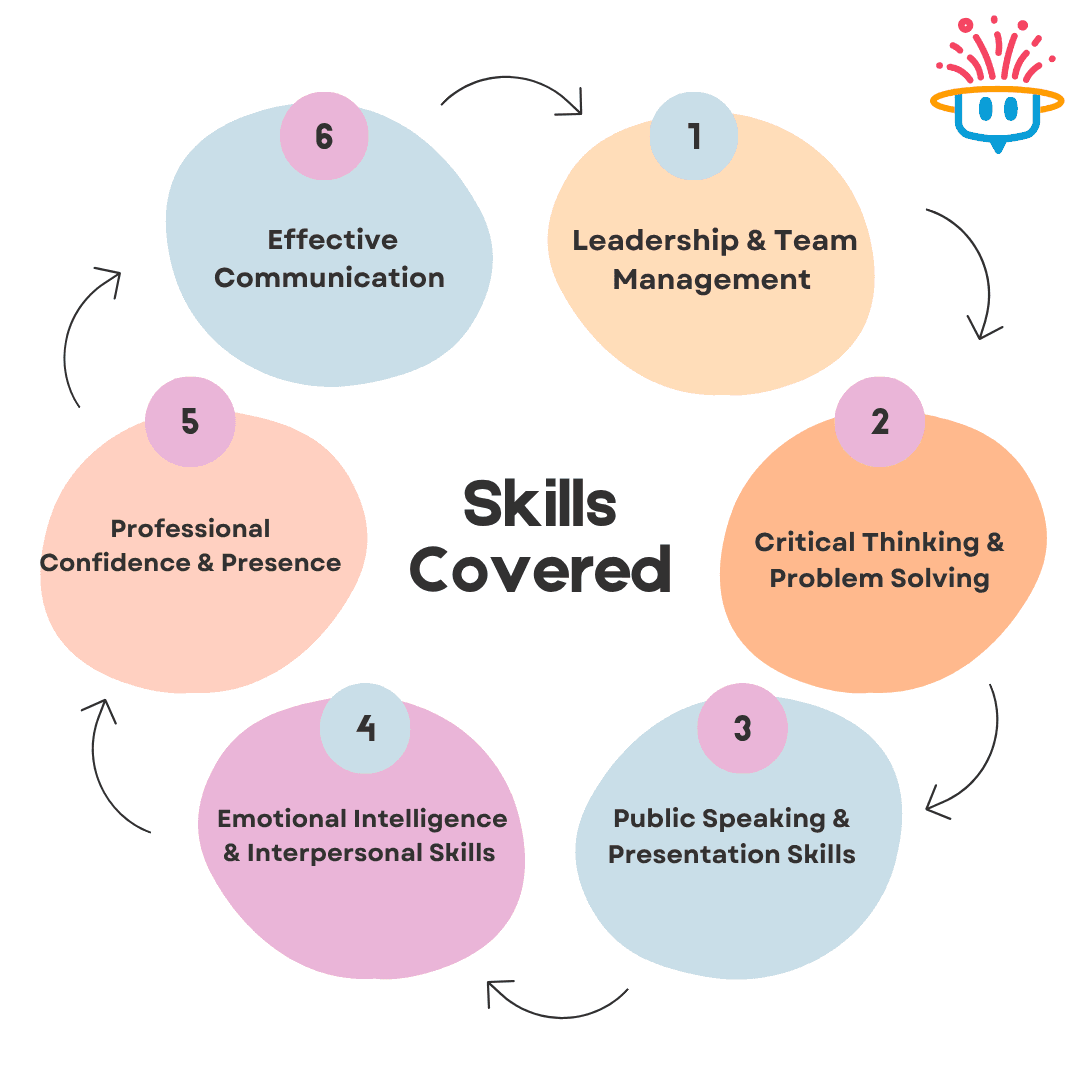
Building strong meeting management skills develops the kind of clarity in thinking and expression that ensures your ideas move conversations forward rather than getting lost in noise. It builds confidence in communication across meetings, presentations, and everyday professional interactions. It develops the self-awareness and behavioural control needed to stay calm, focused, and effective even when a room becomes difficult to manage.
Professionals who lead meetings well consistently project stronger executive presence. They carry themselves with a quiet authority that signals to everyone in the room that they know exactly where this conversation is going and how it will end.
More than that, meeting management training builds the decision-making mindset and ownership orientation that define genuine leadership. Moving from someone who attends meetings to someone who leads them is one of the clearest markers of professional growth available to any working professional.
This is exactly what structured personality development through PlanetSpark delivers. Practical, visible improvement in how you think, communicate, and show up every day in the situations that matter most.
Strong Meeting Habits Start with the Right Training
Think about the meetings that defined your career in a positive way. Almost every one of them was run by someone who knew what they wanted out of the session, kept the room focused, drew out the right perspectives, and left everyone clear on what would happen next.
That is not a natural talent. It is a trained skill set. And it is available to every working professional willing to invest in developing it.
PlanetSpark's meeting management training gives you the coaching, practice environment, and personalised feedback to build meeting management skills that will be visible in every professional context you step into.
Frequently Asked Questions
Meeting management skills are the practical abilities that allow a professional to plan, lead, and close meetings in a way that produces clear decisions, assigned actions, and measurable results. They include agenda design, facilitation, time management, decision-making clarity, and post-meeting follow-through. PlanetSpark's training helps working professionals build all of these skills through live, expert-led coaching.
Meeting facilitation training is structured professional development that builds the specific skills needed to guide groups through productive discussions and toward clear outcomes. It covers facilitation techniques, group dynamics management, structured decision-making, and communication within meetings. PlanetSpark's program is designed for working professionals at every level who want to lead meetings with greater confidence and impact.
Running effective meetings requires clear preparation before the session, structured facilitation during it, and consistent follow-through after it ends. This means defining a meeting's purpose, designing an agenda that fits the time available, actively managing discussion and participation, closing with documented decisions and actions, and following up to ensure accountability. These are learnable skills that improve significantly with structured training and practice.
Yes. PlanetSpark delivers all meeting management training through live online sessions, making it fully accessible for working professionals regardless of their schedule or location. Every session is conducted live with an expert trainer, not through pre-recorded content, so learners get real-time feedback and interaction in every session.
Meeting management training is specifically focused on the skills needed to lead productive professional meetings. It addresses agenda design, facilitation techniques, group dynamics, decision-making, and follow-through in ways that general communication training does not. PlanetSpark's program is built around the real situations working professionals face in team meetings, client sessions, and cross-functional discussions.
Most professionals notice meaningful improvements in meeting structure, facilitation confidence, and team follow-through within the first few weeks of consistent PlanetSpark coaching. Deeper changes in facilitation presence and decision-making effectiveness develop progressively with regular practice and personalised feedback.
Download Free Worksheets
Personalized Communication Roadmaps
Record a video to get a AI generated personalized communication reports