
Memory-Building Activities: Techniques to Boost Recall and Learning
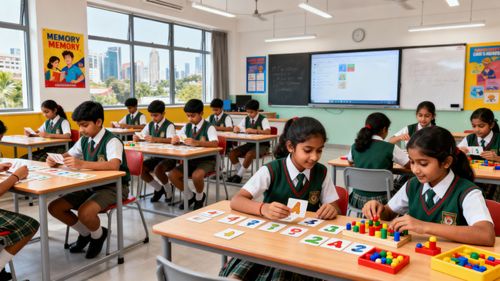

Improving memory is not just about remembering facts; it is about strengthening how the brain processes, stores, and retrieves information. This blog explores the most effective memory-building activities for children, students, and even adults who wish to improve focus, recall, and learning efficiency. You will learn what memory-building activities are, why they matter, how they support overall cognitive development, and how you can integrate them into daily learning.
What Are Memory-Building Activities and Why Do They Matter?
Memory-building activities are exercises designed to strengthen how the brain stores and retrieves information. Here is a simplified breakdown:
What These Activities Do
Strengthen short-term memory
Boost long-term memory
Improve attention span
Sharpen logical and analytical thinking
Enhance problem-solving abilities
Support better comprehension and organised thinking
Why They Matter in Academics
Students constantly absorb new information, so memory is essential for learning.
Good memory improves understanding, retention, and recall during exams.
These activities help children apply concepts confidently and flexibly.
They support overall cognitive growth required for reading, writing, and communication.
Relevant Secondary Keywords
These terms highlight the purpose of such activities:
Cognitive training
Brain development activities
Learning enhancement techniques
Memory techniques for students
Memory-boosting exercises
The Science Behind Memory Development
Memory works through three core processes:
1. Encoding
How information enters the brain.
Activities that strengthen encoding:
Storytelling
Repetition
Mind mapping
Sensory learning
Benefits:Creates meaningful associations
Makes information easier to understand and store
2. Storage
Where information is organised and kept in the brain.
Activities that support storage:
Multisensory learning
Spaced repetition
Flashcards
Visual learning aids
Benefits:Moves information to long-term memory
Helps the brain organise concepts clearly
3. Retrieval
How the brain recalls stored information.
Activities that strengthen retrieval:
Quizzes
Recitation
Summarisation
Application-based tasks
Debates
Active recall exercises
Benefits:Improves speed and accuracy of memory
Boosts confidence in communication and academics
How PlanetSpark Supports Memory Development
PlanetSpark’s Public Speaking Course enhances memory through:
Speaking activities that require content recall
Debates that strengthen quick thinking and retrieval
Storytelling that boosts encoding and comprehension
Structured speech-building that improves organisation
Repetition through video feedback and practice
Cognitive engagement through discussions and peer learning
Types of Memory-Building Activities
Memory-building is not a single skill; it is a combination of techniques and exercises targeting different parts of the brain. Below are detailed categories of activities that enhance recall, attention, processing speed, and cognitive flexibility.
1. Visual Memory Activities
Visual memory is the ability to recall what has been seen. Strong visual memory helps in learning diagrams, recognising patterns, and recalling written information.
Effective activities include:
Picture Matching
Students look at a set of pictures for 10 to 15 seconds and then try to recall or match them later. This strengthens visual encoding.
Memory Grids
A grid of numbers, letters, or colours is shown briefly. Learners must recreate it from memory. This boosts attention and pattern recognition.
Story Visualization
Students listen to a short story and then draw or describe the visuals they imagined. This improves comprehension, imagination, and retention.
Spot the Difference
Not only does this activity enhance focus, but it also forces the brain to process visual changes deeply.
2. Auditory Memory Activities
Auditory memory refers to remembering information that is heard. This is crucial for listening comprehension, language learning, and following instructions.
Effective auditory techniques include:
Number Repetition
A sequence of numbers is read aloud, and the learner repeats them back in the same or reverse order.
Patterned Sound Sequences
Claps, taps, or beats are created in a pattern, and the learner repeats the pattern exactly.
Story Recall
After listening to a short passage, the learner summarises key points. This strengthens processing and retrieval.
Instruction Recall
Teachers provide multi-step verbal instructions, and students must complete them accurately. This builds focus and listening skills.
3. Kinesthetic Memory Activities
Kinesthetic memory relates to learning through movement. Children who are physically active tend to process and recall better because movement stimulates brain activity.
These activities include:
Memory Hunts
Objects are hidden, and learners must recall clues to find them.
Movement Sequences
Learners copy a sequence of movements such as hop-step-jump or clap-spin-tap.
Role-Play
Acting out stories enhances memory, imagination, and creative expression.
Dance Routines
Memorising steps strengthens motor memory and sequencing skills.
4. Language-Based Memory Activities
Language is one of the strongest tools for memory development because it helps encode information meaningfully.
Examples include:
Story Retelling
Learners retell stories in their own words, helping them retain plot, characters, and details.
Rhymes and Repetition
Repetitive sound patterns improve auditory memory and phonemic awareness.
Vocabulary Games
Associating new words with images or experiences builds long-term memory.
Creative Writing
Thinking, organising, and expressing ideas enhances deeper learning and retention.
5. Logical and Analytical Memory Activities
These activities help the brain develop structured thinking patterns, improving recall and decision-making.
Examples include:
Puzzles and Brain Teasers
Sudoku, riddles, and crosswords boost problem-solving and memory.
Sequence Completion
Learners identify missing elements in patterns or number sequences.
Coding Basics
Beginner coding teaches logical thinking and strengthens memory.
Reasoning Games
Games like Guess the Object or Who Am I push children to retain clues and think critically.
6. Social and Communication-Based Memory Activities
Interaction helps reinforce learning through repetition, association, and emotional connection.
Examples include:
Group Discussions
Learners must remember points discussed by their peers.
Show and Tell
Recalling personal stories improves narrative memory.
Debates
Learners remember facts, counterarguments, and structured arguments.
Role-Based Games
Games like teacher-student or journalist-interviewer stimulate recall and creativity.
Deep Dive Into Popular Memory-Building Activities
1. Chunking Information
Chunking means breaking long information into small, meaningful groups. It is one of the most powerful memory techniques.
Examples:
Breaking a long number into small groups
Dividing study material into topic blocks
Grouping vocabulary by theme
Benefits:
Reduces cognitive load
Improves retention
Enhances comprehension
2. Mind Mapping
This technique uses diagrams to connect concepts visually.
A mind map includes:
Main topic at the center
Branches for subtopics
Keywords or images
Colour-coded sections
Benefits:
Supports visual learning
Simplifies complex information
Encourages creativity
3. Active Recall
Instead of re-reading notes, active recall forces the brain to retrieve information.
Activities for active recall include:
Practice quizzes
Flashcards
Answering questions without looking at notes
Summarising from memory
This method significantly improves long-term retention.
4. Spaced Repetition
This involves revisiting information at increasing intervals.
Example pattern:
1 day
3 days
7 days
15 days
30 days
Benefits:
Builds strong long-term memory
Prevents forgetting
Improves accuracy and speed of recall
5. Story-Based Learning
Children remember stories more easily than plain facts. Turn concepts into stories to enhance memory.
For example:
Explaining water cycle as a journey of a water droplet
Teaching grammar through character-based examples
Explaining moral values through short stories
Story-based learning boosts emotional connection and long-term retention.
6. Dual Coding
Dual coding uses both words and visuals to store information. This is especially useful in topics like science, languages, and history.
Examples:
Diagrams with labels
Infographics
Comics explaining concepts
Picture-word combinations
Benefits:
Supports visual and verbal learners
Strengthens associations
Improves retrieval cues
7. Memory Journals
A memory journal or diary is a space where learners write daily experiences, learnings, or new vocabulary.
Benefits:
Improves writing skills
Supports emotional processing
Enhances long-term recall
8. Focused Attention Exercises
Memory improves when attention is strong. Tasks like meditation, breathing exercises, and sensory observation help regulate the mind.
Examples:
Deep breathing
Object observation for 60 seconds
Counting backward
Detail recall from surroundings
How Public Speaking Naturally Enhances Memory
Public speaking is one of the strongest natural tools for memory development. When children prepare speeches, tell stories, debate, or participate in discussions, they automatically strengthen recall, analysis, and cognitive organisation.
PlanetSpark offers a structured, personalised, and technology-driven environment where memory-building happens organically. Below is the detailed content you provided, rewritten in blog form:
1:1 Public Speaking Coaching by Communication Experts
Every child receives individualised coaching tailored to their communication level, personality, and learning pace. Certified trainers in communication and child psychology guide learners with personalised feedback. This one-on-one environment also sharpens memory because students must recall feedback, apply corrections, and remember structured techniques.
TED-Style Training Modules
Children learn to deliver powerful speeches using the hook-message-story-call-to-action format. These modules emphasise story-based memory, sequencing, and structured content recall.
Global Peer Interactions
PlanetSpark students learn with peers from more than 13 countries through debates, discussions, and storytelling circles. This exposure enables children to remember viewpoints, analyse arguments, and express themselves confidently.
Video Feedback Loop
Students receive videos of their speeches and review them with their coaches. This repetition reinforces learning. AI tools analyse pauses, emphasis, tone, and structure to offer objective feedback and enhance memory retention.
Personal Trainers for Every Child
Every student has a dedicated trainer who offers continuous guidance. This helps children internalise habits, techniques, corrections, and strategies—critical for long-term memory-building.
Your Child Is One Memory Skill Away from Transformation
Memory-building activities are not just academic exercises; they shape how children think, speak, reason, and understand the world. When memory improves, every other aspect of learning becomes easier—be it reading comprehension, language mastery, problem-solving, or communication.
As children engage in structured cognitive activities, they develop sharper recall, faster processing, better focus, and higher confidence. Pair these activities with strong communication training, and you give your child a lifelong head start.
You may also read:
Frequently Asked Questions
Memory-building activities are tasks designed to strengthen how the brain processes, stores, and retrieves information. These activities may involve visual exercises (like picture recall), auditory tasks (like listening and repeating sequences), or logical challenges (like puzzles). Their purpose is to improve key cognitive skills such as focus, attention, comprehension, and problem-solving. When practiced regularly, these activities train the brain to organise information better and recall it more quickly and accurately.
Memory-building activities help children improve their attention span, learning speed, and ability to understand and retain new concepts. They also support higher-order skills such as reasoning, sequencing, and comprehension, which are essential across all subjects. Strong memory makes learning easier, improves academic performance, enhances confidence, and supports emotional development because children feel more capable and prepared. These activities also contribute to better communication and clearer thinking.
You can improve your child’s memory through simple, fun, and consistent activities at home. Try storytelling sessions where your child retells the main points, play memory card games, use flashcards for quick recall, encourage daily journaling, or practice active recall by asking questions about books or lessons. Activities like puzzles, rhymes, drawing from memory, or following multi-step instructions also stimulate cognitive development. The key is repetition, engagement, and making learning enjoyable.
Public speaking naturally strengthens memory because it requires children to:
Recall key points from a structured speech
Remember the introduction, body, and conclusion
Use gestures, voice modulation, and expressions in the right places
Apply techniques like storytelling, sequencing, and persuasive patterns
Respond to questions or counterarguments during discussions or debates
When children practice speeches repeatedly, they exercise encoding, storage, and retrieval, making public speaking one of the most powerful cognitive development tools.
PlanetSpark offers a highly structured and personalised speaking curriculum that significantly boosts memory. Children practise through debates, storytelling, extempore activities, panel discussions, and speech-building tasks that stimulate all stages of memory. The platform also provides AI-led feedback, video analysis, customised learning roadmaps, and one-on-one coaching. This combination sharpens recall, improves clarity of thought, strengthens communication skills, and builds long-term confidence. It is an ideal learning space for children who need memory support alongside strong speaking abilities.