
Top 10 Performance Goals for an Employee Example


Table of Contents
- Why Goal Setting for Employees Matters More Than Ever
- Understanding SMART Goals for Employees
- Top 10 Performance Goals for an Employee Example
- Personal Employee Goal Example for Self-Development
- Self-Performance Review Goal Example That Impresses Managers
- Workplace Performance Goals That Deliver Real Results
- Performance Improvement Goals Examples for Career Growth
- Career Growth Goals for Employees That Actually Work
- How to Create Effective Employee Performance Goals
- Enhance Your Career with PlanetSpark Personality Development
- Build a Career That Stands Out
What if your next promotion depends not on how hard you work, but on how clearly you define your goals? Many working professionals struggle with unclear expectations, average performance reviews, and slow career growth. The real problem is not a lack of effort but a lack of structured goal-setting. This is where well-defined performance goals for employee examples become essential.
In this blog, you will explore powerful employee performance goals examples, learn how to use SMART goals for employees, and discover actionable strategies to improve your self-performance review. You will also find real-world examples, performance improvement ideas, and career growth frameworks you can apply immediately.
Let us begin by understanding why goal setting is the foundation of professional success.
Why Goal Setting for Employees Matters More Than Ever
Goal setting for employees is no longer a formality. It is a strategic tool that directly impacts productivity, engagement, and career growth.
In today’s fast-paced work environment, professionals are expected to deliver results, collaborate effectively, and continuously improve. Without clear workplace performance goals, even the most hardworking employees can feel stuck.
Here is why goal setting is critical:
- Provides direction and clarity in daily tasks
- Helps measure performance objectively
- Builds accountability and ownership
- Aligns individual work with business goals
- Boosts confidence and motivation
For example, compare these two goals:
- “Work better”
- “Complete 95 per cent of assigned tasks on time for the next quarter”
The second goal is measurable and actionable, making it far more effective.
Companies today value employees who can set and achieve clear goals. This not only improves performance but also makes you stand out during appraisals.
Feeling stuck in your career growth? Book a free trial class and discover how structured learning can transform your performance.
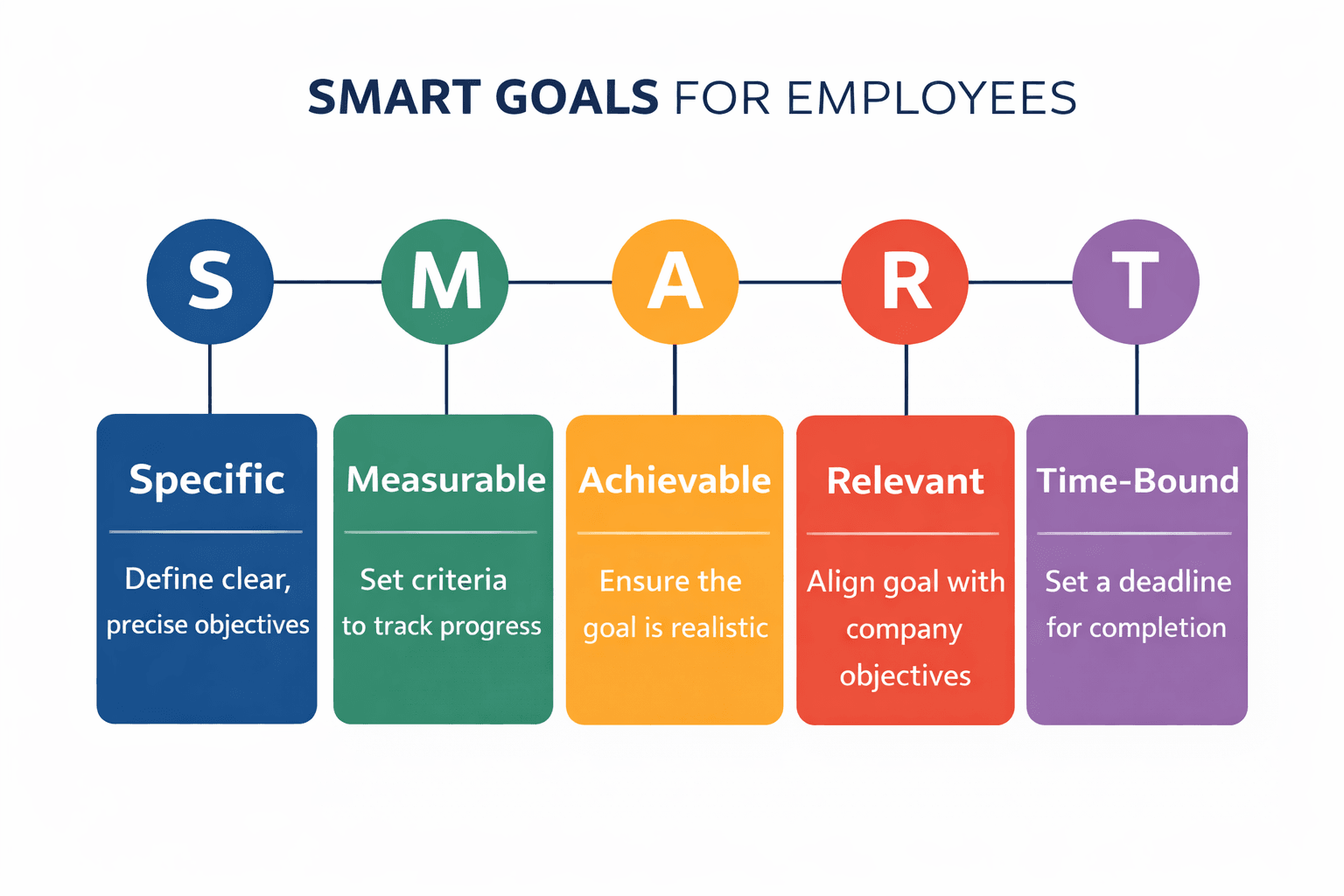
Understanding SMART Goals for Employees
SMART goals for employees are the gold standard for effective goal setting. They ensure that your goals are practical, measurable, and aligned with the results you want.
SMART stands for:
- Specific
- Measurable
- Achievable
- Relevant
- Time-bound
Let us transform a vague goal into a SMART goal:
- Vague: Improve customer service
- SMART: Increase customer satisfaction score from 85 per cent to 92 per cent by the end of Q3 by reducing response time
This clarity makes execution easier and results measurable.
SMART goals help you:
- Avoid confusion
- Track progress effectively
- Stay focused on outcomes
- Improve accountability
Professionals who use SMART goals consistently outperform those who rely on vague objectives.
Top 10 Performance Goals for an Employee Example
1. Increase Productivity
Increasing productivity is one of the most important workplace performance goals because it directly impacts output and efficiency. It is not about working longer hours but about working smarter.
The given example focuses on using time-blocking techniques and dedicating 15 hours per week to high-priority tasks. This is effective because it ensures focused work without distractions.
Why this goal matters:
- Helps prioritise important tasks
- Reduces procrastination
- Improves overall work quality
- Increases output without burnout
How to achieve it:
- Use techniques like Pomodoro or time blocking
- Identify peak productivity hours
- Avoid multitasking
- Track daily progress
This goal is measurable and practical, making it a strong performance goal for employees and a strong example for professionals across roles.
2. Drive Sales Growth
Sales growth is a key performance indicator for many roles, especially in business development and marketing. This goal focuses on increasing revenue through strategic outreach.
The example suggests a 20 per cent increase in monthly sales within 6 months, which makes it both ambitious and achievable.
Why this goal matters:
- Directly contributes to business growth
- Improves negotiation and communication skills
- Builds strategic thinking
How to achieve it:
- Identify target audience segments
- Improve pitch and communication skills
- Use data-driven strategies
- Follow up consistently with leads
This is one of the most impactful employee performance goals examples for revenue-driven roles.
Not seeing growth despite working hard every day? Book your FREE demo class now and start building skills that fast-track promotions.
3. Boost Customer Satisfaction
Customer satisfaction reflects how well a company meets client expectations. A goal of achieving a 95 per cent satisfaction score ensures a strong focus on service quality.
Why this goal matters:
- Builds customer loyalty
- Improves brand reputation
- Increases retention rates
How to achieve it:
- Understand customer needs deeply
- Improve product knowledge
- Respond quickly to queries
- Collect and act on feedback
This is a powerful example of workplace performance goals that combine communication, empathy, and efficiency.
4. Enhance Technical Skills
In today’s fast-changing work environment, continuous learning is essential. This goal focuses on completing a certification to improve job-related skills.
Why this goal matters:
- Keeps you relevant in your industry
- Improves efficiency and accuracy
- Opens new career opportunities
How to achieve it:
- Identify relevant skills for your role
- Enrol in online courses
- Practice regularly
- Apply learning to real work scenarios
This is a strong professional development goal for employees, and it supports long-term growth.
5. Accelerate Project Delivery
Meeting deadlines is critical in any job. This goal focuses on reducing project completion time by improving workflow efficiency.
Why this goal matters:
- Enhances reliability
- Improves team coordination
- Reduces delays and bottlenecks
How to achieve it:
- Break projects into smaller tasks
- Use project management tools
- Communicate clearly with team members
- Identify and eliminate inefficiencies
This is one of the most practical examples of performance improvement goals used in corporate environments.
6. Reduce Error Rates
Accuracy is as important as speed. This goal focuses on reducing errors in reports or tasks using a quality checklist system.
Why this goal matters:
- Improves work quality
- Builds trust with managers and clients
- Reduces rework
How to achieve it:
- Implement review processes
- Double-check critical tasks
- Use automation tools where possible
- Learn from past mistakes
This goal is especially important for roles in finance, operations, and data management.
7. Improve Leadership Skills
Leadership is essential for career growth, even if you are not in a managerial role yet. This goal focuses on mentoring and leading projects.
Why this goal matters:
- Prepares you for promotions
- Improves decision-making
- Builds team trust
How to achieve it:
- Take initiative in projects
- Support team members
- Learn conflict resolution
- Seek feedback from seniors
This is a valuable career growth goal for employees, an example that sets you apart.
8. Strengthen Team Communication
Strong communication is the backbone of successful teams. This goal focuses on improving collaboration through regular feedback sessions.
Why this goal matters:
- Reduces misunderstandings
- Improves team productivity
- Builds a positive work environment
How to achieve it:
- Encourage open discussions
- Use clear and concise language
- Provide constructive feedback
- Actively listen to others
This is a key personal employee goal example that enhances both individual and team performance.
9. Improve Process Efficiency
Efficiency means doing more with less effort. This goal focuses on automating repetitive tasks to save time.
Why this goal matters:
- Reduces workload
- Saves time
- Improves productivity
How to achieve it:
- Identify repetitive tasks
- Use automation tools
- Streamline workflows
- Continuously evaluate processes
This goal is highly relevant in modern workplaces where technology plays a major role.
10. Expand Professional Network
Networking is often overlooked but plays a crucial role in career growth. This goal focuses on building meaningful professional connections.
Why this goal matters:
- Opens new opportunities
- Helps in knowledge sharing
- Builds industry presence
How to achieve it:
- Attend industry events
- Connect on LinkedIn
- Participate in discussions
- Follow up with contacts
This is an excellent example of goal setting for employees that supports long-term success.
Want to stand out in your next performance review? Reserve your trial session today and learn what top performers do differently.
Personal Employee Goal Example for Self-Development
A personal employee goal example focuses on internal growth and self-improvement rather than direct business outcomes. While many professionals concentrate only on measurable KPIs, long-term success depends heavily on soft skills such as confidence, communication, emotional intelligence, and leadership presence.
These goals are essential because they shape how you think, interact, and respond in professional situations. Over time, they directly influence how others perceive your capabilities and potential.
Personal development goals help you:
- Build confidence in professional settings
- Communicate ideas more clearly and effectively
- Develop better decision-making abilities
- Strengthen emotional intelligence and empathy
- Prepare for leadership roles
Some practical examples of personal employee goals include:
- Speak confidently in team meetings without hesitation
- Improve decision-making by analysing situations before acting
- Develop emotional intelligence by understanding team dynamics
- Build leadership presence by taking the initiative in discussions
Example: “Contribute at least one idea in every team meeting for the next 2 months to improve confidence and visibility.”
This goal is simple but powerful because it pushes you out of your comfort zone. Many professionals hesitate to speak up due to fear of judgment, but consistent participation gradually builds confidence.
How to work on personal goals effectively:
- Start with small, achievable actions
- Track your progress weekly
- Seek feedback from peers or managers
- Reflect on your improvement regularly
Although personal goals may not directly impact company KPIs, they significantly influence long-term career success. Professionals who invest in self-development often become better leaders, communicators, and decision-makers.
Self-Performance Review Goal Example That Impresses Managers
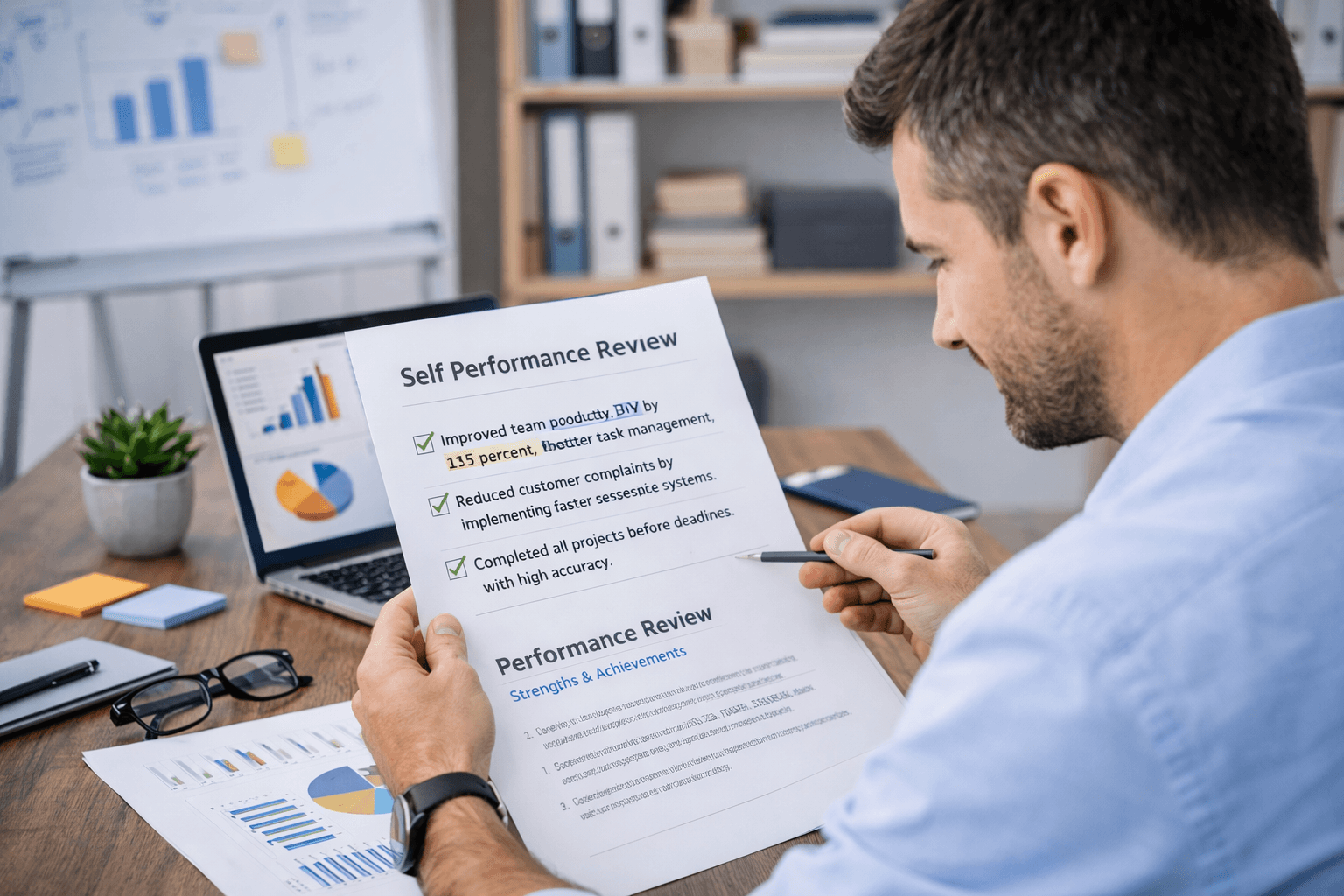
Writing a self-performance review goal example is one of the most important steps during performance evaluations. It is your opportunity to present your achievements, highlight your value, and demonstrate your growth mindset.
Many professionals make the mistake of writing vague statements like “worked hard” or “did my best.” However, managers look for measurable results and clear contributions.
Instead of generic statements, focus on outcomes and impact:
- “Improved team productivity by 15 per cent through better task prioritisation and time management”
- “Reduced customer complaints by implementing faster response systems and better communication practices”
- “Completed all projects before deadlines with high accuracy and zero escalation”
These statements work because they include measurable results, clear actions, and visible impact.
Best practices for writing an effective self-performance review:
- Use data and numbers to support your claims
- Highlight key achievements and milestones
- Mention challenges you faced and how you solved them
- Show a willingness to learn and improve
- Align your contributions with company goals
Common mistakes to avoid:
- Being too modest and not highlighting achievements
- Writing vague or generic statements
- Ignoring areas of improvement
- Not linking your work to business outcomes
A strong self-performance review positions you as a proactive, responsible, and growth-oriented professional. It also increases your chances of recognition, promotions, and better opportunities within the organisation.
Workplace Performance Goals That Deliver Real Results
Workplace performance goals are designed to align individual performance with organisational success. These goals ensure that your daily efforts contribute directly to team objectives and overall business growth.
When employees set clear workplace performance goals, they are more focused, productive, and accountable. It also makes performance evaluations more objective and transparent.
Examples of employee goals at work include:
- Meeting deadlines consistently without delays
- Improving communication and collaboration with team members
- Enhancing productivity by optimising workflows
- Delivering high-quality work with minimal errors
Why workplace performance goals are important:
- They create clarity in roles and expectations
- They improve team coordination
- They help track progress and performance
- They align personal efforts with company success
How to create effective workplace performance goals:
- Identify your key responsibilities and expectations
- Set measurable outcomes for each task
- Use tools to track progress and performance
- Review and adjust goals regularly based on feedback
For example, instead of saying “improve teamwork,” you can define a goal like: “Participate actively in weekly team meetings and contribute at least two ideas per session for the next quarter.”
Professionals who align their goals with business objectives are more likely to stand out, gain recognition, and achieve faster career growth.
Still unsure how to set the right career goals? Book your free trial now and learn from experts who guide you step by step
Performance Improvement Goals Examples for Career Growth
Performance improvement goals examples focus on identifying weaknesses and turning them into strengths. These goals are especially useful for professionals seeking to enhance efficiency, overcome challenges, and improve overall performance.
Instead of ignoring areas for improvement, successful professionals actively work on them through structured goal-setting.
Common performance improvement goals include:
- Reducing errors in reports and tasks
- Improving punctuality and time management
- Enhancing communication skills
- Increasing productivity and efficiency
Example:
“Reduce report errors by 50 per cent within 2 months by implementing a structured review checklist and double-checking process.”
This goal is effective because it is specific, measurable, and time-bound. It also provides a clear method for improvement.
How to approach performance improvement goals:
- Identify your weak areas through feedback
- Break the goal into smaller, actionable steps
- Monitor progress regularly
- Stay consistent and disciplined
Benefits of improvement-focused goals:
- Builds confidence through measurable progress
- Enhances professional reputation
- Increases efficiency and accuracy
- Prepares you for higher responsibilities
Over time, these small improvements lead to significant professional growth and better performance outcomes.

Career Growth Goals for Employees That Actually Work
Career growth goals for employees are long-term objectives that help professionals move forward in their careers. These goals focus on skill development, leadership, and strategic planning.
Unlike short-term goals, career growth goals require patience, consistency, and continuous learning.
Examples include:
- Learning advanced technical or managerial skills
- Taking leadership responsibilities in projects
- Expanding professional networks
- Seeking mentorship from experienced professionals
Example:
“Prepare for a managerial role by leading two projects, improving team coordination skills, and completing a leadership course within one year.”
This goal works because it combines skill development, practical experience, and a clear timeline.
Why career growth goals are important:
- Provide direction and purpose
- Help you prepare for promotions
- Improve confidence and leadership abilities
- Increase long-term career stability
Tips to achieve career growth goals:
- Continuously upgrade your skills
- Take initiative in workplace responsibilities
- Learn from mentors and leaders
- Stay updated with industry trends
Career growth is not accidental. It is the result of consistent effort, strategic planning, and adaptability to new challenges.
Ready to unlock your full potential and stand out at work? Book your FREE trial class now before slots fill up.
How to Create Effective Employee Performance Goals
Creating effective employee performance goals requires a structured and thoughtful approach. Random or unclear goals often lead to confusion and a lack of progress.
To ensure success, follow a step-by-step method:
Step 1: Identify Strengths and Weaknesses
Understand where you excel and where you need improvement. This helps you set realistic and meaningful goals.
Step 2: Set Clear Objectives
Define exactly what you want to achieve. Avoid vague goals and focus on specific outcomes.
Step 3: Use the SMART Framework
Ensure your goals are:
- Specific
- Measurable
- Achievable
- Relevant
- Time-bound
Step 4: Break Goals into Smaller Tasks
Large goals can feel overwhelming. Breaking them into smaller steps makes them easier to achieve.
Step 5: Track Progress Regularly
Monitor your performance and adjust your approach if needed.
Step 6: Seek Feedback
Feedback from managers and peers helps you improve and stay on track.
Additional tips for success:
- Stay consistent and disciplined
- Review goals monthly
- Celebrate small achievements
- Stay flexible and adapt when required
Consistency is the key to achieving any goal. When you review and refine your goals regularly, you stay aligned with your objectives and continue to make progress.
Enhance Your Career with PlanetSpark Personality Development Programs
PlanetSpark personality development programs are designed for both students and working professionals who want to build confidence, communication, and leadership skills for real-world success.
In today’s competitive workplace, technical skills alone are not enough. Professionals need strong communication, public speaking, and personality-development skills to stand out, lead teams, and advance faster in their careers.
PlanetSpark fills this gap with structured, AI-powered, expert-led programs that focus on practical learning and real-world application.
Who are these programs for?
- Working professionals aiming for promotions
- Individuals struggling with communication confidence
- Leaders who want to improve team management
- Anyone looking to enhance personality and presence
Why structured learning matters
Random learning leads to slow growth. Structured programs ensure consistent improvement, measurable outcomes, and real skill development.
Key Features and USPs
- Live 1:1 interactive classes with expert trainers
- Real-world communication and presentation practice
- Personalised feedback and performance tracking
- Confidence-building frameworks based on real scenarios
- AI-powered curriculum aligned with industry needs
- Focus on public speaking, business communication, and leadership
- Global learning community with learners from multiple countries

Build a Career That Stands Out
Success is not just about working hard. It is about working with clarity, purpose, and consistency. When you set the right goals, you take control of your career journey.
Every small improvement adds up over time. Keep learning, keep growing, and keep challenging yourself. With the right mindset and structured approach, you can achieve more than you ever imagined.
Frequently Asked Questions
PlanetSpark provide direction, improve skills, and increase chances of promotions.
These include reducing errors, improving punctuality, and enhancing communication skills.
They align individual performance with company success and help professionals grow faster.
It includes measurable achievements like improving productivity or completing projects efficiently.
Yes. A strong example is improving communication by speaking in every team meeting.
SMART goals are structured goals that are specific, measurable, achievable, relevant, and time-bound, ensuring better results.
At PlanetSpark, we define it as a clear, measurable goal that helps professionals improve performance and achieve career growth.
Personalized Communication Roadmaps
Record a video to get a AI generated personalized communication reports