
Using Personal Anecdotes in Speaking : Learn with PlanetSpark
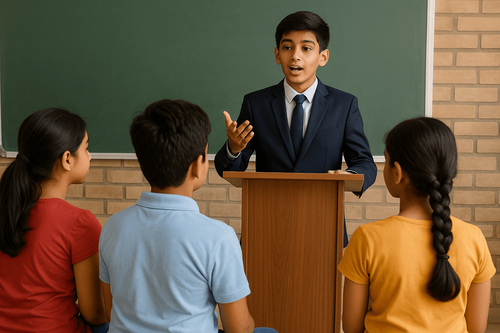

Table of Contents
- What Are Personal Anecdotes
- Why Personal Anecdotes Matter in Speaking
- The Science Behind Storytelling
- How to Use Personal Anecdotes Effectively
- Common Mistakes to Avoid
- Personal Anecdotes in Student Speeches
- The Role of Personal Development Quotes in Speeches
- Real Life Examples of Personal Anecdotes in Famous Speeches
- How to Practice Personal Anecdotes
- Personal Anecdotes for Different Types of Speeches
- Building Confidence Through Storytelling
- Why Personal Anecdotes Are Essential in Personal Development
- Extra Tips to Make Your Anecdotes Powerful
- How Parents Can Encourage Storytelling at Home
- The Long Term Impact of Personal Anecdotes
- How PlanetSpark Helps Children Master Storytelling
- Final Thoughts
Have you ever listened to a speaker and felt instantly connected, almost as if they were speaking directly to you? Chances are, they were using Personal anecdotes to make their message more relatable and memorable.
Stories are powerful. Facts inform, but stories transform. When a speaker shares a real life experience, the audience does not just hear information, they feel it. That emotional connection is what makes communication impactful.
In this blog, we will explore the personal anecdotes meaning, understand how to use them effectively in public speaking, and see how platforms like PlanetSpark help learners master storytelling skills. Along the way, we will also look at personal development quotes, public speaking skills for students, storytelling techniques in communication, and confidence building activities for kids to give you a complete guide.
Let us dive in.
What Are Personal Anecdotes
Before we move forward, let us clearly understand the personal anecdotes meaning.
Personal anecdotes are short stories from your own life that illustrate a point, lesson, or emotion. They are usually:
Real experiences
Brief and focused
Relevant to the topic
Emotionally engaging
In simple words, Personal anecdotes are moments from your life that help explain an idea better than plain facts ever could.
For example:
Instead of saying, “Hard work leads to success,” you could say, “When I failed my math exam in class 8, I thought I was not good enough. But after practicing daily for two months, I scored the highest in the next test.”
See the difference?
The second example creates an emotional image. It builds trust. It makes the listener think, “If they can do it, maybe I can too.”
That is the power of Personal anecdotes.
Why Personal Anecdotes Matter in Speaking
Whether you are a student, a teacher, or a professional, storytelling plays a huge role in communication. Using Personal anecdotes makes your speech:
1. More Relatable
People connect with real experiences. When you share your struggles and achievements, the audience sees a reflection of their own journey.
2. More Memorable
Facts are often forgotten, but stories stay in the mind for years.
3. More Trustworthy
When you share a personal experience, it shows authenticity. You are not just repeating theory, you are speaking from experience.
4. Emotionally Powerful
Emotions drive decisions. Stories create emotions.
In fact, many personal development quotes are powerful because they are inspired by real life experiences. For example:
“Your struggle today builds your strength for tomorrow.”
“Growth begins at the end of your comfort zone.”
These quotes work because they reflect lived experiences.
The Science Behind Storytelling
There is a psychological reason why Personal anecdotes work so well.
When someone listens to a story:
Their brain releases dopamine
They imagine the situation
They emotionally engage with the speaker
This is why storytelling techniques in communication are taught in leadership programs, corporate training sessions, and even in schools.
Research in communication skills training shows that audiences are more likely to remember information presented in story form compared to plain data.
Therefore, if you want to improve your public speaking skills for students or professionals, mastering Personal anecdotes is essential.
Give your child the opportunity to discover the power of Personal anecdotes and confident speaking.
Schedule a free session with PlanetSpark and see the transformation firsthand.
How to Use Personal Anecdotes Effectively
While Personal anecdotes are powerful, they must be used correctly. Otherwise, they may distract from the main message.
Here is a simple structure you can follow:
1. Set the Context
Briefly explain where and when the story happened.
2. Describe the Challenge
What problem did you face?
3. Explain the Action
What did you do?
4. Share the Lesson
What did you learn?
For example:
“I used to fear speaking in front of my class. In grade 6, my hands would shake during presentations. One day, my teacher encouraged me to practice in front of the mirror daily. After two weeks, I felt more confident. That experience taught me that practice reduces fear.”
Notice how simple and clear it is.
Common Mistakes to Avoid
While using Personal anecdotes, avoid these mistakes:
Making the story too long
Adding unnecessary details
Forgetting the main lesson
Sharing irrelevant experiences
Sounding exaggerated
Remember, the goal is not to impress. The goal is to connect.
Personal Anecdotes in Student Speeches
Students often struggle with stage fear. However, adding Personal anecdotes can make their speeches more natural.
Instead of memorizing difficult lines, students can:
Share a classroom experience
Talk about a failure and recovery
Describe a moment of learning
Share a funny incident
This makes the speech authentic.
That is why platforms like PlanetSpark focus heavily on storytelling while teaching public speaking skills for students.
Strong communication skills shape academic and career success.
Enroll in PlanetSpark and unlock your child’s storytelling potential
The Role of Personal Development Quotes in Speeches
Adding personal development quotes along with Personal anecdotes makes speeches more impactful.
For example:
After sharing a story about overcoming fear, a speaker might say:
“As the saying goes, courage is not the absence of fear, but the decision to move forward despite it.”
Quotes add authority. Personal stories add authenticity. Together, they create magic.
Here are some inspiring personal development quotes that pair well with anecdotes:
“Failure is not the opposite of success, it is part of success.”
“Confidence comes from preparation.”
“Small daily improvements lead to big results.”
When used wisely, they strengthen your message.
Real Life Examples of Personal Anecdotes in Famous Speeches
Many great speakers have used Personal anecdotes effectively.
For instance, Oprah Winfrey often shares her childhood struggles to inspire audiences. Her stories make her speeches emotionally powerful.
Similarly, Barack Obama frequently used personal stories about his family to make political messages relatable.
These examples show that storytelling techniques in communication are universal tools of influence.
How to Practice Personal Anecdotes
If you want to improve your storytelling skills, follow these steps:
Step 1: Write Down Key Life Moments
List 10 experiences that taught you something valuable.
Step 2: Identify the Lesson
What did each experience teach you?
Step 3: Practice Telling the Story
Keep it under two minutes.
Confidence and clarity are skills that last forever.
Take the first step today with PlanetSpark and build a brighter future.
Step 4: Record Yourself
Notice your tone, pace, and expressions.
Step 5: Refine
Remove unnecessary details.
This structured practice improves public speaking skills for students and adults alike.
Personal Anecdotes for Different Types of Speeches
Different occasions require different styles of storytelling.
Motivational Speech
Share a struggle and how you overcame it.
Informative Speech
Share a learning experience.
Persuasive Speech
Share a personal example that supports your argument.
Farewell Speech
Share a memorable moment.
Using Personal anecdotes in each of these formats enhances impact.
Every child has a story worth sharing.
Let PlanetSpark guide them in mastering public speaking with expert mentors.
Building Confidence Through Storytelling
Many students lack confidence because they think they must sound perfect. However, storytelling shifts focus from perfection to connection.
Here is how Personal anecdotes build confidence:
You speak about something you know
You feel emotionally connected to your story
You do not rely only on memorized lines
Programs like PlanetSpark integrate confidence building activities for kids so that learners feel comfortable sharing their experiences.
Confidence grows when children realize their stories matter.
Why Personal Anecdotes Are Essential in Personal Development
Personal growth is deeply connected to reflection. When you share Personal anecdotes, you also reflect on your journey.
This reflection leads to:
Greater self awareness
Improved emotional intelligence
Better communication skills
Stronger leadership qualities
That is why many personal development quotes emphasize growth through experience.
For example:
“Experience is the best teacher.”
Your experiences become powerful tools when shared wisely.
Extra Tips to Make Your Anecdotes Powerful
To enhance your storytelling techniques in communication, remember:
Use simple language
Show emotions through voice
Maintain eye contact
Pause at important moments
End with a clear takeaway
Also, remember to adapt your story according to your audience.
A story suitable for classmates may not suit a professional meeting.
How Parents Can Encourage Storytelling at Home
Parents play a key role in developing communication skills.
Here are some simple practices:
Ask children about their day and encourage detailed responses
Share your own experiences openly
Play storytelling games
Encourage journaling
These activities support confidence building activities for kids and strengthen family bonds.
When combined with professional guidance from platforms like PlanetSpark, children develop exceptional public speaking skills for students.
The Long Term Impact of Personal Anecdotes
Mastering Personal anecdotes does not just improve speeches. It shapes personality.
In the long run, students who learn storytelling:
Perform better in interviews
Excel in leadership roles
Communicate clearly in relationships
Build strong professional networks
Strong storytelling is a lifelong asset.
How PlanetSpark Helps Children Master Storytelling
PlanetSpark is known for transforming young learners into confident speakers. Their approach includes:
Structured Learning
Students learn how to frame Personal anecdotes with clarity.
Live Practice Sessions
Regular speaking opportunities help reduce fear.
Feedback and Improvement
Teachers provide detailed feedback on storytelling style and delivery.
Confidence Building Activities for Kids
Interactive exercises improve voice modulation and body language.
Through guided communication skills training, children learn not just to speak, but to inspire.
Final Thoughts
In a world full of information, stories stand out.
Understanding the personal anecdotes meaning is the first step. Practicing storytelling techniques in communication is the second. Applying them confidently in real life is the ultimate goal.
When students learn to use Personal anecdotes, combine them with inspiring personal development quotes, and practice regularly, they transform into confident speakers.
With structured training from platforms like PlanetSpark, learners gain clarity, creativity, and confidence.
Remember:
Your story matters.
Your experiences have value.
And when you share them with honesty, they have the power to inspire others.
Start today. Reflect on one meaningful experience from your life and turn it into a story.
Because sometimes, the smallest story creates the biggest impact.
Frequently Asked Questions
The personal anecdotes meaning refers to short real life stories that you share from your own experience to explain a lesson or idea more clearly.
Personal anecdotes make speeches more relatable, emotional, and memorable. They help the audience connect with the speaker on a deeper level.
Students can practice by writing key life experiences, identifying lessons, rehearsing regularly, and enrolling in communication skills training programs like PlanetSpark.
Yes. When children share their own experiences, they feel more comfortable speaking. This naturally improves their confidence and public speaking skills.
You can visit the official PlanetSpark website, book a free trial class, and speak with an academic counselor to understand the course structure and learning plan.
The fee varies depending on the course duration and level. You can request detailed pricing information during the free demo session with their team.