
15 Personality Traits Every Student Must Have & How to Build Them
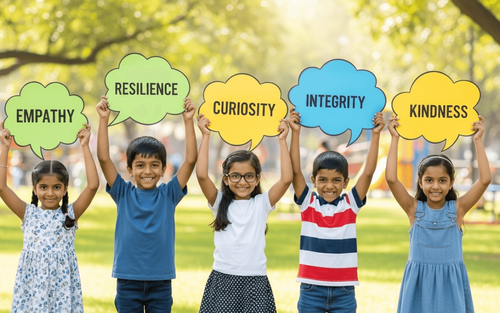

Table of Contents
- 15 Essential Personality Traits Every Student Should Build
- Why Personality Traits Matter More Than Just Academics
- How Schools and Parents Can Teach These Traits Daily
- Real-Life Classroom Scenarios: How Traits Show Up
- Fun Activities to Build Personality Traits
- How PlanetSpark Develops Personality Traits in Students
Picture this: Two students sit in the same classroom.
Both scored 85% on their tests. Both complete their homework on time. Both listen attentively.
But ten years later, their lives look completely different.
One becomes a confident leader. Speaking on stages, building teams, and solving problems with creativity and calm.
The other struggles. Not because he lacks intelligence, but because he never learned to communicate under pressure, handle rejection, or work with difficult people.
What made the difference? Personality.
Education is more than textbooks and test scores. It's shaping WHO a child becomes, not just WHAT they know.
Grades measure memory. Personality measures character. And in the real world, character determines success.
Confidence, empathy, resilience, curiosity, and leadership: these aren't "nice-to-have" extras. They're essentials. They shape how children think, connect, lead, and grow.
The good news? Personality traits can be taught, practiced, and strengthened.
This guide breaks down the 15 most important personality traits every student should develop with real examples, classroom scenarios, and practical activities parents and teachers can use starting today.
15 Essential Personality Traits Every Student Should Build
Let's break down the core traits every child needs and how to build them.
Why Personality Traits Matter More Than Just Academics
Academic performance is important. But it's not the whole picture. And neither is the holistic development of your child.
Here's why personality traits matter just as much, if not more.
Personality Shapes Confidence
A child who believes in themselves participates more, asks questions, takes risks, and learns faster.
Personality Builds Better Relationships
Empathy, respect, and communication help children make friends, resolve conflicts, and work in teams.
Personality Drives Resilience
Life is full of failures, rejections, and setbacks. Kids with strong personality traits bounce back. Kids without them give up.
Personality Fuels Problem-Solving
Creativity, curiosity, and adaptability help kids think beyond textbooks. They become innovators, not just memorizers.
Classroom Participation Improves
Teachers notice it immediately: students with strong personality traits participate more, engage deeper, and inspire their peers.
Let’s take an example: Two Students, Same Grades, Different Outcomes
Let's name them Sara and Omar.
Sara:
- Scored 90% in every subject
- Quiet, obedient, never caused trouble
- Finished school with excellent marks
Omar:
- Scored 78% in most subjects
- Spoke confidently, asked questions, led group projects
- Finished school with decent marks
10 Years Later:
Sara struggles in job interviews. She freezes when asked to present ideas. She avoids leadership roles. Her grades got her the first job, but her lack of confidence holds her back.
Omar thrives. He communicates clearly, handles pressure calmly, and inspires teams. His personality opened doors that his grades never could.
The Lesson?
Grades open the first door. Personality keeps every door after that wide open.
Parents often ask, "Should I focus on grades or personality?"
The answer: Both.
But if you had to choose? Choose personality. Because a confident, empathetic, resilient child will figure out academics. But a brilliant child with poor social skills, low confidence, or weak resilience? They struggle no matter how high their grades are.
That’s why PlanetSpark took the initiative for the holistic development of children so that they achieve in life, not just in school.
How Schools and Parents Can Teach These Traits Daily
Personality traits aren't taught through lectures. They're built through daily practice.
Model the Behavior
Kids mirror adults.
Example: If you handle mistakes calmly, your child will too. If you yell when frustrated, your child learns that too. Show empathy. Admit mistakes. Apologise when wrong. Students notice and copy.
Reflective Journaling
Give kids journals. Weekly prompts:
- "One thing I'm proud of this week…"
- "A time I helped someone…"
- "Something hard I did…"
Reflection builds self-awareness.
Role-Play Activities
Practice real-life scenarios:
- "Your friend is upset. What do you say?"
- "Someone cuts in line. How do you handle it?"
Roleplay = safe practice before real situations.
Daily Gratitude Lists
Before bed, everyone shares:
- One thing they're grateful for
- One kind thing they did
- One challenge they faced
Gratitude builds positivity. Reflection builds growth.
Buddy Systems
Pair students. They support, encourage, and learn from each other.
Example: Shy student + confident student = both grow. One learns courage. One learns empathy.
Student-Led Tasks
Give kids responsibilities:
- Leading prayer
- Organizing supplies
- Helping a younger student
Responsibility builds character.
Real-Life Classroom Scenarios: How Traits Show Up
Let's see these traits in action.
During Group Projects
Scenario: Four students must build a model together.
Traits in Action:
- Leadership: One organizes tasks.
- Teamwork: All contribute ideas.
- Problem-Solving: The model falls. They rebuild.
- Patience: Waiting for everyone to finish their part.
- Adaptability: The Original plan doesn't work. They adjust.
During Oral Presentations
Scenario: A student presents their project.
Traits in Action:
- Confidence: Speaking clearly despite nerves.
- Self-Expression: Explaining ideas in their own words.
- Resilience: Forgetting a line, pausing, continuing calmly.
During Playtime Conflicts
Scenario: Two kids want the same swing.
Traits in Action:
- Empathy: Understanding the other child's feelings.
- Problem-Solving: Let's take turns.
- Patience: Waiting for the turn.
- Positive Attitude: I'll swing next. That's okay!
During Exam Pressure
Scenario: A difficult test.
Traits in Action:
- Discipline: Studied regularly, not last-minute.
- Emotional Intelligence: Managing test anxiety with deep breaths.
- Resilience: Not giving up on hard questions.
In Friendships
Scenario: A friend is upset.
Traits in Action:
- Empathy: Listening without judgment.
- Responsibility: Keeping promises (I'll sit with you at lunch).
- Positive Attitude: Cheering them up.
Fun Activities to Build Personality Traits
Make personality development playful!
1. Emotion Charades
One child acts out an emotion (no words). Others guess. Discuss times they felt that way.
Builds: Empathy, emotional intelligence
2. Storytelling Circle
Everyone sits in a circle. One starts a story. Next person adds a sentence. Continue.
Builds: Creativity, teamwork, self-expression
3. Weekly Challenges
Set small weekly goals:
- "Say something kind to someone new."
- "Try a food you've never had."
- "Ask a teacher a question."
Builds: Confidence, curiosity, adaptability
4. Reflection Prompts
Daily or weekly prompts:
- One thing I'm proud of…
- Something I learned…
- A mistake I made and what I learned…
Builds: Self-awareness, resilience, positive attitude
5. Random Acts of Kindness Chart
Track kind acts. Award stickers or stars.
Example:
- Helped someone carry books
- Shared snack
- Comforted a sad friend
Builds: Empathy, responsibility
6. "What Would You Do?" Game
Present scenarios:
- Your friend is being teased. What do you do?
- You see someone drop their lunch. What do you do?
Discuss answers.
Builds: Empathy, problem-solving, leadership
How PlanetSpark Develops Personality Traits in Students
Modern education requires more than memorisation. It requires communication, confidence, reasoning, creativity, and character.
At PlanetSpark, we don't just teach kids to read and write. We teach them to THINK, SPEAK, CONNECT, and LEAD.
Communication Skills
We build confident speakers through storytelling, debates, presentations, and public speaking practice.
Confidence Building
Every child gets a safe space to try, fail, improve, and shine. We celebrate effort, not just results.
Critical Thinking & Reasoning
We teach kids to ask "why," analyse situations, and think beyond textbooks.
Creativity & Self-Expression
Through creative writing, drama, and storytelling, kids discover their unique voice.
Personality Development
All 15 traits: confidence, empathy, resilience, leadership, teamwork, and more are woven into every lesson.
The Result?
Kids who don't just score well, they communicate clearly, think critically, lead confidently, and connect authentically.
Book Your Free Trial and watch your child's personality and potential unfold with PlanetSpark.
Twenty years from now, no one will remember your child's 5th-grade test score.
But they'll remember how your child made them feel. How they led. How they communicated. How they handled challenges. How they treated others.
That's personality. And personality outlives academic marks.
Every child has potential. With guidance, encouragement, and daily practice, they grow into confident, kind, resilient, creative young adults ready to take on the world.
The 15 traits in this guide aren't "nice-to-haves." They're essentials. And they can be taught starting today.
One kind act. One brave moment. One patient breathes. One creative idea.
Small daily actions build lifelong character.
At PlanetSpark, we believe every child deserves to develop not just their mind but their whole self because the world needs humans who show empathy, think clearly, speak confidently, connect deeply, and lead with heart.
Start today. Your child will thank you.
Here’s more for creative and curious souls who believe in running an extra mile. A fun and easy reading of :
Personality Development Skills Every Child Should Learn
Frequently Asked Questions
The most important personality traits are: Confidence, empathy, resilience, self-expression, discipline, responsibility, curiosity, leadership, teamwork, emotional intelligence, creativity, problem-solving, adaptability, patience, and a positive attitude.
Personality traits can absolutely be taught and developed through practice, modeling, and consistent encouragement.
Parents should start building personality traits as early as possible. Even toddlers benefit from empathy lessons, patience practice, and confidence-building activities.
Teachers can build personality traits through group projects, leadership roles, reflective activities, roleplay, gratitude practices, and by modeling positive behavior daily.
Confident kids participate more. Resilient kids handle failure better. Curious kids engage deeper. Disciplined kids manage time better. All of this leads to better learning and grades.