
Phonics Games for Kids: Fun and Effective Activities to Build Reading Skills
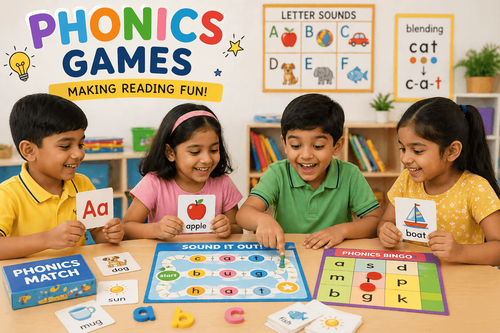

Table of Contents
- What is Phonics and Why is it Important?
- What are Phonics Games?
- Types of Phonics Games for Kids
- Fun and Effective Phonics Games to Try at Home
- Classroom Phonics Games for Teachers
- Benefits of Using Phonics Games in Learning
- Tips for Parents to Use Phonics Games Effectively
- Common Mistakes to Avoid While Teaching Phonics
- Role of Technology in Phonics Learning
- PlanetSpark’s Role in Enhancing Phonics and Communication Sk
- Long-Term Impact of Phonics Learning Through Games
- Conclusion
Phonics is one of the most important building blocks of early literacy, helping children understand the relationship between letters and sounds. It forms the foundation for reading, writing, and effective communication. However, traditional methods of teaching phonics can sometimes feel repetitive or challenging for young learners. This is where phonics games come into play.
Phonics games transform learning into an engaging and enjoyable experience. By combining play with education, these games help children grasp complex concepts like sound blending, word formation, and pronunciation in a natural and stress-free way. Whether at home or in the classroom, phonics games for kids encourage active participation, boost confidence, and improve retention.
In today’s fast-paced and digital learning environment, parents and teachers are increasingly looking for creative ways to make phonics learning interactive. This guide explores the importance of phonics, the role of games in learning, and a variety of fun phonics activities that can help children develop strong reading skills.
What is Phonics and Why is it Important?
Phonics is a method of teaching reading by connecting sounds (phonemes) with letters or groups of letters (graphemes). It enables children to decode words, recognize patterns, and read fluently.
Understanding Phonics in Early Education
In early education, phonics plays a critical role in helping children make sense of written language. Instead of memorizing entire words, children learn to break words into smaller sound units and blend them together.
For example, when a child learns that the letters “c-a-t” represent the sounds /k/, /a/, and /t/, they can combine these sounds to read the word “cat.” This systematic approach helps children become independent readers.
Phonics also supports spelling skills. By understanding how sounds correspond to letters, children can spell words more accurately and confidently.
Benefits of Phonics for Kids
Phonics offers numerous benefits that go beyond basic reading skills. It improves reading fluency by enabling children to recognize words quickly and accurately. As a result, they can focus more on understanding the meaning of the text rather than decoding each word.
Phonics also enhances vocabulary development. When children can decode unfamiliar words, they are more likely to explore new texts and expand their language skills.
Additionally, phonics builds confidence. Children who can read independently feel more capable and motivated to learn, which positively impacts their overall academic performance.
Make reading fun and effective for your child—Try a FREE PlanetSpark Demo Class today!
What are Phonics Games?
Phonics games are interactive activities designed to teach children the relationship between sounds and letters through play. These games can be physical, digital, or verbal, making them versatile and adaptable for different learning environments.
Definition of Phonics Games
Phonics games are structured activities that focus on developing phonemic awareness, letter recognition, and word-building skills. They often involve elements such as matching, sorting, guessing, and storytelling.
Unlike traditional worksheets, phonics games encourage children to learn actively. They engage multiple senses—visual, auditory, and kinesthetic—which enhances understanding and retention.
Why Use Games to Teach Phonics?
Using games to teach phonics makes learning more enjoyable and less intimidating. Children are naturally drawn to play, and incorporating educational elements into games helps them learn without feeling pressured.
Games also promote active participation. Instead of passively listening, children interact with sounds, letters, and words, which reinforces learning.
Another key advantage is improved memory retention. When children associate learning with fun experiences, they are more likely to remember and apply what they have learned.
Types of Phonics Games for Kids
Phonics games can be categorized based on the specific skills they target. Understanding these types helps parents and teachers choose the right activities for children.
Letter Sound Recognition Games
These games focus on helping children identify and associate letters with their corresponding sounds. Activities such as flashcards, matching games, and alphabet puzzles are commonly used.
For example, a child may be asked to match the letter “B” with pictures of objects that start with the /b/ sound, such as “ball” or “bat.” This strengthens their ability to recognize and recall sounds.
Blending and Segmenting Games
Blending and segmenting are essential phonics skills. Blending involves combining individual sounds to form words, while segmenting involves breaking words into smaller sound units.
Games like word-building activities or sound puzzles help children practice these skills. For instance, children can be given letter cards and asked to arrange them to form words.
Rhyming Games
Rhyming games help children identify patterns in sounds, which is a key aspect of phonemic awareness. Activities such as matching rhyming words or completing rhyming sentences are effective.
For example, a game might involve finding words that rhyme with “cat,” such as “hat,” “bat,” and “rat.” This improves listening skills and sound recognition.
Sight Word Games
Sight word games focus on helping children recognize commonly used words instantly without decoding them. These words, such as “the,” “and,” and “is,” are essential for reading fluency.
Games like memory matching or word bingo can make learning sight words more engaging.
Digital Phonics Games
With the rise of technology, digital phonics games have become increasingly popular. These games use interactive visuals, sounds, and animations to teach phonics concepts.
They are particularly useful for self-paced learning and can provide instant feedback, helping children improve more effectively.
Fun and Effective Phonics Games to Try at Home
Parents can play a crucial role in reinforcing phonics skills through simple and enjoyable activities at home.
Alphabet Sound Hunt
The alphabet sound hunt is an engaging activity where children search for objects around the house that start with a specific sound. For example, if the target sound is /s/, children might find items like “spoon,” “sock,” or “soap.”
This game encourages children to connect phonics with real-world objects, making learning more meaningful.
Phonics Bingo
Phonics bingo is a fun variation of the traditional bingo game. Instead of numbers, the cards contain letters or words. The caller announces a sound, and children mark the corresponding letter or word on their card.
This activity helps reinforce sound recognition and keeps children actively engaged.
Word Building with Blocks
Using letter blocks or magnetic letters, children can create words by arranging letters in the correct order. This hands-on activity helps them understand how sounds combine to form words.
Parents can start with simple three-letter words and gradually introduce more complex ones.
Rhyming Word Challenge
In this game, children are given a word and asked to come up with as many rhyming words as possible. This encourages creativity and strengthens phonemic awareness.
For example, starting with “dog,” children might say “log,” “fog,” and “hog.”
Sound Sorting Game
The sound sorting game involves grouping words based on similar sounds. For instance, children can sort words into categories based on their beginning or ending sounds.
This activity improves listening skills and helps children recognize sound patterns.
Improve your child’s pronunciation and reading skills—Book a FREE PlanetSpark Demo Class now!
Classroom Phonics Games for Teachers
Phonics games are not just effective at home—they are equally powerful in classroom settings where group interaction can enhance learning outcomes. Teachers can use structured phonics activities to create an engaging environment that encourages participation and collaboration among students.
Group Activities for Interactive Learning
Group phonics games promote teamwork and active learning. Activities such as phonics relay races or team-based word-building challenges encourage children to work together while practicing sound recognition and word formation.
For example, in a phonics relay game, each team member contributes one letter to form a word based on a given sound. This not only reinforces phonics concepts but also builds communication and collaboration skills.
Group activities also create a supportive learning atmosphere where children can learn from each other and gain confidence in their abilities.
Story-Based Phonics Games
Storytelling is a powerful tool for teaching phonics. Teachers can create interactive stories where children identify specific sounds or words as the story progresses.
For instance, whenever a target sound appears in the story, students can raise their hands or repeat the word aloud. This keeps them actively engaged while reinforcing phonemic awareness.
Story-based phonics games also help improve listening skills and comprehension, making them a valuable addition to any classroom.
Action and Movement Games
Incorporating physical movement into phonics learning can significantly enhance engagement, especially for younger children. Activities such as jumping, clapping, or stepping in response to specific sounds make learning more dynamic.
For example, a teacher might ask students to jump whenever they hear a word that starts with the /b/ sound. This multisensory approach helps children associate sounds with actions, improving retention and understanding.
Benefits of Using Phonics Games in Learning
Phonics games offer numerous advantages that make them an essential part of early literacy development. One of the most significant benefits is increased engagement. Children are more likely to participate actively when learning feels like play rather than a task.
Phonics games also improve memory retention. Interactive activities help children remember sounds and words more effectively compared to traditional methods.
Another key benefit is the development of listening and speaking skills. By practicing sound recognition and pronunciation, children enhance their communication abilities.
Additionally, phonics games encourage independent learning. As children become more confident, they are more willing to explore and practice phonics skills on their own.
Overall, phonics games create a positive learning experience that fosters both academic and personal growth.
Tips for Parents to Use Phonics Games Effectively
Parents play a crucial role in reinforcing phonics learning at home. By using the right strategies, they can make phonics games more effective and enjoyable for their children.
Keep Learning Fun and Consistent
Consistency is key when it comes to phonics learning. Short, regular sessions are more effective than long, infrequent ones. Keeping activities fun ensures that children remain interested and motivated.
Parents should focus on creating a positive environment where children feel encouraged to learn without pressure.
Use Everyday Situations for Practice
Phonics learning does not have to be limited to structured activities. Parents can incorporate phonics into daily routines, such as identifying sounds during grocery shopping or reading signs while traveling.
For example, asking a child to identify words that start with a specific sound during a walk can turn an ordinary activity into a learning opportunity.
Encourage Positive Reinforcement
Praise and encouragement play a significant role in building a child’s confidence. Recognizing small achievements motivates children to continue learning and improving.
Instead of focusing on mistakes, parents should highlight progress and effort, creating a supportive learning environment.
Adapt Games to the Child’s Level
Every child learns at their own pace, so it is important to choose games that match their skill level. Starting with simple activities and gradually increasing complexity ensures steady progress without overwhelming the child.
Personalized learning approaches help children build confidence and maintain interest in phonics games.
Common Mistakes to Avoid While Teaching Phonics
While phonics games are highly effective, certain mistakes can reduce their impact. One common mistake is forcing children to learn, which can lead to frustration and disinterest. Learning should always be enjoyable and voluntary.
Another issue is ignoring pronunciation accuracy. Teaching incorrect sounds can create confusion and hinder progress. It is important to model correct pronunciation consistently.
Using overly complex words too early can also be counterproductive. Children should start with simple sounds and gradually move to more advanced concepts.
Lack of consistency is another challenge. Irregular practice can slow down learning and make it harder for children to retain information.
Avoiding these mistakes ensures that phonics games remain effective and beneficial.
Role of Technology in Phonics Learning
Technology has transformed the way phonics is taught, providing new opportunities for interactive and personalized learning.
Educational Apps and Tools
Digital platforms offer a wide range of phonics games that use animations, audio cues, and interactive features to engage children. These tools make learning more appealing and accessible.
Many apps include progress tracking, allowing parents and teachers to monitor a child’s development and identify areas for improvement.
Benefits of Digital Learning
Digital phonics games provide visual and auditory support, which enhances understanding and retention. They also allow children to learn at their own pace, making them suitable for different learning styles.
Additionally, technology-based learning can be particularly helpful for children who respond better to interactive and multimedia content.
Help your child become a confident reader—Join a FREE PlanetSpark Demo Class today!
PlanetSpark’s Role in Enhancing Phonics and Communication Skills
In the modern learning landscape, structured programs play a vital role in developing strong phonics and communication skills. One such platform is PlanetSpark, which focuses on building essential language skills in children.
PlanetSpark offers comprehensive programs that combine phonics learning with communication development. Through interactive sessions, children learn pronunciation, reading fluency, and effective speaking skills.
The platform emphasizes personalized learning, ensuring that each child receives guidance based on their individual needs. This approach helps children build confidence and improve their ability to express themselves clearly.
By integrating phonics with communication training, PlanetSpark prepares children for academic success and future opportunities.
Long-Term Impact of Phonics Learning Through Games
Teaching phonics through games has long-lasting benefits that extend beyond early education. Children who develop strong phonics skills are more likely to become fluent readers and confident communicators.
A solid foundation in phonics also supports better academic performance across subjects, as reading is essential for learning in all areas.
Furthermore, phonics learning enhances critical thinking and problem-solving skills. As children learn to decode words and understand patterns, they develop cognitive abilities that benefit them throughout life.
Ultimately, phonics games help create lifelong learners who are confident, curious, and capable.
Conclusion
Phonics games are a powerful and effective way to teach children essential reading and language skills. By combining education with play, these games make learning enjoyable, engaging, and impactful.
From simple home activities to interactive classroom games and digital tools, there are countless ways to incorporate phonics into a child’s daily routine. The key is to maintain consistency, adapt to the child’s needs, and create a positive learning environment.
With the right approach, phonics games can transform the way children learn, helping them build a strong foundation for reading, communication, and lifelong success.
Frequently Asked Questions
Phonics games are interactive activities designed to teach children the relationship between letters and sounds in a fun and engaging way.
They improve sound recognition, reading skills, memory retention, and overall language development through active participation.
Children can start phonics games as early as 3–4 years old, depending on their readiness and interest.
Yes, digital phonics games can be highly effective as they provide interactive learning, instant feedback, and personalized progress tracking.