
Best Physical Activities for Preschoolers | PlanetSpark
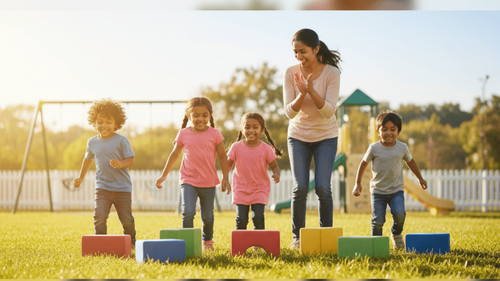

Table of Contents
- What the preschool age looks like
- Key benefits of physical activities for preschoolers
- Safe guidelines when doing physical activities for preschool
- Easy physical activity ideas for preschoolers
- Structuring a daily/weekly movement plan
- Tips for parents & educators
- How physical activity links with other learning
- Overcoming challenges
- Monitoring progress
- Making movement part of everyday life
- Example day-in-the-life schedule
- When to seek professional advice
- Pitching PlanetSpark: Unique features of their personality‐d
- Conclusion
When you plan physical activities for
preschoolers, you give young children strong chances to grow well. At the preschool age, kids learn fast. Their bodies move fast. Their minds absorb many things. So when you help them move, jump, bend, run, you support their growth in multiple ways.
Good physical activity helps build strong bones and muscles. It helps children control their movements. It helps them learn balance and coordination. It helps their heart and lungs work well. It even helps their mood, their sleep, their social skills.
In this blog we will explore many ideas for physical activities for preschoolers. We will look at how to set up safe play. We will look at how to choose fun games. We will look at how to encourage children gently and make it part of their daily life. This matters because early childhood is a window of opportunity.
What the preschool age looks like
Preschoolers are generally in the age group about 3 to 5 years (sometimes up to 6). At this age:
- They move around a lot. They love to run, jump, climb.
- They are developing gross-motor skills (big movements) and fine-motor skills (smaller movements like picking up a pea).
- They begin to follow basic rules, although not always perfectly.
- They begin to structure their day a little: meals, rest, play.
- They imitate others, they learn by watching, they test their limits.
Because of all this, physical activities for preschoolers must be age-appropriate, safe, fun, and should also allow freedom for exploration and creativity.
Key benefits of physical activities for preschoolers
Here are major benefits when preschoolers engage in good physical activities:
- Better body strength & endurance
Jumping, climbing, running help build leg strength, core strength. They help stamina. They help children keep up with peers and be confident.
- Improved coordination & balance
Activities like hopping on one foot, walking on a line, carrying an object while walking – these help balance and coordination. These also help when children learn tasks like dressing up or picking things up.
- Enhanced motor skill development
Gross motor skills (running, throwing) and fine motor skills (grasping, threading) both get boosted when children move and play. This helps later with writing, drawing, cutting.
- Better social & emotional skills
When kids play group games, they learn to take turns, follow rules, cooperate, win and lose gracefully. Physical play reduces stress and helps mood. They feel more capable.
- Improved cognitive development
Movement helps the brain. Children who move are better able to focus, learn new ideas, process information. When we pair physical activity with simple instruction (“jump five times”, “run to the tree and back”), they engage mind and body.
- Health benefits
Help control weight, support cardiovascular health, improve lung capacity, better sleep patterns. Establishing active habits early helps lifelong health.
Safe guidelines when doing physical activities for preschoolers
Before jumping into activity ideas, here are good rules to follow:
- Choose a safe space. Clear obstacles, make sure the surface is even, free of sharp edges.
- Use age-appropriate equipment. If using balls, hoops, small steps, make sure they suit preschool size.
- Keep the supervision level high. Even though they move well, accidents can happen.
- Limit screen time and integrate physical movement into the day. Experts recommend that preschoolers have at least 60 minutes or more of physical activity every day (in varied forms).
- Balance intense play with quieter movement and rest. Over-exertion can lead to fatigue or negativity.
- Encourage but don’t force. Let children choose, let them explore, let them sometimes just move freely.
- Make the activity fun. Use timers, music, simple challenges. Children respond well to play and fun rather than strict drills.
Easy physical activity ideas for preschoolers
Here is a list of simple games and activities that you can do at home or in a preschool setting. Each can be adapted to your space.
1. Obstacle course
Set up a simple obstacle course: crawl under a table, hop over a cushion, walk a line, jump into a hoop. Change the elements each time to keep it fresh. Use cushions, boxes, tape on floor. This helps with coordination, directional awareness, body control.
2. Animal walks
Ask the child to move like different animals: frog jump, bear crawl, crab walk (on hands and feet, belly up), kangaroo hop. This is playful and builds full-body strength.
3. Balloon keep-up
Blow up a balloon. Have the child try to keep it in the air by tapping with hands, or even with feet. Use 2-3 balloons for more fun. Helps hand-eye (and foot‐eye) coordination, attention, reaction speed.
4. Freeze dance
Play music. Child (and you) dance freely. When music stops, everyone freezes in place. Hold that freeze for a few seconds. This builds listening skills, body control, and is super fun.
5. Hopscotch (or tape hop)
Use chalk outside or tape inside. Mark squares numbered 1-5 or more. Child hops on one foot, two feet, skips squares. Good for balance, number sense, motor skills.
6. Throw and catch light ball
Use a soft ball. Stand close. Toss gently. Encourage catching. Over time increase distance. You can also try rolling the ball. Works on fine and gross motor skills, anticipatory movement, focus.
7. Simon Says with movement
Play “Simon says: hop on one foot”, “Simon says: spin around”, “Simon says: touch your toes”, “Simon says: run to the door and back”. Builds listening comprehension, following instructions, movement variety.
8. Parachute or sheet play
If you have a big sheet or parachute cloth, hold it with child and move it up and down, run under it, shake it. This is fun and adds group play, sensory experience.
9. Nature walk and stop-and-go
Go outside. Walk slowly, notice trees, birds. Then at a signal, sprint, then walk again. Do it variant: skip, walk backwards, tip-toe. Mixes nature exploration with movement bursts.
10. Yoga for preschoolers
Short, simple poses: tree pose (balance), cat-cow (flex spine), butterfly stretch, child’s pose. Then combine with story: “You are a tall tree in the wind”. This builds flexibility, calmness, body awareness.
Structuring a daily/weekly movement plan
You might wonder: how often? how long? what variety? Here is a sample weekly plan for preschoolers:
- Daily: Aim for 60 minutes or more of physical activity. It can be split: 20 minutes active play, 20 minutes free movement, 20 minutes mixed quiet movement+game.
- Variety: Mix gross motor (running, jumping), fine motor (small movements), structured games (Simon says), free play (just moving).
- Indoor & outdoor: On good days use outdoor space. On rainy or indoor days adapt to smaller area with soft mats.
- Include rest: After bursts of movement include some calm activity: stretching, yoga, quiet running through an obstacle, or just walking.
- Make it routine: Choose a consistent slot: after breakfast or before snack time. Children thrive in routine.
- Follow interest: Let the child pick a game sometimes. When children select, they are more engaged.
- Review & adjust: If a child seems too tired or uninterested, reduce intensity. If very energetic, increase variety/challenge a little.
Tips for parents & educators
Here are suggestions for adults helping preschoolers engage in physical activities:
- Lead by example. Show them how you move, join the game.
- Praise effort more than success. “You jumped high!” rather than “You won”.
- Encourage group play with peers or siblings. Social play adds fun and helps children challenge themselves.
- Provide safe footwear and clothing. Avoid slippery shoes, limit jewelry.
- Use music, timers, visuals. A timer can let children know “2 minutes jump” then “rest”.
- Use positive language: “Let’s try this game together” rather than “You must do this”.
- Allow mess and exploration. Some games may get messy (balloon pop soil). It’s okay.
- Observe the child’s stamina. Some preschoolers may tire quickly. Adjust accordingly.
- Limit screen time. Too much sitting reduces physical movement and engagement.
- Integrate movement in other routines: ask the child to run and fetch something, skip to snack table, hop while carrying their backpack.
How physical activity links with other learning
Physical activities for preschoolers don’t just build bodies. They build many other skills.
- Language & communication: When children play games with instructions (e.g., “Simon Says”), they listen and follow. They can talk about what they did.
- Math & spatial sense: Jumping squares, counting hops, skipping every second square builds early math sense.
- Social skills: Taking turns, sharing equipment, cooperating builds social competence.
- Emotional regulation: Running around and then calming with a stretch helps children know how to move fast and slow, how to calm themselves.
- Focus & attention: When a child must freeze or wait, it builds attention span.
- Creativity & imagination: Animal walks, story-based movement invite creativity.
- Habit formation: A routine of movement builds habit of active living, which benefits long term.
Overcoming challenges
Sometimes implementing physical activity for preschoolers faces hurdles. Here are common ones and tips:
- Limited space: If you live in a small flat, use hallway, lobby, or front yard. Choose games like balloon keep-up, hopscotch tape on floor.
- Weather: Rain or heat may limit outdoor. Use indoor mats, tape circuits, dance/free movement.
- Low interest: If a child resists, start with short bursts (5 minutes) and gradually increase. Let the child pick a game.
- Safety concerns: Always supervise. Remove hazards. Use soft surfaces or cushions.
- Uneven energy levels: Some days children will be tired or cranky. Accept rest today, but plan movement tomorrow.
- Equipment costs: Use inexpensive items: cushions, tape, balloons, scarves. Nature walk uses no cost.
- Screen distraction: Introduce “movement break” after screen time. Set a timer. Make it fun.
Monitoring progress
You don’t need formal assessment, but as a parent or educator you can check simple signs:
- Does the child show better balance when walking or running?
- Can the child climb or hop more easily than before?
- Does the child participate joyfully in movement play rather than resist?
- After active play, is the child calmer and sleeps better?
- Does the child show improved coordination (catching ball, hopping, skipping)?
- Is the child more willing to try new games and new movements?
Keep a simple log if you like: 3–4 times per week, write down game name, duration, how the child responded. Over a month you can see patterns and adapt.
Making movement part of everyday life
To embed physical activity for preschoolers as a habit, consider these ways:
- Make “movement snack” breaks: every 30-40 minutes indoors, stop and jump/hop for 2 minutes.
- Walk or cycle with the child instead of driving to nearby places.
- At home, have a “toy basket” for active play: ball, scarf, obstacle stuff. Rotate toys so things feel fresh.
- Turn chores into movement: ask child to carry light items, help sweep, hop while cleaning etc.
- Use games for transition times: before lunch, do a quick 5-minute dance. After rest, a yoga pose or stretch.
- Celebrate movement milestones: “You did 10 animal walks today!” and share joy.
- Integrate with siblings/friends: more fun with others, more challenge.
Example day-in-the-life schedule
Here is a sample schedule for a preschooler incorporating physical activities for preschoolers:
- 8:00 AM – Breakfast
- 9:00 AM – Free play: indoor toys
- 9:30 AM – Obstacle course (10 minutes)
- 9:45 AM – Snack
- 10:00 AM – Outdoor animal walks/balloon keep-up (15 minutes)
- 10:20 AM – Quiet time/story reading
- 11:00 AM – Hopscotch/tape game (10 minutes)
- 11:15 AM – Music + freeze dance (10 minutes)
- 11:30 AM – Hand-crafts or fine motor activity
- 12:30 PM – Lunch & rest
- 2:00 PM – Nature walk + stop-and-go running (15 minutes)
- 2:30 PM – Indoor yoga/stretching (5 minutes)
- 2:40 PM – Snack
- 3:00 PM – Light ball throw-catch game (10 minutes)
- 3:15 PM – Free play & social play
- 4:00 PM – Screen time (if any)
- 4:30 PM – Dance game or Simon Says (10 minutes)
- 4:45 PM – Wrap-up, snack, calm down
- 5:30 PM – End of active day and prepare dinner
You can adjust based on your child’s pace, nap time, meals. The idea: keep movement frequent, varied, fun.
When to seek professional advice
If you notice your preschooler has significant difficulty with movement when peers don’t, or shows extreme fatigue, or avoids all movement, it may be wise to consult a paediatrician or physiotherapist. Also, if your child has a health condition (heart, lungs, joints), adjust physical activity accordingly. Gentle movement is still possible.

Pitching PlanetSpark: Unique features of their personality‐development category
Here’s a dedicated section to present how PlanetSpark’s personality development programs can complement the physical and holistic growth of children.
Why PlanetSpark stands out
- Live 1:1 online classes: PlanetSpark offers live one-on-one sessions that allow personalized attention tailored to your child’s unique personality.
- Age-appropriate curriculum: The programs are designed for kids starting from early years (including preschool age) and grow along with them.
- Focus on real-life skills: Beyond academics, PlanetSpark’s courses teach communication, confidence, body language, social skills, emotional intelligence.
- Expert-designed modules: Their curriculum is crafted by specialists and the trainers are certified.
- Holistic growth link: While our blog emphasises physical activities for preschoolers, pairing those with personality development yields a strong foundation. Movement builds body and mind; PlanetSpark builds confidence and expression.
- Progress tracking & parent feedback: The platform keeps parents informed of the child’s growth in the personality domain, so you see results.
How PlanetSpark links to movement & play
- When children move and play they build confidence in their body. When they join PlanetSpark’s communication and social-skills modules, they build confidence in their voice and expression.
- Active play helps children feel energetic and capable. That energy can translate into eagerness to join interactive sessions in personality training.
- Many games used in personality development (storytelling, role-play) complement physical energy by harnessing focus, expression, posture, body language.
- Early adoption (from preschool age) ensures children are ready both physically and socially for the next stage of learning.
Invitation to try
If you want your preschooler to thrive, not just physically but socially and emotionally—then checking out PlanetSpark’s personality development program is a smart step. Book a free trial class and see how your child responds. The combination of movement and personality training sets them up for all-round growth.
Conclusion
Physical activities for preschoolers form a strong base for growth. When children move, run, jump, dance, they build bodies, minds, coordination, social skills and joy. By making movement fun, routine, varied and safe you help your child thrive.
At the same time, supporting their social, emotional and communication growth (for example via programs like PlanetSpark) further enriches their early years. The body and mind grow best when both are nurtured.
Start small. Be consistent. Celebrate movement. Watch your preschooler bloom in health, confidence and joy.
And if you are looking for a structured personality-development path to go along with all the active play, PlanetSpark is ready.
Here’s to active, happy, confident little ones!
Frequently Asked Questions
You can start as early as age 3, once the child moves well and shows interest. Keep the activities short (5-10 minutes) and fun. Increase gradually.
Aim for at least 60 minutes of varied movement per day. It can be broken into smaller blocks (e.g., three 20-minute sessions).
Choose games where children take turns, use soft equipment, set clear rules like “stop at whistle”. Supervise and rotate roles so each child stays engaged.
PlanetSpark offers one-on-one live classes, a child-centred curriculum, qualified trainers, and activities that build confidence, communication, leadership.
Yes. They offer early-year personality development for children aged 3–4 and above. It focuses on social skills, communication, emotional intelligence.
You’ll get regular parent feedback, progress reports, and you’ll notice your child speak up more, interact better, show more confidence in class and social settings.