
Receptive Language: Build Strong Listening Skills with PlanetSpark

Table of Contents
- What Is Receptive Language?
- What Are Receptive Skills?
- Why Receptive Language Is Crucial for Child Development?
- Receptive Language Development: Receptive Language Skills by
- Signs of Receptive Language Difficulty in Children
- Receptive vs Expressive Language
- Strategies for Improving Receptive Language in Kids
- Success Story By PlanetSpark
- How PlanetSpark Builds Strong Receptive Language Skills
- Final Thoughts on Receptive Language Skills by PlanetSpark
Language is more than speaking words. It begins with understanding them. Before a child can respond, read, or express ideas clearly, they must first listen, process, and understand language. This foundational ability, known as receptive language, plays a crucial role in a child’s communication, learning, and academic success.
Many parents notice that their child can speak a few words but struggles to follow instructions, understand stories, or respond appropriately. These signs often indicate receptive language difficulty, an area that requires early attention and structured training.
In this blog, PlanetSpark explains the receptive language meaning, explains what receptive skills are, discusses signs of difficulty, receptive vs expressive language, improving receptive language, shows how expert-led training can help children build strong listening and comprehension skills, and much more.
What Is Receptive Language?
Receptive language means the ability to understand spoken or written language. It includes understanding words, sentences, questions, instructions, and stories that others communicate.
In simple terms: Receptive language = understanding language
This skill allows children to:
- Understand what others are saying
- Follow directions
- Learn new vocabulary
- Make sense of stories and conversations
Before children speak fluently, they first develop receptive language. A child may understand hundreds of words long before they can say them.
Receptive Language Example
A child listens to a story read aloud and understands what is happening in the story, even without speaking or responding. Another example can be when a child listens to the question, “Where is your bag?” and looks toward the bag.
What Are Receptive Skills?
To understand receptive language better, it’s important to know what receptive skills are.
Receptive Skills Meaning
Receptive skills are the abilities that help a child receive, process, and understand language through listening and reading.
Key Receptive Language Skills Include:
- Understanding spoken words: Knowing what common words and phrases mean when heard.
- Following instructions: Being able to act on one-step or multi-step directions.
- Identifying named objects: Pointing to or choosing objects when they are spoken about.
- Understanding questions: Correctly responding to who, what, where, and why questions.
- Listening to stories: Paying attention and understanding the main idea of a story.
- Understanding tone and emotions: Recognising feelings and meaning from the speaker’s voice and context.
Receptive Skills Example
When a parent says, “Bring your books and put them inside the bookshelf,” and the child understands the words and does the action correctly, it shows good receptive language skills.
Why Receptive Language Is Crucial for Child Development?
Receptive language development impacts nearly every area of a child’s growth.
- Foundation for Expressive Language: Children cannot express what they do not understand. Receptive language always develops before expressive language (speaking and writing).
- Academic Readiness: In school, children must:
• Understand teacher instructions
• Listen to explanations
• Follow classroom rules
Weak receptive language skills can lead to learning gaps even if the child is intelligent. - Social and Emotional Development: Understanding language helps children in -
• Interpret social cues
• Respond appropriately
• Build friendships
Children with receptive language difficulty may appear inattentive or withdrawn, though the real issue is comprehension.
Receptive Language Development: Receptive Language Skills by Age
- By 12 Months
• Responds to name
• Understands simple words like “no” and “bye” - By 2 Years
• Follows simple instructions
• Points to familiar objects when named - By 3 Years
• Understands simple questions
• Follows two-step directions - By 5 Years
• Understands stories
• Follows complex instructions
• Grasps basic concepts (before/after, big/small)
If a child consistently misses these milestones, it may indicate a receptive language delay.
Help your child understand better before they speak—book a free PlanetSpark demo class today.
Signs of Receptive Language Difficulty in Children
Receptive language difficulty is often misunderstood as behavioural or attention issues.
Common Signs Include:
- Trouble following instructions
- Frequently saying “what?” or not responding
- Difficulty understanding questions
- Appearing inattentive or confused
- Struggling with stories or explanations
- Responding incorrectly to questions
Additional Signs of Receptive Language Disorder
- Struggling to follow one- or multi-step directions, like "Put your shoes on and grab your bag".
- Difficulty understanding questions, gestures, or identifying body parts/objects in pictures.
- Trouble grasping stories, concepts (e.g., big/small), or reading comprehension later on.
- Appearing inattentive or ignoring spoken instructions, even simple ones like "Sit down".
- Struggling to recall details from short stories or sequences of events told aloud.
- Difficulty categorising objects or understanding relational concepts, such as "under the table" or "before/after".
- Challenges pointing to named pictures in books or following pointing gestures from others.
- Over-reliance on visual cues while missing verbal nuances, causing confusion in conversations.
These issues can arise from hearing problems, limited exposure, or developmental delays, leading to behaviours like ignoring instructions or repeating questions.
What Causes Receptive Language Problems?
Several factors can contribute to receptive language disorder or delay:
- Limited language exposure
- Hearing difficulties
- Neurodevelopmental differences
- Learning challenges
- Lack of structured communication practice
The good news? Receptive language skills can be improved with the right guidance and consistent practice.
Receptive Language Difficulties – Toddlers | Receptive Language Difficulties – School-Age Children |
|---|---|
Limited response to spoken words | Difficulty understanding classroom lessons |
Difficulty identifying objects when named | Trouble with reading comprehension |
Poor understanding of simple commands | Difficulty following teacher instructions |
Does not respond consistently to name | Needs repeated explanations |
Struggles to understand simple questions | Falls behind academically |
Early identification is key to effective improvement.
Turn confusion into clarity with expert-led receptive language training at PlanetSpark.
Receptive vs Expressive Language
Receptive and expressive language skills are essential for effective communication in children. Receptive language involves understanding spoken or written words, while expressive language focuses on producing those words to share thoughts. Children typically develop receptive skills before expressive ones.
Receptive language is the "input," like following directions such as "put on your coat" or understanding gestures and stories. Expressive language is the "output," involving naming objects, asking questions, using grammar, and sharing ideas through words or gestures. In simple words, expressive language is the child's ability to use words, sentences and gestures to communicate thoughts, needs, and emotions. Challenges in receptive skills affect understanding, while expressive issues impact clear communication of needs and feelings.
For example, a toddler hears "Point to the ball" and correctly identifies it, showing receptive skill, but may only say "ba" instead of the full word for expressive output. An older child comprehends a story's plot when read aloud (receptive) but has trouble retelling it in their own sentences (expressive).
Strategies for Improving Receptive Language in Kids
Improving receptive language helps children better understand spoken words, instructions, and ideas through fun, daily practices. These strategies focus on clear communication, repetition, and play to build skills gradually. Below are detailed, easy-to-follow points drawn from child development experts.
- Use visuals and gestures daily: Pair every spoken word with actions, pictures, or pointing to make meaning clear. For example, while reading a book, point to the picture of a "big red apple" and say the words slowly, then ask the child to find something similar around the room. This reinforces connections between words and objects, helping kids process language faster.
- Follow the child's lead in play: Join their playtime and narrate what they're doing with simple sentences, like "The car goes fast on the road" while pushing a toy car. Gradually add directions, such as "Put the blue block on top," to practice following instructions in a low-pressure way. This builds listening skills naturally without frustration.
- Play direction-following games: Start with "Aakash Says" using body parts ("Aakash says touch your nose"), then advance to colours or objects ("Aakash says find something green"). Repeat instructions if needed and praise successes to encourage focus and memory for multi-step commands.
- Read interactively with questions: Choose picture-rich books and pause to point at items, asking "Where's the dog?" or "What happens next?" Re-read favourites often, expanding vocabulary by describing pictures in detail. This improves story comprehension and attention to spoken details.
- Create language-rich routines: During meals or baths, describe actions step-by-step ("First, we pour water; now scrub with soap") and use short, clear sentences. Reduce background noise, make eye contact, and check understanding by having them repeat back, like "Show me 'pour the water'".
- Gain and hold eye contact: When giving instructions, get down to the child's level, make eye contact, and speak clearly to help them focus and process words better. This simple step reduces distractions and strengthens attention during conversations.
- Break instructions into steps: Give one direction at a time, like "Get your shoes," wait for them to do it, then add the next, such as "Now put them on." This prevents overwhelm and builds confidence in following multi-step tasks gradually.
- Use simple, clear language: Avoid long or complex sentences; stick to short, everyday words like "Put the ball in the box" instead of fancy phrases. Repeat if needed, and encourage the child to ask for repeats, fostering better listening habits.
- Model and act out tasks: Demonstrate what you want them to do while talking through it, e.g., "Watch: I pick up the toy and put it here." Then guide them to try, using gestures to connect words with actions for clearer understanding.
- Teach concepts repeatedly: Practice words like "big/little," "in/on," or "left/right" during play, saying "The big ball goes under the table" multiple times. Provide lots of examples to make abstract ideas concrete.
- Practice question types: Ask "who, what, where" questions about stories or pictures, modelling answers if they're stuck, like "Who is in the book? The dog!" Gradually increase to "why" or "how" for deeper comprehension.
Success Story By PlanetSpark
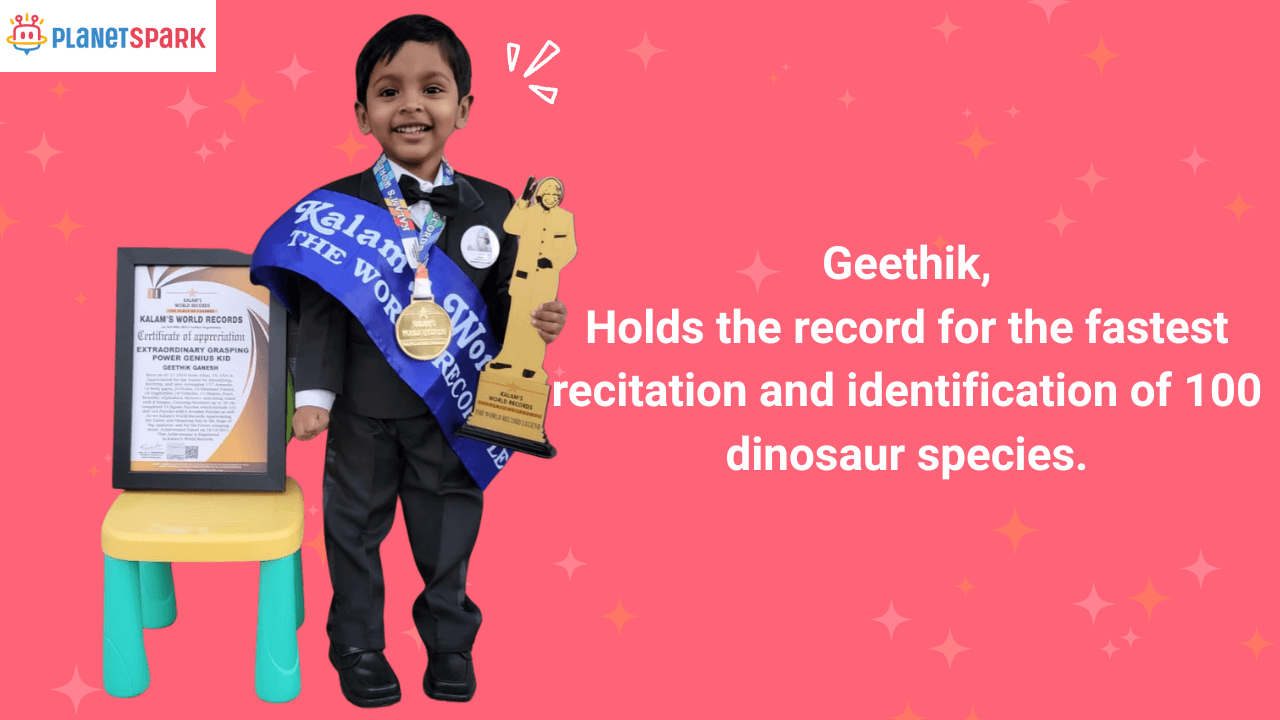
"Geethik, a young achiever from Grade 1 (Age 6), created an impressive milestone by excelling in the Fastest Recitation and Identification of 100 Species of Dinosaurs. His achievement reflects not only exceptional memory and focus but also strong confidence and clarity in expression.
His journey shows how the right learning environment can help children turn curiosity into confidence and knowledge into achievement."
Want your child to shine like Geethik?
Book a free PlanetSpark demo class today and unlock your child’s full potential
How PlanetSpark Builds Strong Receptive Language Skills
PlanetSpark goes beyond teaching language skills; it helps shape the confident, well-rounded personalities of students. Our Personality Development program is designed to nurture essential life skills that children need to succeed both inside and outside the classroom.
- Holistic Growth Beyond Academics: PlanetSpark focuses not just on studies but on building confidence, self-awareness, leadership, and communication etiquette. Children learn how to introduce themselves, set goals, interact with peers, and think critically about skills that stay with them for life.
- Social-Emotional Learning (SEL)–Based Approach: Our curriculum is thoughtfully designed around globally recognised SEL principles (CASEL). This helps children understand their emotions, manage them effectively, build empathy, and form healthy relationships.
- Learning Through Real-Life Activities: At PlanetSpark, children don’t just listen, they practice. Through mock interviews, public speaking, journaling, feedback sessions, and real-life role plays, kids learn how to handle everyday situations with confidence.
- Leadership & Self-Presentation Skills: PlanetSpark helps children develop leadership qualities like responsibility, teamwork, empathy, and assertiveness. Fun challenges and group activities encourage kids to speak up, take initiative, and work collaboratively.
- Confidence Tracking & Parent Guidance: Parents receive regular updates and consultations on their child’s growth in confidence, openness, and leadership traits. Our confidence meter helps track progress clearly and meaningfully.
- Etiquette & Body Language Training: Children are guided on eye contact, posture, respectful communication, tone of voice, and body language, which are essential skills that make a strong first impression and improve social interactions.
Final Thoughts on Receptive Language Skills by PlanetSpark
Receptive language is the foundation of communication, learning, and confidence. When children understand language clearly, everything else, like speaking, reading, writing, and social interaction, becomes easier.
If your child shows signs of receptive language difficulty, expert-led support can make a life-changing difference.
Build strong listening and comprehension skills with PlanetSpark’s expert-led receptive language training because understanding comes before expression.
Frequently Asked Questions
They are related, but not different things, as one is part of the other.
Receptive language is the ability to understand spoken or written language, and receptive language skills are the specific abilities that make up receptive language.
In short:
- Receptive language = the overall understanding of language
- Receptive language skills = the parts of that understanding
Example:
- If a child understands instructions, questions, and stories, that is receptive language.
- Understanding “sit down,” “bring the book,” or “why is the boy sad?” are receptive language skills.
When children don’t understand language well, they may:
- Avoid classroom participation
- Lose confidence
- Appear inattentive
- Struggle academically
This often leads to frustration for both children and parents. Addressing receptive language early prevents long-term academic and communication challenges.
While expert guidance is essential, parents can support development at home.
Simple Home Activities:
- Read aloud daily and ask questions
- Play “follow the instructions” games
- Use picture books to name objects
- Encourage listening before responding
- Give step-by-step directions
However, home activities alone may not be enough for children with significant receptive language difficulty.
Strong receptive language skills help children:
- Follow classroom instructions
- Understand lessons
- Participate actively
- Build reading comprehension
This makes receptive language development a non-negotiable skill for academic success.
Yes, receptive language can be improved at any stage, especially with early intervention. With consistent training, children can:
- Understand instructions better
- Improve listening comprehension
- Gain confidence in learning
- Perform better academically
The earlier the support, the stronger the results.