
Reflective Thinking Skills for Kids to Learn, Improve and Grow

Table of Contents
- What Is Reflective Thinking
- Why Reflective Thinking Matters for Kids
- Key Components of Reflective Thinking
- How Reflective Thinking Helps Children Learn and Grow
- Simple Ways Kids Can Practice Reflective Thinking
- Reflective Thinking Examples for Kids
- Reflective Thinking Through Planet Spark’s Personality Devel
- Takeaway
Every child learns something new every day. But learning does not stop when a lesson ends or homework is completed. True learning happens when children pause, think about what they learned, understand what went well, and identify what they can improve next time. This thoughtful process is known as reflective thinking. Reflective thinking helps children become aware of their thoughts, actions, emotions, and decisions. It teaches them how to learn from experiences instead of repeating mistakes. In this blog, we will explore the reflective thinking meaning, understand why it matters for kids, look at practical reflective thinking examples, and learn simple ways children can build reflective thinking skills in daily life.
What Is Reflective Thinking
The reflective thinking meaning refers to the ability to think deeply about experiences, actions, and outcomes in order to learn from them. It involves asking questions such as what happened, why it happened, and how it can be improved in the future.
Reflective thinking is not about overthinking or self-criticism. Instead, it is a healthy habit of self-awareness and thoughtful evaluation. When children practice reflective thinking, they learn to pause, analyse situations, and make better decisions next time.
At its core, reflective thinking skills help children:
- Understand their strengths and weaknesses
- Learn from both success and failure
- Improve problem-solving and decision-making
- Develop emotional awareness and responsibility
Developing reflective thinking skills at a young age prepares children to become independent learners and confident communicators.
Why Reflective Thinking Matters for Kids
Reflective thinking matters because childhood is the foundation stage for habits, attitudes, and learning patterns. When children learn how to reflect, they become active participants in their own growth.
Reflective thinking skills help children:
- Take ownership of their learning instead of depending only on teachers
- Develop curiosity and critical thinking
- Improve academic performance by understanding mistakes
- Build emotional intelligence by recognising feelings and reactions
In school settings, children who practice reflective thinking are better at understanding feedback, handling challenges, and setting realistic goals. These skills extend beyond academics and support personal, social, and emotional development.
Help your child think smarter, not harder
Enroll your child in PlanetSpark’s Personality Development Program today
Key Components of Reflective Thinking
Reflective thinking skills are built on a few important components that children can learn step by step.
- Self-Awareness: Children learn to recognise their thoughts, emotions, and actions during an experience.
- Observation: They recall what actually happened instead of guessing or blaming others.
- Analysis: Children think about why something happened and what influenced the outcome.
- Learning: They identify lessons learned from the experience.
- Improvement: Children decide what they can do differently next time.
Together, these components help children turn everyday experiences into valuable learning opportunities.
How Reflective Thinking Helps Children Learn and Grow
Reflective thinking skills support both academic success and personality development. When children reflect regularly, learning becomes meaningful and long-lasting.
Academic Growth Reflective thinking helps children understand where they made mistakes and how to correct them. This improves reading, writing, speaking, and problem-solving skills.
Emotional Growth Children become better at managing emotions like frustration, excitement, or disappointment. This builds emotional intelligence and self-control.
Social Growth Reflective thinking improves peer relationships. Children learn to understand different perspectives, resolve conflicts, and communicate respectfully.
Confidence and Independence When children see their progress through reflection, they gain confidence and become self-motivated learners.
Turn everyday experiences into smarter learning and confident growth.
Simple Ways Kids Can Practice Reflective Thinking
Building reflective thinking skills does not require complex activities. Simple daily habits can make a big difference.
Daily Reflection Questions
Encourage children to answer questions like:
- What did I learn today
- What was easy or difficult
- What can I improve tomorrow?
Journaling
Writing short reflections helps children express their thoughts clearly and build self-awareness.
Learning from Mistakes
Teach children that mistakes are learning opportunities, not failures.
Discussion and Sharing
Talking about experiences with parents, teachers, or friends strengthens reflective thinking.
Goal Setting
Children can reflect on progress toward goals and plan better strategies.
Enroll your child in PlanetSpark’s Personality Development Program and build reflective thinking skills that support learning, confidence, and lifelong success.
Reflective Thinking Examples for Kids
Here are simple reflective thinking examples that children can relate to:
- After a class test, a child thinks about which questions were difficult and why
- After a group activity, a child reflects on how well they cooperated with friends
- After a presentation, a child evaluates confidence, voice clarity, and body language
- After an argument, a child reflects on emotions and how to respond calmly next time
These reflective thinking examples show how children can apply reflection in real-life situations.
Reflective Thinking Through Planet Spark’s Personality Development
PlanetSpark’s Personality Development Program uses reflective thinking as a core learning tool to help children grow confidently and holistically.
- Holistic Curriculum Beyond Academics: The program builds essential life skills such as communication, self-introduction, goal setting, leadership, peer interaction, self-awareness, and critical thinking beyond textbooks.
- Social-Emotional Learning Based Design: Aligned with CASEL principles, PlanetSpark strengthens emotional intelligence, empathy, and interpersonal skills through structured reflective thinking activities.
- Practical, Activity-Based Learning: Children engage in journaling, mock interviews, public speaking, feedback sharing, and real-life simulations that encourage meaningful self-reflection.
- Leadership and Self-Presentation Training: Guided challenges help children reflect on teamwork, responsibility, assertiveness, and empathy while building confidence and leadership skills.
- Confidence Meter and Parent Consultations: Parents receive regular insights into their child’s growth in confidence, communication, openness, and leadership orientation.
- Etiquette and Body Language Sessions: Children learn eye contact, posture, tone modulation, and respectful communication through reflective observation and guided feedback.
PlanetSpark transforms reflective thinking skills into lifelong personality strengths that prepare children for academic success and real-world confidence.
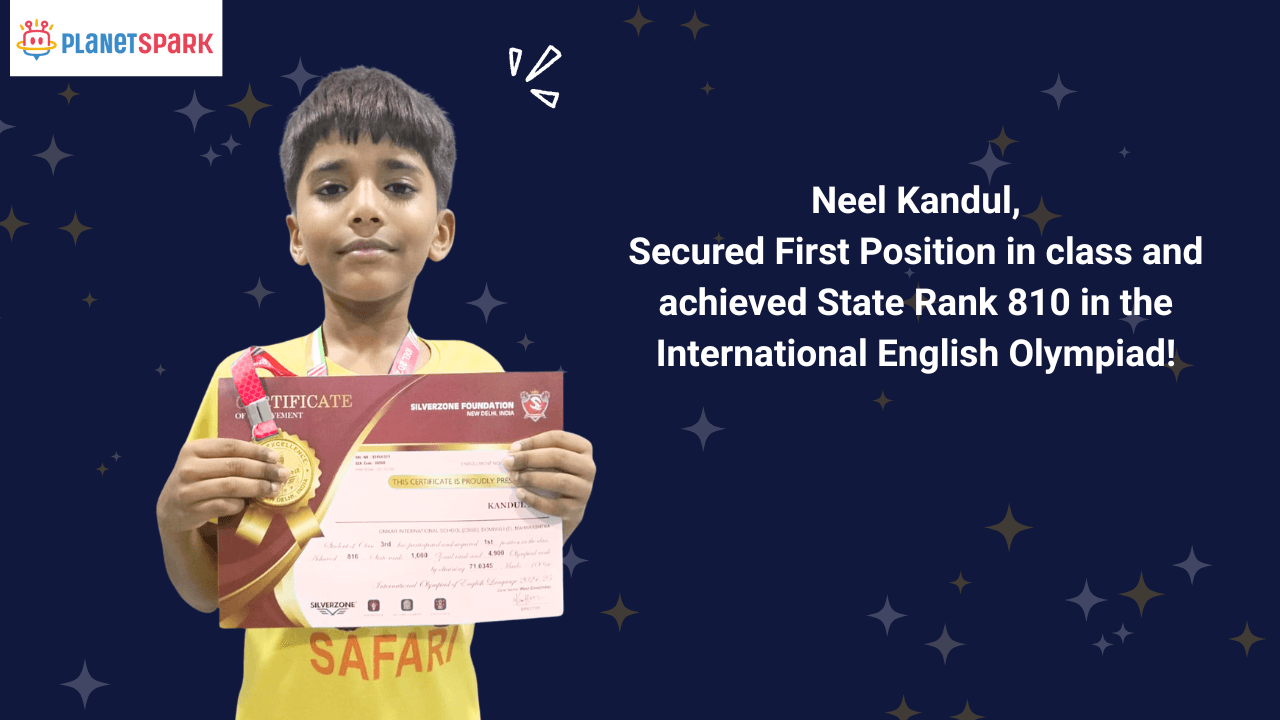
Neel learned to review mistakes, apply feedback, and improve his learning approach. This habit helped him secure First Position in class and achieve State Rank 810 in the International Olympiad of English Language.
Takeaway
Reflective thinking is a powerful life skill that helps children learn, improve, and grow. By understanding the reflective thinking meaning, practising reflective thinking skills daily, and learning from real-life experiences, children become confident learners and emotionally intelligent individuals. With the right guidance and structured programs like PlanetSpark, reflective thinking skills can shape a child’s academic success, personality development, and future leadership abilities.
Frequently Asked Questions
The reflective thinking meaning refers to a child’s ability to think about their actions, learning experiences, and outcomes to understand what went well and what can be improved.
Reflective thinking skills help children learn from mistakes, improve decision-making, build emotional awareness, and become independent and confident learners.
Children can develop reflective thinking skills by asking daily reflection questions, journaling, discussing experiences, and setting simple goals for improvement.
Reflective thinking examples include reviewing test mistakes, thinking about teamwork after group activities, evaluating performance after presentations, and reflecting on emotions after conflicts.
PlanetSpark builds reflective thinking skills through activity-based learning, journaling, feedback sessions, leadership tasks, and personality development programs aligned with social-emotional learning.