
Self Learning: Get Tips to Become Independent Learner with PlanetSpark


Table of Contents
- What is Self Learning?
- Why Self Learning is Important
- Tips to Start Self Learning
- Self Directed Learning at Home
- Fun Activities to Practice Self Learning
- How PlanetSpark Guides Kids in Self Learning
- Nirvana Mehta Wins First Prize in Intersection Poem Recitati
- Conclusion – Key Points to Remember About Self Learning
Learning is not just about sitting in a classroom or following textbooks. Self learning is an exciting way for kids to explore, understand, and master new concepts on their own. It encourages curiosity, builds confidence, and teaches children how to take charge of their education. By practicing self learning, children can develop problem-solving skills, enhance memory, and gain a sense of responsibility toward their studies. In today’s fast-paced world, becoming an independent learner is a valuable skill that can last a lifetime.
Self learning does not mean doing everything alone - it means knowing how to learn effectively, find resources, and practice regularly. This blog will help parents and children understand what is self learning, why it matters, and how to get started.
What is Self Learning?
Self learning is the process of learning on your own, without relying entirely on teachers or structured classes. It is about taking initiative, asking questions, exploring topics, and finding answers independently.
Key Features of Self Learning
Independent Exploration – Children can choose what they want to learn and explore topics that interest them.
Flexible Pace – Kids can spend more time on difficult topics and move faster through easier ones.
Active Engagement – Learning becomes hands-on, with children experimenting, observing, and analyzing.
Skill Development – Apart from academics, children develop life skills like critical thinking, research, and organization.
Difference Between Self Learning and Traditional Learning
| Feature | Self Learning | Traditional Learning |
|---|---|---|
| Pace | Flexible, child-led | Fixed, teacher-led |
| Approach | Explorative, curiosity-driven | Structured, syllabus-driven |
| Tools | Books, videos, online resources, experiments | Textbooks, lectures |
| Skills | Problem-solving, research, independence | Memorization, exams, discipline |
By understanding what is self learning, parents can guide their children to develop habits that encourage curiosity and a love for knowledge.
Why Self Learning is Important
Developing a habit of self learning early in life has multiple benefits for children. It goes beyond academic achievement and prepares them for real-life challenges.
Benefits of Self Learning
Builds Confidence – Children feel proud when they solve problems or complete tasks on their own.
Enhances Curiosity – Kids learn to ask questions, seek answers, and explore ideas deeply.
Improves Retention – Learning actively helps children remember concepts better than passive learning.
Encourages Responsibility – Children take ownership of their learning goals and progress.
How Self Directed Learning Makes a Difference
Self directed learning focuses on giving children the tools to plan, monitor, and evaluate their own learning. Here’s how it works in practice:
Set Learning Goals – Kids choose what they want to achieve in a day, week, or month.
Choose Learning Resources – Books, videos, online courses, or interactive apps.
Track Progress – Maintaining a learning journal or checklist to monitor achievements.
Reflect and Adjust – Children review what they learned, understand mistakes, and plan improvements.
Real-Life Examples of Self Learning
A child exploring planets using online videos and creating a small model.
Learning a musical instrument by watching tutorials and practicing independently.
Conducting science experiments at home using everyday objects.
Self learning and self directed learning together create a foundation for lifelong learning. When children practice these consistently, they not only excel academically but also become adaptable, confident, and motivated learners.
"Confidence is the key to every success."
Unlock your child’s potential with PlanetSpark’s Personality Development course.
Tips to Start Self Learning
Starting self learning can feel exciting yet overwhelming for children. The key is to create a supportive environment, set realistic goals, and make learning enjoyable. Here are some practical tips to begin the journey toward becoming an independent learner:
1. Set Clear Goals
Children should start by defining what they want to achieve. Goals can be small and specific, such as:
Learn 5 new words every day
Complete a chapter in a math book in a week
Explore one new topic in science each week
Having clear goals helps children stay focused and gives them a sense of accomplishment when they complete tasks.
2. Create a Learning Routine
Consistency is important in self learning. Establish a daily or weekly schedule that balances study, practice, and breaks. For example:
| Time | Activity |
|---|---|
| 4:00–4:30 PM | Reading or research |
| 4:30–5:00 PM | Practice exercises |
| 5:00–5:15 PM | Short break |
| 5:15–5:45 PM | Project or creative activity |
A routine reduces procrastination and helps children develop discipline while still keeping learning fun.
3. Use Varied Resources
Learning doesn’t only happen from textbooks. Encourage children to explore:
Educational videos and interactive apps
DIY experiments and projects
Storybooks and articles on interesting topics
Mixing resources keeps the learning process engaging and helps children understand concepts better.
4. Encourage Curiosity and Questions
Children should feel comfortable asking questions and exploring answers. Curiosity drives learning naturally and encourages deeper understanding. A simple question like “Why do leaves change color?” can lead to research, experiments, and observation.
5. Reflect and Review
Self learners should regularly review what they have learned. Maintaining a journal or checklist allows children to track progress, reflect on mistakes, and set new challenges. Reflection strengthens memory and builds critical thinking.
By following these tips, children can gradually develop habits of self learning, building confidence and independence in their studies. These early experiences also prepare them for more complex learning in the future.
"Great communicators create great leaders."
Help your child shine on stage and in life with PlanetSpark.
Self Directed Learning at Home
Self directed learning allows children to take control of their learning process at home. It combines independence with structured guidance to ensure they remain productive and motivated. Parents and educators can play a supportive role without taking over the learning process.
1. Create a Learning-Friendly Space
A dedicated, quiet space at home can help children focus better. Essentials include:
A desk with good lighting
Organized books, notebooks, and stationery
Minimal distractions like TV or mobile phones during study time
2. Let Children Plan Their Learning
In self directed learning, children decide what to learn and how. Encourage them to:
Make a weekly plan with topics and activities
Choose the resources they want to use
Set small milestones to measure progress
This planning fosters independence and teaches time management.
3. Incorporate Hands-On Activities
Practical learning is one of the most effective forms of self learning. Examples include:
Science experiments using household items
Writing short stories or creating art projects
Solving puzzles or brain games to boost analytical skills
Hands-on activities make learning tangible and enjoyable, reinforcing the concepts they study.
4. Track Progress and Celebrate Achievements
Monitoring progress is key to maintaining motivation. Use tools like:
Learning journals to note accomplishments and challenges
Charts or checklists to track daily or weekly goals
Reward systems for completing tasks or mastering new skills
Celebrating achievements, even small ones, builds confidence and encourages children to continue learning independently.
5. Combine Online and Offline Resources
Self directed learners benefit from a mix of online and offline learning. For instance:
Online videos, quizzes, and interactive games for visual and auditory learning
Books, worksheets, and experiments for hands-on practice
This blended approach ensures children develop multiple skills while maintaining interest in learning.
By following these methods, self learning at home becomes structured, engaging, and effective. Children learn to take responsibility for their education while enjoying the freedom to explore topics at their own pace. Over time, they develop critical thinking, creativity, and lifelong learning habits that go far beyond academics.
"Express yourself, inspire others."
Boost your child’s confidence with guided learning at PlanetSpark.
Fun Activities to Practice Self Learning
Making self learning fun is one of the best ways to keep children engaged and motivated. When learning becomes playful, children naturally explore, question, and practice independently. Here are some effective activities:
1. Interactive Quizzes and Games
Online quizzes or board games can make learning topics like math, science, or language more exciting.
Flashcards, memory games, and puzzles help reinforce concepts while improving concentration and recall.
Children can even create their own quizzes to challenge themselves and peers, combining learning with creativity.
2. DIY Projects and Experiments
Hands-on projects enhance understanding of abstract concepts. Examples include:
Creating a small model of the solar system to learn planets.
Simple chemistry experiments using household items to explore reactions safely.
Crafting storybooks or comics to develop language and storytelling skills.
| Activity | Learning Outcome |
|---|---|
| Build a volcano with baking soda | Understand chemical reactions |
| Plant seeds and observe growth | Learn biology and responsibility |
| Create a timeline of historical events | Improve memory and chronological skills |
3. Reading and Research Challenges
Encourage children to explore topics that interest them by:
Reading storybooks, articles, or online resources.
Summarizing what they read in their own words.
Presenting findings through drawings, charts, or short videos.
4. Creative Expression
Writing poems, essays, or stories allows children to express ideas and improve literacy.
Drawing, painting, or making digital art encourages imagination and visual learning.
Role-playing or storytelling exercises help develop communication and confidence.
5. Daily Reflection and Journaling
Maintaining a learning journal motivates children to track their progress.
They can write what they learned, challenges they faced, and how they solved problems.
Reflection reinforces knowledge and encourages self-directed improvement.
By incorporating these activities, children can practice self learning in a fun and meaningful way. These methods not only make learning enjoyable but also foster independence, creativity, and problem-solving skills, preparing children for both academic success and personal growth.
How PlanetSpark Guides Kids in Self Learning
PlanetSpark provides a structured approach to nurture self learning in children. It combines expert guidance, interactive sessions, and self-directed activities to create a comprehensive learning environment.
1. Personalized Learning Plans
Each child receives a customized plan based on their interests and skill levels.
Children set learning goals and milestones, encouraging ownership of their learning journey.
Progress is tracked to ensure consistent improvement and motivation.
2. Interactive Online Sessions
Live classes are engaging, with activities, discussions, and real-time feedback.
Children are encouraged to ask questions, explore solutions, and practice independently.
This approach bridges structured guidance with self-directed learning methods.
3. Skill-Building Exercises
PlanetSpark integrates exercises that develop critical thinking, creativity, and problem-solving:
Language and storytelling tasks enhance communication skills.
Math challenges encourage logical thinking and numerical confidence.
Science experiments and projects foster curiosity and experimentation.
4. Encouraging Self Directed Learning
Children are taught to plan, execute, and review their own learning activities.
Resources like worksheets, videos, and activity guides support independent exploration.
Teachers guide children without taking over, promoting confidence and accountability.
5. Progress Monitoring and Feedback
Parents and children receive regular updates on achievements and areas for improvement.
Feedback is constructive, helping children understand mistakes and try new strategies.
Celebrating milestones motivates children to continue learning independently.
PlanetSpark’s approach ensures that children not only achieve academic success but also develop a lifelong love for learning. By fostering self learning and self directed learning, PlanetSpark empowers children to become independent, confident, and curious learners, ready to explore any subject with enthusiasm.
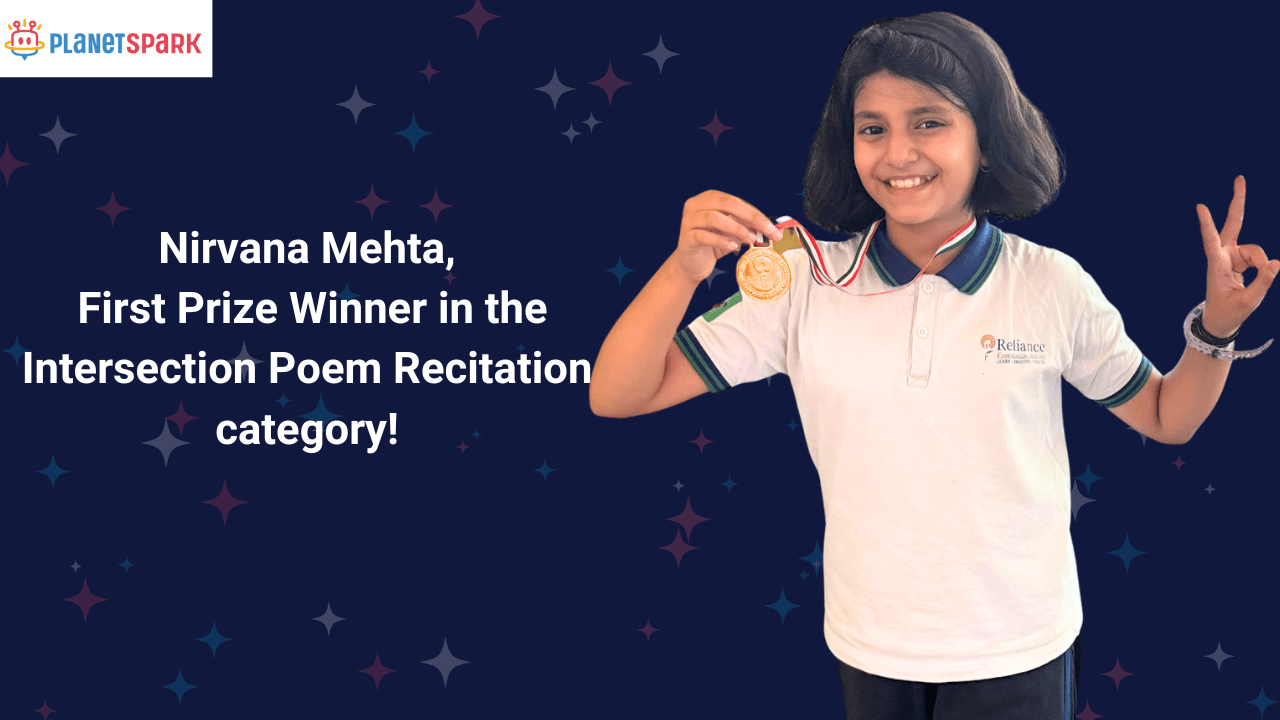
Nirvana Mehta Wins First Prize in Intersection Poem Recitation
Nirvana Mehta has proudly secured the First Prize in the Intersection Poem Recitation category, impressing everyone with her exceptional confidence, expressive delivery, and excellent voice control. Her achievement highlights how consistent practice and guided learning at PlanetSpark can nurture strong communication and public speaking skills, helping young learners shine on every stage.
Conclusion – Key Points to Remember About Self Learning
Self learning helps children become independent, curious, and confident learners. By understanding what is self learning, practicing regularly, and using self directed learning techniques, children can take charge of their education.
Fun activities, a supportive home environment, and guidance from platforms like PlanetSpark make learning engaging and effective. Small, consistent steps in exploring, questioning, and reflecting empower children to grow academically and personally, building skills that last a lifetime.
"Strong skills today, strong future tomorrow."
Give your child the edge with PlanetSpark’s Personality Development course.
You must read:
Personality Development Training for All Ages : Online & Near You
Building Self-Direction: Take Charge of Their Learning Journey
Frequently Asked Questions
Self learning is the process of acquiring knowledge or skills independently, without relying solely on teachers or structured classes. It encourages curiosity, critical thinking, and problem-solving, allowing children to explore topics at their own pace and according to their interests.
Traditional learning often follows a fixed syllabus and timetable led by a teacher. In contrast, self learning gives children the freedom to choose topics, resources, and learning pace. It focuses on exploration, practice, and reflection rather than rote memorization.
Self learning builds confidence, encourages curiosity, and develops independent thinking. Children learn to take responsibility for their education, improve retention of concepts, and gain skills like problem-solving, creativity, and time management.
Self directed learning is a structured approach to self learning where children plan, monitor, and evaluate their own progress. It involves setting goals, selecting resources, tracking achievements, and reflecting on learning outcomes to improve continuously.
Yes, self learning can be effectively practiced at home. Creating a quiet, organized study space, setting a routine, and using interactive resources like books, videos, and projects can make home learning productive and enjoyable.
Activities such as quizzes, hands-on experiments, DIY projects, storytelling, creative writing, and journaling promote self learning. These activities make learning interactive, engaging, and practical, encouraging children to explore and retain concepts better.