
Self-Perception Explained for Children With PlanetSpark
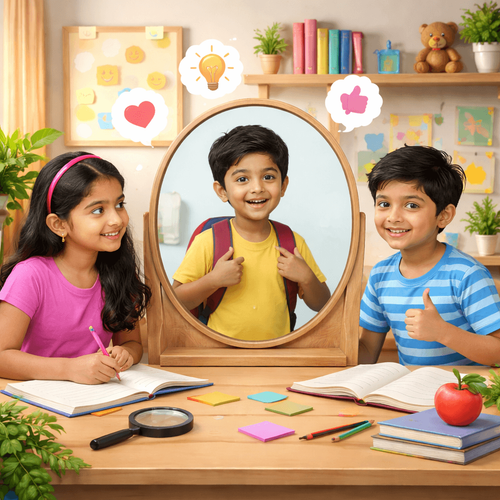

Table of Contents
- Self-Perception Explained: Self-Awareness Basics | PlanetSpa
- What Is Self-Perception?
- How Self-Perception Develops in Children?
- Why Self-Perception Matters More Than Talent?
- Positive vs Negative Self-Perception
- Common Myths Parents Have About Self-Perception
- How PlanetSpark Strengthens Healthy Self-Perception?
- Conclusion
Every child grows up forming opinions about themselves, how capable they are, how they feel about their abilities, and how they think others see them. This inner picture plays a powerful role in shaping confidence, communication, and emotional well-being. Self-perception begins developing early, influenced by everyday experiences such as classroom interactions, parental feedback, and peer relationships.
When children believe they are capable and valued, they are more willing to participate, express ideas, and take healthy risks. Parents often notice that some children speak up easily while others hold back, even when they have strong ideas. The difference often lies in how children view themselves internally. Building a positive self-image helps students handle mistakes with resilience and approach challenges with curiosity rather than fear.
This is why nurturing self-understanding early is essential. At PlanetSpark, we help children get a positive self-perception, not just for academic success, but for lifelong confidence, independence, and emotional balance.
Self-Perception Explained: Self-Awareness Basics | PlanetSpark
To understand this concept clearly, we first look at the self-awareness definition. It is basically the ability to recognise one’s thoughts, emotions, strengths, and limitations. When children develop self-awareness, they begin to understand why they feel a certain way and how their actions affect others. This awareness supports emotional control, better decision-making, and clearer communication.
Many parents ask why self-awareness is important for young learners. The answer lies in growth. Self-aware children learn from feedback instead of fearing it. They become more confident speakers, thoughtful listeners, and emotionally secure individuals. At PlanetSpark, structured communication and reflection activities help children turn awareness into self-belief and expressive confidence.
What Is Self-Perception?
It is how a child sees themselves, the story they quietly tell themselves about who they are, what they can do, and where they fit in. This perception of the self begins forming early and grows through daily experiences at home, school, and with peers. It is not always based on facts, but it strongly influences confidence, effort, and emotional well-being.
How do children question their worth?
Children often ask themselves silent questions like:
“Am I smart enough?”
“Why do others do better than me?”
“Will I fail if I try?”
These thoughts shape what is self-perception for a child. Feedback from marks, teachers’ comments, comparisons with classmates, or even casual remarks at home can deeply influence how children value themselves.
Turn everyday emotions into powerful learning moments. PlanetSpark helps children shape a positive perception of the self through speaking, storytelling, and feedback. Enrol for a free trial class now!
Who a Child Is vs Who They Think They Are?
There is a big difference between a child’s real abilities and their beliefs about those abilities. A child may be kind, creative, and curious, yet still think they are “not good enough” because of one weak subject. For example, imagine a child who loves listening to stories, inventing characters, and explaining ideas aloud, but believes they are “bad at English” because they score low marks in grammar tests. Their enjoyment and natural talent exist, but their belief overshadows them.
This example shows how self-perception can be misleading. It may not reflect true potential, yet it powerfully controls confidence and effort. When children believe something about themselves, they act as if it is true, whether or not it actually is. Helping children reshape these beliefs is key to healthy growth.
How Self-Perception Develops in Children?
A child’s view of themselves does not appear overnight. Self-perception slowly develops through words, experiences, and relationships. Understanding how it forms at different ages helps parents guide children towards healthier confidence and stronger self-belief.
Early Childhood (Ages 3–6)
At this stage, children absorb labels instantly. A child does not question why they are called something, they simply believe it. Parents’ words, tone, and reactions play a powerful role in shaping the self-perception definition during these years.
Influence of parents’ words and tone: Gentle encouragement builds security, while repeated criticism can create fear or self-doubt.
“Good girl”, “naughty boy” effect: Children begin to associate behaviour with identity, not actions. They think, “I am bad” instead of “I made a mistake.”
Primary Years (Ages 7–10)
During school years, children start comparing themselves with others. This is when what is self perception becomes closely linked to performance and approval.
Comparison with peers begins: Children notice who reads fastest, scores highest, or gets praised most.
Teachers’ feedback becomes internalised: A single comment like “You’re careless” can turn into a long-term belief.
Marks, prizes, and classroom roles shape identity: Labels such as “topper” or “average student” influence motivation and confidence.
Pre-Teens & Early Teens (Ages 11–14)
Self-awareness increases sharply, and children become more sensitive to judgement. Their perception of the self is now influenced beyond family and school.
Increased self-consciousness: Children worry about how they look, speak, and perform.
Sensitivity to judgement: Peer opinions begin to matter deeply.
Social media and peer validation: Likes, comments, and comparisons can strongly affect self-worth.
Self-perception is learned, not fixed. This means it can be reshaped positively, with mindful language, supportive feedback, and opportunities for children to rediscover their strengths.
Build confidence, clarity, and self-belief, one conversation at a time. Our programmes strengthen self-perception through real expression, not rote learning. Join our interactive learning experience today!
Why Self-Perception Matters More Than Talent?
Talent opens doors, but self-perception decides whether a child walks through them. Many capable students underperform not due to lack of ability, but because they doubt themselves. How children see their own potential shapes effort, resilience, and long-term success far more than raw skill.
Belief Drives Effort
A talented child who believes “I’m not good enough” often stops trying early. In contrast, a child with average ability but positive self-belief keeps practising. Strong self-perception fuels persistence, helping students push through difficulty instead of giving up at the first challenge.
Confidence Shapes Learning Behaviour
Children with healthy self-perception ask questions, attempt answers, and accept mistakes. Even talented students may stay silent if they fear judgment. Confidence encourages curiosity, risk-taking, and participation, key habits that deepen understanding and improve academic performance over time.
Talent Without Self-Belief Creates Anxiety
High ability paired with low self-perception often leads to stress and perfectionism. Children feel pressure to “prove” themselves constantly. This fear of failure can block creativity and enjoyment in learning, while balanced self-belief allows talent to grow naturally and joyfully.
Students choose subjects, careers, and challenges based on how capable they feel, not just what they can do. A child who believes “I can learn” explores opportunities freely. Positive self-perception empowers children to use their talents confidently in real-world situations.
Positive vs Negative Self-Perception
Children slowly build an internal picture of who they are through experiences, feedback, and comparisons. This picture, known as self-perception, shapes how they learn, behave, and respond to challenges. When parents understand this, they can guide children toward healthier self-beliefs instead of focusing only on performance.
What Positive Self-Perception Looks Like?
Willingness to try: Children with a healthy self-perception are open to new tasks. They believe effort matters and are not afraid to begin, even if success is uncertain.
Comfort with mistakes: These children see errors as part of learning. Because they understand the self-awareness definition, knowing strengths and areas to improve, they don’t feel ashamed when they make mistakes.
Healthy self-talk: Positive inner dialogue sounds like “I’m improving” or “I can practise more.” This supportive self-talk builds resilience and emotional balance over time.
Signs of Negative Self-Perception in Children
Avoiding challenges: Children may avoid tasks they feel unsure about, believing failure defines them rather than teaches them.
Over-apologising: Frequent apologies often reflect low confidence. The child may feel they are constantly wrong or not good enough.
Fear of speaking up: They hesitate to share ideas, worried about judgment or being laughed at.
Self-labelling: Statements like “I’m bad at this” or “I’m shy” show rigid beliefs that limit growth.
Therefore, negative self-perception does not mean low ability. It usually points to low self-awareness or unclear feedback. By breaking the common myths and encouraging reflection, children can rebuild stronger, healthier self-beliefs.
Common Myths Parents Have About Self-Perception
Many misunderstandings around children’s self-beliefs begin with assumptions. These common myths can quietly shape how parents respond to behaviour, confidence, and emotions. Understanding them clearly is the first step toward supporting a healthier, more positive self-view in children.
Myth 1: “Confidence comes naturally”
Many parents believe confidence is an inborn trait; you either have it or you don’t. In reality, confidence grows from repeated experiences of being heard, encouraged, and guided. A child’s self-perception develops through daily interactions, not genetics alone.
Discover why self-awareness is important for lifelong success. From communication to confidence, self-aware children make better choices. Book a free PlanetSpark session and see the transformation begin!
Myth 2: “My child is just shy”
Shyness is often treated as a fixed personality trait. However, many children labelled “shy” actually struggle with uncertainty or fear of judgement. With the right support, communication practice, and safe spaces, their self-belief can change dramatically.
Myth 3: “Criticism builds character”
Constructive feedback helps, but constant criticism can harm how children view themselves. When feedback focuses only on mistakes, children may internalise the idea that they are “not good enough,” affecting motivation and emotional well-being.
Myth 4: “Children will grow out of it”
Waiting and hoping isn’t a strategy. Negative self-beliefs don’t disappear on their own; they often grow stronger if left unaddressed. Early guidance is key to reshaping unhealthy thought patterns.
Self-perception is shaped intentionally or unintentionally—every single day. Words, tone, reactions, and opportunities all leave a mark. When parents become mindful of this, they can actively help children build a stronger, healthier sense of self.
How PlanetSpark Strengthens Healthy Self-Perception?
A child’s self-perception plays a powerful role in how they speak, learn, and respond to challenges. When students understand their strengths and recognise areas of growth without fear, confidence grows naturally. Many parents ask what it is and how it can be improved meaningfully, especially in a world full of comparison and judgment.

PlanetSpark approaches this through skill-based expression rather than lectures or labels. By helping children communicate clearly, reflect on feedback, and express ideas creatively, students slowly build a balanced and accurate view of themselves. This aligns closely with a practical self-awareness definition, understanding oneself through action, reflection, and guided improvement.
- Communication skills training: Structured speaking activities help children organise thoughts and express opinions confidently, reinforcing a positive self-image through clarity and control.
- Public speaking & debates: Regular stage exposure teaches students to manage nervousness, handle mistakes, and feel proud of their voice, key for reshaping negative self-perception.
- Creative writing and storytelling: Writing stories, opinions, and reflections allows children to explore emotions and ideas safely, helping them understand how they think and feel.
- AI-powered feedback for self-reflection: Smart feedback highlights progress and specific improvement areas, encouraging self-awareness without comparison or judgment.
- Confidence-building activities: Small wins, guided practice, and consistent encouragement help students internalise effort-based confidence rather than fear-based performance.
Give your child the skills to understand themselves and express who they are. With expert mentors and AI-powered insights, PlanetSpark makes self-awareness simple and meaningful. Start with a free class today!
Conclusion
Self-perception shapes how children see their abilities, handle challenges, and build confidence over time. When nurtured positively, it becomes a strong foundation for learning and growth. PlanetSpark supports this journey through communication-led learning, helping children understand themselves, express confidently, and grow with self-awareness rather than fear or comparison.
Frequently Asked Questions
Unlike traditional tuition, PlanetSpark focuses on self-awareness, expression, and confidence, not rote learning. Lessons are personalised, interactive, and designed to help children grow emotionally and intellectually alongside academic skills.
Communication helps children organise thoughts, express emotions, and reflect on feedback. Speaking and writing regularly allow students to notice strengths, accept mistakes, and develop clarity about who they are and how they think.
PlanetSpark strengthens self-perception through communication skills, public speaking, creative expression, and AI-led feedback. These tools help children recognise progress, understand themselves better, and build confidence through action.
Yes, negative self-perception is learned and can be reshaped. With supportive feedback, skill-building, and positive experiences, children can replace limiting beliefs with healthier, more realistic self-awareness over time.
Self-perception begins forming as early as ages three to six. Children absorb labels, tone, and reactions from adults, which slowly shape how they view themselves academically, socially, and emotionally.
Self-perception means how a child sees and understands themselves—their abilities, behaviour, and worth. It includes thoughts like “I am confident,” “I struggle with maths,” or “I’m good at speaking,” whether accurate or not.