
Situational Awareness: How to Stay Alert and Make Better Decisions
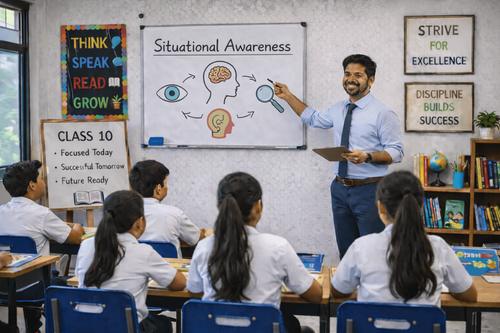

Table of Contents
- What is Situational Awareness?
- Importance of Situational Awareness
- Key Signs of Low Situational Awareness
- Core Skills Behind Situational Awareness
- Observation Skills Development
- Listening Skills and Awareness
- Emotional Awareness
- How to Improve Awareness Skills Daily
- 1. Reduce Distractions
- 2. Pause Before Reacting
- 3. Build Routine Check-Ins
- 4. Strengthen Memory
- 5. Improve Physical Energy
- Real Life Awareness Examples
- Example 1: Student in Classroom
- Example 2: Office Meeting
- Example 3: Public Travel
- Example 4: Sports Performance
- Example 5: Family Conversation
- Situational Awareness for Students
- Situational Awareness for Adults
- Common Barriers to Awareness
- Practical Exercises for Observation Skills Development
- Exercise 1: 30-Second Scan
- Exercise 2: Daily Recall Journal
- Exercise 3: Body Language Watch
- Exercise 4: Prediction Practice
- Exercise 5: Silent Observation Walk
- Situational Awareness and Better Decision-Making
- Role of Communication in Situational Awareness
- Digital Age and Situational Awareness
- How Parents and Teachers Can Build Awareness in Children
- Long-Term Benefits of Situational Awareness
- Why PlanetSpark is a Smart Choice for Personality Developmen
- Awareness is the Skill That Improves Every Other Skill
Situational awareness is the ability to notice what is happening around you, understand its meaning, and respond wisely. It helps students in classrooms, adults at work, travellers in public places, and leaders during important moments. In this blog, you will learn the importance of situational awareness, practical methods to improve awareness skills, real life awareness examples, and observation skills development techniques that can be used every day. Strong awareness can improve safety, confidence, communication, and decision-making in personal and professional life.
What is Situational Awareness?
Situational awareness means being mentally present and aware of your surroundings, people, risks, and opportunities. It is not about fear or overthinking. It is about paying attention and responding intelligently.
The concept is widely used in aviation, military training, sports, business leadership, and emergency response because mistakes often happen when people fail to notice key signals.
The Three Levels of Situational Awareness
1. Perception
This is noticing facts around you.
Examples:
- A class is becoming noisy
- A road signal has changed
- A customer looks confused
- A teammate seems stressed
2. Comprehension
This means understanding what those facts mean.
Examples:
- The noisy class needs redirection
- Traffic may move suddenly
- The customer needs guidance
- The teammate may need support
3. Projection
This means predicting what may happen next.
Examples:
- The class may lose focus
- A vehicle may turn unexpectedly
- The customer may leave
- The project may face delays
When you combine these three levels, you make better decisions faster.
Importance of Situational Awareness
The importance of situational awareness goes far beyond safety. It affects learning, relationships, leadership, and performance.
Why It Matters in Daily Life
Better Decision-Making
When you understand the situation clearly, you choose better actions.
Improved Safety
Awareness helps you identify risks before they become problems.
Stronger Communication
You notice emotions, body language, and tone, which improves conversations.
Higher Confidence
Prepared people feel more confident because they understand what is happening.
Better Time Management
You spot distractions and adjust quickly.
Reduced Stress
Awareness lowers confusion and panic during uncertain moments.
Situational Awareness in Different Age Groups
For Students
- Understand classroom expectations
- Notice deadlines
- Read teacher instructions carefully
- Manage peer interactions
For Adults
- Handle workplace challenges
- Read meetings better
- Improve travel safety
- Manage family responsibilities effectively
Key Signs of Low Situational Awareness
Sometimes people are unaware without realizing it. Common signs include:
- Frequently missing instructions
- Walking while distracted
- Reacting late to problems
- Poor listening habits
- Repeating avoidable mistakes
- Misreading emotions
- Forgetting obvious details
- Difficulty adapting to change
Recognizing these signs is the first step toward improvement.
Core Skills Behind Situational Awareness
Observation Skills Development
Observation is the foundation of awareness. If you do not notice details, you cannot respond well.
How to Build Observation Skills
Use the 5-Senses Method
Pause and notice:
- What do you see?
- What do you hear?
- What do you smell?
- What do you feel?
- What stands out?
Scan Your Environment
Look around intentionally instead of staring at one thing.
Notice Patterns
Patterns help you detect unusual changes.
Examples:
- A normally punctual friend is late
- A quiet employee suddenly withdraws
- A child becomes unusually silent
Practice Detail Recall
After leaving a place, ask:
- What color were the walls?
- Who was near the entrance?
- What music was playing?
This trains memory and attention.
Listening Skills and Awareness
Many people hear words but miss meaning.
Active Listening Tips
- Maintain eye contact
- Avoid interrupting
- Notice tone of voice
- Ask clarifying questions
- Summarize what you heard
Good listeners often make better decisions because they gather better information.
Emotional Awareness
Situational awareness also includes emotions, yours and others’.
Why Emotional Signals Matter
People often communicate feelings through:
- Facial expressions
- Tone changes
- Silence
- Body posture
- Energy levels
Recognizing emotions helps avoid conflict and improves teamwork.
How to Improve Awareness Skills Daily
Learning how to improve awareness skills does not require expensive tools. It requires consistent habits.
1. Reduce Distractions
Digital distractions are one of the biggest enemies of awareness.
Try this:
- Keep notifications off during focused tasks
- Avoid using phone while walking
- Single-task when possible
- Take short screen breaks
2. Pause Before Reacting
Before responding, ask:
- What is happening?
- Why is it happening?
- What are my options?
- What is the best next step?
This small pause creates smarter decisions.
3. Build Routine Check-Ins
Use short mental check-ins during the day:
- Where am I?
- What matters right now?
- What could change soon?
- Am I focused?
4. Strengthen Memory
Awareness improves when memory improves.
Helpful methods:
- Repeat important information
- Write notes
- Use visual reminders
- Review key tasks daily
5. Improve Physical Energy
Low energy reduces alertness.
Support awareness through:
- Good sleep
- Hydration
- Exercise
- Healthy meals
- Movement breaks
Build sharper observation, communication, and leadership skills with PlanetSpark Personality Development Course, designed for students and working adults.
Real Life Awareness Examples
Real life awareness examples show how powerful this skill can be.
Example 1: Student in Classroom
A student notices the teacher repeating a concept and realizes it may appear in exams. They revise it early and score better.
Lesson:
Awareness improves academic performance.
Example 2: Office Meeting
An employee notices confusion in the room and asks a clarifying question. The team avoids costly mistakes.
Lesson:
Awareness creates leadership opportunities.
Example 3: Public Travel
A commuter notices a suspicious route change and verifies directions before continuing.
Lesson:
Awareness supports personal safety.
Example 4: Sports Performance
A football player notices an open teammate before defenders react and makes the perfect pass.
Lesson:
Awareness improves timing and success.
Example 5: Family Conversation
A parent notices a child becoming quieter than usual and starts a caring conversation early.
Lesson:
Awareness strengthens relationships.
Situational Awareness for Students
Students often think awareness only means paying attention in class. It is much broader.
Where Students Need Awareness
Classroom
- Instructions
- Deadlines
- Teacher cues
- Participation opportunities
Exams
- Time management
- Question patterns
- Marks distribution
- Stress control
Friendships
- Respect boundaries
- Understand emotions
- Avoid conflict
Online Learning
- Avoid distractions
- Track assignments
- Participate actively
Student Growth Tip
Students who develop awareness often improve:
- Confidence
- Speaking ability
- Leadership
- Discipline
- Academic performance
Situational Awareness for Adults
Adults face complex situations every day.
Important Areas for Adults
Workplace
- Team dynamics
- Client expectations
- Deadlines
- Risk management
Parenting
- Child behaviour changes
- Emotional needs
- Learning habits
Social Settings
- Reading the room
- Communicating respectfully
- Managing impressions
Personal Safety
- Travel awareness
- Scam prevention
- Emergency response
Adult Advantage
Professionals with strong awareness often become trusted leaders because they stay calm and respond wisely.
Common Barriers to Awareness
Even smart people lose awareness due to habits and overload.
Main Barriers
Multitasking
Doing too much reduces attention quality.
Stress
Stress narrows focus and causes missed details.
Assumptions
Assuming you already know the situation can be risky.
Fatigue
Tired minds miss signals.
Ego
Some people ignore feedback or warnings.
How to Overcome Them
- Slow down
- Ask questions
- Rest properly
- Stay curious
- Recheck assumptions
Practical Exercises for Observation Skills Development
These exercises are simple and powerful.
Exercise 1: 30-Second Scan
Enter a room. Observe for 30 seconds. Then list:
- Number of chairs
- Key people
- Lighting
- Mood of room
Exercise 2: Daily Recall Journal
Write:
- Three things you noticed today
- One thing you missed
- One better decision you made
Exercise 3: Body Language Watch
During conversations, notice:
- Posture
- Eye contact
- Tone
- Energy
Exercise 4: Prediction Practice
Ask:
- What may happen next?
- What signs support that?
This builds projection skills.
Exercise 5: Silent Observation Walk
Take a 10-minute walk without phone use. Notice sounds, movement, patterns, and people flow.
Want practical training that builds confidence, speaking skills, awareness, and leadership? Join PlanetSpark Personality Development Course today.
Situational Awareness and Better Decision-Making
Good decisions are rarely random. They come from accurate awareness.
Decision Formula
Notice
What is happening now?
Interpret
Why is it happening?
Predict
What could happen next?
Choose
What action fits best?
Review
What can I learn from the result?
Use this framework in studies, business, and relationships.
Role of Communication in Situational Awareness
Awareness becomes stronger when paired with communication.
Why Communication Matters
- Asking questions reveals missing facts
- Listening improves understanding
- Clear speaking prevents confusion
- Feedback corrects blind spots
Strong communicators are often highly aware because they exchange information effectively.
Digital Age and Situational Awareness
Technology helps us, but it also distracts us.
Modern Challenges
- Constant notifications
- Short attention spans
- Information overload
- Reduced face-to-face cues
- Mindless scrolling
Smart Digital Habits
- Set no-phone zones
- Use focus timers
- Schedule email checks
- Practice offline observation
- Be present in conversations
How Parents and Teachers Can Build Awareness in Children
Adults can actively teach awareness.
Helpful Methods
Ask Reflective Questions
- What did you notice today?
- Why do you think that happened?
- What would you do differently?
Use Real Scenarios
Discuss traffic, teamwork, conflict, or safety examples.
Encourage Responsibility
Let children plan, observe, and solve small problems.
Praise Attention
Recognize when they notice useful details.
Long-Term Benefits of Situational Awareness
People who consistently practice awareness often gain:
- Better judgment
- Stronger confidence
- Faster learning
- Improved leadership
- Safer habits
- Better relationships
- Higher emotional intelligence
- Stronger career growth

Why PlanetSpark is a Smart Choice for Personality Development
PlanetSpark Personality Development Course helps students and adults build communication, confidence, awareness, leadership, and expression through structured learning. Every learner gets 1:1 personal trainers who adapt sessions to individual pace and goals. A personalised curriculum and roadmap identifies gaps in fluency, grammar, confidence, and speaking structure.
With SparkX AI video analysis, learners receive feedback on body language, voice clarity, grammar, confidence, and flow. AI-led practice sessions strengthen speeches and storytelling outside class. Spark Diary builds writing habits through journals, stories, and reflections.
Gamified tools like quizzes, vocabulary games, grammar challenges, and spelling activities make learning engaging. Regular PTMs and progress reports help families track measurable improvement in content quality, confidence, delivery, and critical thinking.
Learners also grow through exclusive clubs and communities such as debate, story writing, poetry, comedy, podcasting, and collaborative writing circles. Sparkline, a safe internal sharing platform, allows children to showcase work confidently in a moderated environment. Frequent contests, showcases, and recognition events keep motivation high.
Whether you are a student preparing for future success or an adult improving confidence and communication, PlanetSpark offers practical skill-building that creates lasting growth.
Awareness is the Skill That Improves Every Other Skill
Situational awareness is not a rare talent. It is a trainable life skill that helps you stay alert, think clearly, and make better decisions. Whether you are a student managing studies, an adult handling responsibilities, or a leader guiding others, awareness improves safety, confidence, communication, and results. Start with small habits, observe more, listen deeply, reduce distractions, and reflect daily. Over time, your mind becomes sharper and your choices become smarter. In a fast-moving world, situational awareness is one of the most valuable skills you can build.
Ready to grow confidence, communication, and smarter decision-making? Discover the PlanetSpark Personality Development Course today.
You can also read:
Frequently Asked Questions
Situational awareness means noticing what is happening around you, understanding what it means, and deciding what to do next. It includes observing people, places, risks, emotions, and opportunities. This skill helps in classrooms, offices, travel, and daily life because better awareness leads to better choices.
The importance of situational awareness lies in safety, confidence, and decision-making. It helps people avoid mistakes, respond quickly, understand others, and stay calm under pressure. Students can perform better academically, while adults can improve leadership, communication, and workplace success.
To improve awareness skills, start with daily habits:
Reduce distractions
Observe details around you
Practice active listening
Reflect on situations
Predict possible outcomes
Improve sleep and focus
Consistency matters more than speed. Small daily practice creates lasting improvement.
Real life awareness examples include:
A student noticing exam hints from a teacher
A manager seeing confusion in a meeting
A traveller spotting a wrong route
A parent noticing emotional changes in a child
A player spotting open space in sports
These examples show how awareness improves outcomes.
Yes. PlanetSpark helps learners strengthen communication, confidence, observation, critical thinking, speaking, and leadership, all connected to situational awareness. Through 1:1 coaching, AI feedback, structured practice, writing activities, and live performance opportunities, students and adults can develop sharper thinking and stronger personality skills for real-world success.